Showing posts with label adoption. Show all posts

Sunday, May 11, 2014

Salute to the ‘Other Mothers’… On This 100th Anniversary of Mothers Day

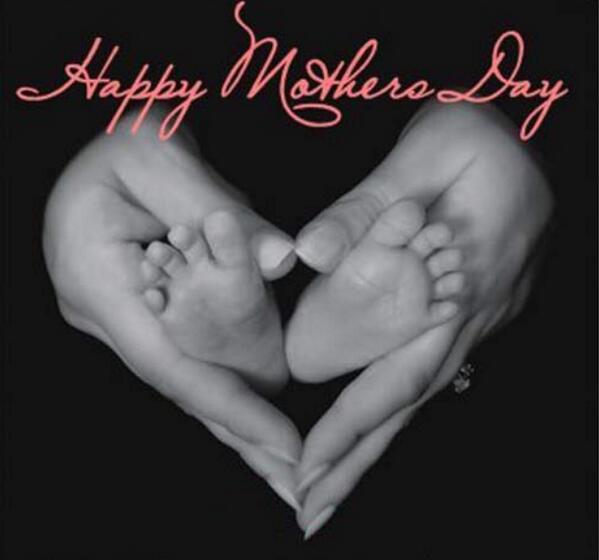
Embedded image permalink

On the 100th Anniversary of Mother’s Day

Mother's Day is a celebration honoring mothers and motherhood, maternal bonds, and the influence of mothers in society. It is celebrated on various days in many parts of the world, most commonly in spring… In the United States the celebration of Mother's Day began in the early 20th century; it is not related to the many celebrations of mothers and motherhood that have occurred throughout the world over thousands of years.  The modern American holiday of Mother's Day was first celebrated in 1908, when Anna Jarvis held a memorial for her mother in Grafton, West Virginia. Her campaign to make "Mother's Day" a recognized holiday in the United States began in 1905, the year her beloved mother, Ann Reeves Jarvis, died.  In 1912, Anna Jarvis trademarked the phrases "second Sunday in May" and "Mother's Day", and created the Mother's Day International Association. It was officially declared a holiday by President Woodrow Wilson in his 1914 presidential proclamation and by the U.S. Congress in relevant related bills.

“All that I am or ever hope to be, I owe to my angel Mother."  …Abraham Lincoln

I would like to dedicate this piece to all the ‘other mom’s out there… the adoptive moms, the stepmoms, the foster moms, the grandmothers, the aunts, older sisters and the God-mothers who stepped in, stepped up to help and in many cases took over the role of ‘Mother’ for many many children, but are later far too often forgotten, neglected, taken for granted and even shunned when the absentee moms or their families suddenly step back into the children’s lives that they abandoned… After those heroes the adoptive moms, the stepmoms, the foster moms, the grandmothers, the aunts, the sisters and the God-mothers stepped in and did their jobs, gave their children more and very often loved their children more than they ever considered, wanted to give or had to give, they too often then swoop in play on the heartstrings of the children who felt abandoned and benefit from the love of the people who nurtured their children. 

Anyone can be a Mother or Father… it is just a biological process. Not everyone can be a loving and nurturing Mom or Dad!  We all have a birth or natural mom somewhere and more women than not are natural or birth mothers; most making the transition to be a loving ‘mom’, but it is not until you walk in the shoes of an adoptive mom, a stepmom, a foster moms, or a grandmother, aunt, older sister or God-mother who had to take on the full mother role for someone else that you can understand that true dynamic.

It is easy to step in later, when the work is done and the bonds are forged, to fulfill ones own needs at the expense of the emotional well-being of the children left behind and the women who gave their all, including their hearts to those children when it was needed most.

I am a daughter, a sister, a niece, was a very involved aunt and have had the unique privilege of being a mom… a  stepmother to 3-children under 2-separate circumstances as well as being an adoptive mom.  I worked for one of the top children’s facilities in the country and have seen it all… the kind of ugly that nobody wants to think about and a few miracles along the way.  And I also have friends who are adoptive moms of kids that know and don’t know they are adopted, that are stepmoms under a myriad of circumstances, a few amazing foster parents, some family members who raised family members and some kids that came out of all those types of situations.  And I know some birth family members and birth mothers who made all the wrong and unfair decisions over and over again as well as step-families who never got it.  For me personally, It has been an honor, a source of endless frustration, the greatest joy in my life and the most heart-wrenching pain in my life to fill the various rolls of motherhood. 

Here are few letters from daughters:

From ‘Annie’s Mailbox’:

To a one-in-a-million Mom, to you, dear lady, for all the dreams you dreamed for us. Not one of us became the ballerina or vocalist or pianist or doctor or lawyer you were hoping for. The boys didn’t become millionaires, and the girls didn’t learn to speak six languages. Instead we are the children who forgot to say “thank you” when it probably would have meant a lot to you. We are the ones who talked when we should have listened. We are the little tykes who woke you before dawn to serve you the breakfast-in-bed birthday special: burnt toast, weak tea, unscrambled eggs and half-raw bacon swimming in grease. We gathered around your bed and sang “Happy Birthday, Dear Mommy.” You pretended to be thrilled and tried your darnedest to eat the mess we brought to your bed.

Our childhood is over, and here are the “thank-yous,” many years overdue. Thank you for being there when we needed you. Thanks for being our tower of strength when you needed support yourself. Thank you for believing in us when we had trouble believing in ourselves. Thank you for saying what we needed to hear and for knowing when silence meant more than words. Your wisdom seemed to come from a place that none of us could ever figure out. Thank you, Mom, for allowing us to dream our own dreams, even though your dreams were more glamorous. And thank you, too, for never letting on when we disappointed you.

Most of all, Mom, thank you for giving us the room we needed to grow and the freedom to learn from our own mistakes. We hope we can do half as well with our kids. — YOUR LOVING CHILDREN

Sent directly to Ask Marion:

I was adopted, but never knew it, until by birth mother showed up at our doorstep.  It was  a closed adoption and I never had a clue.  My adoptive parents and family were my family (still are) and I always felt like I was the luckiest kid there was, having such a great family and so many opportunities.  There was nothing that my parents didn’t or wouldn’t do for me and with me, yet they were strict; they instilled all the important values in me.

My life was turned upside down and it took years to recover from the selfish disruption caused by my birth or so-called real mother.  I was depressed for years and it almost destroyed my adoptive mom.  I chose never to see my birth mother again after that visit, but life was never quite the same, never as good, never as normal.  My adoptive parents and family are my family, my real parents, not the women who upended my life twice.  I only hope that I did not inherit her selfishness!  -- YOUR LOVING REAL DAUGHTER IN NEW YORK

Journal Standard:

Every Mother’s Day, I think of how often the amazing love that can be conferred by stepmothers is ignored on this day. When I was very little, my biological mother passed away. A few years later, my father married a wonderful woman who helped raise me. People often asked me whether she was my real mom. I always answered “yes.” We shared real smiles, had real fights and have real memories. She also put forward an enormous effort to make sure I maintained the cherished relationship I had with my biological mother’s family.  

These women are there, attending our games and dance recitals. They are there when we need a shoulder to cry on. And they are there to pick us up when we fall. They may not have given birth to us, but they are real mothers. — A REAL DAUGHTER IN NEBRASKA

Sent directly to Ask Marion:

My sister and I were in and out of group homes, with some incremental stops back with our parents, for years.  The short times back home were always bittersweet.  We knew they were temporary and even the short stays were like riding a roller coaster.  Then came my foster mom… foster parents.  They took my sister and I in and we have been part of their family every since and will be for the rest of our lives.  They cared about us and we grew to love each other.  We finally had a stable family; people we could depend on and a home.  -- GRATEFUL DAUGHTERS WHO LOVE YOU IN CALIFORNIA

Sent Directly to THITW:

My parents were teenagers when I was born.  My grandmother was fun but, to be honest she and her husband were flakes. Ultimately I was adopted through a family adoption.  The agreement was that it be a closed adoption; I was only 15-months old and apparently had no bonding with my birth mother who was not with my natural father. And from what I hear I spent a lot of time with the relatives that would be my mom and dad and, I never asked about my birth mother once after going to live with them as my permanent family.  At age 19 the rug was pulled out from under me when an uncle under pressure from my birth mother and her father told me I was adopted, with no advance warning or preparation.  I had led a storybook life, had everyone in my life as part of the family and, I had no inkling that I was adopted.

My birth mother and birth grandfather along with an idiot uncle destroyed my life.  I went off the deep end, destroying my relationship with the parents who really loved me and It ultimately killed my adoptive mother due to a deep and prolonged depression.  I was a fool and I would ask everyone who is lucky enough to have someone adopt your child and give you a second chance to start over to think twice about disrupting the lives of your child who has a good home and normal life as well as the life of the women (parents) who took on your responsibility, your place, and your job.

Ask yourself… why do you deserve to ruin your child’s life twice as well as the life of the women, the family, that gave both you and your child a fresh start, probably better than you ever could have, and destroy their home, their sanity and their family just to fill some hole or need within you.  Haven’t they already given you enough?  --FROM YOUR LOVING DAUGHTER WHO WILL ALWAYS BE SORRY FOR MY HESITATION! I LOVE YOU AND MISS YOU DEARLY IN OKLAHOMA

Sent Directly to Ask Marion:

I want to thank my Aunt and Grandma who raised me, loved me and were always there for me.  I never missed not having my mom; they filled every void.  I DO miss that I never knew her since she died in child birth giving me life, for which I will be eternally grateful.  --YOUR GIRL FOREVER IN IDAHO

So please… remember the moms… the women who raised you, who loved you and who were there for you.  That is the true definition of a Mother… a Mom and Motherhood.  Call them today and every Mother’s Day! 

Related:

Animal Moms – Happy Mother’s Day 2014 

Sarah Palin's Views on Hillary Clinton (Becoming a Grandma), Donald Sterling and More!  

School Nixes Mother’s Day and Father’s Day for More Inclusive ‘International Day of Families’ (2013)

10 Top Reasons to Adopt A Pet On Mother’s Day… Or Any Other Day 

Mother’s Day 

Mother’s Day Part 2 – A View From Different Perspectives 

Rare Set of ‘Mono Mono’ Twin Girls Enter World Together In ‘Beautiful’ Way: Holding Hands 

Mom's emotional health during child's early years linked to teen's oral health

Tuesday, June 7, 2011

The Life Zone - Official Movie Trailer

Video:  The Life Zone - Official Movie Trailer

The Life Zone features an all-star cast, including Robert Loggia (Academy Award and Emmy nominee; Scarface, Big, Independence Day), Lindsey Haun (Broken Bridges, Shrooms, "True Blood"), Angela Little (American Pie Bandcamp; My Boss's Daughter), Blanche Baker (Emmy Winner; Sixteen Candles), Charles Durning (2-time Academy Award/4-time Golden Globe/9-time Emmy winner & nominee), Martin Kove (Karate Kid; Rambo) Eric Etebari ("Witchblade", The Lincoln Lawyer), Tara Buck ("True Blood") Tom Waites (And Justice For All; The Thing), Eileen Fulton (Emmy Lifetime Achievement Award; "As the World Turns").

The Life Zone is written and produced by Kenneth Del Vecchio and is directed by Rod Weber. Nace Naumoski is the co-producer and Tatijana Naumoska is associate producer.

Monday, February 14, 2011

Planned Parenthood: We Performed 134 Abortions for Every Adoption Referral

Earlier this month Planned Parenthood released their 2008 annual report. Yes, they are a year behind in reporting their information. Not so professional of them, I know. That aside, the numbers they put out reveal a shocking reality about their nationwide operation.

For every adoption referral from Planned Parenthood, they committed 134 human abortions.

The full numbers for 2008 were:

  • 324,008 Abortions of Preborn Humans
  • 2,405 Adoption Referrals (Planned Parenthood does not do adoptions themselves)

Planned Parenthood Abortions & Adoptions for 2008

Does this statistic bother you?

Consider getting involved with Live Action in the fight for human life.

Saturday, April 4, 2009

Adoption and Social Styles

Adoption of non-family members, has always been a crap shoot for the adoptive parents as well as for the adopted children. And whether it is a private adoption, a conventional government supervised adoption or an out of Country adoption there has traditionally been only one main criteria; matching up whatever child is up next or found first with whatever family is up next or found first. Screening pretty much consists of whether an adoptive family or person is free of unacceptable legal complications, has a basic place to live with the child in question, makes enough money for them to survive and whether they are willing to jump through the hoops of the agency they are working with, plus the weeding through children based on any requests for sex, age, race or religion that the adoptive parents might have; a process that could definitely use some refining for all concerned.

One of the things that we have realized through scientific studies, pure observation and experience is that exactly the opposite of former conventional beliefs is true. Inherited and genetic traits far outweigh the affects of upbringing and environment. So armed with that information should come the realization that the more adoptive parents and their adopted children have in common, the more simpatico they would be; cutting down on factors that cause unnecessary strife in their relationships. Often adopted children will say that they always felt out of place or like a square child in a round family. Whereas adoptive parents will often feel frustrated and guilty when their children turn out exactly opposite from themselves or without reflecting the upbringing or embracing values they hold dear and tried to pass on. In extreme cases some adoptive parents feel that they need to tell everyone they meet and talk incessantly about the fact that they adopted their child, to somehow feel less responsible for their behavior.

As we find out more and more about DNA and genetics we are realizing that much more than basic looks and the proclivity for certain health factors or talents are passed down, perhaps explaining why the respective members of the legendary Hathaway and McCoy Clans would keep their feuds going for years and even generations. They think alike, are attracted to the same behaviors and repelled by the same actions. It also explains why some families seem to be stuck in poverty while others are driven to succeed like America's almost Royal Family, the Kennedys, who also came to America with little, yet became millionaires, politicians and achievers. They are a family of competitors and doers.

If you view well adjusted 'natural' families they tend to be in sync or compliment each other whether they are loud, quiet, extroverted, serious, pranksters, introverted, sports minded, nerds, techies, achievers or part of the 'Silent Majority'. Very seldom do you find completely mismatched temperaments unless the parents were a totally mismatched couple to start with.

There have been many studies done on social styles and the results of their findings have been used and taught extensively by large companies, in management training and by networking groups. Different studies define 'the social styles' in varying terms using colors, animals, shapes and other indicators to make the concept more understandable to the average or unfamiliar person. Essentially, people can be divided into 4-groups or 4-personality types: amiables, drivers, analyticals and expressives. Ideally as we mature we become a blend of the four, but most people begin life with one predominant or main social style and then have a secondary core style. Rarely do you find people with traits virtually entirely in one social style or evenly mixed between 3 or all 4 of the social styles at a young age.

Whole books and courses have been written on social styles and even packaged, sold and taught, at sometimes high sticker prices, so the following is a very quick and general overview. Amiables are nice and the supporters. They are unassertive but responsive and want to be liked. They tend to be the worker bees in a group and the helpers at home; often like to be helpful but unnoticed; and definitely don't want to be on stage, the leader, or do any public speaking. Amiables often don't even want any 'public' credit for their efforts, but need to feel appreciated. Drivers are the movers and shakers in the group, the directors. They are assertive but not responsive and are in control of their emotions. They are natural born leaders who love to be in-charge; tending to fall into the category of somewhere between a bit bossy to down right aggressive; and love to get the credit for any success. They are intense and like to be in control; many really don't need breaks from work or studying. Analyticals are the clinicians and thinkers in the group. The problem is that they often over-think. They are good with numbers and they like order and rigid timetables, in fact they need order around them to be comfortable. They are not assertive, unresponsive and relatively unemotional. Expressives are the socializers and the clowns in the group. They are both assertive and responsive and very emotional. They are fun and love to be center stage; the 'life of the party' but are hard to keep on task. They need fun and some diversion in their life or sometimes actually get sick without it.

Each social style has their strong and weak or good and bad traits, depending how you see it, and a good team or work group has members of each type. A normal well-functioning family generally does not. You can find every combination of all the social styles, as primary and secondary core styles, some combos much more common than others, except Amiable Drivers or Driver Amiables. It is impossible to be an amiable driver or a driver amiable. This combination only exists in people who have continually been abused in some way or have extreme emotional issues so are hiding or have changed their true personalities as a defense mechanism. Sadly a group you do see in higher proportions than in the general population, among the population of 'system kids', children who have been abused and neglected, bounced around, abandoned, and grown up within the social service system: group homes, orphanages and various foster homes; often too many to count and often as many or more bad experiences as good.

Expressives do well with other expressives, but usually get little done. They also do well with aimiables and drivers find them entertaining as friends or siblings, but they can have their ups and downs in a business or parent-child relationship. Expressives do not do well with Analyticals. They are at the opposite ends of the spectrum on almost everything, so neither social style naturally relates to or understands the other. Amiables and drivers often have difficult relationships for the same reason; opposite end of the spectrum. Amiables are often attracted to Drivers, but Drivers tend to get bored or irritated in those relationships. A driver parent would have the tendency to constantly push an amiable child to achieve and stretch, which could be great or devastating depending on the degree and the individuals. Analyticals do well with other analyticals and amiables, but often miss an aspect of fun in their lives. Amiables do well with other amiables, especially socially, but usually don't achieve much. Drivers and analyticals can do well together in work relationships, as long as the driver is the boss, but not as well at home. And drivers respect other drivers, but there is also a lot of competition which can turn out to be either motivating or devastating, depending on the type of relationship. A person's secondary social style also makes a lot of difference in how these different social styles relate and interact as well as: age, upbringing, race, culture, religion, experiences, education, status within their individual relationship (and some would say even astrological signs), and the list goes on, but matching compatible or like social styles in adoptions would definitely be a step in the right direction toward more harmony.

If you have ever worked for a boss or had an employee or co-worker that you had to deal with daily that drove you crazy or that you just could not make a connection with, no matter how much either of you tried, you have a slight idea of what it would be like to live your life in a family where either you or a family member absolutely did not fit. Imagine being a child and having that relationship with both your parents and siblings. The simple attempt to give the birth parents and adoptive parents a personality test or social styles evaluation as part of their paperwork or having a psychologist or trained social worker in social styles do an evaluation, if they are not willing or able to take a test, and then compare the two (or up to 4 parent tests) could have a huge positive affect on adoptive families. If the children are older, obviously the analysis can be done with them and compared to their prospective parents. Not fitting in reinforces the feelings in kids, who know they are adopted, that they don't belong. Not fitting in makes kids who don't know they are adopted wonder what is wrong with them. And having kids that don't fit in frustrates adoptive parents.

Remember, adopted children and their adoptive families face many challenges that natural families do not. So taking this simple step and adding it to the adoption process, when possible, to match up their social styles and thereby raising their chance of compatibility, could ensure a much higher level of success in blending these families, lowering the stress levels for all involved and helping to raise the percentages of happy adoptive families. Happy families and less problems also reduces the costs to the cities, counties and states that these families live in.

If pre-adoption screening of this type is not possible or you have already adopted a child, I would then recommend the entire family being tested and taking some classes or workshops on how to deal with, mirror and negotiate with other social styles, like they do for business and networking. Understanding our differences and mirroring are great tools for every situation in life.

Amiables 
• Not assertive but responsive 
• Dependent on others 
• Respectful, willing and agreeable 
• Emotionally expressive 
• Everyones' friend; supportive; soft-hearted 
• Low risk takers and like security 
• Group and relationship builders 
• Over sensitive 
• Not goal orientated

Drivers 
• Assertive but not responsive 
• Task rather than people oriented 
• Decisive and determined 
• Controlled emotions 
• Set on efficiency and effectiveness. 
• Like control and are often in a hurry. 
• Firm, stable relationships 
• Stubborn and tough. 
• Impatient 
• Inflexible and often poor listeners

Analyticals 
• Not assertive and not responsive 
• Precise, orderly and business-like 
• Rational and co-operative 
• Self-controlled and serious 
• Motivated by logic and facts 
• Not quick to make decisions 
• Distrust persuasive people 
• Like things in writing and detail 
• Security conscious 
• Critical, aloof, and naturally skeptical 
• Excellent problem solvers 
• Like rigid timetables

Expressives 
• Assertive and responsive 
• Reactive, impulsive, make decisions spontaneously and are intuitive 
• Placing more importance on relationships than tasks 
• Emotionally expressive and sometimes dramatic 
• Flexible agendas, short attention spans, and easily loved 
• Enthusiastic, to the extreme at times 
• Strong persuasive skills, talkative and gregarious 
• Optimistic and take risks 
• Creative and fun

By Marion Algier/Ask Marion - Mother, Stepmother, Adoptive Mother, Former Social Services Counselor and Lecturer & Trainer on Social Styles - True Health Is True Wealth:

http://truehealthistruewealth.blogspot.com/2009/04/adoption-and-social-styles.html