Showing posts with label marijuana. Show all posts

Wednesday, March 18, 2015

Nevada Law Would Make 'Pot for Pets' Legal

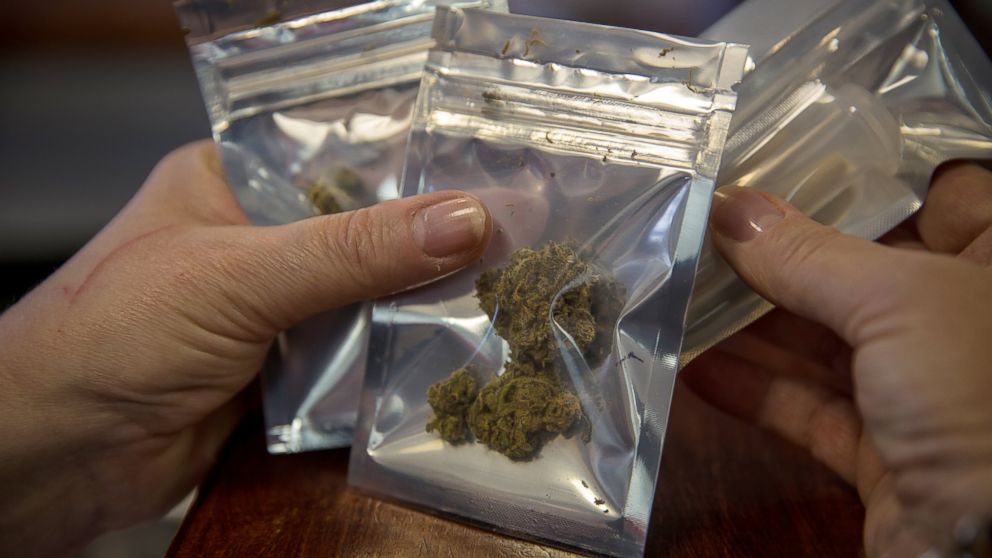
Medical marijuana is dispensed at the Takoma Wellness Center, Oct. 10, 2014, in Takoma Park, DC.

 PHOTO: Medical marijuana is dispensed at the Takoma Wellness Center, Oct. 10, 2014, in Takoma Park, DC.

Evelyn Hockstein/The Washington Post/Getty Images

ABC Health News  - Mar 18, 2015, 1:54 PM ET  -  By LIZ NEPORENT – Cross-Posted at Just One More Pet (JOMP)  and True Health Is True Wealth (THITW)

A new bill introduced in the Nevada state legislature earlier this week would allow owners to give their ailing pets medical marijuana. Many owners across the country said it’s about time, and that “pot for pets” should be legal everywhere.

Becky Flowers, a California ranch owner, said she gave her mare Phoenix regular doses of medical marijuana for several years to help ease the pain of a degenerative joint condition. The horse could barely walk due to extreme swelling in her front legs that traditional and herbal medications didn’t seem to help, Flowers said.

“She would lay there for days and she wouldn’t eat or drink,” Flowers told ABC News.

Flowers said she considered having the animal euthanized but decided as a last ditch effort to give her some of marijuana legally prescribed to her husband who is a paraplegic. In less than an hour, the horse was up and moving, Flowers said.  

PHOTO: Becky Flowers gave her horse Phoenix, right, medical marijuana to help ease the pain of a chronic joint condition.

PHOTO: Becky Flowers gave her horse Phoenix, right, medical marijuana to help ease the pain of a chronic joint condition.

Flowers began giving Phoenix about a tablespoon of medical marijuana in oil every day, she said, noting that the horse lived largely pain-free for two more years before dying in her late twenties. Since then, Flowers has given marijuana to some of her other horses and has recommended it to other horse owners as well.

Medical marijuana does show some promise for easing the pain and suffering in animals, but veterinarians and owners should proceed with caution, said Dr. Robert Silver, president of the veterinary botanical medical association.

“There needs to be a lot more research and education taking place before we introduce this to pets,” Silver said, who is a veterinarian in Colorado, a state where both medical and recreational marijuana are legal for people.

medical marijuana dogStudies show that dogs in particular react differently than humans to THC, one of marijuana’s active ingredients, Silver said. Because they have a high concentration of THC receptors in the back of their brains, they are susceptible to severe neurologic effects and toxic reactions, he added. States where medical or recreational use is legal have seen an increase in canine emergency room admissions associated with the drug, Silver said.

The American Veterinary Medical Association does not have an official stance on the use of medical marijuana with pets but suggests that vets make treatment decisions based on sound clinical judgment that stay in compliance with the law. They note that even in states where medical marijuana is legal, it is still a Class I narcotic under federal law which means vets are not legally allowed to prescribe it to their patients.

If passed, the Nevada law would allow animal owners to get marijuana for their pet if a veterinarian certifies the animal has an illness that might be helped by the drug. The proposal is in its earliest stages and faces numerous legislative hurdles before it could become law. It’s part of a larger bill that would refine the state’s existing medical marijuana law by clarifying penalties for drivers under the influence and allowing the resale of marijuana dispensaries.

**My question is how about Hemp CBD Oil, verses THC oils or marijuana. CBD Hemp Oil (HCHO) is obtained from select strains of CBD rich hemp grown legally worldwide. But always consult your veterinarian. 

Interestingly, cannabis smoking is associated with a 45% reduced risk of bladder cancer in humans and a 47-62% reduced rate of head and neck cancer, regardless of whether or not they had been infected with HPV.  And using hemp oils increases the survival success rate of treatments like chemotherapy and radiation by 25%. JOMP~

Veterinarian Administers Medical Marijuana To Dogs, Says It Works Wonders

More Dogs (and Cats) Getting High, Sick and Fat In States Where Marijuana Is Legal

Canada marijuana growers use wild bears to guard pot

Medical marijuana and the positive effects of hemp oil are a great breakthrough, help and blessing for many… humans and animals with a large variety of illnesses, including Cancer.  But widespread legal recreational marijuana use, perhaps not so much…

George Soros’ Latest Crusade: Legalizing Marijuana in the U.S.

THE HARMFUL EFFECTS OF MARIJUANA

Thursday, December 18, 2014

Cannabis Oil is a Highly Efficient Natural Cancer Cure - Natural News

(NaturalNews) Ever since the mid 70s, medical scientists have been well aware of the beneficial effects of cannabinoid compounds over cancerous cells. Thanks to modern science, over a dozen studies conducted during recent years have been able to partially reveal just how it works. Yet cannabis is still not endorsed by pharmaceutical companies as a cancer cure, and since it is not promoted through mainstream channels, very few people are aware of its benefits. Consequently, it is not sought after as an alternative to disfiguring chemotherapy and other harmful drugs.

Laboratory tests conducted in 2008 by a team of scientists formed as a joint research effort between Spain, France and Italy, and published in The Journal Of Clinical Investigation, showed that the active ingredient in marijuana, known as tetrahydrocannabinol or THC, can function as a cure for brain cancer by inducing human glioma cell death through stimulation of autophagy.
The study concluded that via the same biochemical process THC could terminate multiple types of cancers, affecting various cells in the body. Other studies have shown that cannabinoids may work by various mechanisms, including inhibiting cell growth, inducing cell death, and inhibiting tumor metastasis.

What is amazing is that while cannabinoids effectively target and kill cancerous cells, they do not affect healthy, normal cells and may actually protect them against cellular death. Moreover, cannabinoids are also researched for their pain-modulation and anti-inflammatory abilities as they bind to special receptors in the brain, much like opioid derivatives that are commonly prescribed today.

Further evidence to support the effects of cannabis extract on malignant cells comes from the real life experience of individuals who have successfully overcome cancer by using cannabis oil. Examples include a patient, who managed to completely cure his skin cancer by simply applying cannabis oil onto the affected areas of the skin, as well as another, who recovered from a severe head injury with the aid of hemp oil.

One of the cannabinoids that has displayed amazing medical properties is cannabidiol, or CBD - a non-psychoactive compound that is regarded by some as the medical discovery of the 21st century, and with good reason. Research indicates that CBD can relieve convulsions, reduce inflammation, lower anxiety and suppress nausea, while also inhibiting cancer development. In addition, CBD has exhibited neuroprotective properties, relieving symptoms of dystonia and proving just as effective as regular antipsychotics in the treatment of schizophrenia.

What stands out is that from the vast amount of research and data available, as well as the personal experiences of cancer survivors, is that no chemotherapy currently being used medically can match the non-toxic anti-carcinogenic and anti-tumorigenic effects of these natural plant compounds.

Sources for this article include:
http://safeaccess.ca/research/cancer.htm
http://www.jci.org/articles/view/37948
http://dotsub.com/media/fc4e051a-1709-4e63-8...
http://en.wikipedia.org/wiki/Cannabidiol

About the author:
Raw Michelle is a natural health blogger and researcher, sharing her passions with others, using the Internet as her medium. She discusses topics in a straight forward way in hopes to help people from all walks of life achieve optimal health and well-being. She has authored and published hundreds of articles on topics such as the raw food diet and green living in general.

Friday, February 21, 2014

Girl Scout pot club: Innovative Girl Scout sets up shop by Pot Dispensary

By Heather Levia: McDonald - Examiner – Originally Posted February 21, 2014 

Girl Scouts and pot? An odd pairing. But marijuana and munchies? No doubt a natural twosome. Even for a thirteen year old, the potential marketing goldmine of Girl Scout cookie sales paired with pot sales is hard to ignore.

According to the Huffington Post on Thursday, teenager Danielle Lei put on her brown Girl Scout vest, opened the legs of her card table, and set up shop Monday, directly outside of The Green Cross – a medical marijuana dispensary located on Mission Street in San Francisco.

How did Lei do? As you might imagine, it was a retail rager. The young Scout blew through her boxes – selling a whopping 117 boxes in two hours. The entrepreneurial Lei set a new standard of sales, thinking "outside the cookie box" by capitalizing on the ideal location and selling an average of one box per minute.

Proceeds from the sales benefited local charitable organizations.

Lei’s mother Carol said both Danielle and her sister have been selling cookies outside medical marijuana clinics before, and indicated that they always ask permission.

The Green Cross was completely on board; even employees at the pot shop came out to buy up their fave cookies.

"It's no secret that cannabis is a powerful appetite stimulant, so we knew this would be a very beneficial endeavor for the girls," Green Cross employee Holli Bert said. "It's all about location, and what better place to sell Girl Scout cookies than outside a medical cannabis collective?"

Critics however question the fact that the teen girls are partnering, as it were, with a commercial business that many condemn as somewhere between questionable and outright amoral.

Carol feels otherwise, and says this is a way for her children to learn about the difference between using the drug as a medicine compared to recreational use, which they do not agree with.

“You put it in terms that they may understand,” Carol Lei said. “I'm not condoning it. I'm not saying go out in the streets and take marijuana.”

Not all Girl Scout localities are supportive of the Lei’s business model.

Girls Scouts of Colorado recently denounced a photo of three girls selling cookies outside a marijuana clinic as nothing more than a Photoshop hoax.

“If you are wondering, we don't allow our Girl Scouts to sell cookies in front of marijuana shops or liquor stores/bars,” Girls Scouts of Colorado tweeted. 

But, it is happening… See Video Here

*And the big question here is… what are these parents teaching their children?  Making the sale is all important?  Not to mention the possible psychological impact on the kids…

Sunday, February 16, 2014

Mark Brunell: NFL needs to crack down on marijuana

Cannabis Science

Former NFL QB Says Mark Brunell: Weed Ruins Lives

Buffalo Bills v New York Jets

Getty Images

Posted by Michael David Smith on February 7, 2014, 8:01 PM EST at NBC Sports

As American attitudes toward marijuana change, the NFL is no different: Players have come out recently to say it’s time for the league to stop testing them for pot, and although NFL Commissioner Roger Goodell isn’t ready to go that far, Goodell did open the door to the possibility of players using marijuana for medicinal reasons.

But not everyone in and around the NFL is on board with relaxing rules against reefer. Former NFL quarterback Mark Brunell, now a commentator for ESPN, said on SportsCenter today that far from allowing players to smoke pot, the NFL needs to be cracking down on them.

“I believe it’s harmful,” Brunell said. “I believe it has a negative effect on not only NFL players but anybody that does it. . . . Testing should be increased.”

With some NFL players saying it’s easy to beat marijuana testing, Brunell said that proves the NFL has to make that testing more stringent.

“I think if you’re going to test for marijuana, it needs to be random, it needs to be often,” Brunell said. “It has to be stricter, just like the performance-enhancing drug testing is going to be strict.”

Most of the players who have spoken about marijuana testing have taken the opposite view. But Brunell’s view may be the majority view among NFL owners. Which means the players have an uphill battle if they want to see the rules of drug testing change.

Marijuana as medicine has become such a hot topic for the NFL that even ESPN is talking about it these days. In the wake of current defensive backs Antonio Cromartie’s and Ryan Clark’s comments that weed shouldn’t be tested for and can help players cope with pain/stress, ESPN asked former NFL QB and current analyst Mark Brunell for his take on the dank.

Brunell, who works for ESPN after losing $50 million in bad investments, made comments, maintaining that the NFL should increase its testing of cannabis (randomly and all the time) because the plant is a threat to society.

Thursday, August 29, 2013

5-year-old boy will receive medical marijuana to treat seizures

MarijuanaRx

Associated Press: An Arizona family plans to give medical marijuana to their 5-year-old son to treat his seizures caused by a genetic brain defect.

Zander Welton had his first seizure when he was 9 months old and now has them weekly.

His parents, who live in Mesa, say the cortical dysplasia, coupled with autism, keeps Zander from any real form of communication. He squeals and grunts, and on occasion, will bring them a cup to indicate that he’s thirsty, but otherwise doesn’t use hand gestures or form words.

After hearing about some disabled kids thriving thanks to medical marijuana, Jacob and Jennifer Welton have started the process of making Zander a legal cardholder.

The Weltons hope to start giving their son the marijuana oil drops by next week, using a syringe to pinpoint the exact dosage that works.

“If this finally works for Zander and I finally get to meet who he is, that would be amazing.

Because I don’t know who he is. He’s just a little boy that’s trapped in this craziness,” Jennifer Welton told Phoenix TV station KNXV.

The Weltons have two other sons and Zander is the second oldest. He’s undergone two brain surgeries, a third surgery for shock therapy and has been administered a series of trial and error prescription drugs.

His latest prescription made minor improvements with his seizures, but Jennifer Welton said the medication made her son more combative.

Zander’s mobility also is limited and he often reverts back to crawling after a bad seizure.

For medical marijuana treatments, the Weltons need two doctors to sign off on it. The caregiver also needs to be approved for a medical marijuana caregiver’s card and that person has to live with the recipient.

The couple connected with a naturopathic doctor and started the process to administer legal pot, learning Tuesday that their applications have been approved.

Medical marijuana isn’t covered by insurance. The state currently picks up the $5,000 a month tab for Zander’s prescriptions.

The CBD oil will cost about $300 a week out-of-pocket. The Weltons have been reaching out to friends and family for donations.

Friday, May 3, 2013

Progressives Now Want “Psychedelic Medicine”

psychedelic_medicine

By: Cliff Kincaid -  Accuracy in Media

So-called “medical marijuana” apparently doesn’t cure all of their ailments. Now the progressives want easy access to “psychedelic medicine,” including LSD and Ecstasy.

Working with the George Soros-funded marijuana movement, which has achieved enormous “progress” in the various states, especially Colorado, a group called the Multidisciplinary Association for Psychedelic Studies (MAPS) is demanding acceptance of “psychedelics,” or mind-altering drugs that create hallucinations, to be accepted as “legal prescription drugs.”

Don’t laugh. Powerful and wealthy supporters of Barack Obama such as the late Ashawna Hailey, a transgender woman, have been among the noted backers of MAPS. She left her fortune to a slew of left-wing groups, including MAPS, Code Pink, and the Soros-funded Drug Policy Alliance.

A report on a MAPS-sponsored conference has just appeared on a left-wing website called AlterNet under the uplifting headline, “The Enormous Promise of Psychedelics for Sustaining Health, Happiness and Sanity.” The conference was actually titled, “Psychedelic Science 2013,” to give respectability to the use of illegal drugs. The Drug Policy Alliance was a “promotional partner,” along with such groups as the Psychedelic Society of San Francisco.

One presentation, “Communicating the Unspeakable: Linguistic Phenomena in the Psychedelic Sphere,” was about drugs which can “enable a broad and paradoxical spectrum of linguistic phenomena,” including “interior dialogues with the Other, whether framed as the voice of the Logos, an alien communication, or communion with ancestors and spirits…”

Bringing the subject back down to earth, their current project is to promote “the healing potential of MDMA-assisted psychotherapy on psychological and emotional damage caused by sexual assault, war, violent crime, and other traumas.” MDMA is another word for Ecstasy, a synthetic drug described as having amphetamine-like and hallucinogenic properties.

The promotion of an illegal drug for its alleged “medicinal” properties is the same scam used to set the stage for the legalization of marijuana in such states as Colorado, where “medical marijuana” is already out of control. Three people were shot during the 4/20 marijuana celebration in Denver.

Don’t think MAPS doesn’t have its friends on Capitol Hill. When the marijuana movement was taking off, then-Massachusetts Democratic Senators Edward Kennedy and John Kerry, in 2007, sent a letter to the Drug Enforcement Administration (DEA) urging the agency to approve a “medical marijuana production facility” that was to be under the sponsorship of MAPS. Later, 45 members of Congress signed a similar letter.

MAPS has now moved on to the “psychedelics.”

Although MDMA is classified as a drug with “high abuse potential and no recognized medicinal use,” CNN has favorably reported on the use of MDMA to treat post-traumatic stress disorder (PTSD) and quotes MAPS founder Rick Doblin as saying he’s working with the Defense Department in an effort to use the drug on active-duty troops. CNN’s Dr. Sanjay Gupta, who was offered the job as surgeon general of the United States by President Obama, even narrated a story about a woman claiming relief from an experimental PTSD treatment using the drug MDMA.

Shawn Hailey, also known as Ashawna, supported Obama’s campaign for president and was a member of the MAPS Board of Directors. She passed away in 2011 and left $5.5 million to the organization. She made her money through high-tech companies in Silicon Valley and was a co-founder of Meta-Software Corporation, which was sold to Avanti Corporation in 1996.

She was also a strong supporter of the Marijuana Policy Project, the Soros-backed Drug Policy Alliance, Code Pink and the American Civil Liberties Union.

Actually, “she” was once a “he.” Shawn Hailey was born a man, but changed her gender to female and her name to Ashawna.

In total, she left over $10 million to the liberal-left. The Marijuana Policy Project used some of the money she left them to promote passage last November of the Colorado measure to legalize marijuana. I have previously written about all of the damage that marijuana-on-demand is already causing the people of Colorado.

A search of Federal Election Commission (FEC) records shows that under the name “Shawn Hailey,” she donated $20,000 to the Democratic National Committee (DNC) in 2008, $4,600 to Obama for president in 2007 and 2008, and $23,000 to the Obama Victory Fund in 2007. Another $30,000 went to the DNC in 2009 under the name “Ashawna Hailey.”

A photo of Hailey and Obama is on her memorial site. “Whether it was a morning board meeting, a lunch at Taco Bravo, a dinner with President Obama, or an all night dance, the sparkle of Ashawna will be missed and cherished by us all,” it says.

MAPS, the recipient of most of her largesse, sponsored a conference in 1990 featuring Timothy Leary, identified in literature from the event as the “psychedelic research pioneer,” but who was actually a charlatan who devoted much of his life to glamorizing LSD, marijuana, and other drugs. He eventually went to prison on illegal drug charges.

MAPS founder and executive director Rick Doblin once described himself to High Times magazine as an “LSD therapist,” after “having taken LSD rather often.” He took Leary’s advice to “turn on, tune in, drop out,” before going back to college and eventually starting MAPS in 1986. “His undergraduate thesis at New College of Florida was a 25-year follow-up to the classic Good Friday Experiment, which evaluated the potential of psychedelic drugs to catalyze religious experiences,” his bio says. He then completed a Ph.D. at Harvard’s John F. Kennedy School of Government.

Indeed, according to a story about the “Good Friday Experiment,” which occurred in 1962, participants took hallucinogenic drugs and then attended a Good Friday worship service. They were later evaluated as to whether the drugs could produce “pseudo-mystical states.”

Doblin’s bio goes on, “His professional goal is to help develop legal contexts for the beneficial uses of psychedelics and marijuana, primarily as prescription medicines but also for personal growth for otherwise healthy people…”

The 1960s “New Left,” which became the Weathermen and the Weather Underground, was an outgrowth of this approach. Members of the Weather Underground were involved in arranging the escape from prison of Timothy Leary.

The book, The Harvard Psychedelic Club, discusses how the escape occurred and members of the Weather Underground “rendezvoused with the fugitive,” kept him hidden, then gave him a disguise and a false identity. “Timothy Leary was now ‘William John McNellis,’ a salesman from Salt Lake City,” the author writes. “After hiding out for a week in a farmhouse near Redding, California Leary made his way down to Utah to meet leaders of the Weather Underground, including Bill Ayers and his wife, Bernadette [sic] Dohrn. They created ‘William McNellis’ with a forged birth certificate, Social Security card, and hunting license-paper that required no preexisting photo.”

After his escape, Leary had released a message through Bernardine Dohrn’s sister urging communist revolutionaries to “turn on” and continue a campaign of violence and terrorism.

Bernardine Dohrn, who praised the drug-crazed Charles Manson gang killers, herself issued a statement on September 15, 1970, saying:

“Dr. Leary was being held against his will and against the will of millions of kids in this country. He was a political prisoner, captured for the work he did in helping all of us begin the task of creating a new culture on the barren wasteland that has been imposed on this country by Democrats, Republicans, Capitalists and creeps.

“LSD and grass, like the herbs and cactus and mushrooms of the American Indians and countless civilizations that have existed on this planet, will help us make a future world where it will be possible to live in peace.

“Now we are at war.”

The Senate Internal Security Subcommittee decided to look into this matter because of the implications for national and internal security and examined evidence that subversive groups played a significant role in the spread of the drug epidemic—both as propagandists and as traffickers.

The subtitle of the Harvard Psychedelic Club refers to how Timothy Leary and his collaborators “ushered in a New Age for America.” It is coming to pass under Obama, thanks to his transgendered backer.

Cliff Kincaid is the Director of the AIM Center for Investigative Journalism and can be contacted at cliff.kincaid@aim.org.

Monday, December 10, 2012

SOROS REMAKES AMERICA INTO NARCO NATION

By Cliff Kincaid -  December 7, 2012  - Renew America – cross-posted at AskMarion and h/t to NewsWithViews.com and Liana Smith

As more states embrace legalization of marijuana—a pet cause of George Soros for decades—the British publication The Independent has published a groundbreaking series of articles by journalist Patrick Cockburn on how his son went insane smoking the drug.

Cockburn and his son Henry, who was treated for psychosis and partially recovered, have written an article in which Patrick Cockburn is quoted as saying his son played Russian roulette with cannabis “and lost.”

Henry, who smoked marijuana daily for seven years and was in mental hospitals for about eight years as a result, says, “When I reached a mental hospital, called St Martin’s, I spent three hours walking around the lunch tables trying to listen to my shoes. I thought my shoes were talking to me.”

Patrick Cockburn spent months speaking to the experts in the field and reports on the substantial evidence linking sustained marijuana use with mental illness. One expert, Sir William Paton, professor of pharmacology at Oxford University, reveals “that even limited social use of cannabis could precipitate schizophrenia in people who previously had no psychological problems,” and noted that “smoking a single joint could induce schizophrenia-like symptoms such as hallucinations, paranoia and fragmented thought processes.”

“Three-quarters of consumers may take cannabis with no ill effect but the remaining quarter, the genetically vulnerable, play Russian roulette,” Cockburn says.

The added significance of the series of articles by Patrick Cockburn is that he is a left-wing media figure—the son of Marxist author Claud Cockburn—and might be predisposed to believe that marijuana is, as the liberal media constantly tell us, a relatively harmless drug or a substance with “medical” qualities. But he knows the harm it causes firsthand through what it did to his son.

AIM noted back in 2004, in a special report on George Soros, the main financier behind the drug legalization movement, that although marijuana is depicted by the media as a “soft” drug, it has “extremely negative consequences.” The book, Marijuana and Madness, cites studies and evidence from around the world, some of it going back 40 years, linking the use of marijuana to mental illnesses, including schizophrenia and psychosis.

In a previous article for the left-wing publication Counterpunch, Patrick Cockburn took issue with a report from the Global Commission on Drug Policy which played down the dangers associated with marijuana. “They fail to make clear that for people genetically susceptible to psychosis the risks involved in taking cannabis may be lethally high,” he noted. “Cigarettes and alcohol, whatever harm they cause, do not, at a young age, send you mad.”

The Global Commission on Drug Policy is funded by the Open Society Institute of George Soros.

In this country, the case of Pentagon shooter John Patrick Bedell stands out as a case study of the harmful effects of the drug. Bedell, who shot and wounded two guards at the Pentagon in March of 2010, was a psychotic pothead who hated a government that he believed was standing in the way of his desire to use, grow and glorify marijuana. He virtually worshipped the drug. “I’m a cannabis enthusiast,” he proclaimed.

John Podesta, head of the Soros-funded Center for American Progress (CAP), had suggested on ABC News that the taxing and legalization of marijuana on a national basis could be a way to pay for Obama’s health care plan.

“The pro-cannabis lobby says that the so-called ‘war on drugs’ has failed and legalization or regulation should be tried, though critics argue that no government would ever license a drug that sends at least two percent of its consumers insane,” Cockburn reports.

In the first of Cockburn’s articles, “Is this the ‘tobacco moment’ for cannabis?,” the veteran foreign correspondent suggests a connection between marijuana use and psychotic episodes that is comparable to the scientific recognition that tobacco smoking causes lung cancer and other illnesses.

In addition to the dangers of mental illness, Cockburn notes that a major study finds a drop in intelligence associated with heavy marijuana use.

Cockburn’s articles on the link between marijuana and mental illness become increasingly relevant as the public in the U.S. comes to grips with the fact that voters in the states of Washington and Colorado on November 6 passed ballot measures legalizing marijuana, in violation of federal law. Democratic Rep. Diana DeGette has introduced federal legalization that would amend the Controlled Substances Act to assert that federal law does not preempt state laws.

In response, a group called Save Our Society From Drugs, has said, “Many concerned citizens, community groups, law enforcement agencies and elected officials are concerned how these laws will impact their communities, states and the nation, and are urging the Obama Administration to take action by clearly communicating and enforcing federal drug policies.”

The group added, “Keeping marijuana illegal is a treaty obligation under the 1961 International Convention on Narcotic Drugs and is supported by the two other Conventions: the 1971 Convention on Psychotropic Drugs and the 1988 Anti-Trafficking Convention. Allowing state marijuana laws to supersede federal drug laws violates our treaty obligations.”

It said, “Marijuana legalization will significantly impact our environment, school scores and drop-out rates, accident and vehicle fatality rates, employee productivity, and healthcare and treatment costs.”

But the Soros-funded Drug Policy Alliance is rallying behind the DeGette bill, saying it would “end federal marijuana prohibition and allow states to set their own marijuana policy without federal interference.”

Cliff Kincaid

Monday, February 22, 2010

Marijuana use by seniors goes up as boomers age

By MATT SEDENSKY, Associated Press Writer 59 mins ago

Perry Parks, 67,  takes a puff of marijuana at his home in Rockingham, N.C.,MIAMI – In her 88 years, Florence Siegel has learned how to relax: A glass of red wine. A crisp copy of The New York Times, if she can wrest it from her husband. Some classical music, preferably Bach. And every night like clockwork, she lifts a pipe to her lips and smokes marijuana.

Long a fixture among young people, use of the country's most popular illicit drug is now growing among the AARP set, as the massive generation of baby boomers who came of age in the 1960s and '70s grows older.

The number of people aged 50 and older reporting marijuana use in the prior year went up from 1.9 percent to 2.9 percent from 2002 to 2008, according to surveys from the Substance Abuse and Mental Health Services Administration.

The rise was most dramatic among 55- to 59-year-olds, whose reported marijuana use more than tripled from 1.6 percent in 2002 to 5.1 percent.

Observers expect further increases as 78 million boomers born between 1945 and 1964 age. For many boomers, the drug never held the stigma it did for previous generations, and they tried it decades ago.

Some have used it ever since, while others are revisiting the habit in retirement, either for recreation or as a way to cope with the aches and pains of aging.

Siegel walks with a cane and has arthritis in her back and legs. She finds marijuana has helped her sleep better than pills ever did. And she can't figure out why everyone her age isn't sharing a joint, too.

"They're missing a lot of fun and a lot of relief," she said.

Politically, advocates for legalizing marijuana say the number of older users could represent an important shift in their decades-long push to change the laws.

"For the longest time, our political opponents were older Americans who were not familiar with marijuana and had lived through the 'Reefer Madness' mentality and they considered marijuana a very dangerous drug," saidKeith Stroup, the founder and lawyer of NORML, a marijuana advocacy group.

"Now, whether they resume the habit of smoking or whether they simply understand that it's no big deal and that it shouldn't be a crime, in large numbers they're on our side of the issue."

Each night, 66-year-old Stroup says he sits down to the evening news, pours himself a glass of wine and rolls a joint. He's used the drug since he was a freshman at Georgetown, but many older adults are revisiting marijuana after years away.

"The kids are grown, they're out of school, you've got time on your hands and frankly it's a time when you can really enjoy marijuana," Stroup said. "Food tastes better, music sounds better, sex is more enjoyable."

The drug is credited with relieving many problems of aging: aches and pains, glaucoma, macular degeneration, and so on. Patients in 14 states enjoy medical marijuana laws, but those elsewhere buy or grow the drug illegally to ease their conditions.

Among them is Perry Parks, 67, of Rockingham, N.C., a retired Army pilot who suffered crippling pain from degenerative disc disease and arthritis. He had tried all sorts of drugs, from Vioxx to epidural steroids, but found little success. About two years ago he turned to marijuana, which he first had tried in college, and was amazed how well it worked for the pain.

"I realized I could get by without the narcotics," Parks said, referring to prescription painkillers. "I am essentially pain free."

But there's also the risk that health problems already faced by older people can be exacerbated by regular marijuana use.

Older users could be at risk for falls if they become dizzy, smoking it increases the risk of heart disease and it can cause cognitive impairment, said Dr. William Dale, chief of geriatrics and palliative medicine at the University of Chicago Medical Center.

He said he'd caution against using it even if a patient cites benefits.

"There are other better ways to achieve the same effects," he said.

Pete Delany, director of applied studies at the Substance Abuse and Mental Health Services Administration, said boomers' drug use defied stereotypes, but is important to address.

"When you think about people who are 50 and older you don't generally think of them as using illicit drugs — the occasional Hunter Thompson or the kind of hippie dippie guy that gets a lot of press maybe," he said. "As a nation, it's important to us to say, 'It's not just young people using drugs it's older people using drugs.'"

In conversations, older marijuana users often say they smoke in less social settings than when they were younger, frequently preferring to enjoy the drug privately. They say the quality (and price) of the drug has increased substantially since their youth and they aren't as paranoid about using it.

Dennis Day, a 61-year-old attorney in Columbus, Ohio, said when he used to get high, he wore dark glasses to disguise his red eyes, feared talking to people on the street and worried about encountering police. With age, he says, any drawbacks to the drug have disappeared.

"My eyes no longer turn red, I no longer get the munchies," Day said. "The primary drawbacks to me now are legal."

Siegel bucks the trend as someone who was well into her 50s before she tried pot for the first time. She can muster only one frustration with the drug.

"I never learned how to roll a joint," she said. "It's just a big nuisance. It's much easier to fill a pipe.

I am sitting here laughing at this article… Duh… Are any of us surprised?? The boomers were the ‘loadie generation’… hippies and flower children now grown old. They now have aches and pains as well as some serious illnesses, money challenges they weren’t counting on and if ObamaCare passes they probably figure if they are loaded all the time, they might not notice when some government “death” panel headed up by the likes of a Nancy Pelosi decides for them that it is time for them to take their last toke… ah breathe… ;-) THISTW~