Tuesday, July 9, 2013

Female inmates sterilized in California prisons without approval: report

A guard tower looms over the fence surrounding the new California Correctional Health Care Facility in Stockton, Calif., on Tuesday, June 25, 2013. The $839 million facility will treat up to 1,720 patients in need of long-term care, freeing up staff and treatment space at the state's 33 adult prisons. (AP Photo/Rich Pedroncelli)Washington Times: A report by the Center for Investigative Reporting has found that doctors working at the California Department of Corrections and Rehabilitation sterilized nearly 150 female prisoners between 2006 and 2010 without required state approvals.

“At least 148 women received tubal ligations in violation of prison rules during those five years — and there are perhaps 100 more dating back to the late 1990s,” the report said.

Doctors under contract at the California Institution for Women in Corona and Valley State Prison for Women in Chowchilla targeted prisoners deemed likely to return to prison in the future, the report said.

Crystal Nguyen, a former Valley State Prison inmate who worked in the prison’s infirmary in 2007, said she often overheard staff asking inmates who were repeat offenders to agree to be sterilized.

“I was like, ‘Oh my God, that’s not right,’” she said during an interview with CIR. “Do they think they’re animals, and they don’t want them to breed anymore?”

The top medical manager at Valley State Prison from 2005 to 2008 characterized the surgeries as an empowerment issue for female prisoners, providing them the same options as women on the outside, CIR reported.

Psychologist Daun Martin claimed that some women in particularly desperate situations could commit crimes so they could return to prison for better prenatal care, thus taking advantage of the system.

“Do I criticize those women for manipulating the system because they’re pregnant? Absolutely not,” he told CIR. “But I don’t think it should happen. And I’d like to find ways to decrease that.”

Mr. Martin denied approving the surgeries, but at least 60 tubal ligations were performed at Valley State while he was in charge.

Mr. Martin’s colleague, Dr. Jacqueline Long, declined to discuss the matter.

Since 1994, the surgeries have required approval from top medical officials in Sacramento on a case-by-case basis, but no tubal ligation requests have come before the health care committee responsible for approving such surgeries, Dr. Ricki Barnett, who tracks medical services and costs for the California Prison Health Care Receivership Corp., told CIR.

“Everybody was operating on the fact that this was a perfectly reasonable thing to do,” she recalled.

Monday, July 8, 2013

Forum: Do you agree with recent legislation in several states limiting late term abortions?

Watcher of Weasels/Forum:  Every week on Monday morning, the Council and our invited guests weigh in at the Watcher’s Forum, short takes on a major issue of the day.

As you may know, a number of states including Texas have placed major restrictions on abortions performed after 20 weeks. This week’s question: Do you agree with recent legislation in several states limiting late term abortions?

Rhymes With Right: I support these restrictions wholeheartedly. After all, they are consistent with Roe and its rationale that the state acquires a stronger right to regulate abortion the closer the child is to viability — because that child is undoubtedly a living human being that the state can and should protect.

Now some may point out Roe uses a trimester system for determining when a state may regulate abortion. Unfortunately for supporters of abortion, that logic was not based upon constitutional law, but upon the state of medical science in 1973. But over the last four decades, we have seen advances that make 20-22 weeks the point at which a child in utero becomes viable. As such, the courts are going to have to grapple with the reality that the bad law found in Roe is also bad science as well. As one of my professors (an ACLU board member at the time) agreed with me back during the Reagan years, the reliance of the Blackmun controlling opinion in Roe on medicine rather than the constitution makes Roe a decision inevitably on a collision course with itself. Well, today we have reached the point of collision.

So yes, these laws (including those in conservative hotbeds like New York, Rhode Island and Massachusetts) will be challenged and some of them may be overturned at the District or Circuit Court levels. That will put them on course for the Supreme Court — which will have three choices. What they will not do is overturn the notion of abortion as a legal right — doing so would upset too many other cases because they depend upon the reasoning of Roe. So while the morally and constitutionally correct thing would be to strike down Roe as bad law, that won’t happen.They will either have to constitutionalize medicine as it stood in 1973, remove all restrictions from abortion, or (and this is the best choice) declare that advances in medicine have changed the time and manner for regulating abortion. What the Supreme Court will do will be dependent upon the whims of Justice Kennedy and any changes that take place in the court’s lineup between now and some future decision day in these cases.

Liberty’s Spirit: I have to say, along with 80% of the USA, that third trimester abortions are infanticide. 60% of society also thinks that second trimester abortions are infanticide as well. Science has proven that babies feel pain, suck their thumbs, play, burp, hiccup, respond to music and even their mother’s voices by the end of the 5th month of gestation. It is ignorant of the pro-abortion groups to continue to simply say that the only issue here is the right of the mother to do what she wants with her body. They fail to acknowledge that by the end of the second trimester there are two viable human lives at stake and that is exactly what makes this issue such a moral and ethical conundrum. Additionally the pro-abortionists fail to acknowledge that NO right is absolute. It is always a balancing act between competing interests. The same should be for abortion; the right(s) of the mother to life versus the right of a viable baby to be born.

I do not think that restrictions on late term abortions are necessarily good or bad. Quite frankly I think it depends on exactly what the exceptions happen to be. There are terrible genetic anomalies, which cannot be seen until after the 5th month of gestation. Sometimes there are such painful choices to be made during a pregnancy that it is simply heartrendering and these decision must be private. But for some advocates, on both sides of the issues, in order to get their own way, they like to make these issues simple but these issues are anything but simple or always clear.

Not all babies develop normally and at times terrible tragedies occur. There is no point in a baby developing without a brain or kidneys to be born. If they were born to what end? What about genetic testing for diseases like tay-sachs? Are the results of these tests known before the end of the 5th month? What is the point of allowing such horrible suffering to occur? What is the point of such a terrible death? If there is a more humane way for all to end the suffering then so be it.

But there are also additional issues with unfettered abortion. Gendercide, and the disrespect of the right to life of the disabled. While gendercide is illegal in the west, pro-abortion groups do not denounce it. Babies diagnosed with Down syndrome have a 98% chance of being aborted. Basically the disabled are thought to be less worthy of life. Doctors also think they know everything about the life of the disabled but they have been proven terribly wrong over the past decades too. Gendercide will lead to economic instability and procreative issues for future generations. Dehumanizing the disabled has immediate consequences for human society. Only the Nazis in modern history felt the disabled unworthy of life.

A major part of the problem with abortion is that to kill we need to see our victim as not human. The pro-abortion groups try to tell society that the child growing in the womb is not a person, or that the disabled are less entitled to life, or that its OK to decide you don’t want to give birth to a girl. The reality is that this attitude reaches down into the heart of humanity, and characterizes a civilization. To dehumanize the unborn, to make this an easy question with an easy answer, is to dehumanize all of us. Is this the legacy that we want to leave our posterity?

JoshuaPundit: I’m hardly surprised that the ‘right’ to murder a baby over 20 weeks old who was conceived via consensual sex, poses no danger to the mother’s health and is developed enough to feel pain and and shock at being ripped out of the womb would not be thought of as ‘radical’. After all, look the proponent of infanticide whom the American people not only voted in as president but actually re-elected.His stance on abortion is not much different than Dr. Gosnell’s except he favored doing it in somewhat cleaner surroundings.

There’s no question these new laws will be challenged, and I’m not certain they’ll survive – we’ll have to see. But the fact that something like this would even be controversial at all, let alone our embrace of politicians that regard something like this as controversial and make political capital out of it  is..unholy. I can’t think of any other word for it. And I am by no means a hardliner who wants to see all abortion criminalized.

The Glittering Eye: Back when the Supreme Court initially decided Roe v. Wade, my immediate reaction was that the viability approach that the Court had relied on would result in abortion activists waging a losing war with technology. The recent controversy over a law limiting abortions after 20 weeks in Texas is just the most recent battle in that war.

I find it really fascinating that the Texas legislature’s position, actually a pretty moderate one and consistent not only with the laws of most other states but quite in alignment with public opinion nationally, is being portrayed by a compliant press as a radical position while a radical position, the one being taken by abortion activists and oddly inconsistent with the actual law of the land which has never held an unlimited right to abortion, is being portrayed as moderate and commonsensical.

The Independent Sentinel: I do agree with limiting late-term abortions. After seeing sonograms, I don’t know why everyone doesn’t agree with me. Babies are viable at 20 weeks and that should be the cutoff with the proviso that exceptions be allowed in cases of rape, incest or if a woman’s life is in danger.

For a woman who can’t make up her mind by 20 weeks, why should we justify abortion so she can rectify her “mistake?”

I am very tired of women calling their babies fetuses when they want to kill them but babies when they are looking forward to giving birth. It’s rationalization run amok.

Why did we bother prosecuting Kermit Gosnell if we are going to allow the murder of babies up to the moment-of-birth? What’s the difference between the two really?

We treat animals better in this country. Can you imagine how crazed animal lovers would be if we said that in order to reduce the dog & cat population, we were going to perform a partial-birth abortion on as many as possible. A partial-birth abortion, which is the means by which doctors abort late-term babies, requires the person performing the abortion to randomly pull out the baby in parts. It’s savage and we wouldn’t do it to cats & dogs.

While several states are limiting late-term abortions, we have governors like Andrew Cuomo of New York who wants abortion to the moment-of-birth enshrined in the state constitution as a civil right for political expediency.

The trend of limiting late-term abortions has peaked. Too many women believe they have the right to kill any baby in their womb because it’s their body. Unfortunately, a lot of men are only too willing to go along with them.

GrEaT sAtAn”S gIrLfRiEnD: Uh, any “bortions after 20 weeks seems like baby killing… not Choice.

Well, there you have it.

Related: 

Late Term Abortion Supporters In Texas Chant "Hail Satan!"  Late Term Abortion Supporters In Texas Chant "Hail Satan!" 

Rick Perry:  Late-term abortion ban “is going to pass”

HORRIFYING: Hidden Camera Catches NYC abortion worker telling woman to “flush it” if baby is born alive 

Planned Parenthood’s Roots

Abortion Survivor Blasts Obama

The Negro Project 

Video:  Margaret Sanger

Abortion, Margaret Sanger and Eugenics

Obama’s 5 Most Controversial Statements About Abortion and ‘Women’s Rights’ During His Planned Parenthood Speech  -  A portion of the above text comes from the White House’s official transcript of the speech. This story has been updated.

The President of the United States Asks God to Bless an Abortion Factory 

Philadelphia DA calls abortion doctor Kermit Gosnell a ‘monster’ after he cuts deal for life in prison without parole or right to appeal 

Startling ruling in Gosnell abortion trial

Networks Give Rutgers Scandal 41 Minutes, Gosnell Abortion Horrors ‘0’ 

Degradation of cultural standards, religion, tradition, and moral decency are always at the heart of cultural decline…

Tiny Baby

Protecting Babies Who Survive Abortions

What do Beethoven, Justin Bieber and Tim Tebow Have in Common?

Saturday, July 6, 2013

House Launches Investigation Into Obama’s Blatant Political and Illegal Delay of ObamaCare

Well folks… we are being played again!!

JoshuaPundit: With everything else that's going on, this hasn't gotten as much notice as it should. Even the drones at CBS can't conceal what a trainwreck this is. And now the President is simply manipulating things to move past the 2014 midterms, and not even the Obama Media can avoid it.

Oh, one more thing...it's totally illegal.The law does not allow any discretion whatsoever in its timetables. The President is simply taking unprecedented powers - again- while the media covers for him and the Republicans in the House let another opportunity go by.

The truth of the matter is that ObamaCare is truly a poorly thought out piece of legislation. That's because it was shoved through in a quasi-legal fashion using the reconciliation process reserved for budget matters to avoid having to bring the House bill to a confirming vote in the senate after Scott Brown was elected in Massachusetts.

The individual provisions of ObamaCare, the taxes, the fines, the obscene diktats - still remain and will kick in 2014. After the midterms, in 2015, you will indeed see massive layoffs and workers thrown out of their company health plans to be forced into ObamaCare health exchanges...which are still in the process of being defined!

One thing we already know is that a minimum coverage Bronze level policy will cost $20,000 per year for a family of five, that rationing will be the new normal and that long waits to see a doctor if you're even allowed to have a procedure will be standard. And amnestia? Any bill that provides amnesty for the 11 to 12 million illegal aliens now in the U.S. and gives them access to Obama Care (and it's difficult to see how they can or should be excluded)is going to exacerbate these problems.

Needless to say, the Leftist elites from President Obama on down who lied to you aren't going to be faced with this choice...they have their own plan that covers themselves and their families that's far cheaper, better and more inclusive.

I agree with talk show host Mark Levin here. Instead of allowing the Prevaricator-in chief to get away with this, what if Boehner(or hopefully someone more articulate) went on television and simply told the American people that they were shutting down the government for a week or however long it takes to slash the money going into ObamaCare to protect their healthcare, to keep their premiums from going up, to allow their employer to keep from laying them off or make them switch to part time work. That President Obama was acting illegally to try and shove through a poorly thought out and highly damaging law, and that the House, with the power of the purse was going to act for the benefit of all Americans by exercising this oversight.

As a matter of fact, the House could have stopped ObamaCare or any of this presidents other serial abuses of power at any time simply by refusing to fund them. But that would have taken courage and  principle.

How long, O Lord?’

Well low and behold… Speaker Boehner with a print out of the ObamaCare Bill… and still growing at his side actually did step up and speak out… just not vehemently enough:

Boehner wi ObamaCare Regulations Thus Far

WASHINGTON, DC – MAY 16: Speaker of the House John Boehner (R-OH) stands next to a printed version of the Patient Protection and Affordable Care Act, or Obamacare, during a news conference on Capitol Hill May 16, 2013 in Washington, DC. On top of calling for the repeal of Obamacare, Boehner fielded questions from reporters about the Obama Administrations’ subpoena of AP phone records, the IRS scrutiny of conservative political groups’ applications for tax exemption and other issues. Credit: Getty Images

WASHINGTON (TheBlaze/AP) — Republicans finally seized upon the administration’s abrupt delay of the employer mandate in the health care law as fresh evidence that President Barack Obama’s signature domestic policy is unworkable and should be repealed, an argument that energizes the party base ahead of 2014 congressional elections. 58% of Americans now want ObamaCare repealed in its entirety.

House Speaker John Boehner (R-Ohio) said the administration’s unexpected postponement of a key provision designed to insure more Americans was an admission that the 2010 law is unfeasible. Republicans on the House Energy and Commerce’s oversight panel embarked on an investigation of the decision, seeking documents from the Treasury and the Health and Human Services departments.

“House Energy and Commerce Committee leaders today wrote to Treasury Secretary Jack Lew, and Health and Human Services (HHS) Secretary Kathleen Sebelius, requesting documents and information regarding the administration’s decision to delay full implementation of the health care law’s employer mandate for one year. The Oversight and Investigations Subcommittee, chaired by Rep. Tim Murphy (R-PA), has held a series of hearings on the president’s health care law and will examine the administration’s delay of the employer mandate in the coming weeks,” read a statement from House Republicans.

But the White House’s willingness to respond to the concerns of business – and avoid the specter of job layoffs due to the unpopular health care law – spares Democrats one political headache in next year’s races.

“The best delay for Obamacare is a permanent one,” House Majority Leader Eric Cantor (R-Va.) said Wednesday, hours after the administration announced a one-year delay in requiring businesses with 50 or more employees to provide health coverage for their workers or pay a penalty.

Success in midterm elections depends in large part on turning out the party’s core voters, and Republicans see the latest twist as an opportunity to further vilify the health care law and ignite a GOP base already strongly opposed to Obama’s overhaul. GOP members of Congress pounced on the administration’s decision to make a point they hope will resonate with voters in their states.

“I’ve heard from countless employers in Maine who say that the onerous penalties and provisions in Obamacare provide perverse and powerful incentives to not hire new workers or to cut back on the hours that their employees are allowed to work,” said Senator Susan Collins, who faces re-election next year.

In their strategy for next year’s elections, Republicans were determined to focus on how medium and large businesses would respond to the law’s requirement and the possibility that would translate into job losses. The GOP was ready to place the blame on Democrats who voted for the law if companies had to lay off workers.

The one-year delay to January 2015 largely erases that aspect of the health care criticism in the midterm-election year.

Ken Hoagland, chairman of the conservative Restore America’s Voice and a fierce opponent of the law, said it spares House and Senate Democrats who voted for the law.

“Pushing back the economic damage of Obamacare past the next election won’t change the reality of harm to employees or to the overall economy,” Hoagland said in an interview. “It just seeks to protect those responsible for the legislation.”

Democrats sought to cast the issue as the administration listening to the business community.

“The administration has demonstrated its commitment to implement the Affordable Care Act with increased flexibility for the 4 percent of America’s businesses impacted by the employer responsibility requirement,” House Democratic leader Nancy Pelosi said in a statement Wednesday.

Pelosi argued that a significant majority of businesses already provide health insurance to their employees. The California lawmaker who was instrumental in ensuring the law’s passage when she was speaker of the House insisted that Americans will soon benefit from increased access to affordable health care.

Democrats have always been dogged by the fact that few Americans understand the law and many fear its effect.

In the most recent polling, the Kaiser Family Foundation found that more Americans view the law unfavorably than favorably, a negative tilt that has remained steady since Obama signed it in March 2010. The foundation’s survey this spring found 43 percent with an unfavorable opinion of the law, 35 percent with a favorable view and 23 percent undecided.

The poll also found more people saying the nation will be worse off under the law than better off, a switch from public opinion immediately following its passage.

Democratic strategist Steve Elmendorf said Americans opposed to the law remain vehement while other Americans are waiting to see what happens.

The administration’s one-year delay “impacts a very small number. … A lot more people are going to be impacted by their ability to get insurance in the exchanges, removal of pre-existing conditions and by ultimately what the price is going to be. … I think in terms of the `14 elections, I just don’t see this particular decision having much impact.”

Brad Dayspring, a spokesman for the Senate Republicans’ campaign committee, called the move “the worst of all worlds for Democratic candidates” because it will frustrate liberals who support the law while doing little to quiet Republican derision.

“What is a Democratic candidate supposed to say in light of this?” Dayspring said. “‘Yes, I supported Obamacare, but thankfully we delayed it to protect you from how bad it is’?”

Democratic Sen. Heidi Heitkamp, who won last year in Republican-leaning North Dakota, offered a template for how Democrats could respond when faced with questions about the health care law and the administration’s latest move.

“I have repeatedly said that there is good and bad in the health care law, and we need to improve it. One improvement needed is to make it as simple as possible for our businesses to comply. I applaud the administration for delaying this requirement until there is a system in place that is workable for businesses,” she said in a statement.

Thus far the response from the Obama Administration:

There are people working on alternatives out there… people like Dr. Ben Carson.  Get-involved and educate yourself on this law.

Comments:

desertspeaks

desertspeaks
Jul. 4, 2013 at 10:36am

Avoiding Obamacare! Rescind your signature with social security, and yes it is possible and legal!

Secondly, know that UNLESS you are a naturalized citizen, you are NOT a US CITIZEN! only US CITIZENS are subject to Obamacare!!!
STATUTE AT LARGE to become a US citizen, act of Congress of April 1802, (2 Stat. 153, c. 28, § 1; Rev. St. § 2165 THAT ACT SAYS, and PAY ATTENTION; provides that “an alien may be admitted to become a citizen of the United States in the following manner, AND NOT OTHERWISE!!.”

The following of the act is paraphrased to save room for this to post!

1) That YOU 2 yrs prior to admission absolutely renounced and abjure all allegiance and fidelity “before a court” to any potentate or sovereignty.
2) And had given YOUR intentions to the court to become a U.S. Citizen / SUBJECT of a corporate nature in writing.
There is no other provision of the acts of congress under which YOU could have been naturalized. The Court and public law, did State” AND NOT OTHERWISE.” “which proceedings shall be recorded by the clerk of the court.” And since the STATUTE AT LARGE, NOT code, says IT SHALL BE RECORDED in fact two.
3) reside “within” the US for 5 yrs, 1 yr in the state or territory where such court is and be a “MAN” of good moral character.
If you haven’t done ALL the above, YOU ARE NOT A US CITIZEN!

Your welcome!

See more comments at TheBlaze

Related: 

Obama Administration Guts Obamacare

5 Effects Obamacare Will Have on Working Americans

McCaughey: Obamacare is About Funding Democrats

California Schools To Train Kids To Sell ObamaCare

Washington Examiner: Kaiser: Most Say Nation Will be Worse Off Under Obamacare

Was Justice Roberts Intimidated Into Voting for ObamaCare?

Mendacity and ObamaCare: "It is better to do this right than fast."

Consequences of ObamaCare Delays

UnitedHealth Leaves California Insurance Market

ObamaCare’s Death Knell

Desperate Congress Realizes They're Getting ObamaCare, Seeks a Waiver

Books: 

ObamaCare Survival Guide  -  Nick Tate

Beating Obamacare  -  Betsy McCaughey

 Obama Health Law  -  Betsy McCaughey

By Marion Algier  -  cross-posted at AskMarion

Thursday, July 4, 2013

Fourth of July food safety tips

imageWith the Fourth of July weekend upon us, the USDA, Recreation.gov,  Food Safety and Inspection Service and United States Department of Agriculture has issued several food safety tips to ensure that your festivities aren’t hampered by sickness due to improper food handling:

Picnics and Food Safety

Although it may seem we pack too much before heading out on a picnic, they'd be quite a bit safer if we could actually pack the kitchen sink. Food spoilage and cross-contamination are real concerns when eating food outdoors in warm weather without the use of a kitchen. Be sure to follow these tips to ensure your picnic is a healthy one.

Keep Everything Clean
Find out if there's a source of potable (safe drinking) water at your destination. If not, bring water for preparation and cleaning; or pack clean, wet, disposable cloths or moist towelettes and paper towels for cleaning hands and surfaces. Cross-contamination during preparation, grilling, and serving food is a prime cause of foodborne illness.

Always wash your hands before and after handling food, and don't use the same platter and utensils for raw and cooked meat and poultry. Soap and water are essential to cleanliness, so if you are going somewhere that will not have potable water, bring it with you. Even disposable wipes will do. Include lots of clean utensils, not only for eating but also for serving the safely cooked food.

Keep Hot Food Hot and Cold Food Cold
It's essential to keep hot food hot and cold food cold throughout the duration of your picnic. Holding food at an unsafe temperature is a prime cause of foodborne illness. Already-hot summertime temperatures can spike higher in direct sunlight. Store coolers in the shade whenever possible. Food should not be left out of the cooler or off the grill more than 2 hours (1 hour when the outside temperature is above 90°F).

Carry cold perishable food like hamburger patties, hotdogs, luncheon meats and chicken in an insulated cooler packed with plenty of ice or frozen gel packs. Be sure raw meat and poultry are wrapped securely to prevent juices from cross-contaminating ready-to-eat food. Perishable cooked foods such as meats, chicken and potato or pasta salads must be kept cold, too. Don't stock the cooler until immediately before leaving home. Keep the cooler in the coolest part of the car when traveling.

The Danger Zone
Most bacteria do not grow rapidly at temperatures below 40°F or above 140°F. The temperature range in between is known as the "Danger Zone." Bacteria multiply rapidly at these temperatures and can reach dangerous levels. Raw meat and poultry products may contain bacteria that cause foodborne illness, especially when exposed to this temperature zone. They must be cooked to destroy these bacteria and held at temperatures that are either too hot or too cold for these bacteria to grow.

Take-out Food
If bringing hot take-out food such as fried chicken or barbecue, eat it within two hours of purchase. Or plan ahead and chill the food in your refrigerator before packing it into an insulated cooler.

Grilling
If you plan to use a grill on your picnic, remember to pack a food thermometer. Check that your meat and poultry reach a safe internal temperature. When reheating food at the outing, be sure it reaches 165°F. Cook only the amount of food that will be eaten to avoid the challenge of keeping leftovers at a safe temperature. Discard any leftovers that have not remained cold. Learn more grilling safety tips.   Food safety during grilling and smoking meats is important for preventing foodborne illness:

Since many families will be grilling this Fourth of July weekend, it’s important to know more than how to grill a great burger; food safety tips are imperative for keeping family and friends healthy and happy.

Cooking meats, fish, and poultry during warm summer months increases the prevalence of foodborne illness. As the temperature rises, so does the rate that bacteria multiply. Preparing, handling, and cooking food must be performed cautiously to make certain your food is safe for consuming.

To ensure that foods are grilled or smoked thoroughly and to recommended temperatures, use an oven thermometer. You can use the thermometer while the meat or poultry smokes, making certain that the food is cooked to the required temperature. Keep in mind that the thickness of the meat you are grilling will have a direct impact on the cooking time. Generally, it is recommended to cook beef, lamb, roasts, veal, and chops to 145’ F. All cuts of pork should be cooked, grilled, roasted, or smoked to 160’ F. If you are cooking ground beef, veal, or lamb also cook these to 160’ F. Poultry should be cooked to 165’ F.

Smoking and grilling are two separate cooking methods. When smoking meats, fish, or poultry the food is not in direct contact with the flame, but rather receives indirect heat. This process takes longer to complete. Smoking food includes the use of a water or drip pan that releases steam that smokes the meat. To ensure that foods are smoked properly, it is recommended to use two types of thermometers. The first thermometer is for use on the food, the second is for the smoker. Many smokers come with thermometers built in. The smoker’s temperature should remain a consistent 225-300’ F. This temperature ensures that all harmful bacteria are thoroughly destroyed.

If you are smoking food on a charcoal smoker, make certain to only use approved fire igniters or starters and never use other materials, such as paint thinner, gasoline, or other flammable materials. Smokers should be placed in areas where they receive plenty of ventilation and are not in close proximity to trees, plants, shrubs or other materials that might become fire hazards.

Those grilling will need to ensure that meat is cut thinly to cook thoroughly. When grilling, meat is placed directly over the fire; meat that is tender is preferred. For best results, keep the lid to the grill open. You should only close the lid if you are using the grill as a smoker. Make sure that meat and poultry are completely thawed before smoking or grilling. This helps ensure that food cooks thoroughly and evenly. Though many might feel that defrosting food at room temperature is the quickest method, this can allow bacteria to multiply at a rapid rate. Defrost or thaw meat in the refrigerator for best results. If you are short on time and need to defrost meat or poultry quickly you can use your microwave’s defrost setting, however, smoke or grill the meat immediately afterwards. It is common for meat to begin to cook in the microwave during defrosting; cooking immediately afterwards prevents the meat from becoming tough or overcooked. If you are marinating meat, do so in the refrigerator, not on a counter. One of the most important steps you can take to prevent cross contamination is to use a clean plate or serving tray when transferring food from the grill or smoker. Never use the same plate that the raw meat was placed on unless it has been thoroughly washed first. Finally, when saving leftovers, immediately wrap and store leftovers and refrigerate them properly. If food has been left out for two hours or longer, discard it.

The “Not So Safe Food For Pets” List

The following foods are not safe for dogs, cats, potbellied pigs, or guinea pigs. Never give the following foods or beverages to your pets:

  • Alcohol of any kind
  • Anything with Caffeine
  • Bones from Ham, Chicken, or Turkey (any fowl)
  • Candied Yams
  • Casseroles (unless you absolutely know that none of the no-no foods are in them)
  • Chocolate and Cocoa (this includes things like brownies and chocolate chip cookies) and dark chocolate is the worst… exactly opposite from people.
  • Jell-O Molds
  • Macadamia Nuts (this includes things like cookies and pies) and go easy on nuts in general
  • Pecan Pie
  • Potato Skins
  • Careful of processed Pork Products because of the nitrates, especially ham.
  • Stuffing, unless you made it from scratch yourself. (it usually contains onions, which is very harmful to pets)
  • Anything with onions in it (and garlic should be fed in moderation)
  • Anything with Xylitol in it
  • Grapes or raisins
  • Raw eggs – this is only on the list because of possible exposure to salmonella bacteria, not because the raw eggs are bad for them. (It is the same as concerns over E Coli and other bacterial contamination with raw meat, even though the raw meat is great for them!)
  • Mushrooms
  • Baby food if it contains onion powder
  • Milk (and American Cheese) can be a problem for some dogs. And be aware that some animals can be lactose intolerant like some people.
  • Avocados – especially for birds and cats
  • Sage as well as many other herbs contain essential oils and resins that can cause gastrointestinal upset and central nervous system depression to pets if eaten in large quantities. Cats are especially sensitive to the effects of certain essential oils. (Often used in dressing and stuffing)
  • Also keep them away from any rising bread dough or other rising dough. It can kill them and kill them very quickly.

imagefruit - patriotic style

Related:

How to keep pets safe during July Fourth bangs and pops

Best 4th of July Movies and Entertainment

Late Term Abortion Supporters In Texas Chant "Hail Satan!"

Video:  Testimony at the Capitol part 2... 7-2-13

JoshuaPundit: This is creepy even to someone like me, whose by no means wants abortion outlawed.

Outside the Texas state capitol in Austin, a Christian woman, an obvious pro-lifer is speaking about her beliefs vis a vis abortion ...and at some points she's almost drowned out by late term abortion fans chanting 'Satan!'.

The capitol of Texas where the legislature meets is located in Austin, which is quite different from most of Texas and is known by most Texans as 'Austin-tatious'. Leftist loons abound.

Since the reality of what late term abortions actually consist of surfaced in the Gosnell trial, a number of states have passed laws limiting late term abortions.

In Texas, where a local Dr. Gosnell clone surfaced recently, the House State Affairs Committee passed a pro-life bill to ban abortions in the state after 20 weeks of pregnancy and hold abortion facilities accountable for obeying health and safety laws. The law is set to got to the state senate, where it will probably pass, although there have been the usual rabid demonstrations from the Democrats, whom I suppose at this point we could call the party of abortion.

I have no problem with limiting abortions to 20 weeks ( FIVE MONTHS) unless the mother's life is endangered or there are other special circumstances the law provides for. The other provisions, which are going to limit the number of abortion clinics has good points and bad points. It will eliminate butcher shops like Dr. Gosnell's but it will conceivably make it more difficult for some women in outlaying areas to terminate a pregnancy.Planned Parenthood, of course, will still be around.

On the other hand, there's always the option of traveling a bit or simply being more cautious about getting pregnant, and it's also a fact that no hospital is going to refuse to provide and abortion for someone without means or who is the victim of non-consensual sex.
But to hear people who favor abortion on demand chanting 'Satan!' ? That puts things in an entirely different perspective. If this is what it's come to...

UPDATE: Well, well...it appears that a number of these protesters are being shipped in and paid for their loathsome efforts.

Related: 

Watch: Abortion Supporters Chant ‘Hail Satan!’ While Pro-Life Activists Sing ‘Amazing Grace’ Outside Texas Capitol

Anti-Abortion Group Releases 2nd ‘Gendercide’ Video Showing Planned Parenthood’s Alleged Sex-Selection Abortion Assistance

Tuesday, July 2, 2013

When You Say ‘Enough’ To Giving In Home Care

How to make the decision to end the ‘in your home care’ of an elder. by francy Dickinson

Toots w Kathy, Merrilee n Francy at mother's downstairs area

Toots w Kathy, Merrilee n Francy at mother’s downstairs area in our home

Dear Francy: I don’t know what to do…I am in trouble and too tired to make a decision. My husband has MS and he is still functioning on his own. He is in a wheelchair but he has a good life at home, as a writer. We have three children ages 10-15 years and they are in the swirl of life. I have been a part-time cook at the local cafe. My husband’s aunt is all alone in the world and very dear to us. We have a mother-in-law outbuilding in our backyard and we have fixed it up and moved the Auntie in, to be close to us. She is a quiet and kind person that was doing for herself but she needed a lot of our help. It all seemed great for the first three months she was here. Then she got the flu and complications and she became more frail. Now, I have to care for her…running back and forth over the path to what the kids call “the cottage”. I am getting so tired and the house is beginning to feel the pressures. I don’t know what to do. Our Aunt has done nothing to upset us…she is just getting older and needs more care. Do you think this is just a bump? Or is this going to spiral down and take more of my time?

I can not tell you that, I am not a professional medical person. I am just a person that has years of giving in home care to my family and elders. So, what I will do is write down a list of things to help care givers with ‘in home care’ situations and you can pick and choose what might help you. Just remember there is no guilt when you try to give help and love to another…life changes and things often have to change. You are really in a situation that many others are…you are sandwiched in between job and family vs the care of a senior. Just the kindness of your heart, to make room for your beloved Aunt, is very dear to me. Thank you.

IDEAS OF HOW TO DECIDE, WHEN TO GIVE ELDER CARE IN YOUR HOME:

  1. YOU  have to save yourself first! My dear friend Cheryl, was a flight attendant for 25 years and they were taught to be the first to grab the oxygen when it dropped down! So they could stay clear headed and help others. Its a lesson for all of us to remember when we face situations that require so much of us as care givers.
  2. START SMALL. If you just take time to sit with your spouse and go over the needs list for your aunt and decide who will do what. Do not forget your children, they are all old enough to do little things and be in charge of this or that. Maybe they will take over more of the “in your house or yard chores” so you can go and take care of your Auntie. Be honest…this time can be an amazing learning lesson for your children and you. Giving up some of your own wants and doing for others…is what characters are built on. But this organization meeting will show you how much time you are spending. I don’t want to be out of place saying this…but a business meeting is like a “Come to Jesus”. You finally see what is in front of you.
  3. ASKING FOR HELP: If your Auntie has money then you have to be honest with her and get her to allow you to hire help. It could be a cleaning lady for both places that allows you to forget the little things a bit. The one help I insist on is a bath lady. I have said this a million times. They are worth their weight in gold and they should be the first on a sparse budget. They will take that pressure away and get the bath and hair all clean in a ‘faster than light’ action. Plus, they are another friendly face for the senior.  NO MONEY? Then you simply have to go down to the social services and get your Aunt signed up. They will do a review of her income and your care giving and they will provide help to make it easier for you. They will pay for her medications, they will provide food stamps for her food, they will pay – you – for care you are giving. (they do not pay for a spouse but they will pay for a family member or friend) Yes, in return they will make demands. You have to keep a clean area for the senior and do a few hours of nursing classes to teach you how to give healthy and wise care. But it was a life saver for me when mother’s care went into overdrive and I was not able to work any longer.
  4. BE HONEST: If you pretend life is fine, you are signing your own health decline order. This is not easy stuff…you simply have to say…I NEED REST. You can ask other family members to come one day a week, so you can ease your strain or simply sleep. You can ask your employer if you could just work two days instead of four days. Your income from the state should cover this change. You will find an increase in your expenses. Seniors require expensive food, protein drinks, Depends, extra electric bills with the increased clothes washing and heat bills. (seniors need heat all year round) Talk, the more you talk and ask for help…the more your family and community services will hear you and add you to their listing.
  5. COMMUNITY SERVICES AND FAITH BASED HELP: Even if you do not belong to a faith group, your local church, temple, etc is there for you. You are a part of their extended community and they will reach out to you. You may find that they have a list of retirees that are willing to come and just visit or sit with your senior so you can leave the house and shop. Or the senior can get a good laugh with a person of their own generation. You may find they have a food bank to help with extra items, they also have visiting lay-ministry people that will come and just talk with the senior. Do not get uppity about community help. Those services are made up of others that have gone through what you are going through and decided to put a group together to help others. Take advantage of their ideas and service time available.
  6. RELEASE ANGER: I have a list of families that are angry with their relatives because they did not help with giving care to their elder. If you can ask family to help you…to come and visit when you need to be at school for the kids…or to buy your elder a pair of slippers or new housecoat…then do it. But if they don’t…let it go. Just do not spend your already low energy on anyone that is not willing to reach out and give you a hug and help in your time of high stress. Those folks are not worth it. Let it be…
  7. GET A POWER OF ATTORNEY AND HEALTH CARE DIRECTIVE: I am afraid I often say this, so if you read my blog…its a repeat. But there is nothing, and I mean nothing more frustrating — than to give care to an elder on a daily basis and then have some punk realitive walk in the door and tell you that another anxiety medication is not really needed for your elder. Like they know! No one knows more than the “in home care giver” so you need to insist that you can make the decisions on the behalf of the elder. Then it will be your moral duty to make them in the best way you can, for the elder. Trust me, each time I talk about this…people think…OH my sister is better with forms and she will do it. NOT
  8. GATHER A HEALTH TEAM: Add your senior’s family doctor, get a specialist to at least see the elder once and review things. Get a nurse to talk to or just get a nurse practitioner to be your main care giver reference. Now lets talk real. Doctors diagnose they do not treat you. A nurse or care giver treats. So you need to learn how to ask the doctor questions and understand the chemistry of the elder’s health problems. The better your questions are, the easier the care giving will be. Then you need to know what will happen at home…and what that means you will be doing about the care. If you go through a bump, ask the doctor for in home nurse care, he can order that and the nurse will show you how to treat the elder. Bring in a nurse contact or help line to help you decide how to care for the elder at home and a pharmacist to explain the medications needed. The doctor will give you drugs and what is called an Rx for things like physical therapy, wheelchairs, in home help of an occupational therapist, message, therapy sessions, supplements etc. This is important; anything your senior needs should be written as a prescription so the insurance and medicare will accept it and help pay for it. Always ask the doctor to prescribe something and to give you generic medications so you are not going down a big hole when free services and medications are available to you.
    YES> THIS MEANS YOU NEED TO BE ORGANIZED. So don’t be a baby…the more you write down, the more questions you ask, the more you get clarified…the easier the care giving will be.
    Remember; talk to a nurse about home care tips…read my blog and learn home care tips. Use the Internet for extra advise and read it all…then make your own decisions. Talk about supplements that will help the elder and special ways to use food and exercise to increase the abilities of any senior in any stage of decline. Understand bowel movement difficulty, side effects of medications, dizziness, avoiding falls, eating difficulties, hydration challenges. All these things will come up so you need to write them down and have doctor or nurse show you how to treat the problems at home. It is not scary if you understand and are prepared.
  9. NO< NO< NO: I just do not want to clean a bottom, or smell blood, give a shot, or lift the elder up out of a chair. OK…see, that is being honest with who you are. It does not make you a bad person. You need to draw a line in the sand and when you come to that line the elder is going to be placed in a care facility. Everyone has a line, yours maybe closer than mine…but that does not make me a better person. I have a disposition to give care. I never knew I did…I was never a girl that said I wanted to be Nurse Francy. Now I know, that I can turn off my mind and just give the care without getting sick or too involved in the immediate yucky situation. Some can, some cannot. Know yourself and draw your line. I have a line. I drew it with my mother and now it is firmly in place with my husband and his decline with Alzheimer’s. They have to walk or at least be transferable. I have a very bad back and I simply can not lift a huge person and walk around without a great deal of pain. What is your line in the sand?
  10. HAVE A PLAN: Is there respite services you can use or senior day care services? Ask and find out how the local community is prepared to help you with rest. There needs to be a plan, where would you take your elder if they need to leave you? Some where close so you can visit and keep an eye on their care.  Have the place in your mind. Go and visit, tell them what you are doing and ask if they take medicare patients, if they have a long waiting list, if you could be on a secondary list of placement in case of emergency, etc. Once this is done, you will then be able to relax and know a quick transfer to a facility will not end up in you moving the senior again because the facility was not up to your standards of care. Call Hospice and ask them when you are to use their services…ask them how to judge the situation and they will walk you through a review of how to use them. So, if the senior is sinking down and wants to die at home…you can get help. Hospice also has facilities for end of life care…so find out the best way to use their services, now. Lastly, know what would happen if your elder passed in their sleep. Who do you call, is there money for a funeral, do they want a funeral. Do they want to be buried or cremated? Get it done early in the time you take the elder into your house. So as care accelerates you do not have to add another layer of upset to your own life. Get all this over and done. Then you can turn your attention to today…and making it a day of joy for you and your senior.

You may think no one cares about you being tired, upset and stressed over senior care. You may think that no one has ever been where you are today…but you are wrong. Generations have faced the same problems and found solutions that worked for them. One step at a time…give it time. A senior may have a big dip… and then in a week or two they will regroup, re energize and come back up in strength and life will go on again. Give it  all time. You take time to get over the flu…a senior takes more time. But encourage them to get well… keep them moving, drinking, eating and laughing. Let them know you want them to live… to the end of their life. Not just make it through to end. Keep your heart in the race and it will work out. Care giving is just a short part of your life time. The gift of your giving your heart… will come back to you in so many rich ways… year after year.

Blessings on all that you do for your family and your dear elder.

francy

Related:

1 in 3 Seniors Dies with Alzheimer's or Other Dementia  

UCLA on Alzheimer's Disease - young or old should read

Diagnosis & Treatment of Mild to Moderate Alzheimer's Disease

Alzheimer's patients follow different paths to a final debilitation 

Final Stages of Alzheimer’s  

Alzheimer’s Disease - Caregiver Tips 

Alzheimer’s Disease and Inappropriate Sexual Behavior

Activities for Alzheimer’s Patients 

Low-Carb Diet May Slow Alzheimer’s Disease 

Warning Signs: A New Test to Predict Alzheimer's

Super Spice Secrets: Can This Miracle Spice Stop Cancer, Alzheimer's and Arthritis?

Drinking Coffee Slashes Risk of Alzheimer’s

Stop Using 'Natural' Deodorants Until You Read This

Advances for Alzheimer's, Outside the Lab 

Aluminum + Fluoride = Alzheimer’s and Dementia

Pets are way better than Therapy! 

Life With Trig: Sarah Palin on Raising a Special-Needs Child 

What It's Like to Have Autism 

78 percent increase in autism rates over past decade coincides with new vaccination schedules

83 percent of brain injury vaccine compensation payouts were for autism caused by vaccines

Part Three: Burden of illness often heaviest for caregivers

The Secret; Care Givers are the ‘Silent’ Boss

The Hoax at the Bottom of Autism and Alzheimer’s

Remember 'The Girls' - Views by Ann Hood

Alzheimer's: Tips to make holidays more enjoyable

Saturday, June 29, 2013

11 Food Ingredients Banned Outside the U.S. That Americans Eat

M and M s

Do you like M&Ms and Nutrigrain Bars? They both contain ingredients banned in other countries.  From ABC NEWS:

A recently published list of foods banned in countries outside the U.S. has riled the plates of many in the food industry.

Last week, Buzzfeed published a list of 8 ingredients banned outside the U.S. that are found in foods in America. The list was derived from the book, Rich Food Poor Food: The Ultimate Grocery Purchasing System (GPS)/(Kindle), written by husband and wife team Jayson Calton, who has a Ph.D. in nutrition, and Mira Calton, a licensed certified nutritionist.

Said Mira Calton: "We call it our GPS of grocery purchasing system: how to identify dangerous ingredients -- so people can shop safe and smart in the grocery store."

The book includes a list of banned foods and dangerous foods, which they call "poor food..."

Calton said manufacturers are not putting these ingredients in their food to be "bad people."

"It might have been part of their original formula and sometimes they don't know," Calton said.

The Food and Drug Administration assures the public that despite the frenzy over the list of ingredients banned in some countries outside the U.S., it is doing its job of monitoring food safety.

"As part of FDA's overall commitment to ensure the safety of the food supply, the agency uses an extensive, science-based process to evaluate the safety of food additives," the agency said in a statement to ABC News. "The law requires that the FDA determine there is reasonable certainty that an additive does not cause harm when it is used as intended. The agency continues to monitor the science on food additives and is prepared to take appropriate action if there are safety concerns. When determining that a food or ingredient is 'generally recognized as safe' or GRAS for its intended use in food, the same quantity and quality of evidence is required as is needed to approve a food additive."

Derek Lowe, a chemist who has a Ph.D. from Duke University, said the list is an example of "chemophobia." He told ABC News his reaction to the viral online list was "incredulity and revulsion."

"The thing is, I'm not reflexively saying people should eat all the food additives they can find. I don't myself. But the amount of understanding in the article was so minimal, it really pushed my buttons as a scientist," Lowe said.

The Caltons said they are not calling on the FDA to ban these ingredients, but they said "all of the ingredients on the list pose a potential danger to consumers and we feel the consumer should be made aware so that they can make an informed decision as to whether or not they want to buy a product with these ingredients."

Julie Jones, a professor emeritus with St. Catherine University in Minnesota and author of the textbook, Food Safety, said what drives one country to ban a food and not another often has to do with as much politics as it does science.

If one believes Paracelsus's principle, "the dose makes the poison," Jones said she believes these products have gone through the correct due diligence in the U.S.

"We have science and politics and they are different in each country," Jones said.

Here are 11 ingredients noted as banned in other countries and what some experts have to say about them:
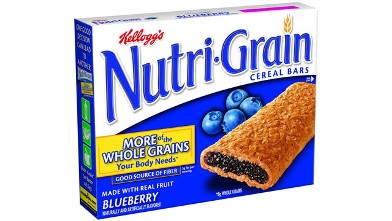
PHOTO: Kellogg's blueberry nutrigrain bars have Blue 1 in them.

Amazon inage

Blue #1 food coloring

Banned in Norway, Finland and France, Blue #1 and Blue #2 can be found in candy, cereal, drinks and pet food in the U.S., the Caltons say.

Kellogg's did not reply to multiple requests for comment about its use of Blue #1 listed as an ingredient in some Nutrigrain bars.

Michael Pariza, professor emeritus of food science and past director of Food Research Institute at the University of Wisconsin-Madison, said most food dyes are not dangerous, with the exception of Yellow #5, but they can influence our perception of food -- for better or worse.

"Taste, appearance and smell all go together. You can have the most fantastic, nutritious thing in the world, but if it looks bad and smells bad, you're not going to eat it," he said.

Blue #1 was at one point banned in several other European countries, but the EU later certified it as safe, said Lowe. Norway banned almost all food dyes from 1978 until 2001, but since then, they have had virtually the same regulations as the EU, he added.

Lowe said synthesized compounds, when used in food, "are often things that are effective in small amounts, because they're so expensive," as is the case with artificial dyes.

"People see the bright colors in cake icing and sugary cereals and figure that the stuff must be glopped on like paint, but paint doesn't have very much dye or pigment in it, either," Lowe writes in his blog.

M&Ms

PHOTO: Blue M&Ms contain blue 2.

Getty Images

Blue #2 food coloring

"Until the twentieth century, food coloring was obtained from natural sources," Jayson and Mira Calton write in "Rich Food, Poor Food." "People gathered spices, like saffron and turmeric, to add rich hues to their otherwise bland-colored foods. While this method may have been somewhat limiting in shades, at least it was safe. Today, most artificial colors are made from coal tar."

Blue #2 is listed as an ingredient in Mars' M&Ms. In a statement from Mars, the company said, "Around the globe there can be slightly different formulations and products available based on both local requirements and consumer preferences. All the colors we use in our products, no matter where they are sold, comply with our own strict internal quality and safety requirements as well as all applicable laws, regulations and safety assessments relating to colors added to food. All colors are declared on the label in accordance with applicable national laws and regulations and always meet the highest safety standards."

Lowe said the concern about blue food dye's connection to brain cancer is "unproven," referring to studies in the 1980s with Blue #2. Lowe said rats were fed the dye over a long period in much larger concentrations -- up to 2 percent of their total food intake -- than even the most dedicated junk-food eater could encounter.

"Gliomas were seen in the male rats, but with no dose-response, and at levels consistent with historical controls in the particular rat strain. No one has ever been able to find any real-world connection," Lowe wrote.

Kraft Macaroni and Cheese
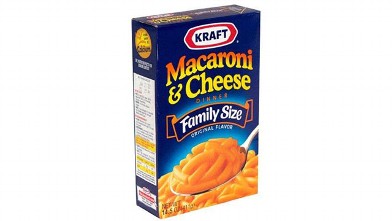
PHOTO: Kraft Mac n' Cheese contains Yellow 5 and Yellow 6.

Amazon image

Yellow #5 (Tartazine), Yellow #6 food coloring

Yellow #5 is banned in Norway and Austria due to compounds benzidine and 4-aminobiphenyl, the Caltons say.

"Six of the eleven studies on yellow #5 showed that it caused genotoxicity, a deterioration of the cell's genetic material with potential to mutate healthy DNA," the book, "Rich Foods, Poor Foods," states.

Companies in the U.S. are required to list Yellow #5 in their ingredients because some people have sensitivity to it.

"Companies are so sensitive about allergies, but peanut allergies would be far more common than Tartazine," Pariza said.

Yellow #6 is banned in Norway and Finland, the Caltons say, but Lowe said the dye is approved across the EU.

Lowe said benzidine and 4-minobiphenyl are two different names for the same compound, which is known as a human carcinogen.

"But it's not a component of any food dye, certainly not of yellow #5, and it's not even any part of its chemical structure," Lowe said.

A spokeswoman for Kraft provided a statement to ABC News, stating, "The safety and quality of our products is our highest priority. We carefully follow the laws and regulations in the countries where our products are sold. So in the U.S., we only use ingredients that are approved and deemed safe for food use by the Food and Drug Administration."

The International Food Information Council has said food ingredients are "carefully regulated by the U.S. Food and Drug Administration (FDA) to ensure that foods containing them are safe to eat and are accurately labeled."

Kraft Catalina Dressing
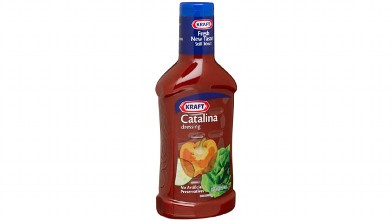
PHOTO: Kraft Catalina dressing contains Red 40.

Amazon image

Red #40

"Red #40 may contain the carcinogenic contaminant p-Cresidine and is thought to cause tumors of the immune system," according to "Rich Food, Poor Food". "In the UK, it is not recommended for children," the Caltons write, but it is approved for use in the EU.

The ingredient can be found in fruit cocktail, maraschino cherries, grenadine, cherry pie mix, ice cream, candy and other products, the Caltons say.

Lowe said he can't find evidence for risk of tumors due to Red #40 and Cresidine "is certainly not a contaminant in the dyestuff" but is one pure compound.

"There is a possibility for cresidinesulfonic acid to be produced as a metabolite, but that's a very different substance than Cresidine itself," Lowe said.

Jones said high amounts of some ingredients could be damaging to some people, but that depends on the amount of consumption and the content of one's diet in general.

"Unless you are crazy and you do drink 8 liters of pop a day, your diet is so disordered already, no wonder what you eat is toxic-- eating things in a way that never intended to be eaten," she said.

Kraft said, "The safety and quality of our products is our highest priority" and the company "carefully follow the laws and regulations in the countries where our products are sold."

Mountain Dew
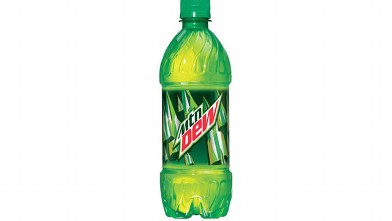
PHOTO: Mountain Dew contains bvo.

Amazon image

Brominated vegetable oil

Brominated vegetable oil, or BVO, acts as an emulsifier in soda and sports drinks, preventing the flavoring from separating and floating to the surface. The ingredient is banned more than 100 countries because it contains bromine, a chemical whose vapors can be corrosive or toxic, the Caltons say.

Aurora Gonzalez, a spokeswoman for PepsiCo, which owns Mountain Dew, said, "We take consumer safety and product integrity seriously and we can assure you that Mountain Dew is safe. As standard practice, we constantly evaluate our formulas and ingredients to ensure they comply with all regulations and meet the high quality standards our consumers expect."

Lowe said the same chemical dangers of consuming a bromine directly can be said of chlorine.

Bromine-containing compounds can indeed cause bad reactions in people but not because bromine is a corrosive gas, he said.

"When a bromine atom is bonded to a carbon, as it is in BVO, it's no longer bromine-the-pure-element, any more than the chlorine in table salt is the World War I poison gas, or the phosphorus in your DNA is the burning white phosphorus found in military tracer shells," Lowe said.

PHOTO: Country hearth breads contains azodicarbonomide.

Getty Images

Azodicarbonamide

This ingredient, which can bleach flour, is banned in Australia, the U.K. and many European countries, said the Caltons, who call it an "asthma-causing" allergen. Up to 45 parts per million is considered safe in the U.S. and it's found in a wide range of breads and baked goods here.

While Lowe acknowledges the chemical can be used to "foam" foamed plastics, "the conditions inside hot plastic, you will be glad to hear, are quite different from those inside warm bread dough," he said. In that environment, azodicarbonamide doesn't react to make birurea - it turns into several gaseous products, which are what blow up the bubbles of the foam, which is not its purpose in bread dough.

While repeated or prolonged contact to the chemical may cause asthma and skin sensitization, Lowe said that refers to the pure chemical and not 45 parts per million in uncooked flour.

"If you're handling drums of the stuff at the plastics plant, you should be wearing protective gear. If you're eating a roll, no," Lowe writes.

flatbread and bagel chips
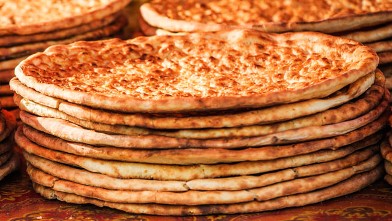
PHOTO: Flatbreads contain brominated flour.

Getty Images

Potassium Bromate (Bromated flour)

Potassium bromate, which strengthens dough, contains bromine, is also in brominated vegetable oil.

"The good news is that American bread manufacturers tell us that it disappears from the product during baking and deem that potassium bromate is safe as there is only negligible residue," the Caltons write in their book. "However, the pastry chefs in Paris disagree. In fact, government regulatory bodies in Europe, Canada, China, and many other regions have banned the use of this additive. In California, if potassium bromate has been added, a product must carry a warning label."

Lowe points out that bromate is different from bromide and bromine.

"Chloride is the anion in table salt, but it's also the anion in hydrochloric acid. Hypochlorite anion is laundry bleach," said Lowe. "Perchlorate anion is in solid rocket fuel. They're all different; that's the point of chemistry."

Olestra (Olean)

Olestra fat substitute is banned in the U.K. and Canada because it causes a depletion of fat-soluble vitamins and carotenoid, the Caltons say, "robbing us of vital micronutrients that our foods should be delivering."

It is found in Ruffles Light and Lay's WOW chips. Frito-Lay did not return a request for comment about its use of Olestra.

Lowe acknowledges that the non-caloric fat substitute interferes with the absorption of fat-soluble vitamins, "but potato chips are not a very good source of vitamins to start with," he writes.

He also points out that Olestra is found only in two brands of potato chips, "since it was a major failure in the market."

"And vitamin absorption can be messed with by all kinds of things, including other vitamins (folic acid supplements can interfere with B12 absorption, just to pick one). But I can agree with the plan of not eating the stuff: I think that if you're going to eat potato chips, eat a reasonable amount of the real ones," he writes in his blog.

Chex
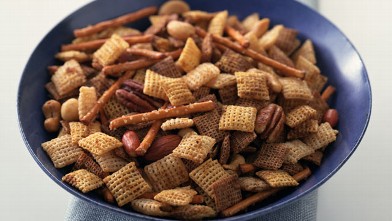
PHOTO: Chex mix contains Bha/BHT.

Getty Images

Butylated Hydroxyanisole (BHA) and Butylated Hydroxytoluene (BHT)

Banned in England, and other European countries, "these waxy solids act as preservatives to prevent food from becoming rancid and developing objectionable odors," the Caltons write.

The state of California lists this ingredient as a possible carcinogen.

General Mills did not respond to a request about its use of BHT in Chex cereals.

Lowe said that BHT is approved by the EU and, "Animal studies notwithstanding, attempts to correlate human exposure to these compounds with any types of cancer have always come up negative."

Some dairy

PHOTO: Non-organic dairy products contain rbst and rbgh.

Getty Images

rBGH and rBST

Recombinant bovine growth hormone and recombinant bovine somatotropin, a synthetic version of bovine growth hormone, can be found in nonorganic dairy products unless noted on the packaging.

"However, several regions, including Australia, New Zealand, Canada, Japan, and the European Union, have banned rBGH and rBST because of their dangerous impacts on both human and bovine health," the Caltons say.

American dairy producer, Stonyfield, opposes the use of rBST because of economics and cow health.

"An increase in milk supply generally leads to a drop in the price paid to farmers," Stonyfield says on its website. "Price drops have put many farms out of business."

In 1993, the FDA approved the use of rBST in dairy cows based on a review of existing scientific studies.

Beth Meyer, a spokeswoman for the American Dairy Association and Dairy Council Inc (ADADC), a regional organization representing dairy farmers in New York, northern New Jersey and northeastern Pennsylvania, said over the last 20 years rBST has been heavily researched and separate reviews by the National Institutes of Health, the joint World Health Organization/Food And Agriculture Organization Committee, the American Medical Association, as well as regulatory agencies in Canada and the European Union have corroborated the FDA's conclusion.

"RBST is one of many management tools used by U.S. dairy farmers to provide a safe, affordable food supply," she said.

Canada and several European countries have affirmed that milk produced from rBST cows is safe for human consumption. These countries don't allow the sale of rBST to local farmers for reasons including economics, social customs and general opposition to technological advances used to promote efficient food production, not human health concerns.

Bovine growth hormone (rBGH) is given to dairy cattle to increase milk production, Lowe said, and BGH levels in the milk of treated cows are not higher than in untreated ones.

"Secondly, BGH is not active as a growth hormone in humans - it's selective for the cow receptor, not the human one," he said.

Lowe points out BGH was banned in some countries due to animal welfare concerns. "As far as human health, there doesn't seem to be any evidence it's bad for humans," he said.

Chicken feed

PHOTO: Chicken feed contains arsenic.

Getty Images

Arsenic

The Caltons warn about traces of arsenic, which has been banned in all foods in the EU, that can be found in some chicken feed.

Last month, Johns Hopkins University scientists said they found amounts of arsenic in chicken that exceeded naturally occurring levels.

But the National Chicken Council says chickens raised for meat or broilers (for meat production) are no longer given any feed additives containing arsenic.

"Broilers used to be given a product called Roxarsone which contained trace amounts of arsenic, but it was pulled from the market in 2011 and is no longer manufactured. No other products containing arsenic are currently fed to broilers in the U.S." said Tom Super, spokesman for the council.

Lowe points out that 100 parts per billion of inorganic arsenic have been found in white rice, though he said that doesn't pose a human health risk.

Arsenic can be found in groundwater supplies in a number of countries, according to the World Health Organization.

"It's very hard to have a diet anywhere in the world that doesn't have a trace amount of arsenic," Jones said.

h/t to Tim Conway Jr. and TLA

Related: 

Is This Why the Europeans Don't Get Sick Like Americans Do? 

How Cells from an Aborted Fetus are Used to Create Novel Flavor Enhancers 

Stop Junk Food Marketing to Kids 

Americans Eat the Cheapest Food in the World, But What is It Really Costing? 

Some Baby Foods are Worse Than Junk Food 

Mad moms to food police: We'll eat what we want 

OBESITY CONSPIRACY: The U.S. Government Scandal that's Really Making You Fat 

Japan Cancels GMO Wheat Order After Concerns Over U.S. Grain Developed By Monsanto

Also checkout:  Wheat Belly: Lose the Wheat, Lose the Weight, and Find Your Path Back to Health/(Kindle) 

Perils of Peanuts and Peanut Butter… Even Organic 

Margarine Verses Butter 

Splenda - safer than aspartame but is it really safe? 

You Are What You Eat: 7 Food Additives That Are Secretly Making Us FAT 

12 Food Additives to Remove From Your Diet 

Whole Foods Vows to Label GMO’s by 2018   

The Dangers of Genetically Modified Ingredients in Pet Food 

Dr Mercola: Bill Gates: One of the World’s Most Destructive ‘So-Called’ Do-Gooders? (Plus: Monsanto and GMO Foods) 

Monsanto Shill And USDA Secretary Tom Vilsack Says Government Will Change The Way Citizens Eat 

World Wide Obesity Epidemic 

Are You Eating, Drinking and Breathing Monsanto’s New ‘Agent Orange’?  

GM Foods Not Served in Monsanto Cafeteria 

Would You Vote for a Food Bill Monsanto Supports?

George Soros and Food Safety 

PDF File:  Liar, Liar: FDA Secrets, Scandals & Slip Ups! 

Dumbing Down Society Part 1: Foods, Beverages, and Meds (Media and Education

Senate Bill S.510 Passed… Quickly Explained Here