Showing posts with label Europe. Show all posts

Saturday, October 5, 2013

European Parliament Outlaws Circumcision; Israel Calls It "A Moral Stain"

JoshuaPundit: A resolution to outlaw male ritual circumcision, calling it a “violation of the physical integrity of children” was passed overwhelmingly by the Parliamentary Assembly of the Council of Europe.

The Jewish rite of Brit Millah was compared in the resolution to the female genital mutilation (FGM) common in a number of Muslim and African countries,although no specific recommendations or resolutions condemning that practice or recommending that member states outlaw FGM was passed.

The resolution Called on member states to "adopt specific legal provisions to ensure that certain operations and practices will not be carried out before a child is old enough to be consulted,” which targets Jews specifically since only Jews ritually circumcise their male children when they are eight days old, symbolic of the Covenant of Abraham.

The State of Israel's Foreign Ministry was quick to respond:

"Circumcision of male children is an ancient religious tradition of two important religions, Judaism and Islam, and it is also common among some Christian circles," the Foreign Ministry staid in a statement.

"Any comparison of this tradition to the reprehensible and barbaric practice of female genital mutilation is either appalling ignorance, at best, or defamation and anti-religious hatred, at worst."

The resolution, the statement continued, is "an intolerable attack both on the respectable and ancient religious tradition that lies at the base of European culture, and on modern medical science and its findings. This resolution casts a moral stain on the Council of Europe, and fosters hate and racist trends in Europe. We call on the Council of Europe to act without delay in order to annul it."

The Israeli Foreign Ministry statement also said that the claims that circumcision harms the health of young boys are false and runs contrary to scientific evidence.

Needless to say, the European Parliament won't annul it.
My friend Carl has the right of it.

"Whenever the gentiles want to attack us, the first things they attack are circumcision, Torah study and ritual slaughter. Not necessarily in that order."

He's got that right.

Saturday, June 29, 2013

11 Food Ingredients Banned Outside the U.S. That Americans Eat

M and M s

Do you like M&Ms and Nutrigrain Bars? They both contain ingredients banned in other countries.  From ABC NEWS:

A recently published list of foods banned in countries outside the U.S. has riled the plates of many in the food industry.

Last week, Buzzfeed published a list of 8 ingredients banned outside the U.S. that are found in foods in America. The list was derived from the book, Rich Food Poor Food: The Ultimate Grocery Purchasing System (GPS)/(Kindle), written by husband and wife team Jayson Calton, who has a Ph.D. in nutrition, and Mira Calton, a licensed certified nutritionist.

Said Mira Calton: "We call it our GPS of grocery purchasing system: how to identify dangerous ingredients -- so people can shop safe and smart in the grocery store."

The book includes a list of banned foods and dangerous foods, which they call "poor food..."

Calton said manufacturers are not putting these ingredients in their food to be "bad people."

"It might have been part of their original formula and sometimes they don't know," Calton said.

The Food and Drug Administration assures the public that despite the frenzy over the list of ingredients banned in some countries outside the U.S., it is doing its job of monitoring food safety.

"As part of FDA's overall commitment to ensure the safety of the food supply, the agency uses an extensive, science-based process to evaluate the safety of food additives," the agency said in a statement to ABC News. "The law requires that the FDA determine there is reasonable certainty that an additive does not cause harm when it is used as intended. The agency continues to monitor the science on food additives and is prepared to take appropriate action if there are safety concerns. When determining that a food or ingredient is 'generally recognized as safe' or GRAS for its intended use in food, the same quantity and quality of evidence is required as is needed to approve a food additive."

Derek Lowe, a chemist who has a Ph.D. from Duke University, said the list is an example of "chemophobia." He told ABC News his reaction to the viral online list was "incredulity and revulsion."

"The thing is, I'm not reflexively saying people should eat all the food additives they can find. I don't myself. But the amount of understanding in the article was so minimal, it really pushed my buttons as a scientist," Lowe said.

The Caltons said they are not calling on the FDA to ban these ingredients, but they said "all of the ingredients on the list pose a potential danger to consumers and we feel the consumer should be made aware so that they can make an informed decision as to whether or not they want to buy a product with these ingredients."

Julie Jones, a professor emeritus with St. Catherine University in Minnesota and author of the textbook, Food Safety, said what drives one country to ban a food and not another often has to do with as much politics as it does science.

If one believes Paracelsus's principle, "the dose makes the poison," Jones said she believes these products have gone through the correct due diligence in the U.S.

"We have science and politics and they are different in each country," Jones said.

Here are 11 ingredients noted as banned in other countries and what some experts have to say about them:
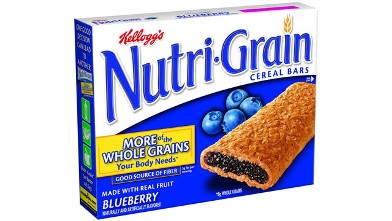
PHOTO: Kellogg's blueberry nutrigrain bars have Blue 1 in them.

Amazon inage

Blue #1 food coloring

Banned in Norway, Finland and France, Blue #1 and Blue #2 can be found in candy, cereal, drinks and pet food in the U.S., the Caltons say.

Kellogg's did not reply to multiple requests for comment about its use of Blue #1 listed as an ingredient in some Nutrigrain bars.

Michael Pariza, professor emeritus of food science and past director of Food Research Institute at the University of Wisconsin-Madison, said most food dyes are not dangerous, with the exception of Yellow #5, but they can influence our perception of food -- for better or worse.

"Taste, appearance and smell all go together. You can have the most fantastic, nutritious thing in the world, but if it looks bad and smells bad, you're not going to eat it," he said.

Blue #1 was at one point banned in several other European countries, but the EU later certified it as safe, said Lowe. Norway banned almost all food dyes from 1978 until 2001, but since then, they have had virtually the same regulations as the EU, he added.

Lowe said synthesized compounds, when used in food, "are often things that are effective in small amounts, because they're so expensive," as is the case with artificial dyes.

"People see the bright colors in cake icing and sugary cereals and figure that the stuff must be glopped on like paint, but paint doesn't have very much dye or pigment in it, either," Lowe writes in his blog.

M&Ms
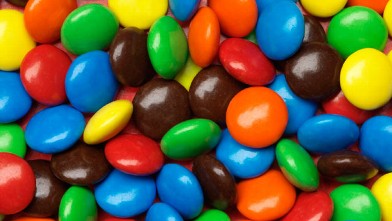
PHOTO: Blue M&Ms contain blue 2.

Getty Images

Blue #2 food coloring

"Until the twentieth century, food coloring was obtained from natural sources," Jayson and Mira Calton write in "Rich Food, Poor Food." "People gathered spices, like saffron and turmeric, to add rich hues to their otherwise bland-colored foods. While this method may have been somewhat limiting in shades, at least it was safe. Today, most artificial colors are made from coal tar."

Blue #2 is listed as an ingredient in Mars' M&Ms. In a statement from Mars, the company said, "Around the globe there can be slightly different formulations and products available based on both local requirements and consumer preferences. All the colors we use in our products, no matter where they are sold, comply with our own strict internal quality and safety requirements as well as all applicable laws, regulations and safety assessments relating to colors added to food. All colors are declared on the label in accordance with applicable national laws and regulations and always meet the highest safety standards."

Lowe said the concern about blue food dye's connection to brain cancer is "unproven," referring to studies in the 1980s with Blue #2. Lowe said rats were fed the dye over a long period in much larger concentrations -- up to 2 percent of their total food intake -- than even the most dedicated junk-food eater could encounter.

"Gliomas were seen in the male rats, but with no dose-response, and at levels consistent with historical controls in the particular rat strain. No one has ever been able to find any real-world connection," Lowe wrote.

Kraft Macaroni and Cheese
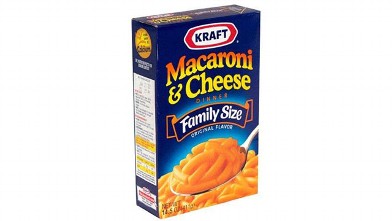
PHOTO: Kraft Mac n' Cheese contains Yellow 5 and Yellow 6.

Amazon image

Yellow #5 (Tartazine), Yellow #6 food coloring

Yellow #5 is banned in Norway and Austria due to compounds benzidine and 4-aminobiphenyl, the Caltons say.

"Six of the eleven studies on yellow #5 showed that it caused genotoxicity, a deterioration of the cell's genetic material with potential to mutate healthy DNA," the book, "Rich Foods, Poor Foods," states.

Companies in the U.S. are required to list Yellow #5 in their ingredients because some people have sensitivity to it.

"Companies are so sensitive about allergies, but peanut allergies would be far more common than Tartazine," Pariza said.

Yellow #6 is banned in Norway and Finland, the Caltons say, but Lowe said the dye is approved across the EU.

Lowe said benzidine and 4-minobiphenyl are two different names for the same compound, which is known as a human carcinogen.

"But it's not a component of any food dye, certainly not of yellow #5, and it's not even any part of its chemical structure," Lowe said.

A spokeswoman for Kraft provided a statement to ABC News, stating, "The safety and quality of our products is our highest priority. We carefully follow the laws and regulations in the countries where our products are sold. So in the U.S., we only use ingredients that are approved and deemed safe for food use by the Food and Drug Administration."

The International Food Information Council has said food ingredients are "carefully regulated by the U.S. Food and Drug Administration (FDA) to ensure that foods containing them are safe to eat and are accurately labeled."

Kraft Catalina Dressing
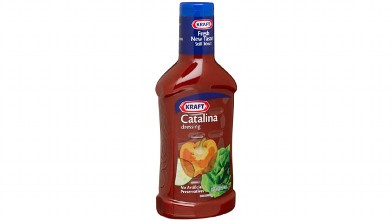
PHOTO: Kraft Catalina dressing contains Red 40.

Amazon image

Red #40

"Red #40 may contain the carcinogenic contaminant p-Cresidine and is thought to cause tumors of the immune system," according to "Rich Food, Poor Food". "In the UK, it is not recommended for children," the Caltons write, but it is approved for use in the EU.

The ingredient can be found in fruit cocktail, maraschino cherries, grenadine, cherry pie mix, ice cream, candy and other products, the Caltons say.

Lowe said he can't find evidence for risk of tumors due to Red #40 and Cresidine "is certainly not a contaminant in the dyestuff" but is one pure compound.

"There is a possibility for cresidinesulfonic acid to be produced as a metabolite, but that's a very different substance than Cresidine itself," Lowe said.

Jones said high amounts of some ingredients could be damaging to some people, but that depends on the amount of consumption and the content of one's diet in general.

"Unless you are crazy and you do drink 8 liters of pop a day, your diet is so disordered already, no wonder what you eat is toxic-- eating things in a way that never intended to be eaten," she said.

Kraft said, "The safety and quality of our products is our highest priority" and the company "carefully follow the laws and regulations in the countries where our products are sold."

Mountain Dew
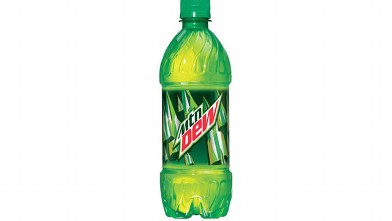
PHOTO: Mountain Dew contains bvo.

Amazon image

Brominated vegetable oil

Brominated vegetable oil, or BVO, acts as an emulsifier in soda and sports drinks, preventing the flavoring from separating and floating to the surface. The ingredient is banned more than 100 countries because it contains bromine, a chemical whose vapors can be corrosive or toxic, the Caltons say.

Aurora Gonzalez, a spokeswoman for PepsiCo, which owns Mountain Dew, said, "We take consumer safety and product integrity seriously and we can assure you that Mountain Dew is safe. As standard practice, we constantly evaluate our formulas and ingredients to ensure they comply with all regulations and meet the high quality standards our consumers expect."

Lowe said the same chemical dangers of consuming a bromine directly can be said of chlorine.

Bromine-containing compounds can indeed cause bad reactions in people but not because bromine is a corrosive gas, he said.

"When a bromine atom is bonded to a carbon, as it is in BVO, it's no longer bromine-the-pure-element, any more than the chlorine in table salt is the World War I poison gas, or the phosphorus in your DNA is the burning white phosphorus found in military tracer shells," Lowe said.

PHOTO: Country hearth breads contains azodicarbonomide.

Getty Images

Azodicarbonamide

This ingredient, which can bleach flour, is banned in Australia, the U.K. and many European countries, said the Caltons, who call it an "asthma-causing" allergen. Up to 45 parts per million is considered safe in the U.S. and it's found in a wide range of breads and baked goods here.

While Lowe acknowledges the chemical can be used to "foam" foamed plastics, "the conditions inside hot plastic, you will be glad to hear, are quite different from those inside warm bread dough," he said. In that environment, azodicarbonamide doesn't react to make birurea - it turns into several gaseous products, which are what blow up the bubbles of the foam, which is not its purpose in bread dough.

While repeated or prolonged contact to the chemical may cause asthma and skin sensitization, Lowe said that refers to the pure chemical and not 45 parts per million in uncooked flour.

"If you're handling drums of the stuff at the plastics plant, you should be wearing protective gear. If you're eating a roll, no," Lowe writes.

flatbread and bagel chips

PHOTO: Flatbreads contain brominated flour.

Getty Images

Potassium Bromate (Bromated flour)

Potassium bromate, which strengthens dough, contains bromine, is also in brominated vegetable oil.

"The good news is that American bread manufacturers tell us that it disappears from the product during baking and deem that potassium bromate is safe as there is only negligible residue," the Caltons write in their book. "However, the pastry chefs in Paris disagree. In fact, government regulatory bodies in Europe, Canada, China, and many other regions have banned the use of this additive. In California, if potassium bromate has been added, a product must carry a warning label."

Lowe points out that bromate is different from bromide and bromine.

"Chloride is the anion in table salt, but it's also the anion in hydrochloric acid. Hypochlorite anion is laundry bleach," said Lowe. "Perchlorate anion is in solid rocket fuel. They're all different; that's the point of chemistry."

Olestra (Olean)

Olestra fat substitute is banned in the U.K. and Canada because it causes a depletion of fat-soluble vitamins and carotenoid, the Caltons say, "robbing us of vital micronutrients that our foods should be delivering."

It is found in Ruffles Light and Lay's WOW chips. Frito-Lay did not return a request for comment about its use of Olestra.

Lowe acknowledges that the non-caloric fat substitute interferes with the absorption of fat-soluble vitamins, "but potato chips are not a very good source of vitamins to start with," he writes.

He also points out that Olestra is found only in two brands of potato chips, "since it was a major failure in the market."

"And vitamin absorption can be messed with by all kinds of things, including other vitamins (folic acid supplements can interfere with B12 absorption, just to pick one). But I can agree with the plan of not eating the stuff: I think that if you're going to eat potato chips, eat a reasonable amount of the real ones," he writes in his blog.

Chex
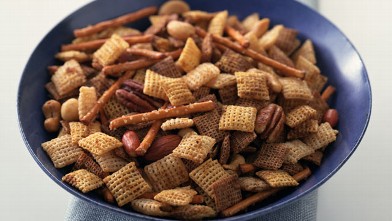
PHOTO: Chex mix contains Bha/BHT.

Getty Images

Butylated Hydroxyanisole (BHA) and Butylated Hydroxytoluene (BHT)

Banned in England, and other European countries, "these waxy solids act as preservatives to prevent food from becoming rancid and developing objectionable odors," the Caltons write.

The state of California lists this ingredient as a possible carcinogen.

General Mills did not respond to a request about its use of BHT in Chex cereals.

Lowe said that BHT is approved by the EU and, "Animal studies notwithstanding, attempts to correlate human exposure to these compounds with any types of cancer have always come up negative."

Some dairy
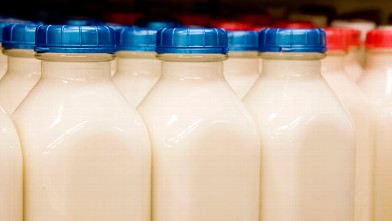
PHOTO: Non-organic dairy products contain rbst and rbgh.

Getty Images

rBGH and rBST

Recombinant bovine growth hormone and recombinant bovine somatotropin, a synthetic version of bovine growth hormone, can be found in nonorganic dairy products unless noted on the packaging.

"However, several regions, including Australia, New Zealand, Canada, Japan, and the European Union, have banned rBGH and rBST because of their dangerous impacts on both human and bovine health," the Caltons say.

American dairy producer, Stonyfield, opposes the use of rBST because of economics and cow health.

"An increase in milk supply generally leads to a drop in the price paid to farmers," Stonyfield says on its website. "Price drops have put many farms out of business."

In 1993, the FDA approved the use of rBST in dairy cows based on a review of existing scientific studies.

Beth Meyer, a spokeswoman for the American Dairy Association and Dairy Council Inc (ADADC), a regional organization representing dairy farmers in New York, northern New Jersey and northeastern Pennsylvania, said over the last 20 years rBST has been heavily researched and separate reviews by the National Institutes of Health, the joint World Health Organization/Food And Agriculture Organization Committee, the American Medical Association, as well as regulatory agencies in Canada and the European Union have corroborated the FDA's conclusion.

"RBST is one of many management tools used by U.S. dairy farmers to provide a safe, affordable food supply," she said.

Canada and several European countries have affirmed that milk produced from rBST cows is safe for human consumption. These countries don't allow the sale of rBST to local farmers for reasons including economics, social customs and general opposition to technological advances used to promote efficient food production, not human health concerns.

Bovine growth hormone (rBGH) is given to dairy cattle to increase milk production, Lowe said, and BGH levels in the milk of treated cows are not higher than in untreated ones.

"Secondly, BGH is not active as a growth hormone in humans - it's selective for the cow receptor, not the human one," he said.

Lowe points out BGH was banned in some countries due to animal welfare concerns. "As far as human health, there doesn't seem to be any evidence it's bad for humans," he said.

Chicken feed
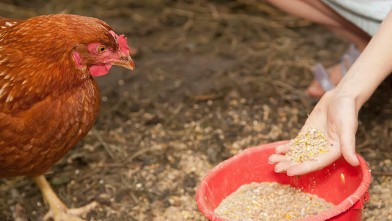
PHOTO: Chicken feed contains arsenic.

Getty Images

Arsenic

The Caltons warn about traces of arsenic, which has been banned in all foods in the EU, that can be found in some chicken feed.

Last month, Johns Hopkins University scientists said they found amounts of arsenic in chicken that exceeded naturally occurring levels.

But the National Chicken Council says chickens raised for meat or broilers (for meat production) are no longer given any feed additives containing arsenic.

"Broilers used to be given a product called Roxarsone which contained trace amounts of arsenic, but it was pulled from the market in 2011 and is no longer manufactured. No other products containing arsenic are currently fed to broilers in the U.S." said Tom Super, spokesman for the council.

Lowe points out that 100 parts per billion of inorganic arsenic have been found in white rice, though he said that doesn't pose a human health risk.

Arsenic can be found in groundwater supplies in a number of countries, according to the World Health Organization.

"It's very hard to have a diet anywhere in the world that doesn't have a trace amount of arsenic," Jones said.

h/t to Tim Conway Jr. and TLA

Related: 

Is This Why the Europeans Don't Get Sick Like Americans Do? 

How Cells from an Aborted Fetus are Used to Create Novel Flavor Enhancers 

Stop Junk Food Marketing to Kids 

Americans Eat the Cheapest Food in the World, But What is It Really Costing? 

Some Baby Foods are Worse Than Junk Food 

Mad moms to food police: We'll eat what we want 

OBESITY CONSPIRACY: The U.S. Government Scandal that's Really Making You Fat 

Japan Cancels GMO Wheat Order After Concerns Over U.S. Grain Developed By Monsanto

Also checkout:  Wheat Belly: Lose the Wheat, Lose the Weight, and Find Your Path Back to Health/(Kindle) 

Perils of Peanuts and Peanut Butter… Even Organic 

Margarine Verses Butter 

Splenda - safer than aspartame but is it really safe? 

You Are What You Eat: 7 Food Additives That Are Secretly Making Us FAT 

12 Food Additives to Remove From Your Diet 

Whole Foods Vows to Label GMO’s by 2018   

The Dangers of Genetically Modified Ingredients in Pet Food 

Dr Mercola: Bill Gates: One of the World’s Most Destructive ‘So-Called’ Do-Gooders? (Plus: Monsanto and GMO Foods) 

Monsanto Shill And USDA Secretary Tom Vilsack Says Government Will Change The Way Citizens Eat 

World Wide Obesity Epidemic 

Are You Eating, Drinking and Breathing Monsanto’s New ‘Agent Orange’?  

GM Foods Not Served in Monsanto Cafeteria 

Would You Vote for a Food Bill Monsanto Supports?

George Soros and Food Safety 

PDF File:  Liar, Liar: FDA Secrets, Scandals & Slip Ups! 

Dumbing Down Society Part 1: Foods, Beverages, and Meds (Media and Education

Senate Bill S.510 Passed… Quickly Explained Here

Monday, February 13, 2012

Hungary Destroys All Monsanto GMO Corn Fields

Hungary has taken a bold stand against biotech giant Monsanto and genetic modification by destroying 1000 acres of maize found to have been grown with genetically modified seeds, according to Hungary deputy state secretary of the Ministry of Rural Development Lajos Bognar. Unlike many European Union countries, Hungary is a nation where genetically modified (GM) seeds are banned. In a similar stance against GM ingredients, Peru has also passed a 10 year ban on GM foods.

Planetsave reports:

Almost 1000 acres of maize found to have been ground with genetically modified seeds have been destroyed throughout Hungary, deputy state secretary of the Ministry of Rural Development Lajos Bognar said. The GMO maize has been ploughed under, said Lajos Bognar, but pollen has not spread from the maize, he added.

Unlike several EU members, GMO seeds are banned in Hungary. The checks will continue despite the fact that seek traders are obliged to make sure that their products are GMO free, Bognar said.

During the investigation, controllers have found Pioneer Monsanto products among the seeds planted.

The free movement of goods within the EU means that authorities will not investigate how the seeds arrived in Hungary, but they will check where the goods can be found, Bognar said. Regional public radio reported that the two biggest international seed producing companies are affected in the matter and GMO seeds could have been sown on up to the thousands of hectares in the country. Most of the local farmers have complained since they just discovered they were using GMO seeds.

With season already under way, it is too late to sow new seeds, so this year’s harvest has been lost.

And to make things even worse for the farmers, the company that distributed the seeds in Baranya county is under liquidation. Therefore, if any compensation is paid by the international seed producers, the money will be paid primarily to that company’s creditors, rather than the farmers.

Source: Exposing the Truth One UE at at Time

Related:

Monsanto: A Horrifying Picture that Will Freeze the Blood in Your Veins – Updated

Dow and Monsanto Team Up on the Mother of All Herbicide Marketing Plans

America’s farmlands to be carpet-bombed with Vietnam-ear Agent Orange chemical if Dow petition approved

Are You Eating, Drinking and Breathing Monsanto’s New ‘Agent Orange’?

Monsanto Battle Continues After Suing Midwest Farmers for Saving Seeds

GM Foods Not Served in Monsanto Cafeteria

Would You Vote for a Food Bill Monsanto Supports?

George Soros and Food Safety

PDF File
Liar, Liar: FDA Secrets, Scandals & Slip Ups!

Dumbing Down Society Part 1: Foods, Beverages, and Meds (Media and Education)

Senate Bill S.510 Passed… Quickly Explained Here

UPDATED:

President Obama appointed former Monsanto vice president and lobbyist Michael Taylor as senior advisor to the Food and Drug Administration commissioner.

This is a classic example of the fox guarding the henhouse. President Obama should isolate the FDA from corporate influence by asking Taylor to step down immediately.

That's why I created a petition to President Obama on SignOn.org. Click here to add your name, and then pass it along to your friends:

http://www.moveon.org/r?r=269891&id=35461-19004089-AN_n6Yx&t=2

The petition says:

President Obama, I oppose your appointment of Michael Taylor, a former VP and lobbyist for Monsanto, the widely criticized genetically modified (GM) food multinational, as senior advisor to the commissioner at the FDA. Taylor is the same person who as a high ranking official at the FDA in the 1990s promoted allowing genetically modified organisms into the U.S. food supply without undergoing a single test to determine their safety or risks. This is a travesty.

Taylor was in charge of policy for Monsanto's now-discredited GM bovine growth hormone (rBGH), which is opposed by many medical and hospital organizations. It was Michael Taylor who pursued a policy that milk from rBGH-treated cows should not be labeled with disclosures. Michael Taylor and Monsanto do not belong in our government.

President Obama, Monsanto has been seen as a foe to family-based agriculture, the backbone of America, by introducing dangerous changes to plants and animals and by using strong-arm legal tactics against farmers for decades. Naturally occurring plant and animal species are permanently threatened by the introduction of DNA and hormonal modification, Monsanto's core businesses.

FDA scientists once regarded genetic modification of the food supply as the single most radical and potentially dangerous threat to public health in history. As early as the 1991, a body of scientific research began to form which now includes articles in over 600 journals. As a whole, these offer scientific evidence that GM foods, hormones, and related pesticides are the root cause for the increase of many serious diseases in the U.S. Since GM foods were introduced, diagnosis of multiple chronic illnesses in the U.S. has skyrocketed. These illnesses include changes in major organs and in hormonal, immune, digestive, and reproductive systems. These modifications to foods and food production may also be contributors to colon, breast, lymphatic, and prostate cancers.

Experts are discouraged that regulators and GM companies systematically overlook potential side effects of GM. Monsanto's objective to use biotechnology to change the world's food supply is the opposite policy direction your administration should pursue. Your legacy of supporting Monsanto to have free rein in U.S. food policy is a nightmare scenario that is against the interest of all Americans and world citizens.

Will you sign the petition? Click here to add your name, and then pass it along to your friends:

http://www.moveon.org/r?r=269891&id=35461-19004089-AN_n6Yx&t=3

Wednesday, March 2, 2011

Dark Times for Herbal Medicine in Europe

Thmpd

Our affiliate, ANH International, is preparing for a legal challenge against EU herb laws.

As we reported to you last November, thousands of products associated with traditional medicine will become illegal throughout the European Union. And more and more, European Union (EU) legislation influences US domestic policy, especially where health-related laws are concerned. The EU threat to herbal medicine is real, and we urge you to take stock of what’s going so we can collectively jump in the minute anything similar emerges from US regulators. After all, it was that joint action from consumers and health organizations back in 1994 that has kept US regulations over dietary supplements relatively sane. But let’s not forget that this kind of freedom needs to be fought for every step of the way.

Here’s what our colleagues in the ANH Europe office are able to relay to you.

The EU has passed a stunning 139,338 directives, regulations and decisions since 1980. While it allowed European countries (now referred to as EU “member states”) to make up their own rules controlling natural healthcare products, there has been a push since around 2000 to control this area by rules formulated primarily by unelected bureaucrats in Brussels.

One of the laws that is set to devastate herbal medicines and products EU-wide, the Traditional Herbal Medicinal Products Directive (THMPD, also known as Directive 2004/24/EC) successfully passed into European law back in 2004. The law will be implemented fully on May 1 this year, and ANH-Intl has exhausted all options other than legal challenge in its efforts to protect the fundamental rights and freedoms of European citizens.

Under this Directive, all herbal medicinal products are required to obtain an authorization to market within the EU. Those products marketed before this legislation came into force can continue to market their product until April 30, but as of May 1, all herbal medicinal products must have prior authorization before they can be marketed in the EU.

Their criteria for authorization don’t sound particularly alarming at first blush, although they do exclude herbal extracts completely—so green tea extract, for example, would not be allowed. But then very specific technical requirements are added which make registering most herbal products very difficult—and expensive.

All products that are not able to be successfully registered according to these guidelines will be banned on May 1, 2011. No license, no sale—simple as that!

If it wasn’t too difficult to get a license, it of course wouldn’t be a problem. And here’s the problem: the THMPD only applies to a narrow range of herbal products. It specifically regulates manufactured herbal medicines that are bought off the shelf in health food stores or online, and then it sets very specific technical requirements that mean that the vast majority of products, especially multi-herb ones, are excluded.

The prime beneficiaries are the large European phytopharmaceutical companies who are getting a relatively small number of licenses for their alcohol extracts. Only a very small proportion of the around 200 products licensed so far across all twenty-seven EU member states contain whole plant material, and many are stuffed full of synthetic excipients that most of us would choose not to put in our bodies! These include additives as unpleasant as benzoate preservatives, sweeteners like sodium cyclamate (banned in the US) and aspartame, detergents like sodium lauryl sulphate, and polymers like polyvinyl pyrrolidone and polyvinyl alcohol, the latter having question marks over its potential carcinogenicity.

Under the THMPD registration scheme, Napoleonic law rules. That means, in effect, you’re guilty until proven innocent.

Only a tiny fraction of the total number of medicinal herbs are getting through the EU door. Currently, fewer than 50 species of medicinal plants are included in registered products, and that’s out of considerably more than 1000 that are regularly used by humans medicinally! Since the rules have been set up to benefit the European phytopharmaceutical companies, it’s no surprise that not a single authentic herbal product from any of the non-European traditions has yet been registered. That equates to zero products from Ayurveda (India), Tibetan, traditional Chinese medicine (TCM), Amazonian, or southern African traditions, these being among the most well established in the world.

ANH-Intl is preparing to challenge these herb laws in court. It has nearly raised the money it needs for the first stage of its challenge in the UK courts, where the objective is to have the case referred to the European Court of Justice. We passionately believe that, as citizens and advocates of natural health, we must use all the means we have at our disposal to ensure justice is brought to bear.

This European law has a host of problems. Among these, it doesn’t do what it originally set out to do, which was to provide a suitable framework for all herbal traditions. To axe the most important, non-Europeans ones by setting an obstacle course that can’t be negotiated except by a few, is not justice. It is also in breach of a whole gamut of European laws that aim to promote fairness, proportionality, and transparency while also preventing discrimination.

If any readers are interested in this case and want to offer any support, be it financial or moral, ANH-Intl would be very glad to hear from you. You can find out more or you can email info@anhinternational.org and put “Herb law” in the subject line.

You can also donate online, and any amount would be gratefully received. All funds are being used exclusively to fund legal costs and not the running expenses of ANH Europe’s ten concurrent campaigns.

Source:  Alliance for Natural Health USA

Friday, May 28, 2010

Why has this Common Food Been Dumped in Europe… Yet, is Still Rampant in the US?

A group of conventional physicians who are strongly aligned with the pharmaceutical paradigm have called themselves the “skeptics”. They also have a few journalists in their camp.

Michael Spector is one of these journalists. If you have any appreciation of natural medicine you will have a very good laugh by watching his entire presentation at a recent TED conference.

If you want further entertainment then listen to my interview with Jeffery Smith in which he decimates Michael’s ignorant comments on GMO.

Jeffrey Smith, the premiere GMO expert and author of the bestseller Seeds of Deception, and Genetic Roulette, exposes the flimsy rationale, and the complete lack of evidence that tries to pass as “science” when it comes to defending genetic engineering.

Science can, and has, given us answers to the question: “Are genetically modified foods safe?”

But those answers are NOT what industry is reporting, and the reason is simple. If they were, genetically engineered crops would never be allowed to be planted, and GM foods would be banned worldwide.

Smith sheds light on how the deception is perpetrated, and counters the critics' claims that “GMOs are safe” with science-based evidence.

Sources:

Jeffrey Smith Interview Transcript

Grist October 31, 2010

Dr. Mercola's Comments:

There are a number of people who object to the information I’m sharing on the internet. Some have a direct vested conflict of interest that explains their behavior, but there is also a large group of people who seek to use science or the scientific method as justification that many of the principles we advocate and instruct you to apply in your life are incorrect.

One of the more prominent media proponents that try to debunk what I teach is an individual named Michael Specter.

He’s the author of a book called Denialism and is a journalist for the New York Times. He recently gave a lecture at a TED conference, criticizing those who would dare to question, among other items, the science of vaccines or genetically modified foods.

He goes so far as classifying those of us who seek to alert the public to the potential dangers inherent with vaccines and GMOs as “endangering public health.”

It is my position that actually the converse is true, and that clear, independent, scientific evidence exists to back up our claims. Those of us who are concerned about the safety of vaccines and GMOs are absolutely committed to the scientific method.

Science does work. The challenge with science that many people fail to appreciate is that it has become progressively easier for many well funded multinational corporations to manipulate and distort the entire process to make it appear as though science is applied, when in fact it’s only superficially being implemented due to massive conflict of interest.

In recent times we’ve seen researchers being exposed for creating entirely fraudulent research; studies are ghostwritten and researchers are paid to put their names on work they’ve had no part in; journalists are paid to write articles that are nothing more than thinly disguised advertising, and the list of scientific deception goes on.

All of this deceptive maneuvering gives industry the appearance of being science based, when in fact they’re oftentimes far from it.

Of course this creates confusion. How could it not?

But there is a simple, rational solution. And that is to pay attention to the source of the funding, for one, and to pay special heed to research that comes from independent sources that have no vested interest in manipulating the end results.

When you do, you’ll find that there is no shortage of scientific based evidence showing a wide variety of hazards that are currently being ignored and glossed over with, in many cases, completely nonsensical PR sound bytes.

Jeffrey Smith is clearly one of the leading experts on genetically modified foods in the world, and his not-for-profit organization ResponsibleTechnology.org has amassed an ever growing number of studies illustrating the grave dangers inherent with GMOs.

Avoiding a Problem Doesn’t Prove It’s Not There – How Industry Manipulates Scientific Results to Justify “Safety”

“These guys have gotten bad science down to a science. They are expert at figuring out ways to avoid finding the problems,” Smith says.

“When genetically modified bovine growth hormone was being tested, one disgruntled FDA employee evidently stole the documents and made them public.

They showed that when Monsanto’s researchers wanted to prove that the [rBGH] injections did not interfere with the cow’s fertility, they secretly introduced cows to the study that were already pregnant before they were ever injected.

And when they wanted to show that the pasteurization process destroys the hormone that’s increased in the milk supply, they pasteurized the milk 120 times longer than normal. That destroyed 19 percent of the hormones.

So they doused the milk with 147 times the amount of the naturally existing hormone, and heated the milk 120 times longer than normal. Under those bizarre circumstances, they were able to destroy 90 percent of the rBGH hormone, and that’s what the FDA reported – that pasteurization destroys 90 percent of the hormone. “

Essentially, the entire scientific method was bastardized and rigged, and used as an incredibly deceptive, yet effective, mechanism to convince people that rBGH was safe.

“In fact, I talked to a former Monsanto scientist who said he was aware that colleagues had fed genetically modified corn to certain rodents and came up with problems,” Smith says. “But instead of pulling the corn off the market or withdrawing the application, they rewrote the study to hide the incidence of the problems.

He also said that three of his colleagues who were doing safety studies on Monsanto’s genetically modified bovine growth hormone stopped drinking milk after they saw the changes in the milk.”

Michael Specter, like so many others, are simply repeatedly parroting the same fabrications despite the fact that the dangers of GMOs are now well documented.

If You Believe in Science-Based Evidence, then You Must Follow Wherever it Leads

Even the FDAs own scientists have stated that GMOs can lead to allergies, nutritional problems, the creation of toxins and new diseases and should require long term safety studies.

But they too were simply ignored.

Smith recounts a story about a South African pro-GM advocate who claimed that even the National Academy of Sciences in the US had determined that GMOs are “absolutely risk free.”

“So I called the National Academy of Sciences of the United States and I spoke to the person in charge of the biotech division,”Smith says, “And she laughed and said, “If we didn’t think there was any extra risk, why would we have released two reports on it?”

She completely dismissed his statement and said it sounded like someone from the biotech industry organization in the United States, although it was their counterpart in South Africa.

So what we have, actually, is a system of denial, distortion, and deadly dangers that are being ignored.”

What you must understand is that much of today’s scientific research is no longer performed through public funding, as it were in the pre-Reagan days, but rather by the industry itself.

This phenomenon explains why “science-based evidence” can no longer be taken at face value, but must first be vetted by looking at who paid the bill, and what sort of results might the one holding the purse strings be looking for. In the case of GMOs, the biotech industry surely is NOT looking for problems.

Fortunately for you, others are, and they’re doing their best to warn you.

Just last year the American Academy of Environmental Medicine (AAEM) reviewed the available research and issued a memorandum recommending that all doctors prescribe non-GMO diets to all patients because they are causally linked in animal feeding studies to:

  • Infertility
  • Immune system problems
  • Gastrointestinal problems
  • Organ damage
  • Dysfunctional regulation of cholesterol and insulin
  • Accelerated aging

They came to this conclusion and issued this recommendation based on scientific evidence, not on individuals who are trying to deny or hide the fact that problems exist.

The AAEM is the same organization that identified the Gulf War syndrome, chemical sensitivity and food allergies, and about a dozen other environmental health threats. They are on the frontlines, and the organization is designed to look for and investigate the sources causing health problems in the United States.

These are the types of organizations you might want to listen to, as opposed to the Specter’s of the world, who offer little or no actual data to back up their opinions.

Specter’s book, for example, provides very little of the scientific evidence he claims you should listen to, and he completely ignores some of the most importantstudies to date, which, coincidentally, show that his arguments are 100 percent incorrect.

Are GM Crops Just a Newer Version of Selective Breeding?

In order to justify the use of genetically modified foods, many will try to use the argument that we have been essentially genetically modifying our foods for thousands of years, through selective breeding of both plants and animals. In essence, they want you to believe genetic engineering is just an improved version of natural selection.

Nothing could be further from the truth!

“This is really a maddening intentional distortion,” Smith says.

“A Noble laureate said years ago that we should not mistake selective breeding with genetic engineering, because genetic engineering basically creates new organisms overnight that don’t have the benefit of the billions of years of evolution.

Even FDA scientists said in a memo that it is the opinion of the technical experts at the agency that genetic engineering is different, and leads to different risks from traditional breeding.”

Genetic engineering involves taking genes from various species of plants and animals, putting them into gene guns, and blasting millions of genes into a plate of millions of cells, and then cloning the result into a plant.

This can cause hundreds or thousands of mutations up and down the DNA chain. Genes can be switched off, switched on permanently, or change their levels of expression – at random.

“Up to 5 percent of the existing natural genes in the plant can change their levels of expression when a single new gene is introduced. In other words, there is a holistic, not well understood response, plant-wide, throughout the entire genome, where maybe hundreds or thousands of genes change their activity when a newcomer is inserted into the DNA,” Smith explains.

“So this is totally new, totally different.

On top of that, you’re throwing in antibiotic resistant marker genes that are part of the process that might yield antibiotic resistant diseases. This was a major concern by FDA scientists from the British Medical Association.

They’re throwing in viruses, viral promoters, which switch on genes at random. They could switch on genes that already exist in the plant or possibly transfer to our own gut bacteria or maybe our own cells, and switch on genes at random, permanently.

So to me that is an easy argument to overcome simply based on the science itself.”

Further Educational Material…

The angles discussed above are not the only ones Jeffrey Smith delves into in this interview, so for more, please listen to it in its entirety, or read through the transcript.

For example, there’s the assertion that GMOs are necessary for feeding the world and the key to ending hunger. Here too, critics like Michael Specter miss their mark, and Smith explains why.

Lastly, I urge you to take the steps necessary to help eradicate GMOs from the US food supply. It will not happen through government intervention. It can only be accomplished once enough people realize that what they’re eating is a public science experiment gone wild, without any checks or balances whatsoever.
The good news, however, is that you, as an ordinary citizen, have the power to incite change, by steering the market demand toward non-GMO crops and foods. Every time you choose to buy a non-GMO product over a product that contains GM ingredients, you are making a dent in this problem.
So take advantage of local sources of organic foods as often as you can. You can also avoid GM foods by:

  • Reducing or Eliminating Processed Foods. Some 75 percent of processed foods contain GM ingredients. Use the Non-GMO Shopping Guide, available for free at www.NonGMOShoppingGuide.com.
  • Read produce and food labels. When looking at a product label, if any ingredients such as corn flour and meal, dextrin, starch, soy sauce, margarine, and tofu (to name a few) are listed, there's a good chance it has come from GM corn or soy, unless it bears the USDA organic seal.
  • Buy organic produce. Buying organic is currently the best way to ensure that your food has not been genetically modified.

To learn more about the health dangers of GMOs, and other tips for what you can do to help end the genetic engineering of our food supply, please visit www.ResponsibleTechnology.org.

Related Links:

Doctors Warn: Avoid Genetically Modified Food

Engineered Poison Lurking in Your Everyday Food?

Everything you MUST KNOW About GM Foods