The Cleveland Clinic is slashing jobs due to the costs of ObamaCare mandates.
Companies, workers, retirees, students, and spouses all suffer from the law’s inflexible mandates.
By Andrew Johnson – National Review: Today, ObamaCare's October 1 launch date finally arrived. Ever since its passage, supporters of the law have made countless attempts to convince the American people of its viability, dismissing predictions of lost jobs, decreased hours, and rising costs, among others.
Yet from major corporations to local mom-and-pop shops, from entire states to tiny school districts, a wide range of companies and institutions have seen ObamaCare's negative impact on their workers, budgets, and production. Here are 100 examples of how ObamaCare is falling short of what was promised.
Yet President Obama refused to work with the House in delaying the launch of ObamaCare by one year to work out the glitches and improve the measures that most Americans oppose. Instead he allowed a shutdown of the government, possibly to hide the problems of the healthcare launch, and spent the morning giving the most divisive and un-presidential imaginable.
(Note: Some items on this list came via Investor’s Business Daily and the Heritage Foundation.)
Corporations
1. IBM
Earlier this month, the computer giant, once famed for its paternalism, announced it would remove 110,000 of its Medicare-eligible retirees from the company’s health insurance and give them subsidies to purchase coverage through the ObamaCare exchanges. Retirees fear that they will not get the level of coverage they are used to, and that the options will be bewildering.
2. Delta Air Lines
In a letter to employees, Delta Air Lines revealed that the company’s health-care costs will rise about $100 million next year alone, in large part because of ObamaCare. The airline said that in addition to several other changes, it would have to drop its specially crafted insurance plans for pilots because the “Cadillac tax” on luxurious health plans has made them too expensive.
3. UPS
Fifteen thousand employees’ spouses will no longer be able to use UPS’s health-care plan because they have access to coverage elsewhere. The “costs associated with the Affordable Care Act have made it increasingly difficult to continue providing the same level of health care benefits to our employees at an affordable cost,” the delivery giant said in a company memo. The move is expected to save the company $60 million next year.
4. Caterpillar Inc.
In the law’s first year, the machinery manufacturer estimated before its passage, ObamaCare would add more than $100 million in health-care costs. “We can ill afford cost increases that place us at a disadvantage versus our global competitors,” a Caterpillar executive wrote lawmakers, saying that the law would not meet the goal of providing good, inexpensive health care for all Americans.
5. SeaWorld
SeaWorld used to let part-time employees work up to 32 hours per week, but the company is dropping the limit to 28 hours to keep them under the 30-hour threshold at which it would be required to provide health insurance under ObamaCare. More than 80 percent of the company’s thousands of employees are part-time and/or seasonal.
Medical-Device Tax
6. Stryker Corp.
Stryker Corp., a Michigan medical-device manufacturer, laid off about 1,000 employees earlier this year due to the Affordable Care Act’s 2.3 percent excise tax on medical devices. The company estimated that the tax would cost it approximately $100 million next year. “Stryker remains significantly concerned with the upcoming medical device excise tax and its negative impact on jobs and innovation and will continue to work with Congress to try to repeal the tax,” said the company’s CEO.
7. Welch Allyn
The manufacturer announced that it will have to cut approximately 10 percent of its 2,750 employees, 275 in all, because of the medical-device tax. The company also plans to consolidate manufacturing centers, moving some operations from Beaverton, Ore., to its facility in Skaneateles Falls, N.Y.
8. Smith & Nephew
The British company informed nearly 100 employees at its Massachusetts and Tennessee facilities that they would be laid off “in order to absorb [the] cost burden” of the tax on medical devices.
Hospitals, Nonprofits
9. Cleveland Clinic, Ohio
One of the world’s best-known hospitals announced in September that it would slash jobs and up to 6 percent of its annual $6 billion budget in anticipation of costs associated with ObamaCare's implementation. A spokeswoman for the clinic announced that approximately $330 million would be cut, but she did not say how many of the 44,000 employees the clinic would let go. The Cleveland Clinic is Cleveland’s largest employer and the second-largest employer in Ohio.
10. Wake Forest Baptist Medical Center, North Carolina
Last November, the Wake Forest Baptist Medical Center, in Winston-Salem, announced that 950 full-time-equivalent positions would have to be eliminated in order to make up costs from the health-care law.
11. Orlando Health, Florida
In that same month, the Orlando Health hospital system announced the biggest staff reduction in its almost century-long history, as part of a “broader effort” to manage the effects of ObamaCare, according to the Orlando Sentinel. Orlando Health will cut as many as 400 jobs across the system, in areas ranging from administrative departments to children’s hospitals.
12. Louisiana State University Hospitals
In the same article, the Sentinel noted that LSU hospitals would cut nearly 1,495 positions in order to save $150 million, apparently because of expected reductions in Medicare and Medicaid payments.
13. Delaware Hospice
Due to new interpretations of the rules for reimbursing for hospice services, Delaware Hospice, the Ocean State’s only not-for-profit hospice provider, had to let 52 employees go earlier this year. “It’s really health-care reform in action,” a spokeswoman said. “This is affecting hospices across the country. We’re working through dramatic changes in terms of the hospice-care benefits.”
14. Lawrence + Memorial Hospital, Connecticut
The New London hospital announced earlier this month that Medicare cuts programmed into ObamaCare had led to the firing of 33 employees. “L+M and other hospitals are contending with massive structural changes that are happening very rapidly,” the hospital’s president and CEO said.
15. Clifton Springs Hospital, New York
Fifty-eight non-clinical employees were let go from Clifton Springs Hospital in Rochester as the hospital prepared for the changes spurred by the Affordable Care Act. “No one really knows what the impact will be because it really is a very new way for reimbursing for health care,” the hospital’s CEO told a local news station. “So I think everyone is trying to prepare for a change, and a change with less revenue.”
16. Anthem Blue Cross Blue Shield, New Hampshire
The state’s only insurer approved to offer plans on the health-insurance exchanges in New Hampshire has cut the number of hospitals that will participate in the plan from 26 to 14 in order to reach “affordable premium levels,” according to the New Hampshire Union Leader.
17. Mexican American Opportunity Foundation, California
The nonprofit, which looks after 1,100 pre-K children at its eight Southern California child-care centers, has had to reduce the hours of dozens of employees who used to work 30 to 40 hours per week. “We’re fearful it’s going to be hard to negotiate health care in any contract,” one local labor leader said. “Overall [ObamaCare] is a positive step, but on a micro level it’s not all roses.”
18. Carnegie Museum, Pennsylvania
A Pittsburgh news station reports that the Carnegie Museum “reluctantly” scaled back the hours of 48 of its 600 part-time employees to less than 30 hours a week to sidestep the mandate to provide health-care coverage.
19. Fort Smith Area Agency on Aging, Arkansas
The nonprofit revealed that all of its health aides and drivers will work a maximum of 28 hours a week, and that the plan it would offer to its remaining full-time employees would be “bare bones.” To make up for additional ObamaCare costs, the organization is asking employees to take steps to save money, such as changing vehicle oil after 5,000 miles rather than 3,000.
20. Emory Healthcare, Georgia
A news station in Atlanta reports that Emory Healthcare, the state’s largest health-care system, will lay off more than 100 employees, in part because of ObamaCare.
21. CoverTN, Tennessee
Thousands of Tennesseans will lose their coverage under the state’s health-insurance program because it does not meet Affordable Care Act standards for yearly expenditure caps. CoverTN, which was used mainly by small businesses, had a $25,000 yearly benefits limit. “It was all I had,” one Nashville small-business owner said.
State and Local Governments
22. State of Virginia
In February the General Assembly affirmed Governor Bob McDonnell’s decision to limit the state’s part-time employees to 29 hours per week.
23. Township of Middletown, New Jersey
Middletown has also cut the hours of 25 part-time public employees. “Any of those expenses [for insurance] are going to be passed along to the taxpayers, and so in order to avoid having to do that, we chose to modify the work hours,” said the township’s administrator.
24. Brevard County, Florida
Brevard County’s insurance director told a local television station that the county’s 300-plus part-time employees will be “capped at something less than 30” hours to save the county about $10,000 per employee in health insurance.
25. Township of Berkeley, New Jersey
The Sandy-hit Jersey Shore town said it will “take a hard line” in union negotiations in limiting part-time employees’ hours, because additional health-care costs “are out of the question.” “If it came down to shaving hours to save substantial dollars, that’s something that would have to be considered,” the township administrator said.
26. Chesterfield County, Virginia
An administrator with this southern Virginia county told the Richmond Times-Dispatch that “several hundred” part-time employees could have their hours cut back to 28. Most of the employees affected would be from the Department of Mental Health Support Services.
27. City of Lynchburg, Virginia
About 40 percent of the city’s part-time work force saw cuts to their weekly hours to ensure that their totals come in below the 30-hour threshold, according to the local News & Advance. The city’s human-resources director said some departments do not have the financial resources to add employees or raise wages to make up for the lost work time.
28. City of Mason, Ohio
Cut hours for 200 part-time workers or take a $3.4 million hit: That was the decision the southwestern Ohio city faced when it started weighing ObamaCare's impact. It opted for the former. Part-timers had regularly worked more than 30 hours, but the city manager told the JournalNews that their weekly workload has been reduced to 20 hours.
29. Township of Toms River, New Jersey
Government workers in Toms River pushing the 30-hour threshold will be bumped down to “below 25” to ensure that they are considered part-time employees, according to the Asbury Park Press. “I think this was not very well thought out,” the township’s business manager said of the Affordable Care Act. “There was this fallacy that the law provisions didn’t apply to municipal government. It sure does.”
30. Lee County, Iowa
Lee County “could be out a lot of money,” a local newspaper reported a supervisor saying, if the county doesn’t stick to its new policy of holding part-time workers to 28 hours.
31. City of Faribault, Minnesota
Employees working 30 to 38 hours per week with the Minnesota city will be bumped down to part-time status to avoid penalties and costs associated with the mandate.
32. Kansas Turnpike Authority
Three eight-hour shifts per week: That’s the new maximum schedule for part-time toll collectors in Kansas. While the state’s turnpike authority previously had part-time employees who worked more than 30 hours a week, a new policy will limit them to the new schedule.
Education
33. University of Virginia
Because of an additional $7.3 million in health-care costs next year, the University of Virginia alerted some of its employees that it will no longer offer health insurance to their spouses.
34. Community College of Allegheny County, Pennsylvania
The Pittsburgh-area community college informed about 400 part-time employees that they would see a reduction in their hours starting in January of this year to comply with ObamaCare regulations. The school had to make this change a year before the law went into effect because ObamaCare stipulates that the federal government must look back one year to determine an employee’s status.
35. St. Petersburg College, Florida
To avoid paying an additional $777,000 per year, St. Petersburg College told 250 adjunct professors that their hours would be cut back for upcoming terms. “I never thought it would impact me directly,” a math teacher told NBC News Investigations. “I was stunned when I got the email. . . . I love teaching at St. Pete College, but that is a significant cut.”
36. Hillsborough Community College, Florida
Hillsborough Community College may have to cut the hours of nearly 10 percent of its part-time work force, according to the Tampa Tribune. By keeping those employees under 30 hours per week, the college can avoid an additional $863,500 in total costs for health plans.
37. Hamilton Township School District, New Jersey
Substitute teachers will see their time in the classroom limited to four workdays per week, the cap set in place in June by the school district . The “strict limits” went into effect at the beginning of this school year. According to a report by the Trenton Times, other nearby districts also could consider similar provisions.
38. Purdue University, Indiana
Despite “pretty radical changes” to the university’s health-care plans for its roughly 27,000 employees, Purdue University still won’t be able to skirt $2.8 million in additional costs brought on by the Affordable Care Act.
39. Oneida Special School District, Tennessee
Most of the non-certified personnel in the Oneida Special School District, such as teacher assistants, janitors, and cafeteria workers, will not be allowed to work more than 29 hours a week.
40. Central Michigan University
Some of the 5,700 students hired as employees by Central Michigan University will be barred from working more than 25 hours a week. While students have said the new limits “will sting a little bit” and make it “increasingly harder” to pay for various expenses, CMU’s human-resources vice president told a local news station that the move would “align us with other schools” making similar adjustments. Without the limits, CMU would have to pay as much as a $5 million penalty for not offering student workers health-care coverage.
41. University of North Alabama
Graduate-student workers at this school in Florence, Ala., will be barred from working more than 29 hours a week.
42. Arizona State University
Associate faculty members will be limited to teaching six credit hours, or two classes, per semester as part of an effort to more clearly define full-time versus part-time faculty, according to the Arizona Republic. “It’s like getting a punch in the stomach,” said one religious-studies teacher. “For some people it’s a major financial setback.”
43. Ivy Tech Community College, Indiana
Ivy Tech Community College, where 60 percent of the professors work part-time, will limit its part-time professors to less than 30 hours per week.
44. Maricopa Community Colleges, Arizona
The Phoenix community-college system notified almost 700 adjunct professors and 600 other part-time workers of a new policy that will prevent them from working more than 30 hours a week. An adjunct professor said the changes would affect his personal finances, and he warned that “this is going to come back to bite us” because instructors won’t be able to fill in for one another due to the cap on hours.
45. Granite School District, Utah
Facing at least $14 million in additional health-care costs, the Salt Lake City–area school district, which operates 92 schools, reduced the hours of as many as 1,200 part-time workers. In a letter, the district warned that employees who violate the 29-hour limit for part-time work could be terminated.
46. Alpine School District, Utah
“I would have to look for another job, or we would lose our house,” a school-bus driver told Provo’s Daily Herald after the school district said hourly employees could no longer work more than 27.5 hours per week. “If they cut our hours to 27, we will be up the creek,” another driver said.
47. Fort Wayne Community Schools, Indiana
In May, 610 part-time teaching aides and cafeteria workers were informed by the Fort Wayne Community Schools that their hours would be cut to keep FWCS from having to provide health insurance to those employees. “It’s something that almost all employers with part-time employees are trying to resolve,” a district administrator said.
48. Papillion–La Vista School District, Nebraska
The Affordable Care Act would have added $2.5 million in new health-care costs — or $3.4 million in penalties — to the Papillion–La Vista school district if 281 part-time employees’ hours had not been limited to fewer than 30 a week.
49. University of Akron, Ohio
Already facing a budget deficit, the University of Akron will ask 230 of its part-time faculty members to accept a cut to their work hours to avoid having to provide health insurance.
50. Youngstown State University, Ohio
The university warned part-time faculty members that they will be fired if they surpass the new 29-hour-per-week restriction. “If you exceed the maximum hours, YSU will not employ you the following year,” the school said in an e-mail. “We will have no recourse.”
51. Tredyffrin-Easttown School District, Pennsylvania
In June, the district announced that it would have to “restructure hours” to avoid cost increases to health-insurance plans. A local newspaper detailed a handful of options for the district; almost all resulted in fewer hours for lower pay.
52. Southern Lehigh School District, Pennsylvania
The Lehigh Valley–area district reduced the hours of 51 part-time workers to comply with the 30-hour threshold. The cuts will affect employees across the district, including custodians, cafeteria workers, secretaries, health-services support-staff members, and special-education support employees.
53. Zionsville Community Schools, Indiana
One hundred instructional aides, coaches, and substitute teachers in the Indiana district saw their weekly workload restricted to 29 hours.
54. Spartanburg Community College, South Carolina
Adjunct faculty members taught more than half of the community college’s classes, and all but 23 of the 400 to 500 such faculty members will see their hours slashed to meet the part-time requirement. Otherwise the college would face the choice of paying penalties of up to $2,000 per employee to whom it didn’t offer health coverage or paying up to $1 million for insurance.
55. Finger Lakes Community College, New York
The upstate New York community college has set the maximum weekly work hours for adjunct faculty members at “under 30.”
56. Mount Ephraim School District, New Jersey
At a school-board meeting this year, the district announced that the cost of benefits will rise by 18 percent because of the Affordable Care Act, and the increase will be passed on to taxpayers.
57. Minocqua-Hazelhurst-Lake Tomahawk School District, Wisconsin
The northern Wisconsin school district took steps to ensure that its part-time employees work fewer than 30 hours per week, a local news station reported.
58. Rock Valley College, Illinois
As of July, the two-year Rockford school now hires new employees to work a maximum of 25 hours per week.
Big Labor
59. Teamsters, UFCW, and UNITE HERE
The heads of the International Brotherhood of Teamsters, the United Food and Commercial Workers, and UNITE HERE wrote to Democratic lawmakers in July to warn that ObamaCare would “destroy the foundation of the 40-hour work week that is the backbone of the middle class.” While the labor leaders acknowledged their past support for the law, they remarked that their decision had “come back to haunt us.”
60. AFL-CIO
In an interview with Al Jazeera America, AFL-CIO president Richard Trumpka conceded that the Affordable Care Act “does need some modifications to it” because companies are “restricting their workforce to give workers 29 and a half hours so they don’t have to provide them health care.”
Restaurants and the Food Industry
61. Cheesecake Factory
The chain restaurant’s CEO warned that while his company already covers its employees who work at least 25 hours, he expects the new law to “be very costly” for most companies. He predicted that if Cheesecake Factory has to expand coverage, the costs will be passed on to consumers with price increases or a lower level of service.
62. Papa John’s Pizza
After causing a stir among ObamaCare supporters by suggesting possible price increases and/or cuts to jobs and hours, Papa John’s Pizza CEO reiterated: “It’s common sense. That’s what I call lose-lose.”
63. Buca di Beppo
Buca di Beppo employees across the country say managers told them in June that they would see their weekly hours reduced to less than 30. The founder of the company that owns the restaurants distanced himself from the comments, but employees insist that the Affordable Care Act is the root cause: “I guarantee you it has to do with what’s going on with our country and decisions being made with ObamaCare,” said one worker.
64. Fatburger
The CEO of the burger-joint chain announced that franchises have begun making efforts to keep employees under the 30-hour threshold, including some franchises’ engaging in “job sharing.” For example, an employee at one Fatburger could work 25 hours a week at one location, and another 25 hours at a different location with a different owner, without falling under the ObamaCare mandate.
65. Wendy’s
An Omaha Wendy’s franchisee alerted almost 100 non-management workers that their hours would be reduced to 28 per week in order to comply with ObamaCare mandates.
66. Subway restaurants, Illinois
Employees at 15 Subway restaurants in central Illinois have begun to see a reduction in their hours. “We don’t like doing that,” the owner said. “But if we were to have to pay for everyone to have health insurance or pay the full penalties, we would be out of business.”
67. Subway restaurants, Maine
The owner of 21 Subway franchises in Maine told 50 of his workers that their hours would be reduced to a maximum of 29 a week. “To tell somebody that you’ve got to decrease their hours because of a law passed in Washington is very frustrating to me,” he told NBC News Investigations.
68. PoFolks restaurant, Alabama
The restaurant’s owner told a local news station that he will have to cut the number of full-time employees from 16 workers to four to meet the “great challenge” ObamaCare poses to the company.
69. Joe Bologna’s, Kentucky
In order to limit employees’ hours and save money, a Lexington businessman has closed his restaurant on Mondays. He told a local news station that additional costs, which could be as high as $20,000, probably would have to be passed on to customers.
70. Five Guys franchises, North Carolina
The owner of eight Five Guys franchises in the Raleigh-Durham area said he will have to use all the profits from one of his eight stores just to cover “any added costs [that] are going to have to be passed on” by the health-care act.
71. Charco Broiler, Colorado
The Fort Collins restaurant informed three full-time employees that they would drop down to part-time work to keep the company under the 50-employee threshold, above which employers must insure all full-time employees.
72. Shari’s restaurant, Oregon
A Portland-area waitress told a news station that she has struggled to pay her bills after Shari’s relegated her status to part time due to one of the law’s mandates, cutting her schedule by almost ten hours a week.
73. Russ’ Restaurants, Michigan
Non-managerial employees are no longer allowed to work more than 25 hours per week.
74. Burger King, Washington, D.C.
“I’m not sure if Congress understood the devastating effect that this will have on businesses and on employment,” said a human-resources officer for the Maryland-based company that owns Washington, D.C.’s largest Burger King franchise. From the beginning of this year, the company has hired only part-time employees, who are “guaranteed no more than 29 hours per week.”
75. Taco Bell, Oklahoma
No employees at the Guthrie Taco Bell will be allowed to work more than 28 hours a week, resulting in a $200 reduction in one employee’s paycheck. “Several of the other people I work with, some of them are single parents, and we do the best we can, and 28 hours a week just isn’t going to cut it for the bills,” the worker said.
76. A Virginia Beach restaurant, Virginia
The owner of a Virginia Beach restaurant and catering company told Bloomberg that he has stopped hiring people to work full time and is even drawing back on part-time employees’ hours. “I can’t afford health insurance for everyone,” he said.
77. Jim’s restaurants, Texas
The San Antonio restaurant chain might be required to pay as much as $1 million more annually after ObamaCare takes effect. In response, Jim’s, like many other companies, is considering a reduction in employees’ hours so it won’t have to provide them with insurance.
78. CiCi’s Pizza restaurants, Texas
Bob Westbrook owned the state’s three top-performing CiCi’s Pizza franchises but calculated that the costs of providing health care under the employer mandate would leave him about $78,000 in the red at the end of the year. Ultimately, Westbrook figured, it was most cost-effective for him to sell his franchises, after nearly 20 years.
Grocery Chains
79. Whole Foods Market
The CEO of Whole Foods may not know exactly what changes will take place when the Affordable Care Act is fully implemented, but he’s sure it will negatively affect workers. While he would like his company to continue offering health insurance to its employees, he said there might have to be a tradeoff in the benefits equation: “That just means there’s less we can pay for wages.”
80. Trader Joe’s
Even though it has previously provided health-care coverage for its part-time employees, an uncommon practice in the industry, next year Trader Joe’s will give employees who work less than 30 hours a week $500 to purchase a plan in the upcoming ObamaCare exchanges. With federal subsidies and possible earnings from other employment, the company said, workers can find coverage that will be just as good. One employee described her soon-to-be lost coverage as “one of the best parts about the job,” and her reaction to hearing it would be dumped was “pure panic, followed quickly by anger.”
81. Wegmans
The New York–based grocery chain announced in July that part-time employees will no longer receive health-care coverage due to ObamaCare. Wegmans previously offered insurance to part-time employees working at least 20 hours a week.
82. Trig’s Supermarkets, Wisconsin
Sixty-five percent of the 1,100 workers at the Wisconsin supermarket chain will see their hours reduced to below 30 per week. “Doing nothing was not an option,” an executive with the company said. “Within a year, it would have put us out of business.”
83. Waldbaum’s, New York
At least one of the New York City–area supermarket chain’s stores has told employees that they will now be part-time workers, with some seeing a reduction of 20 hours or more from their usual weekly total. Some of Waldbaum’s 100 employees affected by the change are now seeking second or third jobs, according to a local newspaper.
84. Royal Farms, Maryland
The company’s 146 convenience stores in Delaware, Maryland, Pennsylvania, and Virginia are transitioning to an almost entirely part-time work force, reducing even full-timers to fewer than 30 hours a week.
Small Local Businesses
85. Southern Hearth & Patio, Tennessee
Health-insurance costs have more than tripled under the Obama presidency, said the owner of Southern Hearth & Patio in Chattanooga. He’s had to offer smaller bonuses and lower pay raises because of the Affordable Care Act.
86. Tsunami Surf Shop, North Carolina and South Carolina
A manager for Tsunami Surf Shop told a local news station that the company will “have to control the shifts” from now on in order to ensure that employees are working fewer than 30 hours a week.
87. Kerns Trucking, North Carolina
The family-owned trucking company had to cut insurance benefits for 81 workers to avoid having to pay an additional $100,000 under the law’s tax.
88. AAA Parking, Georgia
Next year, AAA Parking will move half of its 500 full-time hourly employees (out of a work force of 1,600) to part-time employment. “Our executive team has spent extensive time evaluating the impact of this mandate, and the financial impact for AAA Parking is dramatic,” a company memo explained.
89. Circle K gas station, Georgia
An employee at the Savannah gas station told a local news station that a supervisor informed workers that they would now work a part-time schedule due to the mandate.
90. Maritz Research, Missouri
The business-research firm informed its 300 employees in July that, starting next year, the company would have to “proactively manage average hours worked on a weekly basis” and enforce a 25-hour threshold.
Premium Rate Increases
91. California
Individual-market premiums in the Golden State could jump as much as 146 percent, according to an analysis of the state’s exchange program by Avik Roy of National Review and Forbes. For example, the cost for a nonsmoking 25-year-old in California who purchases the second-cheapest plan on the exchange would go from $92 to $205.
92. Colorado
Colorado’s cheapest health plans, which are generally geared toward younger people, are expected to rise dramatically in price next year, according to The Hill. Consider a nonsmoker under 30 years old. This year, this Coloradan could have purchased the cheapest catastrophic plan for $56 per month; next year, the cost is expected to climb to $135.
93. Florida
Florida regulators say the average premium for individuals will increase by 30 to 40 percent. For small businesses, the rates will be between 5 and 20 percent higher.
94. Massachusetts
According to a study by the Massachusetts Association of Health Plans and Blue Cross Blue Shield of Massachusetts, well over half of the state’s small businesses will see a rate increase, with some prices potentially doubling.
95. New Mexico
In a study conducted by the Manhattan Institute for Policy Research, by a team including our own Avik Roy, New Mexico was rated the state that would see the largest average hike in premium costs, at 130 percent.
96. Ohio
The cost of the average health-care plan in Ohio is expected to nearly double under ObamaCare, according to state insurance regulators. The Hill reports that an 88 percent increase will ultimately mean the cheapest plan on the market after the law goes into effect next year will cost about $280 a month.
97. Oklahoma
In all but one of the insurance plans offered to Oklahoma state employees, premiums will go up by as much as 12 percent; the one plan that does not have an increase is the “cheapest, most basic health plan,” according to The Oklahoman. According to an administrator with the state’s Office of Management and Enterprise Services, a tax associated with ObamaCare has led to an increase in the plans’ cost.
98. Rhode Island
According to the state’s health-insurance commissioner, the rate increase for large employers for 2014 will be about 10 to 12 percent, twice as high as the increase this year.
99. Washington
The analysis by Avik Roy and the Manhattan Institute indicates that Washington State residents across all age groups will see significant increases in their rates. Twenty-year-olds will see an average increase of 80 percent; 40-year-olds 50 percent; and 64-year-olds 59 percent.
100 Wisconsin
The state’s health-insurance regulators determined that “premiums will increase for most consumers” in Wisconsin when the law goes into effect in 2014. Young residents will see an estimated 125 percent increase, while seniors will pay as much as 45 percent more.
— Andrew Johnson is an editorial associate at National Review.
Ten states where ObamaCare wipes out existing health care plans
The Daily Caller ^ | 9/28/2013 | Sarah Hurtubise:
President Barack Obama famously promised, “If you like your health care plan, you can keep your health care plan.” He later got even more specific.“If you are among the hundreds of millions of Americans who already have health insurance through your job, or Medicare, or Medicaid, or the VA, nothing in this plan will require you or your employer to change the coverage or the doctor you have,” Obama said.But as ObamaCare's rollout approaches, we have learned this is not true. Here are the ten states where consumers may like their health care plans, but they won’t be able to...
Contact your senators:
Beck is talked about this on the radio today. Once this happens (Today) these people will be forced into the ObamaCare exchanges:
1. California: 58,000 - The leading State Senator here in CA (Steinberg) supports this 100%, as well as the Fed Senators. They want gov’t-controlled single payer. CA is hopeless!
2. Missouri - 13 hospitals including the St. Louis Children’s Hospital — will not be covered
3. Connecticut: Aetna, the third largest insurer in the nation, won’t offer insurance on the ObamaCare exchange
4. Maryland: 13,000 individuals
5. South Carolina: 28,000 people
6. New York: Aetna pulled out of New York’s exchange in late August in an effort to keep their plans “financially viable,” said Aetna spokeswoman Cynthia Michener.
7. New Jersey: 1.1 million Aetna customers are at risk in New Jersey
8. Iowa: Wellmark Blue Cross and Blue Shield, Iowa’s largest health insurer, decided not to offer plans in the ObamaCare exchange
9. Wisconsin: Two of the three largest insurers in the state won’t offer plans on the exchange.
10. Georgia: Just five insurers are participating in Georgia’s ObamaCare exchange. Medical Mutual of Ohio left
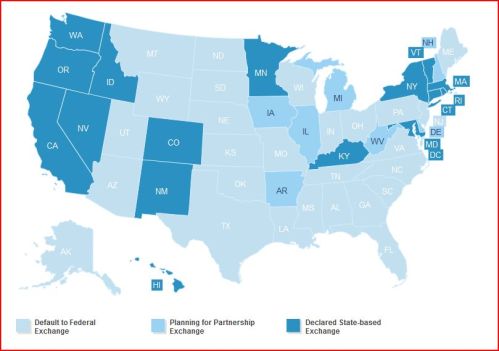
Kentucky ObamaCare: Your private details may be handed over to foreign powers
Don't already have a Kentucky Online Gateway Citizen Account?
WARNING NOTICE: This is a government computer system and is the property of the Commonwealth of Kentucky. It is for authorized use only regardless of time of day, location or method of access. Users (authorized or unauthorized) have no explicit or implicit expectation of privacy. Any or all uses of this system and all files on the system may be intercepted, monitored, recorded, copied, audited, inspected, and disclosed to authorized state government and law enforcement personnel, as well as authorized officials of other agencies, both domestic and foreign. By using this system, the user consents to such at the discretion of the Commonwealth of Kentucky. Unauthorized or improper use of this system may result in administrative disciplinary action and/or civil and criminal penalties. The unauthorized disclosure of Data containing privacy or health data may result in criminal penalties under Federal authority.
(Excerpt) Read more at ssoexternal.chfs.ky.gov ...
Cross-Posted at Ask Marion
Technorati Tags:
ObamaCare,
National Review,
ObamaCare Consequences,
Truth,
Demand Truth,
educate yourself,
ObamaCare Surprises,
Beck,
Daily Caller,
ObamaCare Exchanges,
Socialized Medicine,
ObamaCare Rollout,
You Be the Judge