Showing posts with label food policies of President Obama. Show all posts

Tuesday, August 7, 2012

World Wide Obesity Epidemic


Global Research, March 19, 2012

Washington's Blog

World Wide Obesity Epidemic

Some 68% of all Americans are overweight, and obesity has almost doubled in the last couple of decades worldwide. As International Business Tribune reports:

Studies conducted jointly by researchers at Imperial College London and Harvard University, published in the medical journal The Lancet, show that obesity worldwide almost doubled in the decades between 1980 and 2008.

***

68 per cent of Americans were found to be overweight while close to 34 percent were obese.

Sure, people are eating too much and exercising too little (this post is not meant as an excuse for lack of discipline and poor choices). The processed foods and refined flours and sugars don’t help. And additives like high fructose corn syrup – which are added to many processed foods – are stuffing us with empty calories.

But given that there is an epidemic of obesity even in 6 month old infants (see below), there is clearly something else going on as well.

Are Toxic Chemicals Making Us Fat?

The toxins all around us might be making us fat.

As the Washington Post reported in 2007:

Several recent animal studies suggest that environmental exposure to widely used chemicals may also help make people fat.

The evidence is preliminary, but a number of researchers are pursuing indications that the chemicals, which have been shown to cause abnormal changes in animals’ sexual development, can also trigger fat-cell activity — a process scientists call adipogenesis.

The chemicals under scrutiny are used in products from marine paints and pesticides to food and beverage containers. A study by the Centers for Disease Control and Prevention found one chemical, bisphenol A, in 95 percent of the people tested, at levels at or above those that affected development in animals.

These findings were presented at last month’s annual meeting of the American Association for the Advancement of Science. A spokesman for the chemical industry later dismissed the concerns, but Jerry Heindel, a top official of the National Institute of Environmental Health Sciences (NIEHS), who chaired the AAAS session, said the suspected link between obesity and exposure to “endocrine disrupters,” as the chemicals are called because of their hormone-like effects, is “plausible and possible.”

Bruce Blumberg, a developmental and cell biologist at the University of California at Irvine, one of those presenting research at the meeting, called them “obesogens” — chemicals that promote obesity.

***

Exposed mice became obese adults and remained obese even on reduced calorie and increased exercise regimes. Like tributyltin, DES [which for decades was added to animal feed and routinely given to pregnant women] appeared to permanently disrupt the hormonal mechanisms regulating body weight.

“Once these genetic changes happen in utero, they are irreversible and with the individual for life,” Newbold said.

***

“Exposure to bisphenol A is continuous,” said Frederick vom Saal, professor of biological sciences at the University of Missouri at Columbia. Bisphenol A is an ingredient in polycarbonate plastics used in many products, including refillable water containers and baby bottles, and in epoxy resins that line the inside of food cans and are used as dental sealants. [It is also added to store receipts.] In 2003, U.S. industry consumed about 2 billion pounds of bisphenol A.

Researchers have studied bisphenol A’s effects on estrogen function for more than a decade. Vom Saal’s research indicates that developmental exposure to low doses of bisphenol A activates genetic mechanisms that promote fat-cell activity. “These in-utero effects are lifetime effects, and they occur at phenomenally small levels” of exposure, vom Saal said.

***

Research into the impact of endocrine-disrupting chemicals on obesity has been done only in laboratory animals, but the genetic receptors that control fat cell activity are functionally identical across species. “They work virtually the same way in fish as they do in rodents and humans,” Blumberg said. “Fat cells are an endocrine organ.”

Ongoing studies are monitoring human levels of bisphenol A, but none have been done of tributyltin, which has been used since the 1960s and is persistent in the marine food web. “Tributyltin is the only endocrine disrupting chemical that has been shown without substantial argument to have an effect at levels at which it’s found in the environment,” Blumberg said.

Concern over tributyltin’s reproductive effects on marine animals has resulted in an international agreement discontinuing its use in anti-fouling paints used on ships. The EPA has said it plans next year to assess its other applications, including as an antimicrobial agent in livestock operations, fish hatcheries and hospitals.

Bisphenol A is approved by the Food and Drug Administration for use in consumer products, and the agency says the amount of bisphenol A or tributyltin that might leach from products is too low to be of concern. But the National Toxicology Program, part of the National Institutes of Health, is reviewing bisphenol A, and concerns about its estrogenic effects prompted California legislators to propose banning it from certain products sold in-state, a move industry has fought vigorously.

Similarly, the Daily Beast noted in 2010:

[Bad habits] cannot explain the ballooning of one particular segment of the population, a segment that doesn’t go to movies, can’t chew, and was never that much into exercise: babies. In 2006 scientists at the Harvard School of Public Health reported that the prevalence of obesity in infants under 6 months had risen 73 percent since 1980. “This epidemic of obese 6-month-olds,” as endocrinologist Robert Lustig of the University of California, San Francisco, calls it, poses a problem for conventional explanations of the fattening of America. “Since they’re eating only formula or breast milk, and never exactly got a lot of exercise, the obvious explanations for obesity don’t work for babies,” he points out. “You have to look beyond the obvious.”

The search for the non-obvious has led to a familiar villain: early-life exposure to traces of chemicals in the environment. Evidence has been steadily accumulating that certain hormone-mimicking pollutants, ubiquitous in the food chain, have two previously unsuspected effects. They act on genes in the developing fetus and newborn to turn more precursor cells into fat cells, which stay with you for life. And they may alter metabolic rate, so that the body hoards calories rather than burning them, like a physiological Scrooge. “The evidence now emerging says that being overweight is not just the result of personal choices about what you eat, combined with inactivity,” says Retha Newbold of the National Institute of Environmental Health Sciences (NIEHS) in North Carolina, part of the National Institutes of Health (NIH). “Exposure to environmental chemicals during development may be contributing to the obesity epidemic.” They are not the cause of extra pounds in every person who is overweight—for older adults, who were less likely to be exposed to so many of the compounds before birth, the standard explanations of genetics and lifestyle probably suffice—but environmental chemicals may well account for a good part of the current epidemic, especially in those under 50. And at the individual level, exposure to the compounds during a critical period of development may explain one of the most frustrating aspects of weight gain: you eat no more than your slim friends, and exercise no less, yet are still unable to shed pounds.

***

Newbold gave low doses (equivalent to what people are exposed to in the environment) of hormone-mimicking compounds to newborn mice. In six months, the mice were 20 percent heavier and had 36 percent more body fat than unexposed mice. Strangely, these results seemed to contradict the first law of thermodynamics, which implies that weight gain equals calories consumed minus calories burned. “What was so odd was that the overweight mice were not eating more or moving less than the normal mice,” Newbold says. “We measured that very carefully, and there was no statistical difference.”

***

`Programming the fetus to make more fat cells leaves an enduring physiological legacy. “The more [fat cells], the fatter you are,” says UCSF’s Lustig. But [fat cells] are more than passive storage sites. They also fine-tune appetite, producing hormones that act on the brain to make us feel hungry or sated. With more [fat cells], an animal is doubly cursed: it is hungrier more often, and the extra food it eats has more places to go—and remain.

***

In 2005 scientists in Spain reported that the more pesticides children were exposed to as fetuses, the greater their risk of being overweight as toddlers. And last January scientists in Belgium found that children exposed to higher levels of PCBs and DDE (the breakdown product of the pesticide DDT) before birth were fatter than those exposed to lower levels. Neither study proves causation, but they “support the findings in experimental animals,” says Newbold. They “show a link between exposure to environmental chemicals … and the development of obesity.” [See this for more information on the potential link between pesticides and obesity.]

***

This fall, scientists from NIH, the Food and Drug Administration, the Environmental Protection Agency, and academia will discuss obesogens at the largest-ever government-sponsored meeting on the topic. “The main message is that obesogens are a factor that we hadn’t thought about at all before this,” says Blumberg. But they’re one that could clear up at least some of the mystery of why so many of us put on pounds that refuse to come off.

Consumption of the widely used food additive monosodium glutamate (MSG) has been linked to obesity.

Pthalates – commonly used in many plastics – have been linked to obesity. See this and this. So has a chemical used to make Teflon, stain-resistant carpets and other products.

Most of the meat we eat these days contains estrogen, antibiotics and powerful chemicals which change hormone levels. Modern corn-fed beef also contains much higher levels of saturated fat than grass-fed beef. So the meat we are eating is also making us fat.

Arsenic may also be linked with obesity, via it’s effect on the thyroid gland. Arsenic is often fed to chickens and pigs to fatten them up, and we end up ingesting it on our dinner plate. It’s ending up in other foods as well.

A lot of endocrine-disrupting pharmaceuticals and medications are also ending up in tap water.

Moreover, the National Research Council has found:

The effects of fluoride on various aspects of endocrine function should be examined further, particularly with respect to a possible role in the development of several diseases or mental states in the United States.

Some hypothesize that too much fluoride affects the thyroid gland, which may in turn lead to weight gain.

Antibiotics also used to be handed out like candy by doctors. However, ingesting too many antibiotics has also been linked to obesity, as it kills helpful intestinal bacteria. See this and this.

Moreover, many crops in the U.S. are now genetically modified. For example, 93 percent of soybeans grown in the US are genetically engineered, as are:

Some allege that Roundup kills healthy gut bacteria, and that genetically modified crops cause other health problems.

And Cornell University’s newspaper – the Cornell Sun – reports that our intestinal bacteria also substantially affect our ability to eliminate toxins instead of letting them make us fat:

Cornell scientists researching the effects of environmental toxins to the onset of obesity and Type II Diabetes, discovered that—unlike other factors such as eating too many unhealthy foods—the extent of damage caused by pollutants depends not on what a person puts into her mouth, but on what is already living within her gut.

Prof. Suzanne Snedeker, food science, and Prof. Anthony Hay, microbiology, researched the contribution that microorganisms in the gut and environmental toxins known as “obesogens” have on ever rising obesity levels. Their work, which was published last October in the journal Environmental Health Perspectives, reported a link between composition of gut microbiota, exposure to environmental chemicals and the development of obesity and diabetes. The review, “Do Interactions Between Gut Ecology and Environmental Chemicals Contribute to Obesity and Diabetes?” combined three main ideas: predisposed gut microbe composition can increase an individual’s risk of obesity and Type II Diabetes, gut microbe activity can determine an individual’s metabolic reaction to persistent pollutants such as DDT and PCB and certain pharmaceuticals can also be metabolized differently depending on the community of microbes in the gut.

The microbe community influences many metabolic pathways within the gut, Snedeker said. Our bodies metabolize chemicals, but how they are metabolized, and how much fat is stored, depends on gut ecology. Microbes are responsible not only for collecting usable energy from digested food, but also for monitoring insulin levels, storage of fat and appetite. Gut microbes also play an integral role in dealing with any chemicals that enter the body. According to Snedeker, differences in gut microbiota can cause drugs like acetaminophen to act as a toxin in some people while providing no problems for others. While pharmaceutical and microbe interactions are well understood, there is little information in the area of microbe response to environmental toxins.

She said, there are more than three dozen chemicals called obesogenic compounds, that can cause weight gain by altering the body’s normal metabolic responses and lipid production.

“It seems probable that gut microbes are affecting how our bodies handle these environmental chemicals,” Snedeker said. According to Snedeker, enzymes that are influenced by interactions of gut microbes break down approximately two-thirds of the known environmental toxins. Therefore, differences in the gut microbe community strongly affect our bodies’ ability to get rid of environmental pollutants. Obesogens can alter normal metabolic behavior by changing the levels of fat that our bodies store. Snedeker and Hay suggested that the microbes in the gut of humans determine the way in which these chemicals are metabolized and thus could contribute to obesity.

Snedeker and Hay concluded that although high levels of obesogenic chemicals are bound to cause some kind of disruption in the gut microbe community responsible for breaking these chemicals down, the degree of the disturbance is dependent upon gut microbial composition. In other words, the amount of weight an individual is likely to gain when exposed to environmental toxins, or her risk of acquiring Type II Diabetes, could depend on the microorganism community in their gut.

No, Everything Won‘t Kill You

In response to information about toxic chemicals in our food, water and air, many people change the subject by saying “well, everything will kill you”. In other words, they try to change the topic by assuming that we would have to go back to the stone age to avoid exposure to toxic chemicals.

But this is missing the point entirely. In fact, companies add nasty chemicals to their products and use fattening food-producing strategies to cut corners and make more money.

In the same way that the financial crisis, BP oil spill and Fukushima nuclear disaster were caused by fraud and greed, we are daily exposed to obesity-causing chemicals because companies make an extra buck by lying about what is in their product, cutting every corner in the book, and escaping any consequences for their health-damaging actions.

In fattening their bottom line, the fat cats are creating an epidemic of obesity for the little guy.

What Can We Do To Fight Back?

Eating grass-fed meat instead of industrially-produced corn fed beef will reduce your exposure to obesity-causing chemicals.

Use glass instead of plastic whenever you can, to reduce exposure to pthalates and other hormone-altering plastics.

Try to avoid canned food, or at least look for cans that are free of bisphenol A. (For example, the Eden company sells food in bpa-free cans.) Buy and store food in glass jars whenever possible. And wash your hands after handling store receipts (they still contain bpa).

Eat yogurt or other food containing good bacteria to help restore your healthy intestinal flora. If you don’t like yogurt, you can take “probiotic” (i.e. good bacteria) supplements from your local health food store.

And don’t forget to tell your grocery store that you demand real food that doesn’t contain bpa, pthalates, hormones, antibiotics or other junk. If we vote with our pocketbooks, the big food companies will get the message.

Washington's Blog is a frequent contributor to Global Research. Global Research Articles by Washington's Blog

Related:

Global Elite Using Obesity Vaccines to Alter Minds and Curb Consumption

More Fruit, Fewer Fries: Michelle Obama Might Have Taken the ‘Happy’ Out of McDonald’s Happy Meals

The 76 Dangers of Sugar

Saturday, May 12, 2012

Mad moms to food police: We'll eat what we want

Protest to focus on state demands in fight with consumers

cowface-commons

by Bob Unruh  - WND

Moms in Minnesota are preparing to defy state dictates over when and how they can access food supplies for their families, with a rally scheduled Monday to coincide with the beginning of the trial of the manager of a farm buying club, according to the Farm Food Freedom Coalition.

WND previously has reported on disputes between farmers and consumers on one side and federal regulators on the other. They have involved the purchase by consumers of raw milk, the rights of consumers to access milk from their own cows, a radio program that offered natural products and a blogger who wrote about his battle with diabetes and was threatened with jail.

The newest development comes from the Farm Food Freedom Coalition, which is assembling a protest at the Minneapolis trial of Alvin Schlangen, a farm buying club manager.

The group said that mothers in the state who act as hosts for “drop sites” for farm buying club members now have been threatened with criminal charges.

The May 14 protest will be at 7 a.m. outside the Minneapolis courthouse where Schlangen’s trial is scheduled, officials said.

“At the rally supporters will sign a ‘Declaration of Food Independence’ and demonstrate non-compliance against what they deem ‘unjust’ regulations,” the organization announced.

Another supporting organization, the Raw Milk Freedom Riders, said that Schlangen founded the Freedom Farms Coop, which simply connects people with the foods of their choice from local producers.

“Over the past two years the Minnesota Department of Agriculture has illegally raided Alvin’s van, warehouse, and farm. The state has now brought four charges against Alvin related to food distribution; all are misdemeanors counts. If convicted, Alvin faces up to a year in jail and hefty fines … just for helping to connect consumers to the producers and foods of their choice.”

Organizers confirm that “several Minnesota mothers who organize community access to local fresh farm foods plan to risk criminal charges by openly and publicly defying warnings from the Minnesota Department of Agriculture.”

“The MDA has threatened several mothers, conducted investigations against them and sent them warning letters that if they continue helping provide fresh food to their friends and neighbors, they will be subject to criminal charges and prosecution. The MDA alleges the mothers are violating food-handling regulations.”

Hundreds are expected to join the rally, organizers estimate.

“It is absolutely outrageous that during this time of economic crisis our state government is investigating and sending warning letters to mothers and putting farmers on trial who are helping provide communities with fresh foods. It is my right to contract privately with a farmer for the food of my choice just as it is the right of every American,” said Melinda Olson, a mother and recipient of one of the MDA’s warnings.

“The MDA’s harassment against mothers will not work. We plan to ignore this warning and continue operating as we are. MDA should not waste taxpayer money investigating, prosecuting and jailing peaceful farmers and mothers for helping their communities secure fresh foods. Our time to stand up against this tyranny is now!” she said.

Pete Kennedy of the Farm-to-Consumer Legal Defense Fund, who tracks such issues nationally, said, “Nowhere in the country at this time is state action against food freedom and consumer choice more oppressive than in the state of Minnesota.”

Plans posted online for the event explain that the court has allowed three days for Schlangen’s misdemeanor trial.

The Farm-to-Consumer Fund also confirmed that once the Minneapolis trial for Schlangen is over, he’ll face six more charges of food rule violations in Stearns County.

“While this is going on, there is a pending administrative hearing in which MDA is seeking an order to suspend any further food sales by Schlangen,” the fund reported.

“In addition to selling poultry and eggs produced on his farm, Schlangen manages the Freedom Farms Coop (a private food club formed in July 2010, serving more than 50 families) and delivers raw dairy products and other nutrient dense foods to club members, most of whom live in the Twin Cities.”

The organization documented Schlangen’s perspective, who said: “It must be legal to privately support farms that grow quality food and provide for the health of our growing children and seniors. This should be a model for today’s agriculture. Connecting kids with natural food production is vital to their future.”

He explains he believes private arrangements to purchase such food are not under the jurisdiction of the state.

It was nearly two years ago when the MDA raided warehouse space Schlangen leased. In the warrantless search, state officials seized food at the facility.

Then in 2011 deputies accompanied state agency officials when they impounded his truck and goods while he was delivering farm eggs to students at Macalester College in in St. Paul.

He has argued he doesn’t need a state “food handler’s permit” because he delivers only to members of the buying club through private contract, not the public.

The organization also reports the state agency “has tried” to put farmer Mike Hartmann out of business in recent years, bringing charges against him, his wife Diana and others.

WND reported several months ago when protesters distributed an estimated 100 gallons of raw milk in front of the offices of the U.S. Food and Drug Administration near Washington during a rally that prompted the federal agency to issue a statement defending its crackdown on the product.

The event was organized by the Farm Food Freedom Coalition. A spokesman for the rally, Max Kane, told WND that a caravan of vehicles collected the supplies of raw milk, then traveled to Silver Springs, Md., to the FDA offices for the protest.

The distribution there was in violation of a federal law that prevents people from moving raw milk across state lines for delivery to others. The rally participants were met by officers from the Department of Homeland Security and others.

But Kane said there were no conflicts, no arrests and no violence.

The FDA said there have been there have been reports of illnesses from raw milk, but a report from the Weston A. Price Foundation revealed that from 1980 to 2005 there were 10 times more illnesses from pasteurized milk than from raw milk.

Today, 30 states allow the sale of raw milk and 20 forbid it, but the federal government forbids it in interstate business.

In California, three people are facing trial following an investigation of the Rawesome buying club. In that case, one of the defense lawyers was stunned by the militancy of the prosecutor, declaring, “She doesn’t want raw milk. … She wants blood.”

The federal government has a long history of cracking down on those who produce raw milk and make it available to consumers – even when the consumers are the ones who own the cows and milk.

In that recent case in Wisconsin, a judge ruled that Americans do not have a right to choose their food, not even when they own the cows and the milk.

Kimberly Hartke of the Campaign for Real Milk, a project of The Weston A. Price Foundation, has told WND as the cases have developed the government’s “heavy-handed” tactics simply have gone too far.

“As more consumers seek greater access to local farm fresh milk to feed their families, our federal government is working overtime to curtail freedom to feed your family the way you deem necessary. Since most seek raw dairy for health reasons, this is a serious concern,” she said.

It was a ruling from Circuit Court Judge Patrick J. Fiedler in Wisconsin that said the families who reported they were boarding their cows for a fee and then getting the milk instead were running a “dairy farm.”

“It’s always a surprise when a judge says you don’t have the fundamental right to consume the foods of your choice,” said Kennedy.

Fiedler’s decision said, “Plaintiffs argue that they have a fundamental right to possess, use and enjoy their property and therefore have a fundamental right to own a cow, or a heard (sic) of cows, and to use their cow(s) in a manner that does not cause harm to third parties. They argue that they have a fundamental right to privacy to consume the food of their choice for themselves and their families and therefore have a fundamental right to consume unpasteurized milk from their cows,” the judge wrote.

Bunk, he concluded.

“They do not simply own a cow that they board at a farm. Instead, plaintiffs operate a dairy farm. If plaintiffs want to continue to operate their dairy farm then they must do so in a way that complies with the laws of Wisconsin.”

He continued, “The court denied plaintiffs’ motion for summary judgment, which means the following:

“(1) no, plaintiffs do not have a fundamental right to own and use a dairy cow or a diary (sic) herd;
“(2) no, plaintiffs do not have a fundamental right to consume the milk from their own cow;
“(3) no, plaintiffs do not have a fundamental right to board their cow at the farm of a farmer;
“(4) no, the Zinniker plaintiffs’ private contract does not fall outside the scope of the state’s police power;
“(5) no, plaintiffs do not have a fundamental right to produce and consume the foods of their choice; and
“(6) no, the DATCP did not act in an ultra vires manner because it had jurisdiction to regulate the Zinniker plaintiffs’ conduct.”

Friday, January 27, 2012

Food Fights and Class Warfare

There was a time when full tables signified prosperity and thick waistlines were considered attractive. The ability to eat one's fill was what separated the gentry from the peasant making do with a few crusts and salted leftovers. Fat was in because it represented leisure and wealth. Thin meant you were on the road to the poorhouse or to consumption, which meant your body was being consumed, not that you were the one doing the consuming.

Then feudalism went the way of the dodo, agriculture was revolutionized and starvation went extinct in the West. Between the widespread availability of cheap food and social welfare programs covering everything from soup kitchens to food stamps, it became hard to starve. Not only was the availability of food no longer associated with prosperity, but even the poor had begun to eat so well that fat began to carry working class and lower class associations.

Fat was no longer wealth, instead conscientious fitness became a mark of prosperity. The laden table made way for micro portions and exotic but barely edible foods. Thin was in on the plate and the waistline.

In Third World countries where feudalism never ended and the agriculture revolution never mattered, the values often never flipped. Instead of anorexia, teenage girls suffer from being force fed to make them more marriageable. The wealthy are fat and the feasts at the top never end.

In the West, weight stands in for class, at a time when explicit classism has become politically incorrect. When Europeans sneer at how fat Americans are, and American coastal elites sneer at the rest of the country for being fat, it's a class putdown that dressed up longstanding contempt in the colors of the welfare state.

Just because the left and its class warfare worldview, which pretends to be concerned about the plight of the underclass, dominates Western societies does not mean that it is not classist. The left is elitist and its underclass protectionism creates a new wave feudalism with a vast government funded upper and middle class dedicated to caring for the underclass, subsidizing it, caring for it and taxing it to pay for all those services.

The obesity concern trolling is a combination of classism and nanny statism that brings to mind the days when their ideological forebears thought that the way to deal with the poor was to sterilize those who seemed less capable than the rest to improve the breed. There is something equally Darwinian in the sneers aimed at Paula Deen. The breed being culled while the elites try to teach their less evolved cousins to survive by eating their arugula.

The nanny state is built on a technocratic confidence in the ability to create one size fits all solutions, overlaying that on a map of the current medical wisdom leads to the creation of single standards, which often have less to do with health than they do with the status symbols of the leisure class. 19th century popularized medicine created so many of these fads that some of them are still around today. The 20th century created even more.

Death though is not only inevitable, but it cannot be dodged with a one size fits all standard. Fitness guru Jim Fixx who helped kickstart the running craze died in his early fifties of a heart attack. Fixx had quit smoking and lost weight, and still died at an early age. Jackie Gleason who spent his life looking like a walking health attack, smoking and drinking, outlived him by nearly twenty years.

Medicine is individual and the collectivization of medicine is a technocratic solution that leads nowhere except to few doctors and ranks of unionized medical personnel nudging patients into following the script handed down to them by professors who have never actually practiced medicine a day in their life. This is the outcome of a nanny state outlook that sees individuals as dispensable, that is concerned only with group outcomes.

This view requires seeing all people as endowed with certain problems that require broad stroke solutions, like adding calories to menus and other rats in a maze tactics designed to modify human behavior on a national level. The targeting of fast food restaurants, public school meals and food stamps reeks of the same elitist arrogance that drives the nanny state.

The politicization of food by the elites of the left always comes down to class, no matter how it may be disguised in liberal colors. From exotic to locally grown, the trajectory of food politics follows the upselling of food prices The only difference is that the dominance of the left has wrapped the added cost with no added value in their own politics. The more affordable food becomes, the more the left finds ways to add cost to food, without adding value.

But the politicization of food goes beyond the fair trade and locally grown fetishes of the politically correct elites, the more politics ends up on your plate, the more the elites are driven to involve everyone else in their food fights. What begins as a way of raising prices while diminishing value to assert wealth and privilege becomes imposed on everyone in the name of their political morality. Once everyone else is paying more and getting less, then the classist left demands new ways to set its superior moral eating habits apart. Instead of everyone ending up with more food, everyone ends up with less.

The cultural ascendance of the left has meant that instead of conspicuous consumption, the consumption has to be disguised with conspicuous political pieties. The food may cost twice as much, but it's locally grown on a farm run by handicapped union workers who visit Cuba to receive free health care or by the indigenous peoples of Tuba-Tuba with the proceeds going to a complete sonic library of their chants and ceremonies. The entire thing is meaningfully meaningless, but it disguises the consumption in a hairshirt, which is the entire point.

Conspicuous consumption is now for the poor while conspicuous conservation is for liberal elites. Al Gore may live in a mansion but he still has the carbon footprint of a mouse. The problem is the truck driver whose vehicle emissions are killing the planet. Whole Foods is just fine, but we need to do something about McDonald's.

Conspicuous conservationism has made America a poorer country, destroyed millions of jobs and outsourced them overseas. Now it's beginning to make America a hungrier country. In a moment of horrifying tone deafness that makes Marie Antoinette seem enlightened, the left is cheering that fewer Americans are eating meat, without seeming to understand that it's because fewer Americans are able to afford it because of their economic policies.
What the left's food police can't accomplish with nudges and shaming, they can finish off with policies and regulations that end up raising the price of food or by making it too difficult to sell. As the left tries and fails to sell the general public on conservation as a status symbol, it moves in the heavy bureaucratic artillery.

It isn't unusual for elites to use the legal system to enforce their own values on the general public, though it was the kind of thing that the universal franchise was supposed to put a leash on, but there is something grim about their growing preoccupation with the habits and mortality of the population. It's the kind of concern that has a habit of ending in eugenics and the more medicine is universalized, the easier it is to start cutting off access to medical treatment for those who haven't been nudged far enough in the right direction.

Social medicine politicizes food consumption and a globalized economy politicizes food production. And the politicized American plate has less on it and at a higher price. While the left obsessively pursues its mission of destroying fast food in the name of lowering social medicine costs and being fairer to farmers, what they are truly accomplishing is to take affordable and filling food off the shelves, as they have done with countless other products that they have targeted.

By the time the left was done with Russia, it had gone from a wheat producer to a wheat importer and many basic food staples were hard to come by even in a country filled with collective farms. Finding modern day examples of that isn't hard. We only have to look as far south as Venezuela to see empty store shelves under the weight of government food policies. But one day that may be the local grocery store if the left gets its way.

By Daniel Greenfield at Sultan Knish

Tuesday, March 3, 2009

Most of What You Eat is Not Real Food


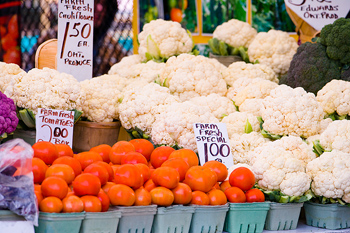
farmer's market, fresh vegetablesThe Speigel Online (The Mirror - German Magazine) conducted an interview with legendary chef Alice Waters about the "eat local" movement, which has become a force to be reckoned with in the United States in recent years. 

Waters was one of the pioneers of that movement -- she transformed her state's cooking in the 1970s into world-renowned "California cuisine" with her Berkeley restaurant Chez Panisse. She promoted the use of in-season produce from local farms, and advocated planting vegetable gardens in schools.

More than three decades later, Waters is still promoting sustainable agriculture. She is now vice president of the international Slow Food movement, which promotes regionally grown goods and local culinary traditions.

In the interview, Waters expressed her opinion that most of the food currently being consumed is not real food. Real food, she argues, is grown by people who take care of the land, and who refrain from using herbicides and pesticides. Real food is food that's grown for taste, and it's grown in a way that pays people a good wage for their work rather than being grown at somebody else's expense.

To read the whole interview, and see what Waters has to say about seasonal food, the spread of the eat-local movement, and the food policies of President Obama, click the link below.