Whole Foods has announced it will make labeling of genetically engineered (GE) ingredients mandatory in its American and Canadian stores by 2018. Many expect other retailers to follow suit
About 20 major food companies, including Wal-Mart, recently gathered for a meeting in Washington to discuss potential lobbying for a national GMO labeling program
The Organic Consumers Association (OCA) recently announced the creation of a new nationwide campaign called the Organic Retail and Consumer Alliance (ORCA). The mission of the new alliance includes exposing and eliminating the misleading practice of “natural” labeling and marketing
Organic food and products, by law and by third-party certification, are produced without the use of synthetic pesticides and chemical fertilizers, animal drugs, genetically modified organisms (GMOs), irradiation, nanoparticles, or sewage sludge, whereas so-called “natural” products are completely unregulated
A critical assessment of the consequences of commercial cultivation of GE plants in the US for 20 years advises the EU to NOT follow the path of the US, as it has had profound negative impacts on farmers, seed markets, and consumers. Among the eight final recommendations, the report concludes that “There must be no large-scale, commercial cultivation of GE herbicide-tolerant or insecticide-producing crops,” and that all potential situations must be retrievable
Whole Foods recently announced the health food giant will make labeling of genetically engineered (GE) ingredients mandatory in its American and Canadian stores by 2018.
(Whole Foods stores in Great Britain already require GE foods to be labeled.) Many expect other retailers to follow suit.
Despite the five-year deadline, which may seem long for some, this announcement is incredibly encouraging and represents a major sign that all the efforts most of you put into the Proposition 37 campaign have paid off. We may have lost that battle but this, and other signs, strongly suggest we are winning the war.
Prop 37 raised an enormous amount of awareness about genetically engineered (GE) foods (a.k.a. genetically engineered organisms, or GMO’s). Many Americans didn’t even know they existed prior to the California campaign to require GE foods to be labeled.
The Prop 37 campaign also ushered conversations about food to the front pages of mainstream media. Over the past year, we’ve not only seen an increase in the number of stories on genetically engineered foods, more people are now also talking about other truth-in-labeling issues, and food safety in general.
People are waking up to the fact that we really don’t understand what we’re eating anymore, and they’re taking control of their food again. Now, other states, including Washington State and Missouri, are taking up the baton to label GE foods. In all, 22 states now have some sort of pending labeling legislation.
Seeing the writing on the wall, the National Cooperative Grocers Association (NGCA)1 recently wrote a letter to their members that now also urges food manufacturers to stop funding or opposing GMO labeling. This is an absolutely stupendous victory for our side that finally vindicates the hard work so many of you put into this effort last year.
Whole Foods Responds to Consumer Demand for GMO Labeling
Whole Foods Co-Chief Executive Walter Robb recently told the Los Angeles Times:2
"This is an issue whose time has come. With cases like horse meat discovered in the U.K., plastic in milk in China, the recalls of almond and peanut butter in the U.S., customers have a fundamental right to know what's in their food.... 'The government has not been willing to take on this issue, so it's going to have to happen differently.'"
According to a February 2012 poll of potential voters in the 2012 US elections, 90 percent of responders were in favor of labeling GE foods. There’s really NO reason not to, aside from protecting the biotech industry’s profits. Americans are already responding favorably to those few products that are labeled. A. C. Gallo, president of Whole Foods, told the New York Times:3
“We’ve seen how our customers have responded to the products we do have labeled. 'Some of our manufacturers say they’ve seen a 15 percent increase in sales of products they have labeled [non-GMO].'”
“Whole Foods' move will be copied by competitors, said Scott Faber, vice president for government affairs for the advocacy organization Environmental Working Group. 'Clearly, they're going to be the first of many retailers who will require labeling as a condition of sale in their stores.'"
It’s worth remembering that CA Prop 37 failed to be passed by just a few percentage points back in November, even though the food and biotech industry spent five times more money (a total of $46 million) on its propaganda campaign than the supporters of the measure. That’s really a good indication of how difficult this fight is for the industry. People want to know what they’re eating, and convincing Americans to lay aside their concerns about GE foods requires a lot of money and effort.
It’s a challenge they can overcome, no doubt. But people are increasingly seeing through the lame excuses, such as not wanting you to be “confused” by the labels, or that labeling would raise food prices, or that labeling is unnecessary because it’s “just as safe” as its conventional counterparts. It’s all nonsense, and fortunately, it’s not flying as well as it used to.
NCGA Urges All Vendor Partners to Support GMO Labeling Initiatives
As just mentioned, the National Cooperative Grocers Association5 (NGCA), a business services cooperative that represents 134 retail food co-ops across the US, sent out a letter on February 28 restating its support of GMO labeling, urging consumers to contact manufacturers directly with their concerns, and encouraging their vendor partners to “consider the kind of statement and negative impact that an organization makes by supporting or donating to campaigns designed to prevent the labeling of GMOs, whether on a state or national level.”
This is yet another sign that retailers and food manufacturers who opposed prop 37 have indeed been paying the price. Take the Cheerios fiasco, for example. General Mills spent over $1.1 million to deceive their customers by defeating Prop 37, and the backlash was significant. When General Mills' Cheerios brand released a Facebook app last December asking "fans" to "show what Cheerios means to you,” thousands used the app to express their disgust over the company's betrayal.
I believe we can expect far fewer brands to engage in biotech’s fight in future state initiatives. They really were not expecting the consumer backlash that followed in the wake of Prop 37, and are likely to be far less willing to take another bullet. The NGCA’s letter to their vendor partners reads in part:
“There was substantial consumer backlash from manufacturer financial support of campaigns to prevent GMO labeling in California. Now, campaigns calling for state level labeling of GMOs are active in a growing number of many other states. Many NCGA co-ops are supporting these campaigns and are also considering one or more of the following actions related to GMOs in food on a local level: discontinuing or boycotting items from companies that support antilabeling campaigns or whose products contain common GMO ingredients; excluding items that contain common GMO ingredients from store-level promotions and new item programs; and/or shifting more of their product assortment focus to certified organic brands.
...We believe GMO labeling will be a reality in the coming years and hope your organization will join us by showing leadership in this area through support of consumers' right to information to make informed purchase decisions.”
Organic Consumers Association Calls on Whole Foods to Move Up Labeling Timeline
Dave Murphy, founder and executive director of Food Democracy Now! who served as co-chair of Prop 37, has criticized Whole Foods timeline, saying “Americans need labeling of GMO foods today, not five years down the road,”6 adding that “had they supported Prop 37 sooner, Americans may have labeling right now.”
Similarly, the Organic Consumers Association (OCA) issued a response to Whole Foods’ plan on March 117 stating that, while it is encouraged by the plan, the five-year timeline is too long. The OCA urges Whole Foods to move up its labeling deadline to July 2015, and to “take the lead in the organic industry to end deceptive labeling practices by requiring all the stores' products that include the word 'natural' in their labeling or packaging to be GMO-free.” According to the OCA press release:
“Washington's I-522 is expected to pass in November 2013, becoming the first statewide mandatory GMO labeling law. The law establishes July 2015 as the deadline for compliance. Whole Foods Markets already complies with the U.K.'s mandatory GMO labeling law in its seven stores in that country. Whole Foods came under fire last year when the company dragged its feet in supporting Proposition 37, California's Right to Know GMO Labeling citizens' initiative. In October, CEO John Mackey confirmed in a blog post that Whole Foods stores knowingly sell Monsanto's genetically modified corn, without labeling it.”
Monsanto Responds to 'Affluent Consumer' Concerns
On March 14, Monsanto President Brett Begeman discussed Whole Food’s move in an interview on NPR radio.8 According to NPR:
“Monsanto President Brett Begeman, speaking at an ag event this week in Decatur, Illinois, called the move 'Big' and said it shows that the agriculture industry needs to come together to address the concerns of what he called the 'affluent consumer.'
Begemann: ‘How do we address their concerns and provide them the choice that they’re asking for without driving up the cost on the large part of the population that cannot afford another increase in the cost of food.' The potential of higher costs is one of the concerns companies have raised about the Whole Foods plan. Begmann says the ag industry needs to figure how to cooperate and co-exist with those who have different food policy views.”
ORCA Takes Proactive Role to Address ‘Natural’ Products Intentional Mislabeling
In related news, the organic and fair trade standards watchdog the Organic Consumers Association (OCA), recently announced the creation of a new nationwide campaign called the Organic Retail and Consumer Alliance (ORCA). The announcement was made at the national Expo-West Natural Products convention. This new alliance includes public interest groups, food producers and retailers, including co-ops, natural food stores, farmers markets, Community Supported Agriculture (CSA) buying clubs and wholesalers.
ORCA’s mission is to “aggressively promote organic food and products, and expose and eliminate the misleading practice of 'natural' labeling and marketing that has slowed the growth of America’s $30-billion dollar organic sector.” In a press release, OCA’s National Director, Ronnie Cummins states:9
“Routine mislabeling and marketing has confused millions of U.S. consumers, and enabled the so-called ‘natural’ foods and products sector to grow into a $60-billion dollar a year powerhouse, garnering twice as many sales in 2012 as certified organic products. By exposing these misleading tactics, and promoting truth-in-labeling, we believe we can rapidly grow sales of certified organic and authentically natural food and products.”
This is indeed a huge problem, as numerous polls and surveys have shown that otherwise health conscious Americans do not understand the qualitative difference between organic and so-called “natural” products. Contrary to reality, the majority of consumers believe the “natural” label equates to “almost organic,” and many believe the “all-natural” label means a product is better than organic! That’s the power of word-association, and these industries are well aware of how the word natural “feels” to consumers who are in the dark about the regulatory differences between the labels... As stated by Cummins:
“This is outrageous, given that organic food and products, by law and by third-party certification, are produced without the use of synthetic pesticides and chemical fertilizers, animal drugs, genetically modified organisms (GMOs), irradiation, nanoparticles, or sewage sludge, whereas so-called 'natural' products are unregulated.”
To achieve its aims, ORCA members will use “a combination of public education, marketplace pressure, boycotts, class action lawsuits and state legislation to end misleading labeling practices in the 'natural' products sector.”
Consequences of 20 Years of Commercial Cultivation of GE Plants in the US
Just in time, as the GE issue is about to heat up once more, a critical assessment of the consequences of commercial cultivation of GE plants in the US was published. The report, published in Berlin, was commissioned in response to increasing pressure from biotech companies requesting broader authorizations to cultivate GE crops in the European Union (EU), where acceptance of such crops is much lower than the US. By looking at the effects that two decades worth of GE crop cultivation has had in the US, the report makes recommendations on how to best handle the technology in the EU. Presented by TestBiotech10 (which published the English version of the report),11 some of the principal findings include the following damaging assessments:
Consequences for farmers: Because the weeds have adapted to the cultivation of the genetically engineered plants, farmers are experiencing a substantial increase in both working hours and the amounts of herbicide they require. Cultivation of insecticide-producing plants have led to "an arms race in the field" against the pest insects, which have adapted quickly. Genetically engineered plants have been created to produce up to six different toxins. Costs for seeds have increased dramatically, without there being a substantial increase in yields or significant savings in the amounts of spray required.
Impact on the seed market: The seed industry in the US is largely dominated by agrochemical industries such as Monsanto, Dupont and Syngenta. In the future, it has to be expected that developments in the US will be strongly influenced by the interests of agro-chemical companies pushing for the cultivation of genetically engineered plants.
Consequences for producers who avoid genetically engineered crops: Contamination with non-authorized genetically engineered plants has already caused billions of dollars worth of damage in the US.
Consequences for consumers: Consumers are exposed to a whole range of risks regarding unintended substances from plant metabolism, from residues from complementary herbicides and from the properties of additional proteins produced in the plants. As yet, there is no way of monitoring the actual effects that consumption of these products might have.
The final recommendations come as no surprise to those well-versed in the many issues involved. It’ll be interesting to see if the EU will follow them or cave to industry pressure like the US. The report concludes:
"In light of the effects caused so far as a result of GE crop cultivation in the United States, the following recommendations can be made:
There must be no large-scale, commercial cultivation of GE herbicide-tolerant or insecticide-producing crops. Such crop cultivation is unsustainable and will lead to a ‘race’ to step up their cultivation.
Ensure that all potential situations are retrievable. Cultivation of crops such as rapeseed, which is extremely susceptible to spread through the environment, should be banned as a matter of principle. An absolute prerequisite for any release of such crops is that it must be possible to control their spread and their persistence in the environment.
Prevent cases of contamination. A particular focus on clean seed is needed because otherwise farmers will lose control over the cultivation of GE crops in their fields and it will no longer be possible to adequately differentiate between products in the subsequent stages of the food production chain.
Risk assessments and risk research should not be geared to economic interests. Under EU law, environmental and consumer protection clearly take precedence over other interests. This must be applied more rigidly in practice. Directives based on EFSA risk assessments must be tightened up significantly and the preconditions for independent risk research must be specifically fostered.
The health effects of consuming products made from GE crops must be monitored. Under EU law, the monitoring of the impact on public health and the environment of products authorized for marketing in the EU is compulsory, but has only been partially implemented.
To allow for the differentiation of products on the feed markets, labeling should be extended to include animal products. The EU should also focus specifically on the search for alternatives to existing feed production and import markets.
To prevent further concentration on seed markets, seed patenting must be stopped.
A plan for research into alternatives must be mapped out. In many areas conventional breeding is a cheaper, more productive and safer alternative for the production of new seed varieties. This approach should be specifically fostered in the future."
Keep Fighting for Labeling of Genetically Engineered Foods
While California Prop. 37 failed to pass last November, by a very narrow margin, the fight for GMO labeling is far from over. The field-of-play has now moved to the state of Washington, where the people's initiative 522, "The People's Right to Know Genetically Engineered Food Act," will require food sold in retail outlets to be labeled if it contains genetically engineered ingredients. As stated on LabelitWA.org:
"Calorie and nutritional information were not always required on food labels. But since 1990 it has been required and most consumers use this information every day. Country-of-origin labeling wasn't required until 2002. The trans fat content of foods didn't have to be labeled until 2006. Now, all of these labeling requirements are accepted as important for consumers. The Food and Drug Administration (FDA) also says we must know with labeling if our orange juice is from fresh oranges or frozen concentrate.
Doesn't it make sense that genetically engineered foods containing experimental viral, bacterial, insect, plant or animal genes should be labeled, too? Genetically engineered foods do not have to be tested for safety before entering the market. No long-term human feeding studies have been done. The research we have is raising serious questions about the impact to human health and the environment.
I-522 provides the transparency people deserve. I-522 will not raise costs to consumers or food producers. It simply would add more information to food labels, which manufacturers change routinely anyway, all the time. I-522 does not impose any significant cost on our state. It does not require the state to conduct label surveillance, or to initiate or pursue enforcement. The state may choose to do so, as a policy choice, but I-522 was written to avoid raising costs to the state or consumers."
Remember, as with CA Prop. 37, they need support of people like YOU to succeed. Prop. 37 failed with a very narrow margin simply because we didn't have the funds to counter the massive ad campaigns created by the No on 37 camp, led by Monsanto and other major food companies. Let's not allow Monsanto and its allies to confuse and mislead the people of Washington and Vermont as they did in California. So please, I urge you to get involved and help in any way you can, regardless of what state you live in.
No matter where you live in the United States, please donate money to these labeling efforts through the Organic Consumers Fund.
If you live in Washington State, please sign the I-522 petition. You can also volunteer to help gather signatures across the state.
For timely updates on issues relating to these and other labeling initiatives, please join the Organic Consumers Association on Facebook, or follow them on Twitter.
Talk to organic producers and stores and ask them to actively support the Washington initiative.
In 2010, Americans spent just over 9 percent of their disposable income on food (5.5 percent at home and 3.9 percent eating out); this is less than half or more of most any other country on the planet
The “faster, bigger, cheaper” approach to food production that the United States has mastered is unsustainable and is contributing to the destruction of our planet and your health
Easy access to cheap, poor-quality food is contributing to the rising rates of obesity, type 2 diabetes, heart disease and other chronic disease
Nearly all cheap processed foods in the United States contain genetically modified (GM) ingredients and come from confined animal feeding operations, which contribute to environmental destruction, animal cruelty and the spread of antibiotic-resistant super-germs
To protect your health and the environment, strive to make 90 percent of your diet non-processed, whole organic foods; it may cost more to eat this way initially, but the amount it will save you in the long run is immeasurable
In 2010, Americans spent just over 9 percent of their disposable income on food (5.5 percent at home and 3.9 percent eating out).i
This is a dramatically lower percentage spent just decades ago in the early 1960s, when over 17 percent was spent on food, and even more of a “bargain” compared to 1930, when Americans spent over 24 percent of their disposable income to feed their families.
When you compare what Americans spend to what people in other countries spend, you’ll also notice some great disparities.
On the surface, having cheaper food may seem like an advantage, but in reality while Americans may be saving a few dollars on their meals, they’re paying big time in terms of their health, and the health of the planet.
No Place on the Planet Has Cheaper Food Than the United States
As reported in TreeHugger, professor Mark J. Perry stated on his Carpe Diem blog:ii
“... compared to other countries, there's no other place on the planet that has cheaper food than the U.S. The 5.5% of disposable income that Americans spend on food at home is less than half the amount of income spent by Germans (11.4%), the French (13.6%), the Italians (14.4%), and less than one-third the amount of income spent by consumers in South Africa (20.1%), Mexico (24.1%), and Turkey (24.5%), which is about what Americans spent DURING THE GREAT DEPRESSION, and far below what consumers spend in Kenya (45.9%) and Pakistan (45.6%).”
Unfortunately, the “faster, bigger, cheaper” approach to food production that the United States has mastered is unsustainable and contributing to the destruction of our planet and your health. Michael Pollan, author of The Omnivore's Dilemma and a number of other bestsellers, said it best:
"Cheap food is an illusion. There is no such thing as cheap food. The real cost of the food is paid somewhere. And if it isn't paid at the cash register, it's charged to the environment or to the public purse in the form of subsidies. And it's charged to your health."
In other words, pay now or pay later. American food may be cheap, but that’s about the only “compliment” it deserves, because when you rely on cheap food, you typically get what you pay for.
Why are So Many Americans Fat and Sick?
In many cases, easily the majority, it is due to dietary factors! Millions of Americans live in "food deserts" where fresh produce is hard to find but processed food and fast food is available everywhere. If your meals consist of $1 burgers and super-size drinks, your diet may be cheap, but it is also excessively high in grains, sugars, and factory-farmed meats. This is a recipe for obesity, diabetes and heart disease, just to name a few calamitous conditions that befall those who consume the standard American diet!
You have the U.S. government to thank for this cheap food, as farm subsidies bring you high-fructose corn syrup, fast food, animal factories, monoculture, and a host of other contributors to our unhealthful contemporary diet. A report comparing federal subsidies of fresh produce and junk food, prepared by U.S. PIRG, a non-profit organization that takes on special interests on behalf of the public, revealed where your tax dollars are really going, and it's quite shocking.
If you were to receive an annual federal subsidy directly, you would receive $7.36 to spend on junk food and just 11 cents to buy apples. In other words, every year, your tax dollars pay for enough corn syrup and other junk food additives to buy 19 Twinkies, but only enough fresh fruit to buy less than a quarter of one red delicious apple.
Heart disease is a direct reflection of poor dietary choices. Heart disease costs us $189.4 billion per year. However, statistics show that by 2030, these costs will triple, resulting in a mind-bending $818 billion!iii Meanwhile, as TreeHugger reported:
“If Americans continue to pack on pounds, obesity will cost us about $344 billion in medical-related expenses by 2018, eating up about 21 percent of healthcare spending, according to an article in USA Today.iv Not to mention the unseen health issues associated with a genetically modified and pesticide-bathed food system.”
What's the "Cost" of a Food System Based on Genetically Modified Foods?
The damage is quite simply immeasurable. Nearly all processed foods in the United States contain genetically modified (GM) ingredients, particularly Bt corn and Roundup Ready soy. These crops and other GM varieties are now planted on nearly 4 billion acres of land throughout 29 countries, as their makers (primarily Monsanto, Dupont, Syngenta) continue to praise their worth. These companies, which have created patents and intellectual property rights so that they now control close to 70 percent of global seed sales, extol the virtues of GM crops as though they are a panacea for ending world hunger and solving the food crisis.
But in fact, as a report coordinated by Navdanya and Navdanya International, the International Commission on the Future of Food and Agriculture, The Center for Food Safety (CFS) and others, has stated, GM crops are surrounded by false promises and failed yields, to the extent that they are now destroying the food system with superweeds, superpests and more.
Scientists have discovered a number of health problems -- like changes in reproductive hormones, testicular changes and damage to the pituitary gland -- related to genetically modified foods, however these studies have been repeatedly ignored by both the European Food Safety Authority and the U.S. Food and Drug Administration (FDA). GM foods are typically regarded as equivalent to their conventional counterparts. This, however, is flawed logic because GM foods contain foreign genes that have never before been introduced into the food supply, and are universally contaminated with toxic GMO-specific herbicide residues.
Behind Virtually Every Cheap Burger is a CAFO
It cannot be ignored that the animals raised on confined animal feed operations (CAFOs) pay one of the highest prices for Americans’ cheap food. The typical CAFO can house tens of thousands of animals (and in the case of chickens, 100,000) under one roof, in nightmarish, unsanitary, disease-ridden conditions.
Animals raised at CAFOs are treated like objects, not animals -- stuck in cages, overcrowded, often covered in feces -- which is not only hard to watch, but also hard to stomach. It is not at all unusual for animals to be abused in these circumstances; the very conditions in which they live are abuse in their own right. For those who aren't aware, about 80 percent of all the antibiotics produced are used in agriculture -- not only to fight infection, but to promote unhealthy (though profitable) weight gain in animals. Unfortunately, this practice is also contributing to the alarming spread of antibiotic-resistant disease -- a serious problem that is costing tens of thousands of Americans their lives.
CAFOs have been highly promoted as the best way to produce food for the masses, but the only reason CAFOs are able to remain so "efficient," bringing in massive profits while selling their food for bottom-barrel prices, is because they substitute subsidized crops for pasture grazing.
Factory farms use massive quantities of corn, soy and grain in their animal feed, all crops that they are often able to purchase at below cost because of government subsidies. Because of these subsidies, U.S. farmers produce massive amounts of soy, corn, wheat, etc. -- rather than vegetables -- leading to a monoculture of foods that contribute to a fast food diet. As written in "CAFO: The Tragedy of Industrial Animal Factories":v
"Thanks to U.S. government subsidies, between 1997 and 2005, factory farms saved an estimated $3.9 billion per year because they were able to purchase corn and soybeans at prices below what it cost to grow the crops. Without these feed discounts, amounting to a 5 to 15 percent reduction in operating costs, it is unlikely that many of these industrial factory farms could remain profitable.
By contrast, many small farms that produce much of their own forage receive no government money. Yet they are expected somehow to match the efficiency claims of the large, subsidized megafactory farms. On this uneven playing field, CAFOs may falsely appear to "outcompete" their smaller, diversified counterparts."
As it stands, the book notes that "grazing and growing feed for livestock now occupy 70 percent of all agricultural land and 30 percent of the ice-free terrestrial surface of the planet. If present trends continue, meat production is predicted to double between the turn of the 21st century and 2050." Does this sound like a good deal to you?
Allocating More Money to Your Food is Investing in Your Most Valuable Asset...
You... and your family (including those who are yet to be born)! If you want to optimize your health, you simply must return to the basics of healthy food choices. And, as more and more people begin to grasp this concept and demand healthy, unadulterated foods, the more must be produced, one way or another. There is just no way around it -- if you want your family to be healthy, someone in your household, or someone you pay, must invest some time in the kitchen preparing your food from scratch, using fresh, whole ingredients.
Avoiding processed food requires a change in mindset, which is not always an easy task. It CAN be done, however. Rather than looking at processed foods as a convenience that tastes good or saves money, try thinking of it as:
Extra calories that will harm your body
A toxic concoction of foreign chemicals and artificial flavors that will lead to disease
A waste of your money
Likely to lead to increased health care bills for you and your family
Not something to give to children, whose bodies are still developing and in great need of nutrients
Your goal should be to strive for 90 percent non-processed, whole food. Not only will you enjoy the health benefits—especially if you buy mostly organic—but you’ll also get the satisfaction of knowing exactly what you’re putting into your body, and that in and of itself can be a great feeling. It may cost more to eat this way, but then again it might not. (And in the long run the amount it will save you in the long run is immeasurable.)
You may be surprised to find out that by going directly to the source you can get amazingly healthy, locally grown, organic food for less than you can find at your supermarket. This gives you the best of both worlds: food that is grown near to you and sold with minimal packaging, cutting down on its carbon footprint and giving you optimal freshness, as well as grown without chemicals, genetically modified (GM) seeds, and other potential toxins.
Restaurants are able to keep their costs down by getting food directly from a supplier. You, too, can take advantage of a direct farm-to-consumer relationship, either on an individual basis by visiting a small local farm or by joining a food coop in your area. To find these types of real foods, grown by real farmers who are eager to serve their communities, visit LocalHarvest.org.
Simple Strategies to Eat Well Without Spending More
There are many strategies available to stretch your food dollars while feeding your family healthy foods. Rather than wasting money on expensive cereal boxes and bags of chips, put your money toward foods that will serve your health well, such as raw organic dairy, cage-free organic eggs, fresh vegetables and fermented foods you make at home (fermented foods are incredibly economical because you can use a portion of one batch to start the next).
The following strategies will also make it easier to eat well on a tight budget:
Identify someone to prepare meals. Someone has to invest time in the kitchen to prepare your meals, or else you will succumb to costly and unhealthy fast food and convenience foods. So it will be necessary for either you, your spouse, another family member or someone you pay to prepare your family's meals from locally grown healthful foods.
Become resourceful: This is an area where your grandmother can be a wealth of information, as how to use up every morsel of food and stretch out a good meal was common knowledge to generations past. Seek to get back to the basics of cooking -- using the bones from a roast chicken to make stock for a pot of soup, extending a Sunday roast to use for weekday dinners, learning how to make hearty stews from inexpensive cuts of meat, using up leftovers and so on.
Plan your meals: If you fail to plan you are planning to fail. This is essential, as you will need to be prepared for mealtimes in advance to be successful. Ideally this will involve scouting out your local farmer's markets for in-season produce that is priced to sell, and planning your meals accordingly. But, you can also use this same premise with supermarket sales or, even better, produce from your own vegetable garden.
You can generally plan a week of meals at a time, make sure you have all ingredients necessary on hand, and then do any prep work you can ahead of time so that dinner is easy to prepare if you're short on time in the evening.
It is no mystery that you will be eating lunch around noon every day so rather than rely on fast food at work, before you go to bed make a plan as to what you are going to take to work for lunch the next day. This is a simple strategy that will let you eat healthier and save money, especially it you take healthy food from home in with you to work.
Avoid food waste: According to a study published in the journal PloS One, Americans waste an estimated 1,400 calories of food per person, each and every day.vi The two steps above will help you to mitigate food waste in your home, and you may also have seen my article titled 14 Ways to Save Money on Groceries. Among those tips are suggestions for keeping your groceries fresher, longer, and I suggest reviewing those tips now.
Buy organic animal foods. The most important foods to buy organic are animal, not vegetable, products (meat, eggs, butter, etc.), because animal foods tend to concentrate pesticides in higher amounts. If you cannot afford to buy all of your food organic, opt for organic animal foods first.
Microsoft founder, Bill Gates, aims to end world hunger by growing more genetically engineered food crops—a philanthropic plan that may be gullible at best, and destructive at worst, both to the environment and humanity
Monsanto and other biotech companies have collaborated with the Gates Foundation via the Alliance for a Green Revolution in Africa (AGRA) to promote the use of genetically modified (GM) crops in Africa
Gates supports the use of Golden Rice, which has been genetically modified to produce beta-carotene that your body can convert to vitamin A. It’s promoted as a way to alleviate vitamin A deficiency, which is common in developing countries. However, beta carotene is fat soluble, and many third-world inhabitants eat a very low-fat diet, which would seriously impede or block the conversion.
According to one study, a woman would have to consume 16 pounds of Golden Rice per day to get the recommended amount of vitamin A; a child would have to eat 12 pounds, raising serious doubts about the usefulness of this invention
Bill Gates: One of the World’s Most Destructive Do-Gooders?
By Dr. Mercola
Above, ABC’s “Nightline,” Bill Weir talks with Microsoft founder Bill Gates about his charitable endeavors.
Gates’ latest plan is to try to end world hunger by growing more genetically modified (GM) crops.
He’s already invested $27 million into Monsanto Company—leading some countries to reject his charity due to the high risks, such as:
New disease vectors
Mutated pesticide-resistant insects
Resistant “superweeds”
Contamination of surrounding non-GM crops
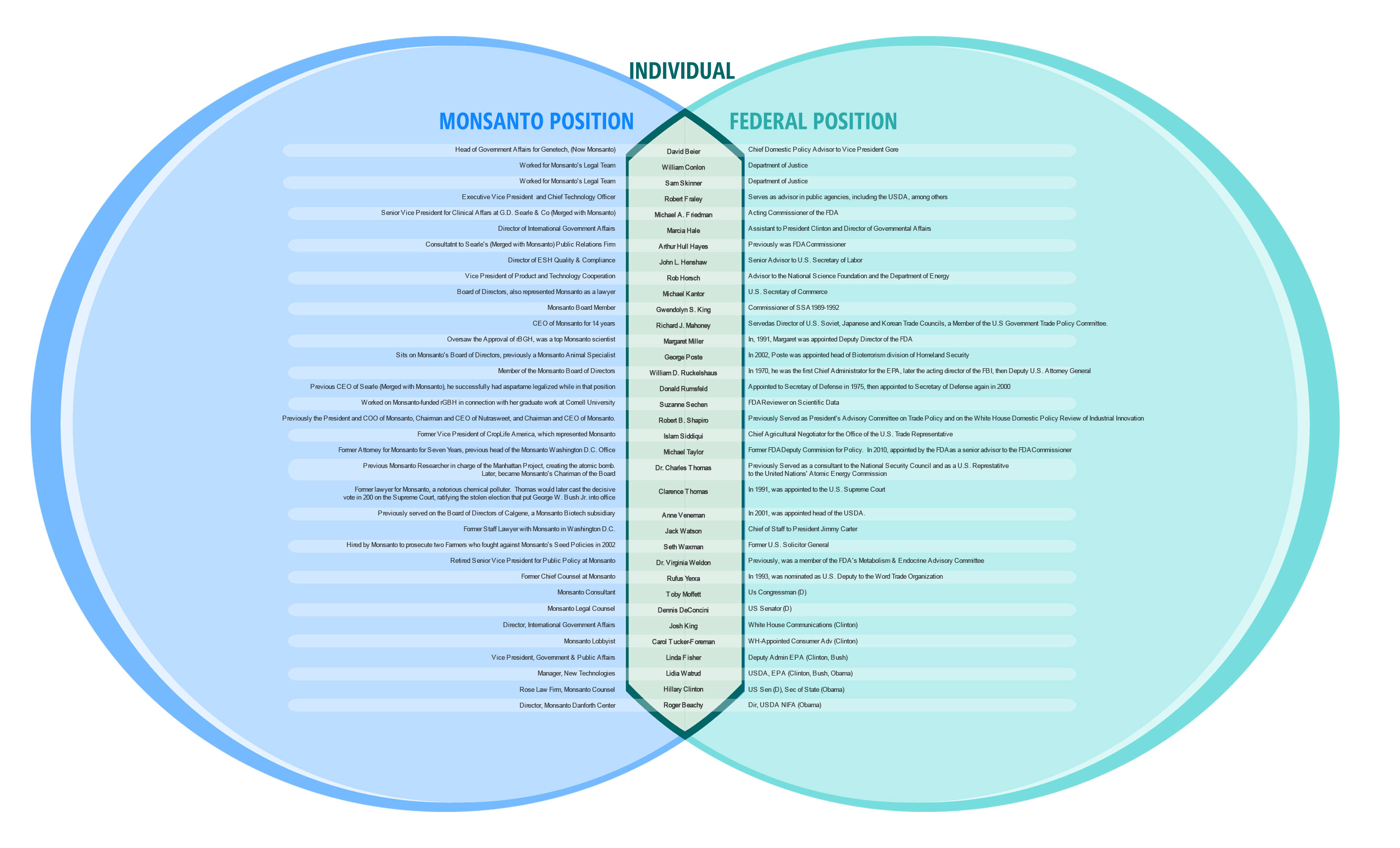
We already know how deeply entrenched the U.S. government has become with Monsanto.
For a visual illustration of their ‘revolving-door-relationship’ with the governmental regulatory agencies, see the graph toward the bottom of this article.
It is this type of government infiltration that allowed genetically engineered alfalfa to be approved without any restrictions at all, despite the protests of the organic community and public comments from a quarter of a million concerned citizens.
In Bill Gates, Monsanto also has one of the wealthiest and most influential “philanthropists” supporting their agenda and spreading misleading propaganda about their products.
In recent years, it has become disappointingly clear that Gates may be leading the pack as one of the most destructive “do-gooders” on the planet… His views on what is required to make a difference in poverty- and disease-stricken third world nations are short-sighted and misinformed at best. A recent article in the Seattle Times1 joins me in arguing that Bill Gates’ support of genetically modified (GM) crops as a solution for world hunger is based on unsound science. A team of 900 scientists funded by the World Bank and United Nations, investigated the matter over the course of three years, and determined that the use of GM crops is simply NOT a meaningful solution to the complex situation of world hunger.
Instead, the scientists suggested that “agro-ecological” methods would provide the most viable means to ensure global food security, including the use of traditional seed varieties and local farming practices already adapted to the local ecology.
“Philanthropy is the Enemy of Justice”
In a recent article with the same headline, “Philanthropy is the Enemy of Justice”,Robert Newman criticizes2 the choice of Bill Gates as the designated “voice” of the world’s poor at the World Economic Forum, held in January.
“Am I saying that philanthropy has never done good? No, it has achieved many wonderful things… But beware the havoc that power without oversight and democratic control can wreak,” Newman writes.
“The biotech agriculture that Lord Sainsbury was unable to push through democratically he can now implement unilaterally, through his Gatsby Foundation. We are told that Gatsby’s biotech project aims to provide food security for the global south. But if you listen to southern groups such as the Karnataka State Farmers of India, food security is precisely the reason they campaign against GM, because biotech crops are monocrops which are more vulnerable to disease and so need lashings of petrochemical pesticides, insecticides and fungicides – none of them cheap – and whose ruinous costs will rise with the price of oil, bankrupting small family farms first. Crop diseases mutate, meanwhile, and all the chemical inputs in the world can’t stop disease wiping out whole harvests of genetically engineered single strands.
Both the Gatsby and the Bill and Melinda Gates foundations are keen to get deeper into agriculture, especially in Africa. But top-down nostrums for the rural poor don’t end well.”
I agree. Donating patented seeds, which takes away the farmers’ sovereignty, is not the way to save the third-world poor. As reported by Netline last year3, Monsanto and other biotech companies have collaborated with the Gates Foundation via the Alliance for a Green Revolution in Africa (AGRA) to promote the use of genetically modified (GM) crops in Africa. The Gates Foundation has donated hundreds of millions of dollars to AGRA, and in 2006 Robert Horsch was hired for the AGRA project. Horsch was a Monsanto executive for 25 years. In a nutshell, the project may be sold under the banner of altruism and ‘sustainability’, but in reality it’s anything but. It’s just a multi-billion dollar enterprise to transform Africa into a GM-crop-friendly continent.
Conflicts of Interest Abound
Gates’ philanthropic methods came under scrutiny back in August 2010, when it was discovered that The Gates Foundation had purchased 500,000 shares of Monsanto stock; dramatically increasing its previous holdings—and hence its financial conflicts of interest—in the biotech firm. AGRA-Watch commented on the ties stating4:
“The Foundation’s direct investment in Monsanto is problematic on two primary levels,” said Dr. Phil Bereano, University of Washington Professor Emeritus and recognized expert on genetic engineering.
“First, Monsanto has a history of blatant disregard for the interests and well-being of small farmers around the world, as well as an appalling environmental track record. The strong connections to Monsanto cast serious doubt on the Foundation’s heavy funding of agricultural development in Africa and purported goal of alleviating poverty and hunger among small-scale farmers. Second, this investment represents an enormous conflict of interests.”
It would be naive to think that all these philanthropic collaborations are designed to solve any problem besides how to help Monsanto monopolize the world’s food supply with expensive patented GM seeds, and the herbicides to go with them.
In the interview above, Gates claims the seeds would be donated to the impoverished areas in question. But seriously, how long would the seeds remain free? There’s rarely such a thing as a free lunch anymore, and it appears highly unlikely that Monsanto is poised to “feed Africa” indefinitely… And since you cannot save Monsanto’s seeds from year to year, they will literally own the areas and the people they temporarily donate their seeds to. And once you own the rights to all the food grown around the globe, you literally rule the world.
That appears to be the goal. And only sane, rational, thinking people can stop them. It’s really too bad that Gates has signed up as a lackey for “the Dark Side,” as it were, instead of using his unfathomable wealth to really create positive, sustainable change.
It’s an undisputed fact at this point that the introduction of genetically engineered crops lead to diminished biodiversity, which is the direct opposite of what the world needs. Truly, in order to save the planet and ourselves, small-scale organic and sustainable farming must not only prevail but flourish, and GM crops do not help, but rather threaten their existence. Seeds have always been sold and swapped freely between farmers, preserving biodiversity, and without that basis, you cannot have food sovereignty. And with fewer farmers, “feeding the hungry with GM crops” is nothing but a pipe dream.
Both Genetically Engineered Seeds and Herbicides Pose Risks to Environment and Human Health
Besides the threat to the environment and to agricultural practices, GM crops also bring a whole host of health concerns; not just from the GM seeds, but also from the herbicide used: Monsanto’s Roundup. It’s the world’s best-selling herbicide, which is designed to be partnered with genetically engineered “Roundup Ready” crops.
According to a shocking report5, regulators were aware as early as 1980 that glyphosate, the active chemical ingredient of Roundup, caused birth defects in lab animals. However, the information was not made public. Instead, regulators misled the public about glyphosate’s safety, and with the introduction of Roundup Ready crops, the use of Roundup has skyrocketed.
According to Monsanto. NO6:
“Dr. Andres Carrasco, a lead embryologist at the University of Bueno Aires Medical School and the Argentinean national research council, discovered that glyphosate-based herbicides like Monsanto’s Roundup formula caused deformations in chicken embryos that resembled the kind of birth defects which where reported in areas like La Leonesa, where big agribusinesses depend on glyphosate to treat genetically engineered crops.”
Golden Rice: a “Trojan Horse”
The idea that you can end world hunger with genetically engineered crops is simply not very well thought through. Last summer, I reported on The Bill and Melinda Gates Foundation’s donation of $20 million toward the development of so-called “golden rice“—yet another untested GM crop that risks bringing economic and ecological disaster. Golden rice has been genetically engineered to produce beta-carotene, which your body can convert to vitamin A. It’s been promoted as a way to alleviate vitamin A deficiency, which is common in developing countries where people don’t have regular access to beta-carotene-rich foods, like vegetables and fruits.
However, while this sounds all well and good in theory, the reality of a beta-carotene producing rice may not be all it’s cracked up to be. According to Food Freedom7:
“Golden rice is a Trojan horse for pushing through GE-friendly biosafety regulations under the guise of humanitarian aid. Once in place, these regulations open the door for the biotech industry to bring in commercial, patented GE crops; USAID and Monsanto accomplished exactly this in Kenya with their sweet potato project.”
It may be easier to see why so many people question this kind of philanthropy once you understand a bit more about the product itself, and why it likely cannot ever live up to its own hype. In this case, your body can only convert beta-carotene to vitamin A under certain conditions. Specifically, beta-carotene is fat-soluble, which means dietary fat is required for your body to convert it into vitamin A. But many people in developing countries eat very low-fat diets, as they simply do not have access to animal foods or other fat on a regular basis. Furthermore, malnourished people might not be able to convert beta carotene to vitamin A efficiently, so taken as a whole, the actual usefulness of golden rice is debatable.
The soundness of the idea becomes even more questionable when you consider the unrealistic amounts of rice you’d have to consume each day to obtain the recommended amount of vitamin A. As stated in a golden rice case study from Iowa State University8:
“Even if golden rice is successfully introduced … a woman would need to eat 16 lbs. of cooked rice every day in order to get sufficient Vitamin A, if golden rice were her only source of the nutrient. A child would need 12 lbs.” [Emphasis mine]
What people in the developing world need in order to receive ample dietary vitamin A is access to a diverse range of nutritious foods — including animal products like eggs, cheese and meat and vegetables such as dark leafy greens and sweet potatoes. This is the type of diet that is attained from biodiverse farming — the opposite of what will occur if GM crops like golden rice get planted on a large scale.
Learn More about Genetically Engineered Foods
Many Americans are still unfamiliar with what GE foods are, which is understandable when you consider that these foods do not need to be labeled in the U.S. We have a plan to change that, and I urge you to participate, and to continue learning more about genetically engineered foods and associated risks, and help your friends and family do the same.
To start, please print out and use the Non-GMO Shopping Guide, created by the Institute for Responsible Technology. Share it with your friends and family, and post it to your social networks. You can also download a free iPhone application, available in the iTunes store. You can find it by searching for ShopNoGMO in the applications.
An even better strategy is to simply buy USDA 100% Organic products whenever possible, (as these do not permit GM ingredients) or buy whole fresh produce and meat from local farmers. The majority of the GMO’s (genetically modified organism) you’re exposed to are via processed foods, so by cooking from scratch with whole foods, you can be sure you’re not inadvertently consuming something laced with GM ingredients. When you do purchase processed food, avoid products containing anything related to corn or soy that are not 100 percent organic, as any foods containing these two non-organic ingredients are virtually guaranteed to contain genetically engineered ingredients, as well as toxic herbicide residues.
To learn more about GM foods, I highly recommend number of great films and lectures available, including:
Is sure seems like it at times. Genetically engineered seeds are now banned in Hungary, as they are in several other European countries, such as Germany and Ireland. Peru is also following the precautionary principle, and has even passed a law that bans genetically modified ingredients within the nation for 10 years9.
In the U.S., however, the opposite to consumer protection is taking place, with certain states actually passing legislation that protects the use of GM seeds and allows for unabated expansion! To date, 14 states have passed such legislation and Michigan’s Sen. Bill 777, if passed, would make that 15.
The Michigan bill would prevent anti-GMO laws and would remove “any authority local governments may have to adopt and enforce ordinances that prohibit or regulate the labeling, sale, storage, transportation, distribution, use, or planting of agricultural, vegetable, flower or forest tree seeds.” Bills like these are obviously music to Monsanto’s ears, which spends millions of dollars lobbying the U.S. government at the federal level for favorable legislation that supports the spread of their toxic products. In the first quarter of 2011 alone, Monsanto spent $1.4 million on lobbying the federal government — a drop from the year before, when they spent $2.5 million during the same quarter.
If we all had several million to spend on lobbying efforts, the world would undoubtedly be a very different place… If you aren’t familiar with the power of lobbying please view the recent 60 minutes expansion on it, which is one of the best 60 Minute episodes I have seen in 40 years.
Not only that, but once you realize just how many of Monsanto’s employees have simply shifted into positions of power within the federal government, it suddenly becomes easy to understand how this biotech giant has managed to so successfully undermine common sense within the U.S. government.
Your Opportunity to Eliminate Genetically Engineered Foods from the U.S.
In 2007, then-Presidential candidate Obama promised to “immediately” require GM labeling if elected. So far, nothing of the sort has transpired.
Labeling of genetically engineered food is way overdue… Here’s how you can get involved to rectify the situation:
Whether you live in California or not, please donate money to this historic effort
Talk to organic producers and stores and ask them to actively support the California Ballot. It may be the only chance we have to label genetically engineered foods.
Distribute WIDELY the Non-GMO Shopping Guide to help you identify and avoid foods with GMOs. Look for products (including organic products) that feature the Non-GMO Project Verified Seal to be sure that at-risk ingredients have been tested for GMO content. You can also download the free iPhone application that is available in the iTunes store. You can find it by searching for ShopNoGMO in the applications.
For timely updates, please join the Organic Consumers Association on Facebook, or follow them on Twitter.
In the meantime, the simplest way to avoid genetically engineered foods is to buy whole, certified organic foods. By definition, foods that are certified organic must never intentionally use genetically engineered organisms, must be produced without artificial pesticides and fertilizers and come from an animal reared without the routine use of antibiotics, growth promoters or other drugs. Additionally, grass-fed beef will not have been fed genetically engineered corn feed, although now that genetically engineered alfalfa is approved, grass-fed will not always mean they animals have not consumed genetically engineered feeds..
Be assured that what happens in California will affect the remainder of the U.S., so please support this important state initiative, even if you do not live there!
The Hidden Email the White House Hopes to Keep Under Wraps The White House has refused to release an email sent to this top Obama official. Why? Because it may reveal they are colluding with lobbyists to poison our wildlife refuges, with an untested seed...
Did You Know? GM Crops are Sown in Wildlife Refuges Across U.S.
In related news, the White House has refused to release certain portions of a January 11 email sent from a Monsanto-linked lobbyist to top Obama administration policy analyst Peter Schmeissneri.
The email was requested by the Public Employees for Environmental Responsibility (PEER) in a Freedom of Information Act (FOIA) request.
Based on other emails they have already obtained, PEER believes the email in question could reveal that the White House is colluding with lobbyists to defend the planting of genetically modified crops in wildlife refuges.
According to Truthout:
"Last July, PEER released a number of internal emails revealing that Peter Schmeissner, a senior science policy analyst and member of the White House's biotechnology working group, had corresponded with the BIO lobbyist about a legal challenge filed by PEER and its allies. The PEER lawsuit had successfully halted GE crop plantings in wildlife refuges in northeastern states, and the group continues to challenge planned plantings in other regions across the country.
In the emails obtained by PEER, longtime biotech lobbyist Adrianne Massey asks Schmeissner if the 'interagency working group' is addressing the PEER's legal challenges. Massey also forwarded environmental assessments of proposed GE crop plots at wildlife refuges in other regions of the country. These assessments could protect future GE crop plots in refuges from legal challenges."
Legal documents state that the White House is withholding part of the email because it accidentally also included information about the Biotechnology Industry Organization's (BIO's) lobbying strategy, which, if released, "would cause competitive harm to the group and the companies it represents," Truthout reports. In response, PEER staff counsel Kathryn Douglass has stated,
"We suspect the reason an industry lobbyist so cavalierly shared strategy is that the White House is part of that strategy."
Crazy as it sounds, the U.S Fish and Wildlife Service has permitted GM seeds to be sown in wildlife reserves for several years now, as part of various habitat restoration efforts. The idea is that planting herbicide-resistant GM crops helps establish ground cover while allowing them to kill off unwanted weeds. PEER challenged this practice after being contacted by concerned Fish and Wildlife biologists, and claims it is being used as a ploy to boost exports of GM crops. According to Truthout:
"PEER contends that the White House working group's involvement indicates high-level interest in showing trade partners that the US government considers GE crops to be so environmentally safe that Americans plant them in wildlife reserves."
PEER also claims to have evidence in the form of an email showing that US Department of Agriculture (USDA) Secretary Tom Vilsack has pressured the Fish and Wildlife Service to support GE agriculture.
"In the January 14 email, Interior Department Deputy Secretary David Hayes told top Interior Department and Fish and Wildlife officials that Vilsack is "somewhat exercised that the Administration is not being consistent in supporting genetically engineered crops," Truthout reports.
Hungary has taken a bold stand against biotech giant Monsanto and genetic modification by destroying 1000 acres of maize found to have been grown with genetically modified seeds, according to Hungary deputy state secretary of the Ministry of Rural Development Lajos Bognar. Unlike many European Union countries, Hungary is a nation where genetically modified (GM) seeds are banned. In a similar stance against GM ingredients, Peru has also passed a 10 year ban on GM foods.
Planetsave reports:
Almost 1000 acres of maize found to have been ground with genetically modified seeds have been destroyed throughout Hungary, deputy state secretary of the Ministry of Rural Development Lajos Bognar said. The GMO maize has been ploughed under, said Lajos Bognar, but pollen has not spread from the maize, he added.
Unlike several EU members, GMO seeds are banned in Hungary. The checks will continue despite the fact that seek traders are obliged to make sure that their products are GMO free, Bognar said.
During the investigation, controllers have found Pioneer Monsanto products among the seeds planted.
The free movement of goods within the EU means that authorities will not investigate how the seeds arrived in Hungary, but they will check where the goods can be found, Bognar said. Regional public radio reported that the two biggest international seed producing companies are affected in the matter and GMO seeds could have been sown on up to the thousands of hectares in the country. Most of the local farmers have complained since they just discovered they were using GMO seeds.
With season already under way, it is too late to sow new seeds, so this year’s harvest has been lost.
And to make things even worse for the farmers, the company that distributed the seeds in Baranya county is under liquidation. Therefore, if any compensation is paid by the international seed producers, the money will be paid primarily to that company’s creditors, rather than the farmers.
President Obama appointed former Monsanto vice president and lobbyist Michael Taylor as senior advisor to the Food and Drug Administration commissioner.
This is a classic example of the fox guarding the henhouse. President Obama should isolate the FDA from corporate influence by asking Taylor to step down immediately.
That's why I created a petition to President Obama on SignOn.org. Click here to add your name, and then pass it along to your friends:
President Obama, I oppose your appointment of Michael Taylor, a former VP and lobbyist for Monsanto, the widely criticized genetically modified (GM) food multinational, as senior advisor to the commissioner at the FDA. Taylor is the same person who as a high ranking official at the FDA in the 1990s promoted allowing genetically modified organisms into the U.S. food supply without undergoing a single test to determine their safety or risks. This is a travesty.
Taylor was in charge of policy for Monsanto's now-discredited GM bovine growth hormone (rBGH), which is opposed by many medical and hospital organizations. It was Michael Taylor who pursued a policy that milk from rBGH-treated cows should not be labeled with disclosures. Michael Taylor and Monsanto do not belong in our government.
President Obama, Monsanto has been seen as a foe to family-based agriculture, the backbone of America, by introducing dangerous changes to plants and animals and by using strong-arm legal tactics against farmers for decades. Naturally occurring plant and animal species are permanently threatened by the introduction of DNA and hormonal modification, Monsanto's core businesses.
FDA scientists once regarded genetic modification of the food supply as the single most radical and potentially dangerous threat to public health in history. As early as the 1991, a body of scientific research began to form which now includes articles in over 600 journals. As a whole, these offer scientific evidence that GM foods, hormones, and related pesticides are the root cause for the increase of many serious diseases in the U.S. Since GM foods were introduced, diagnosis of multiple chronic illnesses in the U.S. has skyrocketed. These illnesses include changes in major organs and in hormonal, immune, digestive, and reproductive systems. These modifications to foods and food production may also be contributors to colon, breast, lymphatic, and prostate cancers.
Experts are discouraged that regulators and GM companies systematically overlook potential side effects of GM. Monsanto's objective to use biotechnology to change the world's food supply is the opposite policy direction your administration should pursue. Your legacy of supporting Monsanto to have free rein in U.S. food policy is a nightmare scenario that is against the interest of all Americans and world citizens.
Will you sign the petition? Click here to add your name, and then pass it along to your friends:
Dr. Mercola has written an excellent article on genetically engineered foods... (below)… and animals --- there are sheep that are 15% human... they will be used for organ transplants.
GM foods disrupt the reproductive cycle causing infertility... (now what was that on the Georgia Guidestones about limiting the population?)....
Think that the label that says “organically grown” has anything to do with the packaging, storage, and transport of that product to stores?
What if I told you that cow, pig, and chicken collagen is now used in place of wax on your fruits and vegetables, among many other things much worse than you can probably imagine?
And what if then I told you, as with most atrocities that happen now-a-days, that this is all approved by the FDA…
Since the early 12th century, there has been a tradition of applying wax onto the skins of fruits and vegetables for longer storage life. Today, that tradition is being carried on with a whole new generation of chemicals and compounds that are genetically designed to accomplish the same goal. But in these modern times, the health and well-being of the consumer of that apple is not necessarily the goal of this unnatural, inorganic process.
Bottom line… your produce is being dipped and sprayed with an experimental host of holy horrors in the name of “food safety” and longer shelf-life. Prepare yourself to be shocked and amazed that our Federal agency that is designed to protect us, the Food and Drug Administration, is allowing these dangerous and unhealthy practices to be perpetrated on an unwitting public, all in the name of profits.
This video was recently posted to Youtube, showing a woman peeling off of her freshly bought supermarket romaine lettuce what appears to be a plastic coating, similar to the type one would peal off of the screen of a new electronic gadget. She has no idea what she has discovered…
Now, while this seems to be an almost incredible and hard to believe hoax, the truth is even stranger. Please read on…
For those of you that know of my writing, you know that I like to get right down to the nitty-gritty… the primary source. And so we will go right to what the FDA has to say about what this strange plastic-like substance is, and whether or not it approves of such food handling practices (which it does).
Here is the link for the FDA’s website, entitled:
“Chapter VI. Microbiological Safety of Controlled and Modified Atmosphere Packaging of Fresh and Fresh-Cut Produce – Analysis and Evaluation of Preventive Control Measures for the Control and Reduction/Elimination of Microbial Hazards on Fresh and Fresh-Cut Produce”.
Wow! That sounds so wonderfully official and scientific, doesn’t it?
So what are these “preventative control measures” as referred to in this report?
Well, for our purposes, since these measures are actually edible, let’s explore what the FDA approves for our fruits and vegetables to be dipped in and sprayed with for our own “safety”…
The report states:
This chapter addresses the use of modified atmosphere packaging and controlled atmosphere packaging for the preservation of fresh produce. There have been great technological advances in this area of preservation, particularly as it refers to improving the quality and shelf-stability of highly perishable food products, such as produce. However, when using these technologies, careful attention must be paid to the effect on the survival and growth of pathogenic organisms. This chapter focuses on food safety aspects of packaging technologies that are either commercially available or under investigation…
Over the past 20 years, there has been an enormous increase in the demand for fresh fruit and vegetable products that has required the industry to develop new and improved methods for maintaining food quality and extending shelf life…
One of the areas of research that has shown promise, and had success, is that of modified atmosphere packaging (MAP). This technique involves either actively or passively controlling or modifying the atmosphere surrounding the product within a package made of various types and/or combinations of films. In North America, one of the first applications of this technology for fresh-cut produce was introduced by McDonald’s (Brody 1995), which used MAP of lettuce in bulk-sized packages to distribute the product to retail outlets…
A modified atmosphere can be defined as one that is created by altering the normal composition of air (78% nitrogen, 21% oxygen, 0.03% carbon dioxide and traces of noble gases) to provide an optimum atmosphere for increasing the storage length and quality of food/produce (Moleyar and Narasimham 1994; Phillips 1996). This can be achieved by using controlled atmosphere storage (CAS) and/or active or passive modified atmosphere packaging (MAP).
The numerous film types used in MAP are listed in Table VI-2 (see below), and some commercially available MAP systems are listed in Table VI-3. Oxygen, CO2, and N2, are most often used in MAP/CAS (Parry 1993; Phillips 1996). Other gases such as nitrous and nitric oxides, sulphur dioxide, ethylene, chlorine (Phillips 1996), as well as ozone and propylene oxide (Parry 1993) have been suggested and investigated experimentally.
So was that plastic looking film being peeled off of that supermarket lettuce above actually one of many forms of modified atmosphere packaging? Was it dipped in or sprayed by a “MAP” chemical compound for “food safety”?
Lets read further into this FDA report…
1.3. Films used in MAP
Edible biodegradable coatings are yet another variant of the smart film technology, where a film is used as a coating and applied directly on the food…
The use of MAP for whole and fresh-cut produce involves careful selection of the film and package type for each specific product and package size . Effective MAP of produce requires consideration of the optimal gas concentration, product respiration rate, gas diffusion through the film, as well as the optimal storage temperature in order to achieve the most benefit for the product and consumer. In addition, when selecting an appropriate film, one has to take into account the protection provided, as well as the strength, sealability and clarity, machineability, ability to label, and the gas gradient formed by the closed film (Zagory 1995).
Recently, the long list of films and commercially available MAP systems has been augmented with the conception of both smartand edible packaging systems (Guilbert and others 1996; Phillips 1996). “Smart” or “intelligent” packaging is being used in the fresh-cut industry and includes indicators of time and temperature, gas composition, seal leakage, and food safety and quality (Rooney 2000). Some intelligent systems alter package oxygen and /or carbon dioxide permeability by sensing and responding to changes in temperature. Other smart films incorporate chemicals into packets placed in the packaging system, with no contact with the product; an example would be the use of O2 scavengers with O2 indicators. Another type of smart film, developed with food safety in mind, is currently undergoing testing. This novel system, when incorporated into a packaging film, uses an antibody detection system to detect pathogens, and expresses a positive finding as a symbol on the surface of the package, thereby alerting food handlers to the presence of pathogens. Although this technology shows promise, it is still in its infancy and comprehensive assessments have yet to be performed. Several limitations have been suggested with this technology; for example, it would not likely be able to detect pathogens at concentrations below 104 CFU/g or cm2 and would not detect pathogens within the product.
Edible biodegradable coatings are yet another variant of the smart film technology, where a film is used as a coating and applied directly on the food (Guilbert and others 1996; Francis and others 1999). Wax has been used in China since the 12th and 13th centuries as an edible coating to retard desiccation of citrus fruits, and in the last 30 years, edible films and coatings made from a variety of compounds have been reported. Guilbert and others (1996) and Baldwin (1994) have extensively reviewed some of the newer edible films (see Tables VI-3 and VI-5). These films are gaining popularity due to both environmental pollution and food safety concerns (Padgett and others 1998). However, a number of problems have also been associated with edible coatings. For example, modification of the internal gas composition of the product due to high CO2 and low O2 can cause problems such as anaerobic fermentation of apples and bananas, rapid weight loss of tomatoes, elevated levels of core flush for apples, rapid decay in cucumbers, and so on (Park and others 1994).
Edible films may consist of four basic materials: lipids, resins, polysaccharides and proteins (Baldwin and others 1995). Plasticizers such as glycerol as well as cross-linking agents, antimicrobials, antioxidants, and texture agents can be added to customize the film for a specific use (Guilbert and others 1996). Plasticizers have the specific effect of increasing water vapor permeability. Therefore, their addition must be considered when calculating the desired water vapor properties of each specific film, since too much moisture can create ideal growth conditions for some foodborne pathogens. The most common plasticizer used to cast edible films is food-grade polyethylene glycol, which is used to reduce film brittleness (Koelsch 1994).
Plasticizers (UK = plasticisers) or dispersants are additives that increase the plasticity or fluidity of a material. The dominant applications are for plastics, especially polyvinyl chloride (PVC). The properties other materials are also improved when blended plasticizers including concrete, clays, and related products. The worldwide market for plasticizers in 2000 was estimated to be several million tons per year.
Plasticizers work by embedding themselves between the chains of polymers, spacing them apart (increasing the “free volume”), and thus significantly lowering the glass transition temperature for the plastic and making it softer. For plastics such as PVC, the more plasticizer added, the lower its cold flex temperature will be. This means that it will be more flexible and its durability will increase as a result of it. Some plasticizers evaporate and tend to concentrate in an enclosed space; the “new car smell” is caused mostly by plasticizers evaporating from the car interior.
Plasticizers make it possible to achieve improved compound processing characteristics, while also providing flexibility in the end-use product… Plasticizers also function as softeners, extenders, and lubricants, and play a significant role in rubber manufacturing.
Other uses include:
Phthalate-based plasticizers are used in situations where good resistance to water and oils is required. Some common phthalate plasticizers are:
Diisononyl phthalate (DINP), found in garden hoses, shoes, toys, and building materials
Bis(n-butyl)phthalate (DnBP, DBP), used for cellulose plastics, food wraps, adhesives, perfumes, and cosmetics – about a third of nail polishes, glosses, enamels, and hardeners contain it, together with some shampoos, sunscreens, skin emollients, and insect repellents
Butyl benzyl phthalate (BBzP) is found in vinyl tiles, traffic cones, food conveyor belts, artificial leather, and plastic foams
Diisodecyl phthalate (DIDP), used for insulation of wires and cables, car undercoating, shoes, carpets, pool liners
Di-n-octyl phthalate (DOP or DnOP), used in flooring materials, carpets, notebook covers, and high explosives, such as Semtex (plastic explosive). Together with DEHP it was the most common plasticizers, but now is suspected of causing cancer
Diisooctyl phthalate (DIOP), all-purpose plasticizer for polyvinyl chloride, polyvinyl acetate, rubbers, cellulose plastics, and polyurethane.
Di-n-hexyl phthalate, used in flooring materials, tool handles, and automobile parts
and on and on…
Lipids, or waxes and oils, and resins such as shellac and wood rosin have been widely used for intact fruits and vegetables in two distinct forms, laminates and emulsions (Baldwin and others 1995). Lipid-based edible barriers are known for their low water vapor permeabilities. Koelsch (1994) found that the water vapor permeability of a cellulose-based emulsion barrier is dependent on the lipid moiety used; a minimum permeability can be achieved when stearic acid is used as the lipid. This is due to the effective barrier formed by stearic acid through an interlocking network. However, lipid-based edible films also require a support matrix to reduce brittleness, and have difficulty adhering to the hydrophilic cut surfaces of fruits and vegetables (Koelsch 1994; Baldwin and others 1995). Some of the most common compounds used for support matrices are modified celluloses of hydroxypropylmethyl, ethyl and methylcellulose, chitosan and whey protein isolate (WPI; Koelsch 1994).
*** Authors note: Steric acid is also known as tallow (animal and plant fatty acids used in the production of soap).
In general, polysaccharides such as cellulose, pectin, starch, carrageenan, and chitosan, can adhere to cut surfaces of produce and effectively allow gas transfer; however, they are not effective moisture barriers. Due to their CO2 and O2 permeabilities, polysaccharide-based films allow the creation of desirable modified atmospheres, an attractive advantage over plastic or shrink wrap MAP which can be labor intensive, expensive and environmentally harmful (Baldwin and others 1995). A number of cellulose derived coatings are available commercially, most taking advantage of the modified atmosphere effect of the barriers. Pro-long (Courtaulds Group, London) and Semperfresh (Surface Systems International, Ltd., Oxfordshire, U.K.) are examples of water-soluble composite coatings comprised of the sodium salt of carboxymethyl cellulose (CMC) and sucrose fatty acid ester emulsifiers (Baldwin and others 1995). Their properties are discussed in Table VI-6. A newer product called “Snow-White,” based on sucrose esters of fatty acids, has also been used to combat oxidative browning in the potato industry. Nature-Seal is a polysaccharide-based surface treatment that uses cellulose derivatives as film formers, but unlike Semperfresh and Pro-long, does not contain sucrose fatty acid esters. Nature-Seal is a browning inhibitor that is applied as a dip or spray and has been shown to delay ripening of whole fruits and vegetables, and to retard discoloration of peeled carrots and cut mushrooms.
*** Authors note: Sucrose is the organic compound commonly known as table sugar and sometimes called saccharose. This is the kind of processed sugar many health conscious people avoid, and which diabetics aren’t supposed to consume, though the natural sugars in fresh fruit is acceptable for diabetics. This is a blatantly deceiving practice.
Finally, proteins such as casein, soy, and zein, can also adhere to hydrophilic cut produce surfaces and are easily modified to form films; however, they also allow water diffusion (Baldwin and others 1995). Unlike lipid-based barriers, protein-based barriers do not require the addition of a support matrix, since the protein acts as both the water vapor barrier and structural component of the film (Koelsch 1994). Park and others (1994) reported the successful application of a corn-zein film to extend the shelf life of tomatoes. Color change, loss of firmness, and weight loss during storage were delayed, and shelf life was extended by 6 d in comparison to untreated tomatoes. The corn-zein product used in the above study was a commercial product that was brushed onto the tomatoes (Regular Grade F4000, INC Biomedicals, Inc.), and consisted of 54 g of corn-zein, 14 g of glycerine, and 1 g of citric acid dissolved in 260 g of ethanol. Park and others (1994) did not comment on the use of citric acid in the film solution; however, others have found that edible films composed of zein were more successful in preventing the rancidity of nuts when citric acid was added (Guilbert and others 1996).
*** Author’s note: Ethanol, also called ethyl alcohol, pure alcohol, grain alcohol, or drinking alcohol, is a volitile, flammable, colorless liquid. It is a psychoactive drug and one of the oldest recreational drugs. Best known as the type of alcohol found in alcoholic beverages, it is also used in thermometers, as a solvent, and as a fuel. In common usage, it is often referred to simply as alcohol or spirits.
In order to obtain an edible film that incorporates all the best qualities of these four basic materials, as well as fulfilling the specific conditions for each fruit or vegetable, manufacturers are now producing films comprised of different combinations. Some of the advantages and disadvantages of the four basic edible film barriers, as well as combinations thereof, are listed in Table VI-5 (discussed below).
Here is Table VI-3:
“Commercially available modified atmosphere packaging systems for small and large quantities of produce”
Edible Films1
TAL Pro-Long (Courtaulds Group) Blend of sucrose esters of fatty acids and sodium carboxymethylcellulose; depresses internal O2 and is edible. Pears
Nutri-Save N, O-carboxymethychitosan edible film. Pears, apples
Semperfresh, Nu-Coat Fo, Ban-seel, Brilloshine, Snow-White and White Wash products (Surface Systems Intl. Ltd.) Sucrose ester based fruit coatings with sodium carboxymethyl cellulose products manufactured exclusively from food ingredients available in dip or spray. Most fruits and vegetables, processed and whole potatoes (Snow-White and White-Wash)
PacRite products (American Machinery Corp.) Variety of products, water-based carnauba-shellac emulsions, shellac and resin water emulsions, water-based mineral oil fatty acid emulsions, and so forth. Apples, citrus, tomatoes, cucumbers, green peppers, squash, peaches, plums, nectarines
Fresh-Cote product line (Agri-Tech Inc.) Variety of products including; shellac-based, carnauba-based and oil emulsion edible films. Apples, pears, eggplant, tomatoes, cucumbers, stone fruits
Vector 7, Apl-Brite 300C, Citrus-Brite 300C (Solutec Corp.) Vector 7 is a shellac-based film with morpholine; the Apl-Brite and Citrus-Brite are carnuba-based films. Apples and citrus fruits
Primafresh Wax (S.C. Johnson) Carnauba-based wax emulsion. Apples, citrus and other firm-surfaced fruit
Shield-Brite products (Pace Intl. Shield-Brite) Shellac, carnauba, natural wax and vegetable oil/wax and xanthan gum products. Citrus, pears, stone fruit
Sta-Fresh Products (Food Machinery Corp.) Natural, synthetic, and modified natural resin products and combinations thereof. Citrus, apples, stone fruits, pomegranates, tomatoes, pineapple, cantaloupes, and sweet potatoes
Fresh Wax products (Fresh Mark Corp.) Shellac and wood resin, oxidized polyethylene wax, white oil/paraffin wax products. Citrus, cantaloupes, pineapples, apples, sweet potatoes, cucumbers, tomatoes and other vegetables
Brogdex Co. products Carnauba wax emulsions with or without fungicides, emulsion wax, high shine wax, water-based emulsion wax, carnauba-based emulsion, vegetable oil, resin-based and concentrated polyethylene emulsion wax products. Apples, melons, bananas, avocado, chayote, papaya, mango, pineapple, citrus, stone fruits.
FreshSealTM (Planet Polymer Technologies Inc. has licensed CPG Technologies of Agway, Inc. to produce) A patented coating that slows the ripening process by controlling the O2 and CO2 and water vapor flowing in and out of the product. It can be tailored to the individual respiration rates of different fruit and vegetable varieties. Currently available for avocado, cantaloupe, mangoes and papaya. Use on limes, pineapples and bananas is currently under investigation.
Nature-SealTM , AgriCoat (Mantrose Bradshaw Zinsser Group) Composite polysaccharide-based coating using cellulose derivatives as film formers. Sliced apples, carrots, peppers, onions, lettuce, pears, avocados, sliced bananas
Intelligent Systems
Activated Earth Films Typically polyethylene bags with powdered clay material made of powdered aluminum silicates, incorporated into the film matrix. Possibly reduces ethylene concentration by facilitating its diffusion out of the bag. Variable
Temperature Responsive Films (Landec Labs) Films increase their gas permeabilities in response to temperature increases as well as increases in respiration. Stabilizes the modified atmosphere so it remains the same under various temperatures. Specific for each product
CO2 Scavengers FreshLock (Mitsubishi Gas Chemical Co.), Verifrais (Codimer Tournessi, Gujan-Mestras) Sachet type product which is placed directly in the package and absorbs both carbon dioxide and oxygen. Fruits and vegetables, coffee
Ethylene absorbents Ethysorb (StayFresh Ltd), Ageless C (Mitsubishi Gas Chemical Company), Freshkeep (Kurarey), Acepack (nippon Greener), Peakfresh (Klerk Plastic Industrie, Chantler Packaging Inc.) Sachet type product which is placed directly in the package and absorbs ethylene. They are composed of a variety of products such as aluminum oxide, potassium permanganate, activated carbon, and silicon dioxide. Fruits and vegetables
Antimicrobial Films-unsure of commercial availability
-=-
So let’s take a look at what some of these “food safety” MAP products actually are, as listed in the above table:
-=-
Shellac is a resin secreted by the female lac bug, on trees in the forests of India and Thailand. It is processed and sold as dry flakes which are dissolved in ethyl alcohol to make liquid shellac, which is used as a brush-on colorant, food glaze and wood finish. Shellac functions as a tough natural primer, sanding sealant, tannin-blocker, odour-blocker, stain, and high-gloss varnish. Shellac was once used in electrical applications as it possesses good insulation qualities and it seals out moisture. Phonograph (gramaphone) records were also made of it during the pre-1950s, 78-rpm recording era.
Shellac is one of the few historically appropriate finishes (including casein paint, spar varnishes, boiled linseed oil and lacquer) for early 20th-century hardwood floors, and wooden wall and ceiling paneling.
From the time it replaced oil and wax finishes in the 19th century, shellac was one of the dominant wood finishes in the western world until it was replaced by nitrocellulose lacquer in the 1920s and 1930s.
Morpholine is a common additive, in parts per million concentrations, for pH adjustment in both fossil fuel and nuclear power plant steam systems. Morpholine is used because its volatility is about the same as water, so once it is added to the water, its concentration becomes distributed rather evenly in both the water and steam phases. Its pH adjusting qualities then become distributed throughout the steam plant to provide corrosion protection. Morpholine is often used in conjunction with low concentrations of hydrazine or ammonia to provide a comprehensive all-volatile treatment chemistry for corrosion protection for the steam systems of such plants. Morpholine decomposes reasonably slowly in the absence of oxygen at the high temperatures and pressures in these steam systems.
The European Union has forbidden the use of Morpholine in fruit coating.
Morpholine is widely used in the USA, Canada, Australia and other parts of the world as a food additive for use as a component or coating for fruits and vegetables. However, the use of Morpholine is prohibited in the European Union, those countries where its use is permitted are fully aware of these restrictions. Consequently, they have strict protocols to ensure waxes containing Morpholine are not used for fruit destined for the UK and the EU.
Morpholine is not permitted in Europe because it is known to be a precursor of N-nitrosomorpholine, a carcinogen.
Carboxymethyl cellulose (CMC) or cellulose gum is a synthesized cellulose derivative.
CMC is used in “food science” as a viscosity modifier or thickener, and to stabilize emulsions in various products including ice cream. As a food additive, it has E number E466. It is also a constituent of many non-food products, such as K-Y Jelly, toothpaste, laxatives, diet pills, water-based paints, detergents, textile sizing and various paper products. It is used primarily because it has high viscosity, is non-toxic, and is hypoallergenic. In laundry detergents it is used as a soil suspension polymer designed to deposit onto cotton and other cellulosic fabrics creating a negatively charged barrier to soils in the wash solution. CMC is used as a lubricant in non-volitile eye-drops (artificial tears). Sometimes it is methyl cellulose (MC) which is used, but its non-polar methyl groups (-CH3) do not add any solubility or chemical reactivity to the base cellulose.
Following the initial reaction the resultant mixture produces approximately 60% CMC plus 40% salts (sodium chloride and sodium glycolate). This product is the so-called Technical CMC which is used in detergents. A further purification process is used to remove these salts to produce pure CMC which is used for food, pharmaceutical and dentifrice (toothpaste) applications. An intermediate “semi-purified” grade is also produced, typically used in paper applications.
CMC is also used in pharmaceuticals as a thickening agent. CMC is also used in the oil drilling industry as an ingredient of drilling mud, where it acts as a viscosity modifier and water retention agent. Poly-anionic cellulose or PAC is derived from CMC and is also used in oilfield practice.
-=-
Paraffin – medicinal liquid paraffin is used to aid bowel movement in persons suffering chronic constipation; it passes through the gastrointestinal tract without itself being taken into the body, but it limits the amount of water removed from the stool. In the food industry, where it may be called “wax”, it can be used as a lubricant in mechanical mixing, applied to baking tins to ensure that loaves are easily released when cooked and as a coating for fruit or other items requiring a “shiny” appearance for sale.
It is often used in infrared spectroscopy, as it has a relatively uncomplicated IR spectrum. When the sample to be tested is made into a mull (a very thick paste), liquid paraffin is added so it can be spread on the transparent (to infrared) mounting plates to be tested.
Mineral oil has also seen widespread use in biotechnology for preventing the evaporation of small volumes of liquid during heating. Polymerase chain-reaction samples may need to be overlaid with a layer of mineral oil to prevent evaporation during the high heat (95 °C) required to denature DNA.
Paraffin wax as a food grade substance is used in:
Shiny coating used in candy-making; although edible, it is non-digestible, passing right through the body without being broken down
Coating for many kinds of hard cheese, like Edam cheese
Sealant for jars, cans, and bottles
Chewing gum additive
It is also used for:
Candle-making
Coatings for waxed paper or cloth
Investment casting
Anti-caking agent, moisture repellent, and dust-binding coatings for fertilizers
Agent for preparation of specimens for histology
Bullet lubricant – with other ingredients, such as olive oil and beeswax
Crayons
Solid propellant for hybrid rocket motors
Component of surf-wax, used for grip on surfboards in surfing
Component of glide wax, used on skies and snowboards
Friction-reducer, for use on handrails and cement ledges, commonly used in skateboarding
Ink. Used as the basis for solid ink different color blocks of wax for thermal printers. The wax is melted and then sprayed on the paper producing images with a shiny surface
Microwax: food additive, a glazing agent with E number E905
Forensics aid: the nitrate test uses paraffin wax to detect nitrates and nitrites on the hand of a shooting suspect
Antiozonant agents: blends of paraffin and micro waxes are used in rubber compounds to prevent cracking of the rubber; the antiozonant waxes can be produced from synthetic waxes, FT wax, and Fischer Tropsch wax
Mechanical thermostats and actuators, as an expansion medium for activating such devices
“Potting” guitar pickups, which reduces microphonic feedback caused from the subtle movements of the pole pieces
“Potting” of local oscillator coils to prevent microphonic frequency modulation in low end FM radios.
Wax baths for beauty and therapy purposes
Thickening agent in many Paintballs, as used by Crayola
An effective, although comedogenic, moisturizer in toiletries and cosmetics such as Vaseline
Prevents oxidation on the surface of polished steel and iron
N(6)-Carboxymethyllysine (CML), also known as N(epsilon)-(carboxymethyl)lysine, is an advanced glycation endproduct (AGE). CML has been the most used marker for AGEs in food analysis.
An advanced glycation end-product (AGE) is the result of a chain of chemical reactions after an initial glycation reaction. Side products generated in intermediate steps may be oxidizing agents (such as hydrogen peroxide), or not (such as beta amyloid proteins). “Glycosylation” is sometimes used for “glycation” in the literature, usually as ‘non-enzymatic glycosylation.’
AGEs may be formed external to the body (exogenously) by heating (e.g., cooking);or inside the body (endogenously) through normal metabolism and aging. Under certain pathologic conditions (e.g., oxidative stress due to hyperglycemia in patients with diabetes), AGE formation can be increased beyond normal levels. AGEs are now known to play a role as proinflammatory mediators in gestational diabetes as well.
The formation and accumulation of advanced glycation endproducts (AGEs) has been implicated in the progression of age-related diseases. AGEs have been implicated in Alzheimer’s Disease,cardiovascular disease,and stroke.The mechanism by which AGEs induce damage is through a process called cross-linking that causes intracellular damage and apoptosis.They form photosensitizers in the crystalline lens, which has implications for cataract development.Reduced muscle function is also associated with AGEs.
AGEs may be less, or more, reactive than the initial sugars they were formed from. They are absorbed by the body during digestion with about 30% efficiency. Many cells in the body (for example, endothelial cells, smooth muscle, and cells of the immune system)from tissue such as lung, liver, kidney, and peripheral blood bear the Receptor for Advanced Glycation End-products (RAGE) that, when binding AGEs, contributes to age- and diabetes-related chronic inflammatory diseases such atherosclerosis, asthma, arthritis, myocardial infarction, nephropathy, retinopathy, periodontis, and neuropathy.. There may be some chemicals, such as aminoguanidine, that limit the formation of AGEs by reacting with 3-deoxyglucosone.
The total state of oxidative and peroxidative stress on the healthy body, and the accumulation of AGE-related damage is proportional to the dietary intake of exogenous (preformed) AGEs, the consumption of sugars with a propensity towards glycation such as fructose and galactose. (So naturally, this AGE is used to coat fructose engorged fruit!!! Real safe…)
AGEs affect nearly every type of cell and molecule in the body, and are thought to be one factor in aging and some age-related chronic diseases.They are also believed to play a causative role in the vascular complications of diabetes mellitus.
They have a range of pathological effects, including increasing vascular permeability, inhibition of vascular dilation by interfering with nitric oxide, oxidising LDL, binding cells including macrophage, endothelial, and mesangial cells to induce the secretion of a variety of cytokines and enhancing oxidative stress.
-=-
Gelatin (or gelatine) is a translucent, colorless, brittle (when dry), flavorless solid substance, derived from the collagen inside animals’ skin and bones. It is commonly used as a gelling agent in food, pharmaceuticals, photography, and cosmetic manufacturing. Substances containing gelatin or functioning in a similar way are called gelatinous. Gelatin is an irreversibly hydrolyzed form of collagen, and is classified as a foodstuff and therefore carries no E Number. It is found in some gummy candies as well as other products such as marshmallows, gelatin dessert, and some low-fat yogurt. Household gelatin comes in the form of sheets, granules, or powder. Instant types can be added to the food as they are; others need to be soaked in water beforehand.
Gelatin is a mixture of peptides and proteins produced by partial hydrolysis of collagen extracted from the boiled crushed bones, connective tissues, organs and some intestines of animals such as domesticated cattle, chicken, and pigs. The natural molecular bonds between individual collagen strands are broken down into a form that rearranges more easily. Gelatin melts to a liquid when heated and solidifies when cooled again. Together with water, it forms a semi-solid colloid gel.
The worldwide production amount of gelatin is about 300,000 tons per year (roughly 600 million lb).On a commercial scale, gelatin is made from by-products of the meat and leather industry.Gelatin is derived mainly from pork skins, pork and cattle bones, or split cattle hides; contrary to popular belief, horns and hooves are not used.The raw materials are prepared by different curing, acid, and alkali processes which are employed to extract the dried collagen hydrolysate. These processesmay take up to several weeks, and differences in such processes have great effects on the properties of the final gelatin products.
Authors note… And so the practical joke of the century from the villainous FDA? Vegetarians and vegans have all this time been eating organic fruit and veggies covered in pig, beef, and chicken byproducts. Oh, they must get a kick out of themselves!
-=-
Could this food safety practice actually be causing harm and promoting disease and harmful pathogens?
Oh, most certainly, according to the FDA report.
In fact, it after reading this report, I am very suspicious that the recent outbreaks of food-borne illness caused from produce may X have ironically been caused by this scientific process of food safety.
Remember the great spinach scare of the 2006, when almost all prepackaged washed and ready to eat spinich was recalled due to the strain of E. coli called 0157:H7? Several of those infected during that outbreak were diagnosed with hemolytic uremic syndrome, a serious form of kidney failure (remember, the kidneys are your renal system, a side effect of which is mentioned above).
How about the recent February 2011 recall of broccoli, where a number of broccoli products sold under the Signature Café, TFarms and Raley’s labels were recalled due to the risk of Listeria food poisoning?
It seems most if not all of these recalls have to do with “fresh cut” or “washed and ready to eat” produce, as well as whole produce.
So let’s take a look at the report to see what this Map film can do for our little pathogenic food poisoning friends…
3.2. Pathogenic organisms
…MAP produce is vulnerable from a safety standpoint because modified atmospheres may inhibit organisms that usually warn consumers of spoilage, while the growth of pathogens may be encouraged. Also, slow growing pathogens may further increase in numbers due to the extension of shelf life. Currently, there is concern with the psychrotrophic foodborne pathogens such as L. monocytogenes, Yersinia entercolitica and Aeromonas hydrophila, as well as non-proteolytic C. botulinum, although clearly a number of other microorganisms, especially Salmonella spp., E. coli O157:H7 and Shigella spp., can be potential health risks.
3.3. Clostridium botulinum (botulism)
…there is some concern about the use of MAP with respect to this organism (Zagory 1995). Depending on the product in a MA package, the level of O2 can decrease rapidly if the product is temperature abused and product respiration increases, leaving a highly anaerobic environment ideal for the growth and toxin production of C. botulinum (Francis and others 1999)…
…in 1987, four circus performers in Sarasota, FL became ill with symptoms of botulism after consuming coleslaw prepared from packaged shredded cabbage purchased three weeks earlier in New Orleans (Solomon and others 1990). Researchers suspected that the cabbage had been packaged using MAP and that contaminated cabbage further contaminated the dressing, leading to the recovery of C. botulinum type A toxin and spores from the dressing.
…Lilly and others (1996) found that only 0.3% (1 of 337) of sampled shredded cabbage obtained from retail suppliers in the United States contained C. botulinum. However, the products tested had all been stored at 4°C (39.2°F), below the minimum for growth of proteolytic C. botulinum…
Growth and toxin production of C. botulinum before obvious product spoilage has also been observed on Agaricus bisporus mushrooms (Sugiyama and Yang 1975) and potato slices (Dignan 1985). As well, Austin and others (1998) performed challenge studies using both nonproteolytic and proteolytic strains of C. botulinum on MAP fresh-cut vegetables and found that samples of butternut squash (5°C [41°F], 21 d) and onion (25°C [77°F], 6 d) appeared organoleptically acceptable when toxin was detected. It was also demonstrated that toxin production by C. botulinum varied with the vegetables tested. Only nonproteolytic strains growing on butternut squash were capable of producing neurotoxin at temperatures as low as 5°C (41°F ) in 21 d, whereas proteolytic strains were able to produce toxin on all vegetables tested (onion, butternut squash, rutabaga, romaine lettuce, stir-fry and mixed salad), except coleslaw at 15°C (59°F) and higher (Austin and others 1998)…
Fresh mushrooms and tomatoes have also been shown to contain spores of Clostridium spp., and therefore the possibility of botulism associated with these MAP products must not be ignored (Zagory 1995).
3.4. Listeria monocytogenes
Recently, concerns about possible pathogen contamination in MAP produce have focused on L. monocytogenes due to its ability to grow at refrigeration temperatures (NACMCF 1999). Numerous researchers have reported that this organism can remain largely unaffected by MAP, while the normal microflora is inhibited (Amatanidou and others 1999; Francis and O’Bierne 1997, 1998). Thus, although MAP produce can remain organoleptically acceptable, L. monocytogenes, with a reduced microflora and, especially if low levels of lactic acid bacteria are present, can grow at low temperatures to potentially harmful levels during the extended storage life of a MAP produce product…
Early studies showed that L. monocytogenes inoculated onto broccoli, asparagus and cauliflower was unaffected by a modified atmosphere of 3% CO2, 18% O2 and 79% N2 for 10 d at 10°C (Berrang and others 1989a). Further studies by Beuchat and Brackett (1990a) clearly demonstrated thatL. monocytogenes increased significantly in number on lettuce stored in a modified atmosphere of 3% O2 and 97% N2…
…Francis and O’Beirne (1997) also reported that the growth of L. monocytogenes was stimulated by nitrogen flushing at 8°C (46.4°F). In addition, increasing CO2 levels from 10 to 20% has been reported to stimulate the growth of L. monocytogenes in a surface model system (Amanatidou and others 1999).
Challenge studies conducted by Farber and others (1998) focused on commercially available packaged vegetables and salads, as well as vegetables processed to mimic foodservice conditions. The importance of refrigeration was clearly demonstrated as L. monocytogenes population levels remained constant on all fresh-cut, processed and packaged vegetables stored at 4°C (39.2°F), with the exception of butternut squash and carrots on which the levels increased and decreased, respectively. At 10°C (50°F), the growth of L. monocytogenes was supported on all vegetables tested with the exception of chopped carrots, where the population decreased by 2 log units over 9 d. The inhibitory properties of raw, uncooked carrots and carrot juice on the growth of L. monocytogenes have been previously reported (Beuchat and Brackett 1990b). As well, Jacxsens and others (1999) reported a decline in L. monocytogenes on both Brussels sprouts and carrots packaged under a modified atmosphere (2 to 3% O2, 2 to 3% CO2, and 94 to 96% N2) and stored at 7°C (44.6°F)…
…and the authors concluded that these conditions might allow L. monocytogenes to reach potentially hazardous levels during the shelf life of the product…
The effects of competition between the indigenous microflora and pathogens on MAP produce have not been studied extensively. However, in a recent study, Francis and O’Beirne (1998) used a surface model agar system to examine the effects of storage atmosphere on L. monocytogenes and the competing microflora (Pseudomonas fluorescens,P. aeruginosa, Enterobacter cloacae, Enterobacter agglomerans and Leuconostoc citreum). The findings suggested that MAP conditions (5-20% CO2, balance N2 and 3% O2) might increase the growth rate of L. monocytogenes…
…Liao and Sapers (1999) also reported that P. fluorescens strains inhibited the growth of L. monocytogenes on endive leaves and spinach, possibly due to the production of a fluorescent siderophore by the pseudomonads. In general, at 3% O2, a level often reached in commercial MAP packages, it appeared that growth of the inoculated mixed natural population was decreased, whereas L. monocytogenesproliferated.
Reports of L. monocytogenes growing on sliced apples in controlled atmosphere (Conway and others 1998) and peeled potatoes in vacuum-packages (Juneja and others 1998) at abusive temperatures provide further evidence that this organism may pose a safety risk with respect to certain MAP fruit and vegetable products, and reiterates the importance of Good Agriculture Practices (GAP), Good Manufacturing Practices (GMP) and HACCP for produce post-harvest handling and processing.
More research needs to be done to examine the influence of different atmospheres, background microflora and storage temperatures on the survival and growth of L. monocytogenes on MAP fresh-cut produce.
3.5. Aeromonas hydrophila
Aeromonas spp. can be found on a wide variety of foods, as well as in most aquatic environments and most often causes gastroenteritis, and occasionally septicemia (Kirov 1997)… A. hydrophila can grow at refrigeration temperatures, and several studies have shown that growth is not affected by low O2 levels (1.5%) and CO2 levels up to 50% (Francis and others 1999). A survey of 97 prepared salads found A. hydrophila to be present in 21.6% of them, significantly lower than in meat products tested (Fricker and Tompsett 1989). Hudson and De Lacy (1991) also did a small survey of 30 salads and found A. hydrophila in only one salad package not containing mayonnaise. They surmised that the mayonnaise lowered the pH of the food, thereby inhibiting the growth of or inactivating the aeromonads present…
Berrang and others (1989b) determined that although at both 4°C (39.2°F) and 15°C (59°F), the shelf life of broccoli, asparagus and cauliflower was prolonged by MAP (that is, 11-18% O2, 3-10% CO2, 97% N2), it did not negatively affect the growth of resident or inoculated A. hydrophila. Interestingly, the organism was detected on most lots obtained from the commercial producer. Therefore, for storage periods of 8-21 d, depending on the product, A. hydrophila increased from roughly 104 to 108 or 109 CFU/g, and product that appeared suitable for consumption was heavily contaminated with the pathogen. As with L. monocytogenes, the CO2 levels that were inhibitory to A. hydrophila (that is, >50%) also damaged the product (Bennik and others 1995)…
3.6. Other pathogens of concern with respect to MAP produce
Organisms such as Salmonella, Shigella, E. coli, and various enteric viruses, such as hepatitis A, have been implicated in produce outbreaks, and, therefore, there is concern about their behavior under modified atmosphere conditions (Zagory 1995; Amanatidou and others 1999). A 1986 outbreak of shigellosis was traced back to commercially distributed MAP shredded lettuce; 347 people were affected in two west Texas counties (Davis and others 1988). Fernandez-Escartin and others (1989) tested the ability of three strains of Shigella to grow on the surface of fresh-cut papaya, jicama, and watermelon and reported that populations increased significantly when the inoculated product was left at room temperature for 4-6 h. Shigella is not part of the normal flora associated with produce, but can be passed on as contaminants by infected food handlers and contaminated manure and irrigation water.
More recently, an outbreak of Salmonella Newport was reported in the U.K., associated with the consumption of ready-to-eat salad vegetables (PHLS 2001). To date, nine human cases have been identified with the isolated strain from the implicated salad vegetables having an identical PFGE pattern to three of the human isolates.
Salmonella Typhimurium and L. monocytogenes actually had an increased growth rate at these concentrations; growth increased from 0.011 and 0.031µ/h to 0.023 and 0.041 µ/h for S. Typhimurium and L. monocytogenes, respectively. In general, E. coli O157:H7, S. Hadar and S. Typhimurium were only inhibited by CO2 levels that caused damage and spoilage to the produce (Piagentini and others 1997; Amanatidou and others 1999; Francis and others 1999). A modified atmosphere of 3% O2 and 97% N2 also had no significant effect on E. coli O157:H7 inoculated onto shredded lettuce, sliced cucumber, and shredded carrot and incubated at 12 and 21°C (21.6 and 69.8°F) (Abdul-Raouf and others 1993). At 5°C (41°F), populations of viable E. coli O157:H7 declined on stored vegetables; however, at 12 and 21°C (53.6 and 69.8°F), populations increased, demonstrating the importance of refrigeration temperatures in maintaining product safety. Richert and others (2000) who, although not studying MAP, reported that E. coli O157:H7 could survive on produce (broccoli, cucumbers and green peppers) stored at 4°C (39.2°F) and proliferate rapidly when stored at 15°C (59°F). In 1993, there were two foodborne outbreaks of enterotoxigenic E. coli (ETEC) linked to carrots in a tabouleh salad served in New Hampshire and to an airline salad on a flight from North Carolina to Rhode Island (CDC 1994). Although these carrots were of U.S. origin, ETEC is a common cause of diarrheal illness in Mexico and developing countries that import fresh product to North America. Research on the behavior of this pathogen on fresh and fresh-cut product, both under MAP and without MAP, seems warranted…
…A more recent study, investigating the survival of C. jejuni on MAP fresh-cut cilantro and lettuce, found that refrigeration temperatures in combination with a modified atmosphere of 2% O2, 18% CO2 and 80% N2 can be favorable for bacteria (Tran and others 2000). Due to the microaerophilic nature of Campylobacter spp., which require 5% O2, 10% CO2 and 85% N2 for optimal growth, the investigators suspected that a low O2 modified atmosphere may provide an environment conducive to survival of the pathogen…
-=-
Table VI-2: Polymers, film types and permeability available for packaging of MAP produce:
Edible Films O2 permeability (mL.mm/m2.d.atm) - CO2 permeability (mL.mm/m2.d.atm) Relative Humidity
Pectin 57.5 - - 87
Chitosan 91.4 - 1553 93
Wheat (gluten) 190/250 - 4750/7100 91/94.5
Na caseinate 77 - 462 77
Gluten-DATEM 153 - 1705 94.5
Gluten-beeswax 133 - 1282 91
Na casenate/Myvacet 83 - 154 48
MC/MPMC/fatty acids 46.6 - 180 52
MC and beeswax 4 - 27 42
Gluten-DATEM and beeswax <3 - 15 56
Gluten-Beeswax and beeswax <3 - 13 56
Methylcellulose-palmitic acid 78.8 - - 100
Zein 0.362 - 2.672 0.1163
Cozeen 0.892 - 5.252 0.4073
Polyethylene 8.32 - 26.12 -
Polypropylene 0.552 - - 0.000653
Sucrose polyester 2.102 - - 0.000423
Smart Films
O2scavengers with O2indicators
antibody based detection systems for detection of microbial pathogen
Antimicrobial filmsi) Edible
Chlorinated phenoxy compound with biocide incorporated into the polymer layer (that is, nisin, lysozyme)
Chlorine dioxide with biocide incorporated into polymer layer
Edible films with sorbic acid, sodium benzoate, benzoic acid and potassium sorbate
Pine based volatiles added to edible film
Horseradish extract added to edible film
ii) Non-edible films/products
Propyl paraben dispersed in a polymer emulsion (Permax 801 or Carboset)
LDPE with Imazalil
LDPE with grapefruit seed extract
Gas, as produced by sachets or other materials to produce sodium metabisulfite to obtain the production of sulfite
This list of ingredients includes substances that many people have high allergic reactions to, including wheat (gluten) and milk (caseinate), and ones that are just downright bad for your health, including Chlorine, corn byproducts, and other animal fatty acid byproducts.
-=-
So now at least you know. That shiny, healthy looking high-pro glow that is emanating from your fresh store-bought produce is more than likely this MAP – a film consisting of any number of inorganic, unhealthy compounds, including pork rinds and chicken bones!
The most important factor here is to understand that in an attempt prolong shelf life and reduce natural spoilage of our produce, these film covers are also creating an environment for bad pathogens to grow. And since the produce shows no signs of spoilage or contamination, the consumer may never know what is actually thriving thanks to that prolonged life allowed by modern, yet impossibly dangerous and deceiving food science.
And so once again, this is your Federal Food and Drug Administration at work.
When will we learn that the FDA is in the business of making its government owned corporations lives easier, by deregulating the rules that govern the food and drug industries and by allowing just about anything to be called “edible” and “food”, while simultaneously destroying the lives of anyone who tries to heal or cure disease without the FDA’s permission… and stealing their patents to boot? And now arresting farmers who transport raw milk across state borders as if milk is a illicit drug?
What is it going to take to make you stand up to this beast… this tyrant?
Refuse to Eat These Foods - They Could Destroy Your Reproductive Organs There's a "protection racket" going on to tell you it's safe - but find out how foods that contains them can possibly disrupt your reproductive cycle and may even cause a miscarriage. Also contains a poison found to cause cancer in rat studies...


![k1284497[1]](https://blogger.googleusercontent.com/img/b/R29vZ2xl/AVvXsEh5HGVhCatIg7lBWyFTgH9YSBCTeqAWtpqKLV9LKb-rdNAJKPf1S-fN8lj82BXaliRV8HrRV26HPKz8au3giFMaqJx9XD9Ism5nBI0cHPCEaTuDo6eVmfHJ5FsUz7hpmdUN6yHI6K6FdS-y/s1600-h/k1284497%25255B1%25255D%25255B7%25255D.jpg "k1284497[1]")