Showing posts with label NATIONALIZED HEALTHCARE. Show all posts

Sunday, August 23, 2009

Sign Petition to Stop ObamaCare Before It's Too Late

Obama and the Democrats in Congress will stop at nothing to nationalize medicine... AMERICA NEEDS YOUR HELP!

Sign The 'STOP OBAMACARE' PETITION Before It Is Too Late!
This petition will be delivered to Congress after the August Recess...

Have you ever stood in a line at the Department of Motor Vehicles or the Post Office? Have you ever tried to read the IRS code? Whenever the government involves itself in areas it has no business, it becomes a big bureaucratic mess. Costs and taxes go up—service and quality goes down. The only thing the government does well is get out of the way.

If You’d Like One of these Bumper Stickers:

ORDER YOUR 2 "HEALTH CARE" BUMPER STICKERS NOW!

(ONLY $1.99 wiht FREE U.S. SHIPPING while supplies last! (2-PACK, SIZE: 4" x 8", Weatherproof / UV protection / Non-residue) – Support the Cause

Source: NewsMax/Patriot Update

Posted: True Health Is True Wealth

Thursday, August 6, 2009

Senator Grassley (and Others): Democrats' Want to Nationalize Healthcare

Iowa Sen. Charles Grassley told Newsmax that the healthcare reform plans Democrats are proposing would be a "backdoor" to a Canadian-style, single-payer plan and the nationalization of healthcare.

(Senator Rick Santorum (PA) was on Greta Wire yesterday and said exactly the same thing as Senator Grassley in this article; Obama and Democrats wants Nationalized Healthcare.)

In an interview with Newsmax, TV's Kathleen Walter, Grassley indicated he would strenuously oppose Democratic plans advanced in the House and the Senate. The ranking Republican on the Finance Committee, he is one of three Republicans from the Committee involved in talks with Democrats on plans to overhaul the healthcare system.

Though a Republican, Grassley is considered a moderate on the healthcare issue and his view may hold sway over Democratic conservatives or “Blue Dogs” who have been on the fence over whether they’ll embrace health plans that President Obama has backed.

Grassley slammed a key element of Democratic plans – the so-called “public option.” Under these plans, individuals and businesses would be allowed to join the public healthcare insurance system.

But critics contend such a system, offering cheaper health care, would eventually bankrupt private insurers.

About the public option, Grassley said his biggest worry is "the extent to which the federal government runs everything — and that would be the case with the public option."

"And I want to say how that happens. It doesn't happen just because you pass a public option. It's a backdoor to a Canadian-style, single-payer plan. And don't forget, seven out of the 13 Democrats on Senator Kennedy's [Committee on Health, Education, Labor, and Pensions] did vote for a Canadian single-payer plan."

Grassley warned that such a system would increase costs and lead to massive new taxes.

President Obama has pledged not to raise taxes on middle-class Americans.

"First of all, a very very important consideration for any tax issue that's coming up right now is, when we're in the middle of a recession, why would you want to raise any taxes?" Grassley asked. He is also a member of the Joint Committee on Taxation.

"[Democrats have] got the feeling you can raise taxes on the top one percent and solve all the problems of government. That's not real. You could confiscate, let alone tax, all the income over $250,000 that people make each year, and you couldn't run the federal government for more than three or four months. So it's idiotic to think that's a solution...

"You get the feeling that [Democrats] not only want to tax at 39.6 percent, but also add 5 percent to it for healthcare, and add on the average of 5 1/2 percent for state income tax. Pretty soon you're above 50 percent, and pretty soon you have a higher level of taxation than Sweden has."

He also rejected demands by the president and some Democrats that Congress should pass healthcare legislation quickly.

"We're not focused on getting done by a certain time. There might be other people that have that in mind. But our goal is, quite frankly, to do it right.

"And when I say do it right, it involves two things that are very essential that we always have to keep in the back of our mind.

"Number one, we're talking about some restructuring of one-sixth of the economy. That's a big thing in and of itself that Congress has never done before.

"And the other one is that when you deal with something called healthcare, you're talking about the life and death of every American. And so for those two reasons, the prime consideration has to be to get it right, as opposed to get it done by a certain time."

Grassley noted that Democrats originally stated that they wanted to pass healthcare reform before the upcoming summer recess. But he said the 4-week recess will provide an opportunity for people to discuss the healthcare proposals and tell their representatives what they think of them.

"Much of this legislation doesn't go into effect until the year 2013 because it takes a long phase-in period, so what's one more week or one more month when our goal is to get it right?" Grassley said.

"Instead, we will work to develop a nonpartisan bill that will not lead to the nationalization of health insurance, which you do through a public option."

Grassley also said he opposes Sonia Sotomayor for the Supreme Court because she is a "judicial activist" who "believes you ought to be able to legislate from the bench," and warned that the cap-and-trade plan being pushed by Democrats would lead to the export of all manufacturing in the U.S. to China.

See Video: Sen. Charles Grassley reveals how much damage the Democrat’s ‘public option’ could do to American medical care - Click Here Now

By: Jim Meyers

Source: NewsMax

Related Resources:

When you start losing political swing state ACORN proponents like Claire McCaskill, you know things are bad!  This is not a good sign for TEAM OBAMA and this why you are starting to see acts of desperation from both the White House and Pelosiphiles in Reid Loyalists in both houses of Congress and it will get worse.

The White House is in essence asking Americans to ‘snitch’ on other Americans by emailing them any information about the Obamacare that is misleading… Hello??  Sounds like…?!? 

Mind you, the White House (on their site) is asking Americans to report to them any emails, websites and the content of ‘casual conversations’ about ObamaCare that contains mis (or dis) information…  Judge Andrew Napolitano says this is absolutely unconstitutional!!!  It is 100% against the 1st Amendment and has been tested at the Supreme Court level.  Also, the White House has a staff of people capable of picking up pretty much anything on the Internet… so?!?  When Robert Gibbs was question about this, he tapped danced, as usual.  When asked about the White House collecting the names and emails of people reporting the information (which is also required by law) he first said they weren’t going to keep them and then when pushed on the point, said they wouldn’t share them?!?

Civil Rights Attorney, Tamara Holden, said today… The White House asking for this type of information is illegal and questionable.  And the biggest question is:  “What is the Obama White House going to do with this information???  Watch and track the people who have been reported?  Track them indirectly through the back door online? Compile and enemies list?  Keep files on citizens? And then are they going to put the names and emails of the people who reported them, who they think agree with them, on other lists and give them to friendly groups to recruit or minimally use for the Obama re-election campaign?

Nancy Pelosi (and her followers) is accusing concerned Americans who are afraid of losing their healthcare, being asked to listen to duty to die lectures and then told they aren’t worthy or are too old to receive needed treatments and are exercising their 1st Amendment rights of being organized by the RNC or rich people against her/their plan and accusing them of being mobs and carrying swastikas. None of that is true. (And if perhaps one or two have gotten over-zealous and painted a swastika on their homemade picket sign… do you think the White House’s Hitler Youth inspired snitching program might have given them the wrong idea?)  Besides, if that were true, Pelosi would have photos!?!  Grassroots movements and worried individuals (some of whom have never stood up for themselves or protested and picketed for anything before) are just fed up and scared and finally exercising their rights as Americans! 

Grass-roots Opposers to ObamaCare In Texas and Penn – Do These People Really Sound Like Uninformed Organized Mobs?

The experts, the people who have actually read HR 3200, responsible elected officials (Governors, Congress People, Senators and ex-Politicians), and average Americans are realizing that Obamacare (and of the 5 bills now being considered) is a power grab not healthcare reform; will ultimately end up in full-blown socialized medicine; will ration care especially for the elderly… which in Britain begins at 59 for some procedures and the lack of certain life-saving medications for everyone, high costs for worse healthcare, long waits for treatment, and more government in your life.

There are many out there: Pawlenty, DeMint, Kyl, Romney, McCain, to name just a few ,who have ideas for real healthcare reform and have experience in what works and doesn’t work… but nobody is listening. And many financial experts feel that we could save enough to cover the bulk of the uninsured and actually improve services by just overhauling the system we have by enacting tort reform (limiting or doing away with frivolous lawsuits and the size of awards in warranted suits) and serious fraud control in Medicare, Medicaid, Veterans Benefits and Reservation Healthcare for Native Americans (all of which are inadequate and riddled with fraud now) plus changes in insurance laws and better regulation of the insurance companies, the AMA, and Big Pharma.

Another option is excluding or limiting care for Illigals. There is something wrong with a system that is talking about rationing to seniors but covering people who are here illegally!

There are also several systems (the Mayo Clinic and the Cleveland Clinic) and improvements that are working or have usable components that were presented at the Senate hearings:

This fight over American Healthcare (like the fight over Cap and Tax… ah Trade) is one of those that could change the very fiber of our Country and concerns every American… even if you are so wealthy that you do not need coverage, because the system that is being promoted will not necessarily allow you to pay for procedures that aren’t approved by the government representative or doesn’t fall into the guidelines.  Mind you the well connected in other countries with socialized medicine often receive “exceptions” and the others with money come here to the U.S.  Wonder what they plan to do?

~~  If you believe that Grandpa’s life is worth no less that little Sally’s… you need to stand-up!  ~~

What We (You) Can and Need To Do…

1.  Inform yourself!!

2.  Donate to groups and organizations launching and effective campaign

3.  Talk to and email your friends, family and associates

4.  Call, Write and Email your Senators and Congressman

5.  Become Proactive

6.  Don’t be intimidated!!

7.  Demand answers

8.  Follow your gut!!!!!!!!!!!

Information Resources:

Source:  Knowledge Creates Power

Friday, July 3, 2009

Welcome To Obamacare Theater

The White House sure likes to put on a show. Fresh off its joint stage production with ABC News, the Obama administration broadcast another health-care propaganda play this week under the guise of a citizen "town hall."

Chicago consigliere and senior adviser Valerie Jarrett managed the floor and human props for Obama. In a telling moment as the event kicked off, she protested a wee bit much: "I want to emphasize that the president has not seen the questions ahead of time." The audience responded with polite laughter.

But the denials of pre-planning and stacked decks deserve nothing but derisive mockery. Obama's town hall was filled with backroom players and a supporting cast of socialized medicine activists and ideologues. One of the three lucky audience members whom Obama chose for questioning was Jason Rosenbaum. Rosenbaum works for the Washington, D.C.-based Health Care for America Now (HCAN). That's the same K Street Astroturf outfit I reported on last week -- the one with a $40 million budget to lobby for government-run health care. The one inextricably linked to left-wing billionaire George Soros.

Let's look at who else miraculously drew a golden ticket. Another one of the three softball-tossing citizen questioners at the White House forum identified herself as a member of the Service Employees International Union. That's the same SEIU whose president, Andy Stern, boasted of spending nearly $61 million in members' dues to elect Barack Obama. It's the same union that produced Patrick Gaspard, former SEIU health-care lobbyist and now White House director of the Office of Political Affairs.

But the Obama health-care town hall's climactic moment came when the consoler in chief plucked Debby Smith from the crowd to tell her personal health-care horror story. She choked back tears as she talked of her battle with kidney cancer, her joblessness and her lack of insurance. Obama hugged the trembling woman and dubbed her "Exhibit A" for his massive entitlement program.

Debby Smith, however, is no ordinary patient. While she may be "unemployed," she has been rather busy working for the Obama campaign -- as a volunteer for Organizing for America. It's the old Obama for Change political machine now housed under the Democratic National Committee. Smith has also identified herself as a worker for the Virginia Organizing Project, which has been coordinating lobbying trips and health-care forums with HCAN. Yes, that same HCAN.

In December, Smith moderated "a community discussion on health care issues" in Appalachia, Va., and told her local paper that the meeting "would be reported back to former Sen. Tom Daschle, who has been directed by President-elect Barack Obama to form a committee to report on health-care issues."

Daschle may be out of the spotlight since his Health and Human Services Cabinet-nomination fiasco. But he is in constant contact with Team Obama. As he told The Associated Press earlier this week in a media meeting on health-care reform, "We interact with them daily." No doubt.

Veteran liberal journalist Helen Thomas earned some accolades for challenging the tightly controlled White House events. But where was she back in March, when Team Obama pulled the same stunt? At a health-care event in the East Room, the questioners included an Obama donor, a Democratic National Committee member, a former Democratic candidate for the Virginia statehouse who had publicly endorsed Obama and a member of the SEIU. Yes, that SEIU.

The growing irritation of the once-smitten Beltway media is better late than never, I suppose. But one wonders what took so long for the sedatives to wear off the watchdogs. Team Obama has screamed "kabuki" from day one.

By: Michelle Malkin - Blogger, author of the forthcoming "Culture of Corruption: Obama and His Team of Tax Cheats, Crooks, and Cronies" (Regnery 2009), and contributor to Creators Syndicate, Inc.

Source: GOPUSA.com

Posted: True Health Is True Wealth

Related Resources:

  1. Welcome to Obamacare Theater « NObama Blog
  2. Journalist Doing His Job: Jake Tapper Challenges Obama on
  3. ObamaCare Isn’t Inevitable
  4. Socialized Health Care (video) « Frugal CafĂ© Blog Zone
  5. The Obama ‘Evil Eye’ « Jim Blazsik
  6. Healthcare Tea Party: July 11th and July 17th in San Diego « Temple of Mut
  7. Bloodthirsty Liberal » Not-so-Little Debbie
  8. COACHEP » Blog Archive » Posts about Obama Health Care Failure as of July 3, 2009
  9. Patriotic Dissent
  10. Gazzer’s Gabfest » The One is more like a Zero…
  11. ObamaCARE forum – Yes we HCAN! linked to Soros, SEIU and Debby Smith #tcot #obamafail #912 #bashbama | Fire Andrea Mitchell!
  12. News And Views 07-03-2009 | FreedoMedium
  13. This ain’t Hell, but you can see it from here » Blog Archive » Why is the media so upset now??
  14. Human Trafficking and Slavery in DC Beltway « Nuke Gingrich
  15. When is a Town Hall Meeting Not a Town Hall Meeting? | Pirates! Man Your Women!
  16. Healthcare, Exhibit B « The Political Inquirer
  17. Alice in Medical Care
  18. Obama’s Plan to Change U.S. Health Care System Will Cost Nearly Two Trillion Dollars
  19. Helen Thomas: Not Even Nixon Tried to Control the Media Like Obama
  20. The Anchoress — A First Things Blog
  21. Canadian Healthcare Coming Soon to the USA
  22. Get Both Sides of the National Healthcare Story
  23. President Obama Defends Right to Choose Best Care… For His Family
  24. Here Comes Health Care Rationing
  25. The Obamacare Show: Bombed
  26. Catastrophe or Catastrophe CD
  27. Glenn Beck's Common Sense
  28. Culture of Corruption

Friday, June 26, 2009

President Obama Defends Right to Choose Best Care… For His Family

In ABC News Health Care Forum, President Answers Questions About Reform. President Obama struggled to explain today whether his health care reform proposals would force normal Americans to make sacrifices that wealthier, more powerful people -- like the president himself -- wouldn't face.

Obama Said He Won't Accept Health Care Limits for His Own Family… But Obviously Limits Will Be Good Enough For You and Your Family…. Hmmmm?!?
Obama Won't Accept Health Care Limits for His Own Family

A special edition of "Nightline" from inside the White House followed the Prime Time infomercial.

The probing questions came from two skeptical neurologists during ABC News' special on health care reform, "Questions for the President: Prescription for America," anchored from the White House by Diane Sawyer and Charles Gibson.

Dr. Orrin Devinsky, a neurologist and researcher at the New York University Langone Medical Center, said that elites often propose health care solutions that limit options for the general public, secure in the knowledge that if they or their loves ones get sick, they will be able to afford the best care available, even if it's not provided by insurance.

Devinsky asked the president pointedly if he would be willing to promise that he wouldn't seek such extraordinary help for his wife or daughters if they became sick and the public plan he's proposing limited the tests or treatment they can get.

The president refused to make such a pledge, though he allowed that if "it's my family member, if it's my wife, if it's my children, if it's my grandmother, I always want them to get the very best care.

"There's a whole bunch of care that's being provided that every study, that every bit of evidence that we have indicates may not be making us healthier," he said.

Gibson interjected that often patients don't know what will work until they get every test they can.

"Oftentimes we know what makes sense and what doesn't," the president responded, making a push for evidence-based medicine.

By JAKE TAPPER and KAREN TRAVERS

Source: Fox Nation - Read The Full Article

Posted: True Health Is True Wealth

The Obamacare Show: Bombed

In a rare show of good taste, America TV viewers turned off the ABC News/White House infomercial on Obamacare.

They should have listened to me and included John Stossel in their programming!

Via The Live Feed:

President Obama’s town hall meeting on health care delivered a sickly rating Wednesday evening.

The one-hour ABC News special “Primetime: Questions for the President: Prescription for America” (4.7 million viewers, 1.1 preliminary adults 18-49 rating) had the fewest viewers in the 10 p.m. hour. The special tied some 8 p.m. comedy repeats as the lowest-rated program on a major broadcast network.

Source: By Michelle Malkin • June 25, 2009 02:46 PM

Posted: True Health Is True Wealth

For the 4.7 million viewers who did watch the ABC-ObamaCare infomercial it was disappointing. It was vague, filled with generalities and a "follow us blindly" mantra. There was a lot of: that is a significant issue that we are looking into; it’s not going to happen overnight; and we have to do something (even if we don’t quite know what). When asked who was going to pay for all this the answer again was pretty vague except for more taxing of the same group whose pockets the Obama administration has already picked several times.

83% of all Americans have said they are happy with the coverage they have but are just worried about costs in the future. Does it really make sense to totally change the country's whole program for 17% of Americans when some of those already qualify for some coverage they just haven’t applied for, some just need a "group or category" to belong to cut their costs and others may just need government assistance, not matter what. Why not work with the private sector (as suggested by the CEO of Aetna who was at the event) to help cover some of those people and to incentivize prevention while simultaneously overhauling and expanding Medicare and Medicaid, that the government already runs… and presently does that pretty poorly, for those that are otherwise uninsurable?? - Ask Marion/True Health Is True Wealth

Related Resources:

  1. Simplifying the Health Care Debate « NEOAVATARA
  2. Reagan jokes about the Soviet Union and how it relates to government health care « Jim Blazsik
  3. Congrats to ABC/ObamaCARE infomercial! Your ratings tied 8pm comedy reruns! | Fire Andrea Mitchell!
  4. Obama Health Care; A Native American Warning, the Ta’Shon Story « VotingFemale Speaks!
  5. Health Care Reform Clearly a Huge Gamble, Too Experimental to Pass Without Big-Time Manipulation « Quick Daily Hits — Politics and Such
  6. Guess the Repressive Regime with Auntie Rosita: Lightning State-Run Media Round. « Rosita the Prole
  7. The City Square
  8. Obama Socialized Health Care Infomerical on ABC-TV Bombs; POTUS Drones On and On, Admits He May Not Want It for His Own Family « Frugal CafĂ© Blog Zone
  9. Tel-Chai Nation
  10. The Obama Public Option Poison Pill For A Government Health Care Monopoly–Single Payer System–Betting Your Life and Paying Though The Nose « Pronk Palisades
  11. COACHEP » Blog Archive » Posts about Obama Health Care Failure as of June 25, 2009
  12. GayPatriot » Is Obama the Political Equivalent of Ben Affleck?
  13. Health Care BS - DOCTOR UNMASKS OBAMA ON PUBLIC PLAN
  14. A Small Corner of Sanity - An Online Oasis for Conservative Thought
  15. So, how DID that ObamaCare indoctrimmercial go? « The Daley Gator

Trackback URL

Thursday, June 25, 2009

ObamaCare Isn't Inevitable

Americans are increasingly concerned about the cost -- in money and personal freedom -- of the president's nanny-state initiatives.

(And yesterday’s ABC infomercial was, as always… very vague!)

While still good, President Barack Obama's political health is deteriorating, threatened by what he thought would be balm -- his ambitious plan for a government takeover of health care.

Mr. Obama remains slightly more popular than most presidents have been in their opening months. But his job approval rating has drifted down to 60% in the RealClearPolitics.com average. His disapproval numbers have nearly doubled to 33%.

More troubling to Team Obama is the growing gap between the president's approval rating and declining support for major items on his policy agenda. Independents are increasingly joining Republicans in opposition to administration initiatives that range from reviving the economy to closing the terrorist detention facility at Guantanamo.

[Commentary]Chad Crowe

Things will likely get worse in the coming months as the congressional stage comes to be dominated by health care. A new poll by Resurgent Republic (a nonprofit, right-of-center education organization whose creation I helped spur), reveals some of the president's challenges. By a 60%-to-31% margin, Americans prefer getting their health coverage through private insurance rather than the federal government.

Mr. Obama's record-setting spending binge has also made Americans more sensitive to deficits and higher taxes. Thirty-nine percent said they supported "a health-care plan that raises taxes in order to provide health insurance to all Americans," while 52% preferred "a plan that does not provide health insurance to all Americans but keeps taxes at current levels." By a 58%-to-37% margin, American prefer reforming health care "without raising taxes or increasing the deficit" to government investing "new resources to make sure it is done right."

This is why Senate Finance Committee Chairman Max Baucus blanched when committee staffers priced his -- which is also the Obama administration's -- draft legislation at a cool $1.6 trillion over the next decade.

The federal government will release an update on the deficit in mid-July, which will likely increase the public's fear of deficit spending. The current fiscal year's $1.8 trillion deficit is likely to grow significantly.

There is some good news in the Resurgent Republic poll for Mr. Obama if he can sell his plan as shifting power from "insurance bureaucrats to consumers." Resurgent's poll found that Americans favor that by 57% to 38%.

But to argue, as Mr. Obama does, that a government-run health-care plan can control costs better than a market-based system is a mistake. This argument is belied by Medicare's experience. A study published by the Pacific Research Institute finds that since 1970 Medicare's costs have risen 34% a year faster than the rest of health care.

Mr. Obama's trashing of American health care as "a broken system" that must be brought "into the 21st century" doesn't resonate with most Americans. They are happy about their health care, doctor and hospital. Resurgent's poll found that 83% of Americans are very or somewhat satisfied with the quality of care they and their families receive.

Nearly everyone agrees that some reforms are needed. But it is also vital to protect areas of excellence and innovation. Stanford University professor Scott Atlas points out that from 1998 to 2002 nearly twice as many new drugs were launched in the U.S. as in Europe. According the U.S. Pharmaceutical Industry Report, some 2,900 new drugs are now being researched here. America's five top hospitals conduct more clinical trials than all the hospitals in any other developed country, according to Mr. Atlas. And a McKinsey Co. study reports that 40% of all medical travelers come to the United States for medical treatment.

Transforming health care into a government-run system would be difficult to do under any circumstances. Americans are still wary about big government. Health-care reform also always sounds better in the abstract. Public resistance rises once liberals are forced to release the details of their plans.

Meanwhile, the $787 billion stimulus package has not provided the economic kick Mr. Obama promised. The $410 billion Omnibus spending bill the president signed in March and his $3.5 trillion budget plan for next year are also adding to the river of red ink.

Health-care reform was said to be "inevitable" a few months ago. Today, its prospects are less certain, even to Democrats. The issue may even turn out to be a millstone for the party.

Americans are increasingly concerned about the cost -- in money and personal freedom -- of Mr. Obama's nanny-state initiatives. To strengthen the emerging coalition of independents and Republicans, the GOP must fight Mr. Obama's agenda with reasoned arguments and attractive alternatives. Health care may actually be an issue that helps resurrect the GOP.

By Mr. Rove - the former senior adviser and deputy chief of staff to President George W. Bush.

Printed in The Wall Street Journal, page A13 on June 25, 2009

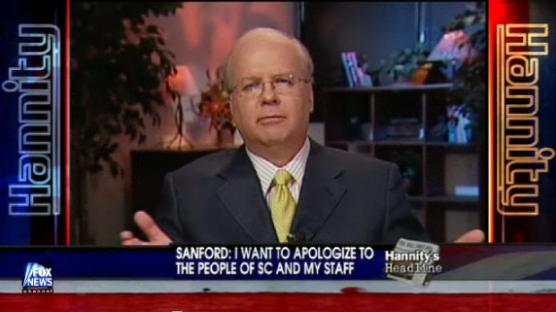
ON THE AIR: KARL ROVE ON IRAN, HEALTH CARE AND MORE

Karl Rove joined Hannity to analyze President Obama's rhetoric on the situation in Iran. Karl says Obama's statement condemning the violence against demonstrators came too late and its tardiness sent the wrong message to the Iranian regime. Karl also talks about health care and Gov. Sanford's political future.

>> Watch Video

Posted: Daily Thought Pad

Wednesday, June 17, 2009

Another Fine Example Of Government Healthcare

No sooner than I had written a story about government "care" than a reader sent me the following story, written by Kimberly Hefling and Ben Evans, of Associated Press.

"Fewer than half of Veterans Affairs centers given a surprise inspection last month had proper training and guidelines in place for common endoscopic procedures, such as colonoscopies... even after the agency learned that mistakes may have exposed thousands of veterans to HIV and other diseases.

The findings, from the VA's Inspector General and obtained by Associated Press, suggest that errors in colonoscopies and other minimally invasive procedures, performed at VA facilities, "may be more widespread than initially thought."

What?

If this was a private hospital, the outcry would be deafening. The lawsuits would already be stacked ten feet high. Insurance premiums for those doctors would rise like a hot air balloon.

You would already be hearing the stentorian tones of network television announcers asking why and how such a tragedy could happen.

But there is no outcry, because the defendant is the government, and as everyone knows, even when the government makes a mistake, and in this case a HUGE mistake, "NOTHING" is the most likely outcome.

"The VA's response was that there was no way to tell whether the infections suffered by veterans came from VA procedures. Their experts said that most, or all, of the infections probably already existed. Six veterans had HIV, thirty four had hepatitis C and thirteen had hepatitis B.

All from one hospital?

For all those out there that think the government can run healthcare, think again. The present system, no matter its flaws, has checks and balances. The government has no checks and balances, and zero accountability. There is no report of anyone losing their job in this entire scandal. Not only that, but there is no plan in place to make sure this doesn't happen again, and if bureaucrats draft one, there will be enough holes for them to weasel out of any situation that gets sticky.

The best thing you can do for yourself and your family is to practice preventative medicine, and to make sure that you don't have to go into the system, because you are in excellent health.

One of the ways you can do that is by taking Omega Oil Supplements, pharmaceutical grade fish oil and pharmaceutical grade CoQ10 and multiple vitamin and nutrient supplement.

With my best wishes for your optimum health,

Dr. Bill

Dr. Bill is the nom de guerre of William Thomas Stillwell, M.D., FACS, FICS, FAAOS, FAANAOS, FAAPGS. He is a licensed, board certified orthopaedic surgeon, with nearly a quarter century of clinical experience, and has served as Chairman of the Department of Orthopaedic Surgery at St. Catherine of Siena Medical Center, Smithtown, New York until he retired in 2003, Associate Professor of Clinical Orthopaedic Surgery at the State University of New York at Stony Brook (1987-2003), Assisitant Professor before that, and Instructor of Clinical Orthopaedic Surgery at the College of Physicians & Surgeons of Columbia University (1982-1999).

Posted: True Health Is True Wealth

Tuesday, June 16, 2009

Doctors Boo Obama In Chicago… Analysis: Tough Road Ahead


WASHINGTON (AP) — Barack Obama isn't used to hearing boos.

For all the young president's popularity, the response he got Monday from doctors at an American Medical Association meeting was a sign his road is only going to get rockier as he tries to sell his plan to overhaul the nation's health care system.

The boos erupted when Obama told the doctors in Chicago he wouldn't try to help them win their top legislative priority — limits on jury damages in medical malpractice cases.

But what could they expect? If Obama announced support for malpractice limits, that would set trial lawyers and unions — major supporters of Democratic candidates — on the attack. Not to mention consumer groups.

Every other group in the health care debate has a wish list and a top priority. Insurers don't want competition from the government. Employers don't want to be told they have to offer medical coverage to their workers. Hospitals want to stave off Medicare cuts. Drug companies want to charge what the market will bear.

Obama can't give all of them what they want. Instead, he's got to figure what's just enough to keep as many groups as possible on board — without alienating others. It's a fine line for him — and sometimes for them.

"It's a coalition issue," said Robert Blendon of the Harvard School of Public Health, an expert on public opinion and the politics of health care. "No major group is able by itself to sink health reform. But if numbers of them come together for different reasons, it could really hurt the direction the president wants to go in."

The doctors were only Obama's first house call. He'll be making his case to the other groups — and to the nation at large — in an increasingly energetic campaign to get a bill passed by the end of his first year in office.

AMA insiders shouldn't have been surprised by Obama's upfront refusal to consider malpractice caps.

The group couldn't get that idea passed by a Republican Congress and president a few years ago. Some states have such curbs, but anyone who can count votes knows the chances for national limits are slim to none with Democrats in charge of Congress.

Instead, Obama left the door open to some kind of compromise on malpractice.

The president said he's willing to explore alternatives to taking doctors to court. In the past, he supported special programs in which hospitals and doctors are encouraged to admit mistakes, correct them and offer compensation. Studies have shown the approach can work, because doctors' refusal to acknowledge mistakes is one reason many families file suit.

Doctors have special reasons to be wary of the president's plans to overhaul the health care system.

Not long ago, doctors' decisions were rarely questioned. Now they are being blamed for a big part of the wasteful spending in the nation's $2.5 trillion health care system. Studies have shown that as much as 30 cents of the U.S. health care dollar may be going for tests and procedures that are of little or no value to patients.

The Obama administration has cited such findings as evidence that the system is broken. Since doctors are the ones responsible for ordering tests and procedures, health care costs cannot be brought under control unless they change their decision-making habits.

"Change is scary," said Dartmouth University's Dr. Elliott Fisher, a doctor turned costs researcher. "I think there is a fear of loss of autonomy, that someone is going to tell you what to do." Fisher collaborated on research that showed wild differences in health care spending around the country — and no signs of better health in the high-cost areas.

But Obama did not blame the doctors. Instead, he tried to woo them, much as he has done with recalcitrant foreign leaders.

"It's the equivalent of international diplomacy. He's got to make them feel like it's possible to have dialogue about what the future looks like," said Blendon. "I think he's starting out with the AMA, but before the summer's over he's going to reach out to a lot of the other groups."

Obama assured the doctors that his plan would provide them with objective information on what treatments work best, with new computerized tools to better manage their patient case loads, and with support for harried solo practitioners to form networks.

He promised that Washington would not dictate clinical decisions. And he asked the doctors to imagine a world in which nearly every patient has insurance coverage and they can devote their full attention to the practice of medicine.

"You did not enter this profession to be bean-counters and paper-pushers," Obama said. "You entered this profession to be healers — and that's what our health care system should let you be."

That line got him an ovation.

By RICARDO ALONSO-ZALDIVAR – 2 hours ago - reports on health care policy for The Associated Press.

Obama needs to take time and give Congress and the American People time to examine all the options and do the needed research about American Healthcare Reform, not push through another nightmare (costing 1 Trillion Dollars over 10-years), like the TARP and Omnibus Bills without reading or researching with the gun of immediacy to all our heads. Obama also needs to stop rewarding the organized labor, who spent $80 Million dollars getting Obama and the Democrats elected. Doing something just to fulfill your uninformed campaign promises is not a good enough reason to spend another Trillion Dollars and to do this wrong!! This time around is everyone's job to get this right and to stand up to the Obama Administration and Congress to get it right, or let it go until we have our ducks in a row and can afford the needed decisions. - Ask/Marion – Daily Thought Pad

--------------------

OBAMA BOOED BY DOCTORS IN ILLINOIS TODAY

Seems pretty funny to me that doctors booed the Obama and it was told by CNN today and it's not on the internet yet. Doctors in Illinois didn't like what he had to say and it was big on CNN. Thought I'd look into the Liberal side and see what was happening.

Oh, and what he meant about having it costing less as it goes along - is the Government going to make sure the elderly get their coverage or operations or whether they will tell them to go home and die is that what they mean about costing less as it goes along. Makes one wonder, doesn't it?

Seems a lot of doctors feel this will be offensive to them - and NO CAPS on the way people sue doctors looks to me that less men or women will want to be doctors in the future.

By: Teatime1 on AARP.org/blog

Source: Knowledge Creates Power

Posted: True Health Is True Wealth

Related Resources and Posts:

Sunday, June 14, 2009

Safeway's Health Care Program Gets Attention

My "Citizens, heal thyselves" item Wednesday on the responsibility of individuals to reform their own health care prompted inquiries from readers wanting to know more about what I referred to as Safeway Inc.'s stick-and-carrot approach.

Based on the belief that rising health care costs are mostly driven by behavior (smoking, eating poorly, not checking your cholesterol, etc.), the Pleasanton company's Healthy Measures program uses screenings and questionnaires and offers access to prevention-related facilities like fitness clubs, along with advice and referrals to help improve behavior.

The carrot: discounted premiums or refunds for passing the screenings or showing improvement. The stick: higher premiums for failing tests and no measurable improvement in behavior. "Holding people accountable gives them incentives," said Ken Shachmut, the Safeway senior vice president who oversees the health program.

It has also kept Safeway's health care costs, amounting to $1 billion or so a year, mostly flat over the past five years, an achievement few other companies can claim, said Shachmut, who admits battling his own weight problems.

The voluntary program now covers 25,000 employees, or about three-quarters of Safeway's nonunion workforce. Elements of the program are included in contracts covering Safeway's union workers, who fall outside the company's self-insurance plan. Shachmut said most of its 200,000 union workers should be participating in the program within the next six years. The main thing that employees covered by the program seem to want, said Shachmut, is "more discounts."

In the meantime, Safeway is spreading its consumer-driven approach via the recently formed Coalition to Advance Healthcare Reform (coalition4healthcare.org), founded by company CEO Steve Burd. The 63 corporate members include Bay Area companies McKesson Corp., PG&E, Clorox Co., and Kaiser Permanente.

"This is the silver lining in the cloud of rising health costs. If we can design incentives in these core areas, we have a fighting chance of getting our arms around it," Shachmut said.

More details: You can find more on Safeway's program at links.sfgate.com/ZHIV. A Chronicle feature that ran earlier this year, is online at sfgate.com/ZHJB. Safeway CEO Burd penned on op-ed on the subject in Friday's Wall Street Journal, available at links.sfgate.com/ZHIX.

The Journal also has a news story in Friday's edition questioning the efficacy of prevention programs (links.sfgate.com/ZHIY). On the other hand, a 2007 nationwide survey of 355 human resources and health benefits managers suggested a strong correlation between wellness programs and increased productivity and market and shareholder value. (links.sfgate.com/ZHIZ).

-------

How Safeway Is Cutting Healthcare Costs


Effective health-care reform must meet two objectives: 1) It must secure coverage for all Americans, and 2) it must dramatically lower the cost of health care. Health-care spending has outpaced the rise in all other consumer spending by nearly a factor of three since 1980, increasing to 18% of GDP in 2009 from 9% of GDP. This disturbing trend will not change regardless of who pays these costs -- government or the private sector -- unless we can find a way to improve the health of our citizens. Failure to do so will make American companies less competitive in the global marketplace, increase taxes, and undermine our economy.

At Safeway we believe that well-designed health-care reform, utilizing market-based solutions, can ultimately reduce our nation's health-care bill by 40%. The key to achieving these savings is health-care plans that reward healthy behavior. As a self-insured employer, Safeway designed just such a plan in 2005 and has made continuous improvements each year. The results have been remarkable. During this four-year period, we have kept our per capita health-care costs flat (that includes both the employee and the employer portion), while most American companies' costs have increased 38% over the same four years.

[Steven A. Burd]

Martin Kozlowski

Safeway's plan capitalizes on two key insights gained in 2005. The first is that 70% of all health-care costs are the direct result of behavior. The second insight, which is well understood by the providers of health care, is that 74% of all costs are confined to four chronic conditions (cardiovascular disease, cancer, diabetes and obesity). Furthermore, 80% of cardiovascular disease and diabetes is preventable, 60% of cancers are preventable, and more than 90% of obesity is preventable.

As much as we would like to take credit for being a health-care innovator, Safeway has done nothing more than borrow from the well-tested automobile insurance model. For decades, driving behavior has been correlated with accident risk and has therefore translated into premium differences among drivers. Stated somewhat differently, the auto-insurance industry has long recognized the role of personal responsibility. As a result, bad behaviors (like speeding, tickets for failure to follow the rules of the road, and frequency of accidents) are considered when establishing insurance premiums. Bad driver premiums are not subsidized by the good driver premiums.

As with most employers, Safeway's employees pay a portion of their own health care through premiums, co-pays and deductibles. The big difference between Safeway and most employers is that we have pronounced differences in premiums that reflect each covered member's behaviors. Our plan utilizes a provision in the 1996 Health Insurance Portability and Accountability Act that permits employers to differentiate premiums based on behaviors. Currently we are focused on tobacco usage, healthy weight, blood pressure and cholesterol levels.

Safeway's Healthy Measures program is completely voluntary and currently covers 74% of the insured nonunion work force. Employees are tested for the four measures cited above and receive premium discounts off a "base level" premium for each test they pass. Data is collected by outside parties and not shared with company management. If they pass all four tests, annual premiums are reduced $780 for individuals and $1,560 for families. Should they fail any or all tests, they can be tested again in 12 months. If they pass or have made appropriate progress on something like obesity, the company provides a refund equal to the premium differences established at the beginning of the plan year.

At Safeway, we are building a culture of health and fitness. The numbers speak for themselves. Our obesity and smoking rates are roughly 70% of the national average and our health-care costs for four years have been held constant. When surveyed, 78% of our employees rated our plan good, very good or excellent. In addition, 76% asked for more financial incentives to reward healthy behaviors. We have heard from dozens of employees who lost weight, lowered their blood-pressure and cholesterol levels, and are enjoying better health because of this program. Many discovered for the first time that they have high blood pressure, and others have been told by their doctor that they have added years to their life.

Today, we are constrained by current laws from increasing these incentives. We reward plan members $312 per year for not using tobacco, yet the annual cost of insuring a tobacco user is $1,400. Reform legislation needs to raise the federal legal limits so that incentives can better match the true incremental benefit of not engaging in these unhealthy behaviors. If these limits are appropriately increased, I am confident Safeway's per capita health-care costs will decline for at least another five years as our work force becomes healthier.

The Healthy Measures program currently applies only to our nonunion work force. While we have numerous health and wellness provisions in our union contracts, we are working with union leaders like Joe Hansen of the United Food and Commercial Workers to incorporate healthy measures provisions in our union work force as well.

While comprehensive health-care reform needs to address a number of other key issues, we believe that personal responsibility and financial incentives are the path to a healthier America. By our calculation, if the nation had adopted our approach in 2005, the nation's direct health-care bill would be $550 billion less than it is today. This is almost four times the $150 billion that most experts estimate to be the cost of covering today's 47 million uninsured. The implication is that we can achieve health-care reform with universal coverage and declining per capita health-care costs.

There is a very real possibility that we will see positive transformational health-care reform in the near future. I am encouraged by the effort I see on Capitol Hill, particularly the bipartisan effort in the Senate. While some tough issues remain, if we continue to work in a bipartisan manner I believe we will resolve these issues successfully and find agreement on meaningful reform.

By STEVEN A. BURD - Mr. Burd is CEO of Safeway Inc., and the founder of the Coalition to Advance Healthcare Reform.

Steven Burd has testified in Washington D.C. and appeared on Fox News’ Huckabee. He has caught the attention of people from Senator Barbara Boxer to Rush Limbaugh; definitely opposite ends of the spectrum!! This is a great alternative to $600 Million in additional taxes and $400 Million in cuts to Medicare and Medicaid!!

Source: Daily Thought Pad

Posted: True Health Is True Wealth

Related Resources and Posts:

Thursday, June 11, 2009

How to Stop Socialized Health Care

Five arguments Republicans must make…

It was a sobering breakfast with one of the smartest Republicans on Capitol Hill. We can fix a lot of bad stuff President Barack Obama might do, he told me. But if Mr. Obama signs into law a "public option," government-run insurance program as part of health-care reform we won't be able to undo the damage.

I'd go the Republican member of Congress one further: If Democrats enact a public-option health-insurance program, America is on the way to becoming a European-style welfare state. To prevent this from happening, there are five arguments Republicans must make.

[Karl Rove]Getty Images

The first is it's unnecessary. Advocates say a government-run insurance program is needed to provide competition for private health insurance. But 1,300 companies sell health insurance plans. That's competition enough. The results of robust private competition to provide the Medicare drug benefit underscore this. When it was approved, the Congressional Budget Office estimated it would cost $74 billion a year by 2008. Nearly 100 providers deliver the drug benefit, competing on better benefits, more choices, and lower prices. So the actual cost was $44 billion in 2008 -- nearly 41% less than predicted. No government plan was needed to guarantee competition's benefits.

Second, a public option will undercut private insurers and pass the tab to taxpayers and health providers just as it does in existing government-run programs. For example, Medicare pays hospitals 71% and doctors 81% of what private insurers pay.

Who covers the rest? Government passes the bill for the outstanding balance to providers and families not covered by government programs. This cost-shifting amounts to a forced subsidy. Families pay about $1,800 more a year for someone else's health care as a result, according to a recent study by Milliman Inc. It's also why many doctors limit how many Medicare patients they take: They can afford only so much charity care.

Fixing prices at less than market rates will continue under any public option. Sen. Edward Kennedy's proposal, for example, has Washington paying providers what Medicare does plus 10%. That will lead to health providers offering less care.

Third, government-run health insurance would crater the private insurance market, forcing most Americans onto the government plan. The Lewin Group estimates 70% of people with private insurance -- 120 million Americans -- will quickly lose what they now get from private companies and be forced onto the government-run rolls as businesses decide it is more cost-effective for them to drop coverage. They'd be happy to shift some of the expense -- and all of the administration headaches -- to Washington. And once the private insurance market has been dismantled it will be gone.

Fourth, the public option is far too expensive. The cost of Medicare -- the purest form of a government-run "public choice" for seniors -- will start exceeding its payroll-tax "trust fund" in 2017. The Obama administration estimates its health reforms will cost as much as $1.5 trillion over the next 10 years. It is no coincidence the Obama budget nearly triples the national debt over that same period.

Medicare and Medicaid cost much more than estimated when they were adopted. One reason is there's no competition for these government-run insurance programs. In the same way, Americans can expect a public option to cost far more than the Obama administration's rosy estimates.

Fifth, the public option puts government firmly in the middle of the relationship between patients and their doctors. If you think insurance companies are bad, imagine what happens when government is the insurance carrier, with little or no competition and no concern you'll change to another company.

In other words, the public option is just phony. It's a bait-and-switch tactic meant to reassure people that the president's goals are less radical than they are. Mr. Obama's real aim, as some candid Democrats admit, is a single-payer, government-run health-care system.

Health care desperately needs far-reaching reforms that put patients and their doctors in charge, bring the benefits of competition and market forces to bear, and ensure access to affordable and portable health care for every American. Republicans have plans to achieve this, and they must make their case for reform in every available forum.

Defeating the public option should be a top priority for the GOP this year. Otherwise, our nation will be changed in damaging ways almost impossible to reverse.

By Karl Rove

About Karl Rove - Karl Rove served as Senior Advisor to President George W. Bush from 2000–2007 and Deputy Chief of Staff from 2004–2007. At the White House he oversaw the Offices of Strategic Initiatives, Political Affairs, Public Liaison, and Intergovernmental Affairs and was Deputy Chief of Staff for Policy, coordinating the White House policy making process.

Before Karl became known as "The Architect" of President Bush's 2000 and 2004 campaigns, he was president of Karl Rove + Company, an Austin-based public affairs firm that worked for Republican candidates, nonpartisan causes, and nonprofit groups. His clients included over 75 Republican U.S. Senate, Congressional and gubernatorial candidates in 24 states, as well as the Moderate Party of Sweden.

Karl writes a weekly op-ed for The Wall Street Journal, is a Newsweek columnist and is now writing a book to be published by Simon & Schuster. Email the author at Karl@Rove.com or visit him on the web at Rove.com.

Or, you can send him a Tweet @karlrove.

Related Resources and Posts:

Posted: True Health Is True Wealth

Democrats Set to Rush Through Government-Run Healthcare


Senate Democrats announced plans Tuesday to begin committee work next week on health care legislation designed to assure coverage for millions of Americans who now lack it, a key objective of the Obama administration.

IBut Sen. Chris Dodd, D-Conn., said the measure that goes before the Senate Health, Education, Labor and Pensions Committee would contain gaps rather than include several controversial features included in a draft that circulated only last week. Among them are a proposed government-run insurance plan to compete with private companies -- vociferously opposed by nearly all Republicans -- and a requirement for employers to pay a penalty if they fail to provide coverage for their workforce.

Dodd said he would preside over the sessions in the place of Sen. Edward M. Kennedy, D-Mass., the committee chairman, who was diagnosed more than a year ago with brain cancer and has not been in the Capitol in recent days. The committee work will take about three weeks, he said.

Sen. Mike Enzi, R-Wyo., the top Republican on the health committee, responded dismissively to Dodd's comments about leaving gaps for GOP lawmakers to debate.

He said Democrats did so "because they know we're not going to like what they've written and they don't want us to have any time to comment," he said in an interview.

Enzi also said Democrats would have behaved differently if Kennedy were present.

"I've never worked a process on any bill with him that went like this where there was absolutely no input taken from the other party," Enzi said. "And I never treated him that way either."

"What the question is, is Senator Dodd in charge or is he just running the meeting, and we don't know yet," Enzi said.

Dodd's announcement signaled a quickening pace of activity on health care legislation, and came as senior House Democrats disclosed they are considering a new tax on employer-provided health benefits to help pay for expanding coverage to the 50 million uninsured. President Barack Obama opposed a tax on benefits during last year's campaign and aired numerous television commercials criticizing the idea when his Republican rival, Sen. John McCain, proposed it.

Several officials also said an outline of emerging legislation in the House envisions a requirement for all individuals to purchase affordable coverage, with an unspecified penalty for those who refuse and a waiver for those who cannot cover the cost.

"There's no sense having a mandate unless you have a contribution," Rep. Charles Rangel, D-N.Y., chairman of the House Ways and Means Committee, said Monday. He referred to the suggestion as "play or pay."

Rangel and other senior Democrats arranged to bring members of the party's rank and file up to date at a midday session Tuesday on the effort to draft health care legislation at the top of President Barack Obama's agenda.

The officials spoke on condition of anonymity, saying they did not want to pre-empt the presentation to rank-and-file Democrats on Tuesday.

Under an outline of the House Democratic plan, individuals and small businesses would be able to purchase coverage from a "health exchange" and the government would require all plans to contain a minimum benefit. No applicant could be rejected for pre-existing conditions, nor could one be charged a higher premium.

The outline shows Democrats want to provide subsidies to families up to about $88,000 a year to help them pay for insurance, and to require new policies to limit out-of-pocket spending as a way to prevent personal bankruptcies.

House Democrats also are considering a wide-ranging change for Medicaid that would provide a uniform benefit across all 50 states and increase payments to providers, according to several officials. Medicaid is a joint state-federal program of health coverage for the poor.

The measure also envisions several changes to Medicare, the government program that provides health care to seniors, although details are lacking.

According to the outline, the gap between primary care physician fees and those of specialists would be narrowed, and beneficiaries would not incur out-of-pocket costs for preventive services. The outline also mentions unspecified improvements in the prescription drug benefit. Democrats vociferously opposed that benefit when Republicans passed it, saying it provided billions in unnecessary subsidies to pharmaceutical companies.

The outline does not include an overall cost for the legislation, which is expected to exceed the $1.2 trillion, 10-year price tag Obama's proposal carried last winter.

Part of the cost would be covered in the form of cuts in the government payments under Medicare plans run by private insurance companies, which receive more per patient than the cost of traditional coverage.

Strikingly, the outline made no mention of the possible tax on health benefits, or of the proposed penalty for those refusing to purchase affordable insurance.

Several officials stressed that no final decisions would be made for several days on the possible tax on health benefits.

The idea has been gaining currency in recent weeks as Congress intensifies its search for more than $1 trillion to help pay for a health care overhaul.

America… Do your homework, contract your Representative and Senator (no matter which side you are on) and do not let them pass this legislation without reading it, without having ‘real’ funds to pay for it and a real plan, and without being satisfied that you will be receiving and will continue to receive the same or better health care treatment than you do today… which means better than the care in any country that now has socialized or nationalized healthcare. If not… do not let the government force you into a plan of worse healthcare that nobody can pay for!!

Source: Associated Press/MoneyNews.com

Related Resources and Posts:

Tuesday, June 9, 2009

Understanding the House Democrats’ health care bill

Posted Tuesday, June 9th, 2009, at 10:30 am

Yesterday I posted and described the draft Kennedy-Dodd health care bill. Today I would like to do the same for an outline produced by House Democrats.

Here is a three-page outline of “Key Features of the Tri-Committee Health Reform Draft Proposal in the House of Representatives,” dated yesterday (June 8, 2009).

The three committees are:

  • The House Ways & Means Committee, chaired by Rep. Charlie Rangel (D-NY). The Health Subcommittee is chaired by Rep. Pete Stark (D-CA).
  • The House Energy & Commerce Committee, chaired by Rep. Henry Waxman (D-CA). The Health Subcommittee is chaired by Rep. Frank Pallone, Jr. (D-NJ).
  • The House Committee on Education & Labor, chaired by Rep. George Miller (D-CA). The Health, Employment, Labor and Pensions Subcommittee is chaired by Rep. Robert Andrews (D-NJ).

The document suggests this is a joint product of the three committees and/or their subcommittees. My sense, however, is that it is Speaker Pelosi who is driving the bus. This is in contrast to the Senate, where the committee chairmen (Kennedy/Dodd and Baucus) appear to have the pen, in less well-coordinated efforts.

Kennedy-Dodd and the House bill outline are remarkably similar. Whether this represents House-Senate coordination or parallel thought processes is unclear.

I think the easiest way for me to present the House bill outline is in comparison with the Kennedy-Dodd bill. So here my description from yesterday of the Kennedy-Dodd bill, with today’s comparison to the House bill outline in red. I hope it’s comprehensible and useful this way. If you read yesterday’s post, you can skim the text in black and focus on the new text in blue.

Here are 15 things to know about the draft Kennedy-Dodd health bill and the House bill outline.

  1. The Kennedy-Dodd bill would create an individual mandate requiring you to buy a “qualified” health insurance plan, as defined by the government. If you don’t have “qualified” health insurance for a given month, you will pay a new Federal tax. Incredibly, the amount and structure of this new tax is left to the discretion of the Secretaries of Treasury and Health and Human Services (HHS), whose only guidance is “to establish the minimum practicable amount that can accomplish the goal of enhancing participation in qualifying coverage (as so defined).” The new Medical Advisory Council (see #3D) could exempt classes of people from this new tax. To avoid this tax, you would have to report your health insurance information for each month of the prior year to the Secretary of HHS, along with “any such other information as the Secretary may prescribe.”

    The House bill also contains an individual mandate. The outline is less specific but parallel: “Once market reforms and affordability credits are in effect to ensure access and affordability, individuals are responsible for having health insurance with an exception in cases of hardship.”

  2. The Kennedy-Dodd bill would also create an employer mandate. Employers would have to offer insurance to their employees. Employers would have to pay at least a certain percentage (TBD) of the premium, and at least a certain dollar amount (TBD). Any employer that did not would pay a new tax. Again, the amount and structure of the tax is left to the discretion of the Secretaries of Treasury and HHS. Small employers (TBD) would be exempt.

    The House bill outline also contains an employer mandate that appears to parallel that in Kennedy-Dodd: “Employers choose between providing coverage for their workers or contributing funds on behalf of their uncovered workers.”

  3. In the Kennedy-Dodd bill, the government would define a qualified plan:
    1. All health insurance would be required to have guaranteed issue and renewal, modified community rating, no exclusions for pre-existing conditions, no lifetime or annual limits on benefits, and family policies would have to cover “children” up to age 26.

      The House bill outline is consistent with but less specific than the Kennedy-Dodd legislative language. The House bill outline would “prohibit insurers from excluding pre-existing conditions or engaging in other discriminatory practices.” I will keep my eye on what “other discriminatory practices” means in the legislative language. Does that mean that a health plan cannot charge higher premiums to smokers?

      Like the Kennedy/Dodd bill, the House bill outline would preclude health plans from imposing lifetime or annual limits on benefits: “Caps total out-of-pocket spending in all new policies to prevent bankruptcies from medical expenses.” This would raise premiums for new policies.

      The House bill outline “introduces administrative simplification and standardization to reduce administrative costs across all plans and providers.” I don’t know what this means, but suggest keeping an eye on it.

    2. A qualified plan would have to meet one of three levels of standardized cost-sharing defined by the government, “gold, silver, and bronze.” Details TBD.

      Same: “… by creating various levels of standardized benefits and cost-sharing arrangements…”. It also contains this addition relative to Kennedy-Dodd: “… with additional benefits available in higher-cost plans.”

      But note the “various levels of standardized benefits.” This appears to be more expansive government control of health plan design than in the Kennedy-Dodd draft.

    3. Plans would be required to cover a list of preventive services approved by the Federal government.

      This is unspecified in the House bill outline. We’ll have to wait to see legislative language. The House bill would require plans to “waive cost-sharing for preventive services in benefit packages.”

    4. A qualified plan would have to cover “essential health benefits,” as defined by a new Medical Advisory Council (MAC), appointed by the Secretary of Health and Human Services. The MAC would determine what items and services are “essential benefits.” The MAC would have to include items and services in at least the following categories: ambulatory patient services, emergency services, hospitalization, maternity and new born care, medical and surgical, mental health, prescription drugs, rehab and lab services, preventive/wellness services, pediatric services, and anything else the MAC thought appropriate.

      This appears parallel but is less specific for now: “Independent public/private advisory committee recommends benefit packages based on standards set in statute.” I find the “standards set in statute” interesting. It suggests that provider and disease interest groups will have two fora in which to lobby for their benefits to be mandated: Congress, and the advisory committee.

    5. The MAC would also define what “affordable and available coverage” is for different income levels, affecting who has to pay the tax if they don’t buy health insurance. The MAC’s rules would go into effect unless Congress passed a joint resolution (under a fast-track process) to turn them off.

      The House bill outline is silent on this.

  4. Health insurance plans could not charge higher premiums for risky behaviors: “Such rate shall not vary by health status-related factors, … or any other factor not described in paragraph (1).” Smokers, drinkers, drug users, and those in terrible physical shape would all have their premiums subsidized by the healthy.

    The House bill outline says it would “prohibit plans [from] rating (charging higher premiums) based on gender, health status, or occupation and strictly limits premium variation based on age.” If the bill were to provide nothing more, this would appear to parallel the Senate bill and preclude plans from charging higher premiums for risky behaviors.

  5. Guaranteed issue and renewal combined with modified community rating would dramatically increase premiums for the overwhelming majority of those Americans who now have private health insurance. New Jersey is the best example of health insurance mandates gone wild. In the name of protecting their citizens, premiums are extremely high to cover the cross-subsidization of those who are uninsurable.

    The House bill outline is silent on guaranteed issue and renewal. I’m going to make an educated guess that the bill includes these provisions as part of “other discriminatory practices,” and they have just left them out of the outline. Given the philosophy behind this outline (with which I disagree), it would be a striking omission. But for now, the outline says nothing specific on these topics.

  6. The bill would expand Medicaid to cover everyone up to 150% of poverty, with the Federal government paying all incremental costs (no State share). This means adding childless adults with income below 150% of the poverty line.

    The House bill outline “expands Medicaid for the most vulnerable, low-income populations,” so we have no specifics other than that there’s an expansion. I cannot tell if this is expanding eligibility or benefits. The outline also “improves payment rates to enhance access to primary care under Medicaid.” I assume this means the bill would expand the Federal share paid of each dollar spent by a State Medicaid program on primary care, rather than the Federal government actually mandating specific payment rates to be implemented by States. Federal micromanagement of specific Medicaid provider payment rates was eliminated in the mid 1990’s.

  7. People from 150% of poverty up to 500% (!!) would get their health insurance subsidized (on a sliding scale). If this were in effect in 2009, a family of four with income of $110,000 would get a small subsidy. The bill does not indicate the source of funds to finance these subsidies.

    The House bill outline has a sliding scale up to 400% of poverty. If this were in effect in 2009, a family of four with income of $88,000 would get small subsidy.

  8. People in high cost areas (e.g., New York City, Boston, South Florida, Chicago, Los Angeles) would get much bigger subsidies than those in low cost areas (e.g., much of the rest of the country, especially in rural areas). The subsidies are calculated as a percentage of the “reference premium,” which is determined based on the cost of plans sold in that particular geographic area.

    The House bill outline is not specific on this point. I would not expect it to be – this is something you can tell only from legislative language.

  9. There would be a “public plan option” of health insurance offered by the federal government. In this new government health plan, the federal government would pay health care providers Medicare rates + 10%. The +10% is clearly intended to attract short-term legislative support from medical providers. I hope they are not so naive that they think that differential would last.

    The House bill outline “creates a new public health insurance within the Exchange … the public health insurance option competes on ‘level field’ with private insurers in the Exchange.” There are no specifics on how the public plan would work, or on provider payment rates.

  10. Group health plans with 250 or fewer members would be prohibited from self-insuring. ERISA would only be for big businesses.

    The House bill outline is silent on this point.

  11. States would have to set up “gateways” (health insurance exchanges) to market only qualified health insurance plans. If they don’t, the Feds will set up a gateway for them.

    The House calls it an Exchange rather than a Gateway. While the Senate bill would tell each State, “Create a Gateway or we’ll create one for you,” the House bill outline says to each State, “We’re creating a single new national Exchange. You’re in it unless you develop your own State or Regional Exchange.”

  12. Health insurance plans in existence before the law would not have to meet the new insurance standards. This creates a weird bifurcated system and means you would (probably) be subject to a different set of rules when you change jobs.

    The House bill outline appears to parallel the Kennedy-Dodd draft: “Phases-in requirements to benefit and quality standards for employer plans.” This means that new plans will be more expensive than old plans. It also means they’re creating a bifurcated system with all sorts of perverse unintended consequences for employment flexibility.

  13. The bill does not specify what spending will be cut or what taxes will be raised to pay for the increased spending. That is presumably for the Finance Committee to determine, since it’s their jurisdiction.

    The House bill outline lists specific topics for changes to Medicare reimbursement:

    • Changing (how?) the Medicare reimbursement for doctors, called the “Sustainable Growth Rate” (SGR).
    • “Increasing reimbursement for primary care providers”
    • “Improving” the Medicare drug program. I won’t be surprised if, when I see the specifics, I disagree that their changes are “improvements.” In the past this has meant having the federal government mandate specific prices for drugs.
    • Cutting payments to Medicare Advantage plans.
    • Expanding low-income subsidies for seniors and eliminating cost-sharing for all preventive services in Medicare.

    The House bill outline also uses positive language to describe things that might generate budgetary savings from Medicare and/or Medicaid. The hospital readmissions point is specific. The first two points could increase or decrease federal spending, depending on the specifics.

    • “Use federal health programs … to reward high quality, efficient care, and reduce disparities.”
    • “Adopt innovative payment approaches and promote[s] better coordinated care in Medicare and the new public option through programs such as accountable care organizations.”
    • “Attack the high rate of cost growth to generate savings for reform and fiscal sustainability, including a program in Medicare to reduce preventable hospital readmissions.”
  14. The bill defines an “eligible individual” as “a citizen or national of the United States or an alien lawfully admitted to the United States for permanent residence or an alien lawfully present in the United States.”

    The House bill outline is silent on this point.

  15. The bill would create a new pot of money for state gateways to pay “navigators” to educate people about the new bill, distribute information about health plans, and help people enroll. Navigators receiving federal funds “may include … unions, …”

    The House bill outline is silent on this point.

This would have severe effects on the more than 100 million Americans who have private health insurance today:

  • The government would mandate not only that you must buy health insurance, but what health insurance counts as “qualifying.”
  • Health insurance premiums would rise as a result of the law, meaning lower wages.
  • A government-appointed board would determine what items and services are “essential benefits” that your qualifying plan must cover.
  • You would find a tremendous new disincentive to switch jobs, because your new health insurance may be subject to the new rules and would therefore be significantly more expensive.
  • Those who keep themselves healthy would be subsidizing premiums for those with risky or unhealthy behaviors.
  • Far more than half of all Americans would be eligible for subsidies, but we have not yet been told who would pay the bill.
  • The Secretaries of Treasury and HHS would have unlimited discretion to impose new taxes on individuals and employers who do not comply with the new mandates. (The House bill outline is not specific on this point.)
  • The Secretary of HHS could mandate that you provide him or her with “any such other information as [he/she] may prescribe.” (The House bill outline is not specific on this point.)

I strongly oppose the Kennedy-Dodd bill and the House Tri-Committee bill.

If this topic interests you, I highly recommend Jim Capretta’s blog Diagnosis.

Source: Keith Hennessey.com /Daily Thought Pad

Posted: True Health Is True Wealth

Related Resources and Posts: