Showing posts with label Dogs. Show all posts

Monday, June 16, 2014

Kids with autism connect, cuddle with future service dogs: 'I love them'

Students snuggle and play with puppies at the Lionheart School in Alpharetta, Georgia. The puppies will go on to become service dogs for war veterans and others with disabilities.

LionPaws via Facebook

Today – Pets By LauraT Coffey – Originally Posted on June 10, 2014 at 4:11 PM ET – Cross Posted at Just One More Pet

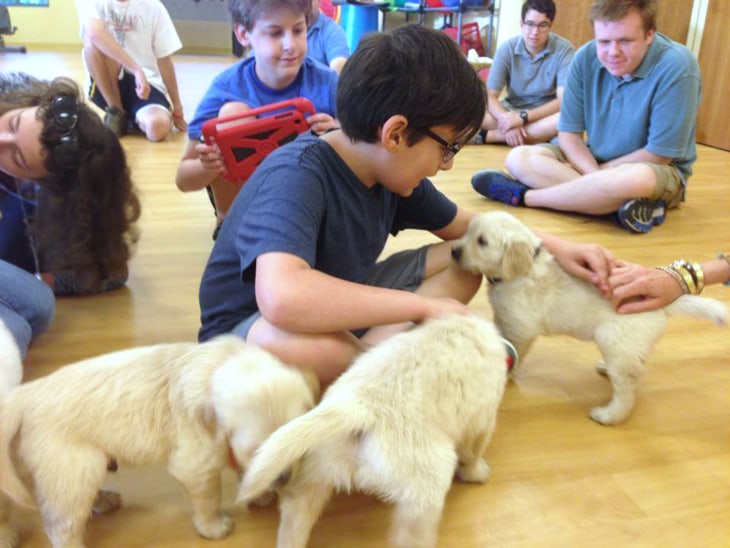
A student named Max, front, and other children snuggle and play with puppies at the Lionheart School in Alpharetta, Georgia. The puppies will go on to become service dogs for war veterans and others with disabilities.

For many children with autism, social interactions with strangers can be awkward and anxiety-inducing. But if the stranger is a gentle golden retriever puppy with huge paws and a quiet snore, something remarkable happens.

Throw a puppy into the mix, and the uneasiness tends to melt away.

“It’s just amazing,” said Elizabeth Dulin, co-founder and head of the Lionheart School, which serves students with autism in Alpharetta, Georgia. “When our kids interact with the dogs, we see reduced anxiety levels. ... They become calm and focused.”

One 11-year-old student named Max can quickly identify all seven of the puppies romping around the school. How can he name them so effortlessly when they look so similar? That’s easy.

“Because I love them,” Max told WXIA-TV in Atlanta.
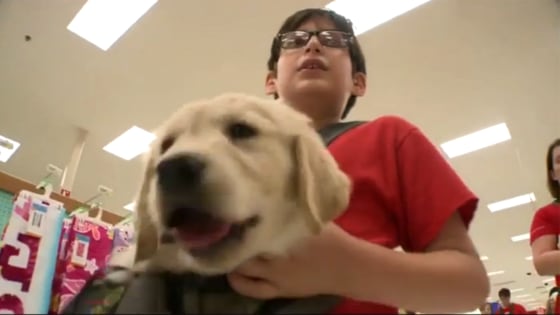
A student named Max holds a puppy in a Target store.

WXIA / 11Alive.com

Max, 11, converses with anyone who will listen about a puppy in his care during a field trip to a Target store.

Lionheart is home base for a new partnership with the paws4people foundation, which trains service dogs for war veterans, disabled kids and adults. Dubbed the “LionPaws Puppy Development Center,” the fledgling program sees to it that the future service dogs help as many people as possible throughout their training.

The puppies spend the first four months of their lives at Lionheart, where they befriend the school’s 39 students. The kids hold the puppies, talk to the puppies, bathe the puppies and go on field trips with the puppies — all the while socializing the animals and preparing them for more advanced obedience training ahead.
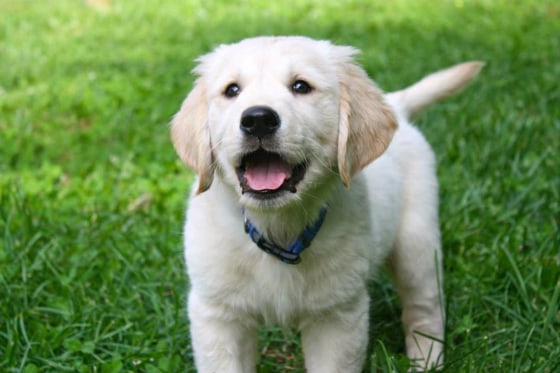
A puppy that will become a service dog.

LionPaws via Facebook

As this puppy trains to become a service dog, it will touch the lives of many humans in need.

The next stop is an inmate intervention program, where prisoners in good standing teach the puppies 125 commands and train them to open and close doors, turn lights on and off and perform other tasks. Inmates entrusted with the dogs’ training get more than a sense of purpose — they also receive recent job experience that can help them find employment when they get released.

The final phase of the dogs’ training happens at the University of North Carolina in Wilmington, where paws4people is based. Animal-loving students get college credit for making sure the dogs are fully prepared to go to their new homes — often with war veterans who are physically disabled or who have post-traumatic stress disorder.

Related story: 'She gives me independence': Service dog changes wounded veteran's life
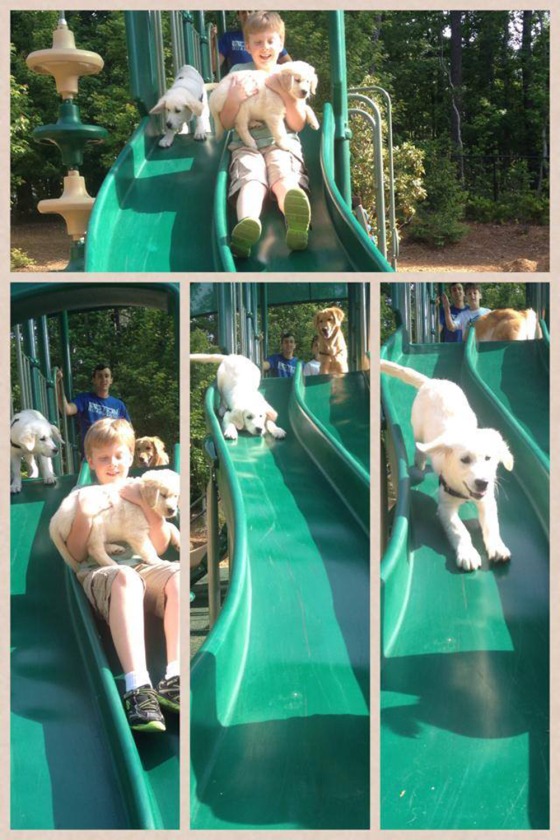
Puppies go down a slide with Lionheart students.

LionPaws via Facebook

Getting socialized: Puppies go down a slide with Lionheart students.

paws4people has been training service dogs for 14 years. The newest segment of socialization and training for some puppies — spending time with children with autism — began in January of this year. The results so far have been “nothing short of miraculous,” said Sarah Rosenbaum, director of the LionPaws Puppy Development Center.

Rosenbaum said she’s seen non-verbal children become chatty around the puppies, and she’s seen children with motor-skill deficits get up and run to see the puppies.

“They’re just so excited, which really is such a source of pride for me,” she told TODAY.com. “The children are providing for the puppies, and the puppies are providing for the children.”
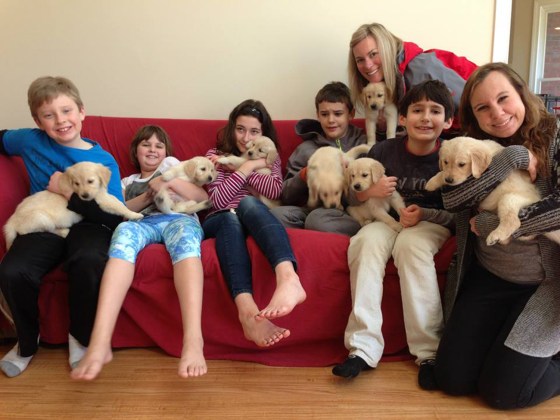
Adults and kids holding puppies on a couch.

LionPaws via Facebook

The puppies get plenty of affection during the first four months of their lives at the Lionheart School.

Lionheart’s first batch of seven puppies is about to move on to the inmate intervention phase of their training, and a new pile of puppies will arrive at the school soon. Five members of the school’s staff have become certified as dog handlers, and that makes it possible for one older service dog named LANGLEY to stay at the school year-round.

Dulin, the head of the Lionheart School, said LANGLEY and the puppies have been helping students to make social and emotional connections. On field trips to Target or to a nursing home, the children often will open up and make conversation with strangers about the puppies. Or when a student is having a bad day, a furry friend can help them regain a sense of normalcy.

“A lot of our kids have difficulty regulating their emotions,” Dulin told TODAY.com. “One little girl who deals with a lot of anxiety was riding in carpool one morning, and a boy who rides with her slammed his finger in the door. This little girl started crying and she could not stop.”

The girl locked herself, wailing, inside a bathroom stall and refused to come out. A teacher knew just what to do: Launch Operation LANGLEY. She brought LANGLEY into the bathroom and sat on the floor until the girl was ready to let the dog into her space.

“About three minutes later, the teacher saw a little ‘thumbs up’ sticking out from under the stall door,” Dulin said. “LANGLEY went into the stall, calmed her down, and then the two walked to class together. And she had been inconsolable — without LANGLEY, we probably would have needed to call her parents.”

Related story: Xena the Warrior Puppy, rescued from abuse, helps 8-year-old boy with autism
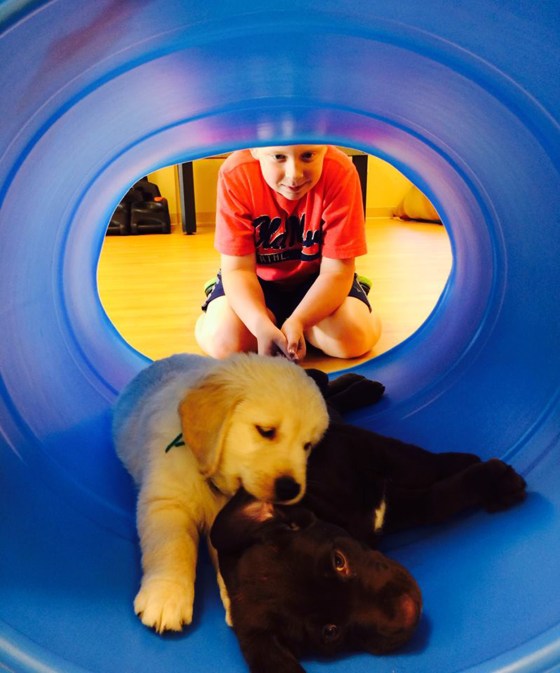
Puppies playing in playground equipment.

LionPaws via Facebook

Puppies take a break while playing with Lionheart students.

Research regarding the effects of companion animals on kids with autism is limited but encouraging. One study published last year revealed that children with autism spectrum disorder were more likely to talk, laugh, make eye contact and show other positive social behaviors in the presence of guinea pigs than they were in the presence of toys.

And in her 2010 paper “What a Dog Can Do: Children with Autism and Therapy Dogs in Social Interaction,” researcher Olga Solomon highlighted cases of dogs helping children to communicate and connect emotionally with others around them. As Solomon noted in her paper, “dogs lead humans elsewhere, and this elsewhere is often better than where we have been before.”

Related: 

Pet Therapy

Pets Reduce Stress at Work… More Companies, Citing Benefits, Allowing Pets at Work 

Pets are way better than Therapy!

Waltz Into a Healthy Old Age

Pet Alzheimer's Disease - Is Your Dog or Cat Showing Signs? 

Therapeutic benefits of music being used to treat Alzheimer’s, addiction, and depression 

Sarah Palin and Senator Mile Lee Take Time to Visit Service Dog Trainers While in Iowa 

Gov. Palin: Trig is getting a buddy!

Wednesday, January 22, 2014

The Iditarod on 12,000 calories a day

Extreme cold in Alaska makes the race even more challenging – and dangerous

Rick Casillo dog racingGuest essay by Paul Driessen – What’s Up With That? – Cross-Posted at Just One More Pet

This winter’s record Midwestern freeze made any outdoor activity a real challenge. It also made us appreciate modern housing, heating, transportation and hydrocarbons – and what our frontline troops have endured in the Aleutians, Korea and Afghanistan. I’ve been in minus 20-50 F weather, and it is brutal. 

The nasty weather reminded me of the Iditarod racers and spirited sled dogs I met last summer in Alaska. Trekking 1,100 miles from Anchorage to Nome, across Sam McGee’s wilderness in the dead of winter in nine to twelve days, is not for faint-hearted humans or canines. It’s equivalent to jogging from Chicago to Tampa or from Washington, DC to Kansas City – with temperatures ranging from a “balmy” 10 or 20 degrees F (-7 to -12 C) above to a bone-rattling and deadly minus 50 (-46 C) or lower for the entire trip.

It helps explain why far more people have reached the summit of Mt. Everest than have finished the annual Iditarod race.

This difference: some 4,000 to Everest’s peak versus around 900 individual dogsledders, many of whom are the same hardy men and women racing year after year. About 2,550 dog teams of 16 dogs each have competed since Dorothy Page and Joe Redington, Sr. launched the Iditarod dogsled race in 1973.

Rick Swenson has entered the race 33 times and won it five times, logging more than 82,000 miles in training and racing. DeeDee Jonrowe has started 27 races and finished 25, including 2003 when she began three weeks after finishing chemotherapy for breast cancer! (Go here for still more Iditarod trivia.)

“The coldest I’ve ever been in during the Iditarod was minus 60, and I actually camped out on the trail that night with the dogs,” Rick Casillo told me. “It’s by far the coldest I have ever been. I went to sleep after taking care of the dogs, woke up two hours later and was starting to get hypothermic. I had to get out of my bag and get moving fast. When you’re dealing with temperatures like that, there is no room for error. You have to plan and execute each step perfectly.” Jack London’s “To build a fire” comes to mind.

Rick and his wife Jennifer operate Battle Dawgs Racing, Aurora Heli-Expeditions and the Knik River Lodge west of Palmer. But Battle Dawgs is not just their dog kennel. By partnering with Alaska’s Healing Hearts, they’ve made it a wounded veterans rehabilitation program that enables military personnel and their families and loved ones to experience wild Alaska, restore their souls, and meet kindred spirits through hunting, fishing, mushing, flying, hiking and snowmobiling.

James Hastings, director of operations for AHH and a retired U.S. Army veteran, says their goal with Battle Dawgs is to have a year-round camp with cabins and facilities that can accommodate warriors in wheel chairs. Adds Jennifer, an Air Force veteran and reservist, aircraft mechanic and chopper pilot: “For a wounded veteran, the true battle often begins when they get home.” That’s why the dogs are important. “The healing capabilities of canines are legendary,” Rick says. “You can’t spend time with these men and women, and not want to help out by offering them some life changing experiences.”

Some of warriors will actually be members of Rick’s “pit crew” during dog races. One will be on his sled for the “ceremonial” portion of the 2014 Iditarod, from Anchorage to Eagle River, where the teams regroup and start the actual race. Few can imagine what goes into this race.

Pre-season racing is like pre-season football, Rick says. “You use it to gauge younger dogs and give them valuable racing experience. I’m looking for attitude, recovery time, eating habits, drive and desire. These dogs are all born to run, but I need dogs that can do these runs over and over, willingly and happily.” Usually he spots these characteristics by opening day, but sometimes there are surprises.

“The toughest situation I was ever in was easily in 2007 when I was going up the Alaska Range from Rainey Pass,” Rick recalls. “The temperature was minus 30, with 40 mph winds – making it feel like minus 71 – and we were climbing in a complete whiteout. My goggles froze up solid and were useless. I was forced to take them off. Minutes later, frostbite set in on my nose, cheeks and eyelids. Sometimes I had to walk in front of the team to find the trail. All of a sudden, an 18-month-old dog started demanding to be up front, leading. Normally I would never rely on a young dog in a situation like that, but Grisman was jumping five feet in the air, howling to go. So I gave him a chance. Once I put Gris in lead, he never balked once. Not only did he take us up and over the range. He continued to be one of best dogs in that race and went on to be the best dog I have ever run.”

That experience underscores what are perhaps the six most important factors in Iditarod racing. (1) Bond and trust. “If you don’t have the dogs’ trust, you have nothing,” Rick emphasizes. (2) Mental and physical toughness, for dogs and musher alike. By the end of the race, each musher is tired, battered and cut up – attesting to the difficulty of the trail and weather, and to the need to just keep going, no matter what. (3) Logistics. More on that in a minute. (4-6) “Dog care, dog care, dog care. As the dogs go, you go.”

For UPS and Amazon, logistics are vital. “Brown” even has a jingle about logistics, and Amazon.com hires numerous veterans because of their logistical skills. But for the military and Iditarod racers, logistics mean the difference between success and failure, life or death. “We’re on our own out there,” Rick told me. “No cell phones, no communications. Careful planning and preparation are critical.”

Each dog burns 12,000 calories a day during the Iditarod, Rick points out. That’s what Olympic swimming champion Michael Phelps reportedly consumes on racing days. Rick’s dogs eat a combination of beef, horse, fish and chicken; beef fat and turkey and chicken skins; tripe and high-grade dry dog food; salmon oil and natural supplements. They wear booties to protect their feet from the cold and bruising.

Mushers are required to carry a sleeping bag, ax, snow shoes, extra dog booties, a veterinary care book, a dog food cooker and sufficient food for the dogs, in their sleds at all times. So they are hauling about 60 pounds of food and gear in sleds similar to what Inupiaq and Yup’ik Natives used for centuries. For each musher, some 3,000 pairs of booties and 2,000 pounds of food and personal gear are divided up and airlifted by volunteer flyers two weeks before the race to each of 20 check points along the route.

“We cover 125 to 150 miles a day. Our average runs are 60 miles, followed by a four-to-five-hour break to eat, rest, massage and care for the dogs – and then we do it again, and again, until we reach Nome,” Rick explains. Mushers are also required to shut down completely for two 8-hour and one 24-hour rest periods. Tough hills, rocks, swollen creeks, high winds, frigid temperatures, storms, whiteout conditions, accidents and injuries to dogs or mushers, and other adventures can slow that pace down. But somehow they need to make it to the next check point, where volunteer veterinarians examine the dogs and they can replenish their supplies. More volunteers fly any injured dogs from the nearest checkpoint back to Eagle River, where Hiland Mountain Correctional Center inmates care for them until the mushers finish the race.

The hard training and careful preparation pay off. Rick has entered and finished four Iditarod races and is now preparing for his fifth. He’s also competed in many other dogsled races. This year he plans to run at a slower pace that requires less exertion and less rest – and results in less fatigue and healthier dogs that can chew up miles. That’s a bit different from a musher who “ran” all 188 miles to Rohn with minimal breaks in the first race of the 2013-14 season. It will be fascinating to watch all the mushers’ strategies in action.

They’re all straining, sweating and freezing for the $50,000 first place prize – and smaller cash prizes for the next 30 top finishers, plus the joys and thrills of just being in this premier race. But competing in the Iditarod costs $30,000 or more in fees, supplies, dog care, preparation, training and prelims.

So follow Rick Casillo on BattleDawgsRacing.com and all the mushers, preparations, history and thrills of this amazing race at Iditarod.com. Buy some gear and DVDs. Support your favorite mushers and dogs with donations or by volunteering. And watch the race on television. It starts March 1 – and now you know enough to really understand and appreciate “the last great race,” the Iditarod.

_______________

Paul Driessen is senior policy analyst for the Committee For A Constructive Tomorrow, author of Eco-Imperialism: Green Power Black Death (Kindle), and a huge fan of Rick Casillo, Battle Dawgs and all they do.

Related: 

Iditarod Trail Race Headquarters, Palin and Alaskan Tourism 

Iditarod Dog Found 7-Days After Disappearing From Team 

Pet Detectives Capture Iditarod Dog on the Lam in East King Co. for 6 Weeks 

Iditarod Dog Saved With Mouth-To-Snout CPR 

Alaskan Breeds Only True American Breeds Study Shows…

Saturday, November 23, 2013

Keeping Pets Safe for Thanksgiving: The “Not So Safe” or No-No Pet Food List

pet-friendly-home Just One More Pet (JOMP) – Cross-Posted at AskMarion: The following foods are not safe for dogs, cats, potbellied pigs, or guinea pigs. Never give the following foods or beverages to your pets:

  • *Alcohol of any kind (a no-no for all animals)
  • *Anything with Caffeine (a no-no for all animals)
  • Avocados – especially for birds and cats
  • Baby food if it contains onion powder
  • Bones from Ham, Chicken, Turkey or Cooked Bones that can splinter
  • * (Raw) Bread or Yeast Dough
  • Candied Yams
  • Casseroles (unless you absolutely know that none of the no-no foods are in them)
  • *Chocolate and Cocoa (this includes things like brownies and chocolate chip cookies) and dark chocolate is the worst
  • Raw cookie dough can also kill dogs and small children.
  • *Grapes or raisins
  • Jell-O Molds
  • (Raw) Liver
  • *Macadamia Nuts (this includes things like cookies and pies) and go easy on nuts in general (nuts in general are not great for dogs, but walnuts, macadamia nuts, and pecans are particularly harmful and add the additional possibilities of health problems caused by fungus and mold. Peanuts and peanut butter are not on the no-no list but could also cause problems because of mold issues). Nuts are rich in monounsaturated fats, which are healthy for humans, but too much fat of any kind increases the risk of pancreatitis in dogs.
  • Milk (and American Cheese) can be a problem for some dogs. They can be lactose intolerant like some people.
  • Mushrooms, particularly wild mushrooms.
  • Nutmeg
  • *Onions, including onion powder (garlic should be fed in moderation)
  • Pecans, including Pecan Pie (nuts in general are not great for dogs, but walnuts, macadamia nuts, and pecans are particularly harmful and add the additional possibilities of health problems caused by fungus and mold.  Peanuts and peanut butter are not on the no-no list but could also cause problems because of mold issues).
  • Potato Skins and Green Potatoes (potatoes in general are not digestible by dogs).
  • Pork Products because of the nitrates
  • Stuffing (it usually contains onions, which are very harmful to pets)
  • Large amounts of Grains (often a main ingredient in cheap commercial pet foods)
  • *Raisins and grapes
  • Raw eggs (raw egg whites) – (According to the ASPCA, raw egg whites contain avidin, which damages a dog’s metabolism and creates a biotin deficiency, so they recommend owners should discard the white if feeding a dog raw eggs.  Others disagree.)
  • Tomatoes (plant and fruit) – All parts of the plant except the tomato itself are poisonous to humans
  • Vitamin A in large amounts causes toxicity
  • Walnuts (nuts in general are not great for dogs, but walnuts, macadamia nuts, and pecans are particularly harmful and add the additional possibilities of health problems caused by fungus and mold. Peanuts and peanut butter are not on the no-no list but could also cause problems, for humans as well, because of mold issues).
  • *Xylitol and anything with it in it.

Depending on the amount consumed and the size, breed, species and age of the animal many of the items above can cause death, but they definitely can and usually cause discomfort for the pet/animal, more and expensive vet bills for you, butt scooting, and stress in your pets and for you. Distention of the abdomen, vomiting, muscle tremors, paralysis bloody stool, depression, stress, jaundice, disorientation, diarrhea, lethargy, lack of coordination, difficulty breathing, tremors, coma, abnormal fluid accumulation, drooling, restlessness, anemia and seizures are among the symptoms and conditions that can be caused by the aforementioned foods.

The range of diseases and conditions caused or intensified by the No-No Foods for pets include: coma, heart arrhythmia and cardiac arrest, paralysis, pancreatitis, inflammation throughout the body, seizures and tremors, gastric-dilitation volvulus (twisted stomach) and death.

*Causing the most severe health problems and the most incidents of death.

Tobacco products and many plants and herbs are also bad for pets.  Poinsettias, tomato plants and the Sago Palm are among the common plants that are toxic to dogs/pets. 

How to keep your dog safe during Thanksgiving holidays

“Holidays Are Great and Fun To Share With Our Pets, As Long As We Avoid the No-No Foods”

Common Foods That Are Harmful Or Even Fatal to Dogs

Pets and Toxic Plants

More Dogs (and Cats) Getting High, Sick and Fat In States Where Marijuana Is Legal – Drugs, unless prescribed or are specifically made and approved for animals, are a No-No!

Cooking real food or feeding a raw diet is generally the best option for most pets, but pet parents need to know the general restrictions as well as those for their particular pet plus make sure that their furkids are getting all the nutrients they need and avoiding too many fats, sugars and of course the no-no food list!  Commercial pet food, including kibble, is a rather new creation along with pre-packaged, processed and restaurant-style junk food for humans, including baby food and baby formula, filled with questionable additives and unrecognizable ingredients; none of which are proving to be the best choices, just read the labels.  All were invented for the consumers’ convenience and the profit for their manufacturers not good health and nutrition. The more fresh and freshly prepared food from good sources, as well as mother’s milk over formula for babies, the healthier we, our children and our pets are and will be!

When Raw Food is NOT the Right Food for Your Pet

Every species, breed or type of animal has its own requirements and no-no’s.  As a pet parent or the parent of a learning pet parent, it is your job to find out what those requirements and no-no’s are and meet those needs.  A pet is a living creature that adds joy to our lives.  We are all God’s creatures and any animal is a gift that has been given to you to cherish and take care of properly!!

Wednesday, July 17, 2013

Surgeon who typically operates on humans, was called in after the pit bull was strapped with fireworks and lit ablaze

NBCLA/JOMP: A 2-year-old pit bull pup who may have been the victim of a cruel Fourth of July prank was rescued July 5th, but it’s just the start of what likely will be a long recovery for the badly burned dog.  The young pit bull was found July 5 in the Van Nuys, Calif., area and brought to the East Valley Animal Shelter.

While rescuers are unsure exactly what happened to the dog they named Indy, they suspect he may have been hurt by fireworks the day before.

Shelter Transport Animal Rescue Team (S.T.A.R.T.) took the dog into their care Thursday. The group, which describes its purpose as removing animals from high-kill shelters in Los Angeles, is offering a $1,000 reward for the arrest and conviction of whoever injured Indy.

"We named him Indy because we want Independence Day to mark his freedom from those who hurt him," according to a video posted to S.T.A.R.T.’s Facebook page.

In the video, Indy takes ginger steps around his cage. He is suffering from third-degree burns over half his body, including on his stomach, legs and paws.

Doctor Aids Pup Hurt by Fireworks

Dr. Daniel Slaton, a well-known surgeon who typically operates on humans, was called in after the pit bull was apparently strapped with fireworks and lit ablaze.  He believes based on the pattern and location of the burns, the dog was strapped with fireworks on July 4.

“Fire from the fireworks are going down his legs, and as it was being lit, he was walking and burning the bottoms of his feet,” said Slaton, lead surgeon at the Westlake Village Animal Hospital, where Indy has undergone at least 2 surgeries so far.

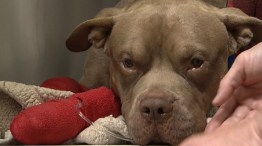
Called "sweet and gentle" by rescuers, the 2 to 3-year-old pup (pictured above) is being treated by a burn specialist at the private veterinarian hospital, where he’ll have to stay at least another month.

His next surgery is scheduled for Friday morning.

Rescuers are asking for the public’s help to fund Indy’s extensive recovery.

Anyone interested in donating is asked to contact donations@startrescue.org, or mail a check to:

S.T.A.R.T.
PO Box 4792
Valley Village, CA 91617

The organization notes that donations should be sent as "Personal and Gift so no charges are taken out, and kindly write INDY in the memo."

See video HERE

Related: 

'Rocket' the dog lucky to be alive after thugs attached an explosive to its neck and blew it up 

Justice for Dog Whose Face Was Blown Off By Fireworks!

Sunday, March 3, 2013

Pets Reduce Stress at Work… More Companies, Citing Benefits, Allowing Pets at Work

Recent study shows pets in the workplace can reduce employee stress… Hmmm, most pet owners knew that years ago without studies!

gan-pets-at-workUSAToday: INDIANAPOLIS -- Employers and employees are acknowledging the advantages and benefits of a growing office trend that allows pets in the workplace. And now there's research to support what some have known for years.

According to a Virginia Commonwealth University study, employees who bring their dogs to work produced lower levels of the stress-causing hormone cortisol.

Published in spring 2012, the study, led by Randolph Barker, a professor of management, was conducted at a dinnerware company in North Carolina, which sees 20 to 30 dogs a day on its premises. As the workday went on, research found average stress level scores fell about 11% among workers who had brought their dogs to work, while they increased 70% for those who did not.

"When I'm stressed, I usually call Zoe (a chocolate Labrador retriever) over and rub her ear. That's my therapy," said Ann Marie DeLa Rosa, 26, who works at software design company Inverse-Square in downtown Indianapolis and appreciated the company's pet-friendly policy.

Not only does Zoe, who could be mistaken for a small grizzly bear with a smile, alleviate her stress, DeLa Rosa said, the dog also forces her owner to take a lunch break.

"Zoe gets me out," she said. "Otherwise, I tend to power through lunch when I want to get something done. Taking a 15-minute walk with her refreshes me, and I can focus easier."

According to a 2008 national poll of working Americans 18 and older by the American Pet Products Manufacturers Association, 17% reported their company permits pets at work. In 2012, the group reported in a separate study that workers surveyed brought their dogs with them to work 22 times in 2012, compared with 17 times in 2008.

Deb Havill, a clinical social worker and therapist, conducts client sessions along with her two rescue dogs. But David and Jai aren't trained therapy dogs; they just accompany their owner during therapy sessions.

"Dogs were domesticated to be attentive to us," said Havill, who keeps two couches in her Indianapolis office — one for clients and one for the dogs. "It is natural for us to be around them, so to not be around them would be unnatural. We would be in an unnatural state."

Havill explained that touching or petting an animal has been shown to lower the galvanic skin response much like the science behind the polygraph test, when measuring feelings such as fear, stress or anxiety.

"Reaching down and petting a dog is an easy way to ratchet things down when you need to."

None

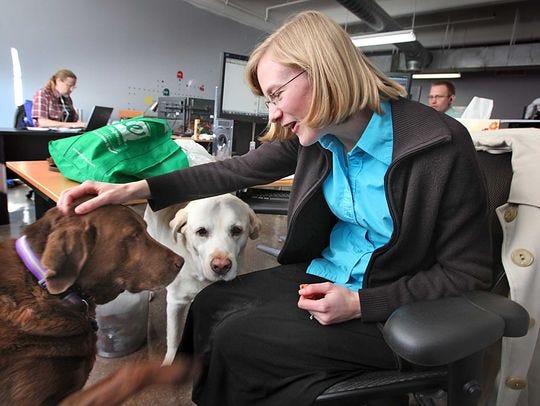
Ann Marie DeLa Rosa is shown with her dog, Zoe, a chocolate Labrador retriever as Hoagey, a yellow lab that belongs to fellow worker, noses in for a little TLC. (Photo: Frank Espich, The Indiapolis Star)

Janet Myers travels all over the country with her Bernese mountain dog, advocating the benefits of pet therapy and animal-assisted activities in health care.

A nurse as well as the director of risk management at Schneck Medical Center in Seymour, Ind., Myers founded the hospital's pet-therapy program and next year will speak at the National Pediatric Nurses conference.

Bentley, her dog, is a popular therapy dog with his own children's book and schedule of special appearances. But his main job is still to be with his owner in her office at least three times a week.

"It's been proven that people are always more productive when they are happy," Myers said. "If Bentley is by my side, I am not thinking of needing to be home to care for him or that he's lonely. I often stay late at work with him snoozing away under my desk. He is a big part of my life."

The Centers for Disease Control and Prevention cites dozens of animal experts who report that pets can decrease blood pressure and cholesterol levels as well as increase opportunities for exercise and socialization.

Commercial developer Turner Woodard knows this better than anyone. He's the man who made it possible for employers at The Stutz business center in Indianapolis to have pet-friendly office policies — and about 25% of the tenants take advantage of the perk.

"We know it's a positive," he said. "We need to see more of it in the world."

However, if you're looking to implement a formal policy, there are several factors to consider, Barker said.

"You have to think about employee health (allergies), minimizing disruptions and keeping pets safe," he said.

Amazon and Purina, cited as two of the most pet-friendly companies in the country, don't allow pets because many factories and distribution centers can be dangerous workspaces.

Bob Baird, who brings his two dogs, Ruby and Hoagey to work, knows that when he makes a new hire at Inverse-Square, he might be excluding or discouraging potential applicants who might not like dogs.

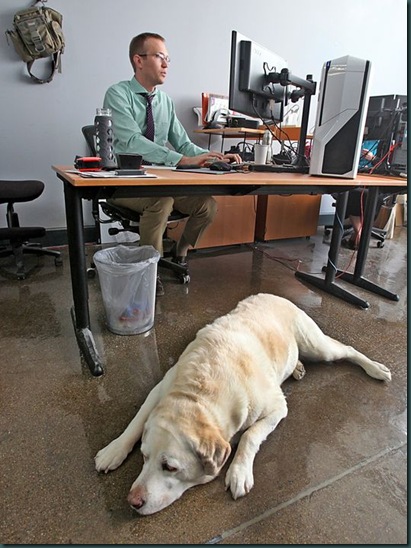
"But having dogs here is indicative of our culture," said Baird, whose dog Hoagey, a 110-pound yellow Labrador retriever, is notorious for snoring too loudly during conference calls.

"For us, having dogs in the office is out of necessity," Baird said. "We love having them around because this is (a) home away from home. We work long hours, and it's nice to have them with us."

Related:

Dogs at Work Can Alleviate Employee Stress, Study Shows

Pets reduce stress at work

Video:  Study – Pets in the Work Place Reduce Stress

12 companies that let you bring your dog to work

Chapman University Hosts ‘Furry Friends For Finals’

Londonderry School Uses Therapy Dog in Classroom

Collar to Keep Track of Dogs’ Temperature is in the Works

Pet Therapy

Pets are way better than Therapy!

Can the U.S. Become a No-Kill Nation?

The Difference Between No Kill Nation & Other Animal Advocacy Groups

Cross-Posted at Just One More Pet

Wednesday, May 30, 2012

Autism Assistance Dogs

Autism Assistance Dogs are trained for children and families living with autism. The rise in autism rates is staggering. The evolution of programs geared toward successfully integrating children with autism into routine daily activities includes Autism Assistance Dogs.

Autism Assistance Dogs are trained to enhance the safety of children with autism by acting as an anchor and preventing the child from bolting into unsafe environments such as traffic, bodies of water, etc. Autism Assistance Dogs can also have a calming effect on the child and may improve the child's willingness and ability to communicate and bond.

Training:

  • Training generally takes four to six months.

Placement:

  • When ready for placement with an approved applicant, the trainer travels to the client's home for one-on-one training with the client and all family members.
  • Placement training is generally three to five days in length.

Follow up:

  • Dogs for the Deaf provides follow up training for the life of the team. Follow up training includes guidance and suggestions consisting of verbal contact, written contact, and in home visits.
What does it cost to get an Autism Assistance Dog?

With the exception of a $50.00 application fee, Dogs for the Deaf places Autism Assistance Dogs free of charge to qualified applicants. When an applicant has been approved to receive an Autism Assistance Dog and is ready to be placed on the waiting list, we require a $500.00 Good Faith deposit, which is returned after the person and the Autism Assistance Dog have been together for one year. Once the dog is placed with a person, the client is financially responsible for the on-going care of the dog.

If you would like additional information or an application packet, please contact Dogs for the Deaf, Inc.

Cross-Posted at Just One More Pet

Wednesday, February 15, 2012

Londonderry School Uses Therapy Dog in Classroom

Southern New Hampshire Montessori Academy (SNHMA) has become one of the first schools in New England to bring in a therapy dog as a full time member of its community. Guardian, a Portuguese water dog, was chosen for his temperament, his silky soft hypoallergenic coat and teddy bear looks. While he’s in the process of completing his year-long training, Guardian is already having a positive impact in the classroom, where he is charged with being a calm, emphatic and steadfast best friend for little boys and girls.

Loundary School 1

“While school therapy dogs are still currently regarded as a cutting-edge educational tool, research is showing that dogs in the classroom can play a huge role in boosting students’ happiness, calmness, overall emotional well-being, and ability to learn,” explains Debra Hogan SNHMA’s Founder and Head of School.

Loundary School 2Guardian, who is always here to greet student with a wag and a lick in the mornings, has helped the younger pre-K students with separation anxiety as their parents drop them off in the morning. “He is happy to see the children come in in the mornings and offers a welcome huggable friend to little ones who are finding it hard to see Mom and Dad go,” says Hogan.

Guardian is also helping first graders hone in their reading skills, as Ms. Hogan explains: “Dogs are perfect listeners. They are not judgmental; they don’t care if you don’t get the words exactly right, and for most children, practicing reading aloud is all they need to become fluent readers.”

“Therapy dogs can have a positive impact on every aspect of the classroom from lessons planning, to teaching social skills and responsibility, to comforting students in a time of grief or personal crisis. They teach, they listen, they are unconditional friends. I have seen children who had attention deficit disorder become calmer. I have seen children with emotional difficulties lie down beside the dog and whisper things in his ear, things they’d never tell an adult, and then rise up ready to learn. Their self esteem really soared,” says Terri Hamilton, an Elementary Guidance Consultant and Parent-Child Connection Advocate.

Loundary School 3

Images courtesy of Tanya Swann Photography.

Southern New Hampshire Montessori Academy offers an academically focused education to children through an integrated curriculum. Concentration is given to educating the “whole child” (all facets of the child’s being, including: intellectual, physical, emotional, social and creative aspects) with a strong emphasis of hands-on and experiential learning where children develop their passion in technology, science, visual and performing arts, foreign language and physical education. Complementing a strong academic core, the school offers an enrichment program that includes elementary Latin, creative arts (visual and performing), daily physical education, technology and Spanish. For further information, please visit their website.

Source:  Londonderry News

Thursday, January 6, 2011

SCHOOL AGREES TO ALLOW SERVICE DOG TO ACCOMPANY EPILEPTIC 12-YEAR-OLD

AndrewSuffering from a rare and severe form of epilepsy, 12-year-old Andrew Stevens can experience up to 20 seizures a day, any one of them potentially fatal. But thanks to a German shepherd service dog named Alaya, Andrew doesn‘t have to be under his parents’ watchful eye at all times. He can now go out and play, walk his dog down the street and use the bathroom unaided.

But Andrew’s freedom ended at his Virginia schoolhouse doors as the Fairfax County Public School system barred him from bringing Alaya to school with him. “I think what they’ve done has really been an injustice to my son,” Nancy Stevens, Andrew’s mother, told Matt Lauer on NBC’s “Today” show Tuesday. “A service dog is trained very well. If Andrew sits, the dog is going to sit. If Andrew gets up, the dog is going to get up. A service dog will not bite anybody at all,” she said, addressing the school’s safety concerns.

But after drawing national attention and public outcry from across the country, Change.org reported Tuesday evening that its campaign on Andrew‘s behalf had successfully forced Andrew’s school district to alter their stance.  “It’s time to celebrate a victory for disability rights, epilepsy awareness and a boy and his dog!” the site said, announcing its members had flooded Andrew’s school administrators with 371 emails in protest of the ban. See Video:

Today, Ft. Belvoir Elementary officials told Andrew’s parents that Andrew could bring Alaya to school with him as early as next week. In the beginning, Angelo and Nancy will accompany Andrew to school, riding the bus with him and staying with him and Alaya during the day. As teachers and students adapt and learn how to interact with Alaya, Andrew’s parents will gradually transition away and Andrew and Alaya will go to school together — as originally planned.

Not only that — the school is now looking at updating their policy on disability access, Angelo Stevens told Change.org today. This all comes thanks to the grueling work done by Andrew’s parents to advocate for their 12-year-old son and his service dog.

The Stevens family created a foundation in Andrew’s name, first to raise money for Alaya, and now to raise money for service dogs for other needy children. That foundation, and the TODAY show coverage, has meant that he‘s been contacted by other parents around the country who are trying to get their childrens’ service dogs admitted in schools.

Source:  the Blaze & Cross-posted at Just One More Pet, True Health Is True Wealth and Ask Marion

Thursday, February 25, 2010

YES! Walking Your Dog Counts!

YES! Walking Your Dog Counts!

Just how effective can walking your dog be when trying to lose weight? Pretty effective, according to a University of Missouri-Columbia study in which participants lost an average of 14 pounds by walking a dog 20 minutes a day, five days a week for 50 weeks. The study shows that you can still see weight-loss results without power walking or jogging. A routine stroll could be just the trick!

There are two reasons why walking your dog can be more effective than walking by yourself:

• People tend to be more faithful to their furry friends than they are to their own fitness regime.

• The mere fact that walking a dog requires a set schedule forces you to follow it.

• Walking your dog gives you just the kind of discipline and motivation you need to lose weight!

So grab a leash, get your dog, and start walking! Looking to pick up a little extra cash? Pick up a couple dog walking jobs… and see your health improve and the pounds melt away.

Posted: True Health Is True Wealth – Cross-Posted: Just One More Pet

Wednesday, June 24, 2009

Dogs Being Trained to Sniff Out Diabetes

A canine's hyper-sensitive nose can detect tiny changes in blood sugar

AYLESBURY, England - Dogs are being trained in Britain as potential life-savers to warn diabetic owners when their blood sugar levels fall to dangerously low levels.

Man's best friend already has been shown capable of sniffing out certain cancer cells, and dogs have long been put to work in the hunt for illegal drugs and explosives.

Their new front-line role in diabetes care follows recent evidence suggesting a dog's hyper-sensitive nose can detect tiny changes that occur when a person is about to have a hypoglycemic attack.

A survey last December by researchers at Queen's University Belfast found 65 percent of 212 people with insulin-dependent diabetes reported that when they had a hypoglycemic episode their pets had reacted by whining, barking, licking or some other display.

At the Cancer and Bio-Detection Dogs research center in Aylesbury, southern England, animal trainers are putting that finding into practice and honing dogs' innate skills.

The charity has 17 rescue dogs at various stages of training that will be paired up with diabetic owners, many of them children.

"Dogs have been trained to detect certain odors down to parts per trillion, so we are talking tiny, tiny amounts. Their world is really very different to ours," Chief Executive Claire Guest told Reuters TV.

The center was started five years ago by orthopedic surgeon Dr John Hunt, who wanted to investigate curious anecdotes about dogs pestering their owners repeatedly on parts of their body that were later found to be cancerous.

At around the same time, the first hard evidence was being gathered by researchers down the road at Amersham Hospital that dogs could identify bladder cancer from chemicals in urine.

The move into diabetes followed the case of Paul Jackson, who told Guest and her team about his dog Tinker who warns him when his sugar levels get too low and he is in danger of collapsing.

"It's generally licking my face, panting beside me. It depends how far I have gone before he realizes," Jackson said.

Tinker has now been trained by the Aylesbury center and is a fully qualified Diabetic Hypo-Alert dog, complete with red jacket to announce himself as a working assistance animal.

Source: Just One More Pet

Posted: True Health Is True Wealth

Related Articles:

Tuesday, April 28, 2009

Can Dogs Smell Cancer?

“All over the world, major universities are researching the therapeutic value of pets in our society and the number of hospitals, nursing homes, prisons and mental institutions which are employing full-time pet therapists and animals is increasing daily.” ~ Betty White, American Actress, Animal Activist, and Author of Pet Love

dog_noseScienceDaily (Jan. 6, 2006) — In a society where lung and breast cancers are leading causes of cancer death worldwide, early detection of the disease is highly desirable. In a new scientific study, researchers present astonishing new evidence that man’s best friend, the dog, may have the capacity to contribute to the process of early cancer detection.

In this study which will be published in the March 2006 issue of the journal Integrative Cancer Therapies published by SAGE Publications, researchers reveal scientific evidence that a dog’s extraordinary scenting ability can distinguish people with both early and late stage lung and breast cancers from healthy controls. The research, which was performed in California, was recently documented by the BBC in the United Kingdom, and is soon to be aired in the United States.

Other scientific studies have documented the abilities of dogs to identify chemicals that are diluted as low as parts per trillion. The clinical implications of canine olfaction first came to light in the case report of a dog alerting its owner to the presence of a melanoma by constantly sniffing the skin lesion. Subsequent studies published in major medical journals confirmed the ability of trained dogs to detect both melanomas and bladder cancers. The new study, led by Michael McCulloch of the Pine Street Foundation in San Anselmo, California, and Tadeusz Jezierski of the Polish Academy of Sciences, Institute of Genetics and Animal Breeding, is the first to test whether dogs can detect cancers only by sniffing the exhaled breath of cancer patients.

In this study, five household dogs were trained within a short 3-week period to detect lung or breast cancer by sniffing the breath of cancer participants. The trial itself consisted of 86 cancer patients (55 with lung cancer and 31 with breast cancer) and a control sample of 83 healthy patients. All cancer patients had recently been diagnosed with cancer through biopsy-confirmed conventional methods such as a mammogram, or CAT scan and had not yet undergone any chemotherapy treatment. During the study, the dogs were presented with breath samples from the cancer patients and the controls, captured in a special tube. Dogs were trained to give a positive identification of a cancer patient by sitting or lying down directly in front of a test station containing a cancer patient sample, while ignoring control samples. Standard, humane methods of dog training employing food rewards and a clicker, as well as assessment of the dog’s behavior by observers blinded to the identity of the cancer patient and control samples, were used in the experiment.

The results of the study showed that dogs can detect breast and lung cancer with sensitivity and specificity between 88% and 97%. The high accuracy persisted even after results were adjusted to take into account whether the lung cancer patients were currently smokers. Moreover, the study also confirmed that the trained dogs could even detect the early stages of lung cancer, as well as early breast cancer. The researchers concluded that breath analysis has the potential to provide a substantial reduction in the uncertainty currently seen in cancer diagnosis, once further work has been carried out to standardize and expand this methodology.

This study was supported by the MACH Foundation (Fairfax, CA), Guide Dogs for the Blind (San Rafael, CA) and Frank and Carol Rosemayr (Kentfield, CA).

Adapted from materials provided by SAGE Publications, via EurekAlert!, a service of AAAS.

Source:  Just One More Pet - 04.27.09

Related Articles:

Friday, September 26, 2008

Your Pet and Your Health

Many of us agree that we should do everything within our power to make sure that our companion animals enjoy the best possible health.  But did you know that simply by being a part of your life, your dog or cat could actually help you to be not only happier but healthier, too?

Of course you did.  It’s all part of the privilege (and fun!) of being a pet parent.  What you may not know is that there’s plenty of science to back it up.  A wealth of knowledge regarding the health benefits associated with having companion animals has been accumulated over the last two decades, including numerous research studies in the U.S. and abroad.

A study published in 
The British Journal of Health Psychology reports that people who have companion animals tended to be healthier than those who did not.  Additionally, when a dog was part of the family, the members had fewer minor ailments, lower blood pressure and lower cholesterol.  Although the explanation for these advantages is unclear, researchers speculated that all benefits could be accounted for by reduced levels of stress, possibly due to increased physical activity and levels of social interaction.

The positive effects of having a canine companion have also been chronicled in research published in the 
American Journal of Cardiology.  The year-long study documented the effect of having a canine companion in 369 patients who had suffered an acute heart attack.  The positive effects were nothing short of extraordinary!  The patients who had a dog in the home had a much better chance of survival.  Over 7% of patients without a dog died during the study, compared with only 1% of those who had a canine companion.

Researchers at the University of Leicester found that when pets are in a household, children six years and younger develop social skills at an accelerated rate.  Additionally, these children tend to have better coordination, improved confidence, superior communication skills and are even less likely to have allergies!

The British Medical Journal concluded that pets serve a vital need for socialization, especially for those at a higher risk for isolation, like those with physical limitations that might prevent opportunities for social interaction.  Most medical professionals agree that the broader the network of social contacts, the better we are able to deal with difficult life issues.  This study, and others like it, supports the idea that this need for social relations can be fulfilled equally well by companion animals as with people.

And a survey by the American Pet Products Manufacturers Association revealed that bringing a companion animal to the office resulted in higher worker productivity.

These and many other studies reinforce what we as pet parents have suspected all along … that our beloved four-footed companions are integral parts of our families, enriching our lives beyond measure.

Source:  Healthy Pet Net

Sunday, September 14, 2008

Pet Therapy

"All over the world, major universities researching the therapeutic value of pets in our society and the number of hospitals, nursing homes, prisons and mental institutions are employing full-time pet therapists."  …Betty White, American Actress, Animal Activist, and Author of Pet Love

Researchers are finding that pets truly have the power to heal their owners, especially the elderly. The most serious disease for older people is not cancer or heart disease, but loneliness.

Too often, people who live alone or are suddenly widowed die of broken hearts. Love is the most important medicine and pets are one of nature's best sources of affection. Pets relax and calm. They take the human mind off loneliness, grief, pain, and fear. They cause laughter and offer a sense of security and protection. They encourage exercise and broaden the circle of one's acquaintances.

Patients in hospitals and nursing homes who have regular visits from pets - whether their own or those brought in from various agencies - are more receptive to medical treatment and nourishment. Animals give the patient the will to live and in nursing homes, the medical staff is often surprised to see residents suddenly "become alive." Animals have a calming effect on humans and benefit mental well-being, especially with children and the elderly.

In recent years, the experts have been relying on pet therapy as a valuable aid in reaching out to the elderly, the infirm, and to ill or abused children through-out the country. Therapy animals go to convalescent homes, hospitals, day care centers, juvenile halls, and prisons. These animals are trained to be calm, gentle and well-mannered, especially around rambunctious children. There are no breed requirements.

In fact, many therapy animals are mixed breeds. They come in all sizes and shapes. Cats and small dogs are good because they can be lifted easily and fit even on the smallest laps. A large dog makes a good companion for someone in a wheelchair, sitting patiently and allowing the occupant to stroke his fur.

Most important is that the therapy cats and dogs have a calm, gentle personality and are people-oriented. They must love attention and petting and not be shy. In addition, they need basic obedience training and should be conditioned to sudden noises. They provide an invaluable service to those who are lonely, abandoned, or ill; indeed, anyone who needs the miraculous healing that can arise from a hug and a gentle touch.

Children, especially those who are abused or neglected, are able to communicate with animals. A pet offers a safe place for a child with emotional problems. They give unconditional love, providing a security blanket.

A dog, cat, ferret or parrot can be the bond that glues a family together when upheaval, such as moving, death or divorce, occurs. Often, an animal can reach a child beyond an adult's touch.

Mary Kelly, a child-life specialist at Children's Hospital in Oakland, CA (USA), coordinates pet therapy sessions twice a month. She keeps a camera on hand to record the incredible connections that occur. "We've had very dramatic visits where a dog brought a child who has not spoken for months out of depression," she states. "Most kids can relate to animals, so seeing and touching the pets brings them a sense of normalcy."

Professionals in the field of pet-assisted therapy find that in addition to cats and dogs, fish, pot-bellied pigs, birds, reptiles, rabbits, guinea pigs, goats, horses and llamas are also valuable healers. They have also found pets lower blood pressure and stress levels, give the patient a reason to interact, offer a chance to exercise and a sense of security and/or intimacy, allow communication, and offer continuity in life.

The innocence of animals and their ability to love makes animals special. Human beings want to be part of their world, to connect with them in a mysterious and powerful way that will strengthen and nurture both humans and animals.

Allen Schoen, DVM says "In order to bond with animals, we have to step outside ourselves and learn to communicate on their terms." During his years as a veterinarian, Dr. Schoen tells how love for our pets can literally save lives and how their love for us can be transforming in his book Love, Miracles and Animal Healing.

That animals feel our pain, our joy, and our stress should come as no surprise for anyone who has a pet. Whether we recognize it or not, the emotional as well as the physical environment we humans create has a direct impact on the way our pets behave. Dr. Schoen explains that "...we emit energetic signals related to our deepest feelings that are picked up by those around us - especially our pets." The emotional benefits from animals are difficult to measure, meaning that pets help humans without anyone knowing exactly why. What experts know, however, is that animals allow humans to focus, even for a short period of time, on something other than themselves.

Animals, especially small ones, have shown promise for many conditions, both social and physical:

  • Pets help Alzheimer's patients by bringing them back to the present. Specially trained pups can also help alert others that an Alzheimer's patient has wandered into harm's way. "Pets can provide a measure of safety to people with the disease," says Thomas Kirk, a vice president of a chapter of the Alzheimer's Association.
  • Children who suffer from attention deficit disorder (ADD) are able to focus on a pet, which helps them learn to concentrate.
  • Mentally ill patients, or those with emotional problems, share a common bond when a cat or dog enters the room. Instead of reacting negatively to one another, it boosts morale and fosters a positive environment.
  • Pets are an antidote to depression. Life in a care facility can be boring. A visit from a therapy cat or dog breaks the daily routine and stimulates interest in the world outside.
  • Pets provide social interaction. In a health care facility, people come out of their rooms to socialize with the animals and with each other.
  • Everyone has the need to touch. Many humans are uncomfortable hugging or touching strangers, even those close to them. Some people are alone and have no hands to hold, no bodies to hug. But rubbing the fur of a cat or dog can provide a stimulation that is sorely lacking. The nonverbal connection is invaluable in the healing process.
  • Pets are a source of expectation, hope and communication. Looking forward to a social call or getting home after time away gives that spark of anticipation all humans need to help feel alive. Pets can help start a conversation, and help one who is struggling against unusual difficulties in learning to speak for the first time or after a speech impairment such as a stroke.

Animals also provide healing outside domestic settings: dolphin and pet-assisted therapy, horseback riding, farm animal and wildlife interaction, and marine life activity.

The incredible abilities of pets are astounding:

Dogs sniff out deadly land mines in Bosnia and earthquakes worldwide, searching for victims. After the bombing in Oklahoma City, OK (USA), they crawled through twisted metal and broken glass in 12 hour shifts, searching for survivors. K-9 Corps dogs work with police and military personnel to uncover drugs, bombs and criminals. At airports, specially trained beagles scramble through cargo and baggage for illegal contraband, including foreign viruses. They aid the blind and assist the deaf and disabled. They have been used to detect cancerous lesions, long before they look suspicious. And we must never forget the combat dogs who served our countries, War Dogs - Dogs in Combat.

Cats are certainly the most curious and also the most psychic of pets. Throughout the ages, they have predicted earthquakes and other natural disasters, found missing persons and alerted their owners to danger. They can sense when a person needs help. Betty White relates the story of Handsome, a Persian cat who was taken to a nursing home and met Marie, a lonely senior with no friends and no family. She remained curled in a fetal position with no interest in living. She had sores on her legs from constant scratching. After Handsome became Marie's roommate, whenever she tried to scratch herself, he would play with her hands or otherwise distract her. Within a month the sores had healed. But even more incredible, she was so fascinated with the cat that she asked the staff about his care. Before long, she was inviting other residents to come visit with her pet.

Even more dramatic is the story of Nina Sweeney from Lawrence, MA (USA). Her seven cats and dog saved her life one fateful night in January. The temperature was bitterly cold when she went to bed. During the night Nina was struck with a paralyzing illness that left her helpless. Unable to leave her bed, she listened as the fire in her stove sputtered and died. Outside, the thermometer registered below zero and the numbing chill seeped into the house. Nina prayed someone would find her as she shivered beneath her blankets. Two days passed before neighbors investigated. When they reached her, they found Nina alive and warm, one cat on either side of her, another draped like a fur on her neck. One was nestled on her chest and another under her arm. Beneath the covers were two other cats. Her dog lay across her stomach. Her pets had kept Nina from freezing to death.

A pet is an animal that is very beneficial to its owner. There’s even now a type of treatment called pet therapy. I myself have a pet dog and since having it, many things in my household have changed for the better. Below are 3 things why owning a pet will positively affect your life.

Firstly, a pet like any other animal needs to eat and shit. They have a daily schedule that needs to be attended to. Like for example, my pet dog eats 2 meals a day, once in the morning and once in the night. He gets his shower on Saturdays. So, caring for a pet actually encourages nurturance, responsibility and adherence to a daily schedule. This is especially a solid reason for you to convince your parent to get that pet you’ve been wanting.

Secondly, pets improve a person’s mood. No matter how angry, sad or stressed out you may be, spending time with your pet will put your focus and attention on it. There are actually 2 things that can suddenly improve your mood. One is a pet and the other is a baby. In this case, adopting a pet is easily more attainable than a baby.

Lastly, the third reason why you should own a pet is for accompaniment. This is especially beneficial to the elderly. Pets make you feel accepted every time. For example, my pet dog is usually left hanging around alone in the compound of my house. Even if you leave him alone the whole day, he will still come and lick me whenever I’m around. If that’s not love, then I don’t know what is. Pets are also good listeners. Sharing your burden with it helps to alleviate your mind and put you at peace.

Marion Algier - True Health Is True Wealth

Source:  Just One More Pet

Related Articles: