Showing posts with label curb the belly bulge. Show all posts

Saturday, May 9, 2009

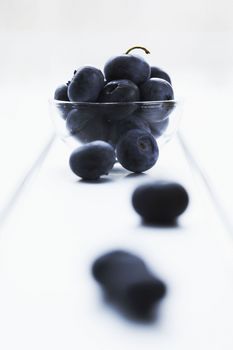
Blueberries Reduce Belly Fat and Diabetes Risk

berries, blueberry, blueberries, heart disease, cardiovascular disease, diabetes, metabolic syndrome, obesity, belly fat, abdominalEating blueberries could help you get rid of belly fat, and a blueberry-enriched diet could stem the conditions that lead to diabetes.

New research gives tantalizing clues to the potential of blueberries in reducing risk factors for cardiovascular disease and metabolic syndrome. The effect is thought to be due to the high level of naturally occurring antioxidants called phytochemicals contained in blueberries.

Researchers studied the effect blueberries had when added to the diet of rats. After 90 days, rats that received a blueberry-enriched diet had less abdominal fat, lower triglycerides, lower cholesterol, and improved fasting glucose and insulin sensitivity.

Dr. Mercola''s CommentsDr. Mercola's Comments:

The benefits of eating fruits and vegetables are undisputed, but modern research keeps showing us just how they help you to optimize your health.

Berries are some of the most nutritious foods on the planet. In the case of blueberries, naturally occurring phytochemicals such as anthocyanins can do wonders to normalize and improve your health. And berries, in general, are also high in fiber and relatively low in sugar, so they won’t stimulate severe insulin swings if eaten in moderation.

Berries are best eaten in their raw, natural state, as heating and freezing can damage antioxidants. However, some antioxidants will remain even after heating or freezing.

The Blue Wonder Berry

Blueberries contain vitamins A and C, zinc, potassium, iron, calcium and magnesium, and are high in fiber and low in calories. Additionally, researchers at the USDA Human Nutrition Center (HNRCA) have ranked blueberries number one in antioxidant activity when compared to 40 other fresh fruits and vegetables, so there are many reasons for adding blueberries to your diet.

They are associated with numerous health benefits, including natural protection against:

And, according to the latest research presented in the article above, blueberries may also offer protection against metabolic syndrome (which can lead to diabetes), the accumulation of abdominal fat, and reduce your risk of cardiovascular disease.

These findings strengthen previous discoveries of the berry’s powerful impact on cardiovascular health.

Because in addition to anthocyanin – which gives the berry its deep blue color -- blueberries also contain an antioxidant compound called pterostilbene, which has been found to reduce cholesterol as well as prescription drugs. (It shares similar qualities to another cholesterol-reducing antioxidant, resveratrol, which is found in both grapes and red wine.)

As an interesting side note, another unusual way to benefit from blueberries is to add them to your ground beef before cooking (ideally at low temperatures) as they help prevent cancer-causing heterocyclic amines (HCA) from forming in the meat.

How Blueberries Protect Against Metabolic Syndrome

Metabolic syndrome -- also sometimes referred to as pre-diabetes -- is a conglomerate of health problems that include high amounts of abdominal fat, high blood pressure, elevated blood sugar, and high triglycerides. When combined, these conditions increase your risk of cardiovascular disease, heart attacks, strokes and diabetes.

In this latest study, rats that consumed blueberry-enriched powder as two percent of their diet had less abdominal fat, lower triglycerides, lower cholesterol, and improved fasting glucose and insulin sensitivity after 90 days, compared to the control group.

Additionally, they found that blueberry intake affected genes related to fat-burning and storage. And when they looked at muscle tissue, they saw alterations in genes related to glucose uptake.

This is interesting as another recent study concluded that metabolic syndrome is likely not caused primarily by abdominal fat, as previously thought, but rather by insulin resistance in your skeletal muscle, which leads to changes in energy storage – which in turn leads to metabolic syndrome.

Insulin resistance is clearly a key factor in metabolic syndrome, and as I’ve stated on countless occasions, the prescription for insulin resistance is diet and exercise. 

It’s good to know that eating something as delicious as blueberries can actually help improve your insulin sensitivity.

The Two Best Prescriptions Against Belly Fat and Diabetes

Exercise is your number one ally here, both for shedding unwanted body fat and normalizing your insulin levels.

It can also help you sleep better, which turns out to be another important factor if you want to avoid excess pounds around your midsection. In my recent article 4 Ways to Shed Belly Fat, I explain the little-known connection between your sleeping habits and your body’s ability to shed abdominal fat.

Keep in mind that when you’re exercising to achieve weight loss, you’ll want to focus on weight bearing exercises, as muscle burns calories quite efficiently. In my experience, non-weight bearing exercises, like swimming and bicycling, are not as efficient or effective for weight loss. You’ll typically need to exercise four times as long in these activities to receive the same benefit of running or using an elliptical machine, or performing other aerobic activities.

And, to really maximize your weight loss efforts, make sure you include high-intensity interval exercises and strength training in your program.

When it comes to diet, you’ll clearly want to stay away from any foods that raise your insulin levels, namely grains and sugars, and of course, processed foods.

But in addition to that, perhaps the most effective way of making sure you’re eating the optimal diet for you is to determine your specific nutritional type. Because what’s healthy for others may not necessarily be healthy for you, and vice-versa.

When battling either belly fat or diabetes – or both -- remember that controlling your insulin levels is as important to optimizing your weight as it is to protecting you against diseases like diabetes.

Because as your insulin levels increase, your body starts to store carbohydrates as fat while at the same time not releasing stored fat. This makes it impossible for you to use your own stored body fat for energy. So excess refined and processed carbohydrates in your diet (such as breads and pasta) not only make you gain weight, they make sure you keep that weight on.

By cutting grains and sugars from your diet, combined with a regular exercise program, you can significantly improve your chances of successful weight loss, and effectively protect yourself against diabetes and a whole host of other diseases.

Posted:  TrueHealthIsTrueWealth

Sunday, March 15, 2009

Foods That Fight Belly Fat

Did you know that besides doing wonders for your health, a certain nutrient group might also help keep your pants size down? 

It's true. Flavonoids -- those antioxidant-like compounds found in fruits, veggies, chocolate, tea, and wine -- seemed to help ward off belly fat in a 14-year study. 

Multitasking Flavonoids 
  • Specifically, catechins, flavonols, and flavones -- types of flavonoids -- may help curb belly bulge by improving the body's metabolic profile, the researchers noted. So where can you get your fair share? The study participants got most of theirs from pears, apples, tea, chocolate, broad beans, onions, leeks, and sweet peppers. Pretty tasty choices. 
  • Got some chicken in the freezer? Got an apple rolling around the crisper drawer? Great! Then grab some leeks on the way home and make this: Saute of Chicken with Apples & Leeks
  • Need a yummy side dish that's full of flavonoids but isn't salad? Try Pear & Red Onion Gratin.
  • Got nothing for dessert? Make: Green Tea-Poached Pears with Matcha Cream.
Low-Cal Delights
Interestingly, only the women in the study experienced a waistline benefit from flavonoids. But because flavonoid-rich foods like fruits and veggies are often low in calories, they're still a smart choice for anyone who is weight conscious.

Saute of Chicken with Apples & Leeks

4 boneless, skinless chicken breast halves (1-1 1/4 pounds), trimmed 
3 teaspoons extra-virgin olive oil, divided
1/4 teaspoon salt
Freshly ground pepper to taste
2 large leeks, white parts only, washed and cut into julienne strips (2 cups)
2 large cloves garlic, minced
1 tablespoon sugar
2 teaspoons minced fresh rosemary or 1/2 teaspoon dried
1/4 cup cider vinegar
2 firm tart apples, such as York or Granny Smith, peeled, cored and thinly sliced
1 cup reduced-sodium chicken broth

1. Place chicken breasts between 2 sheets of plastic wrap. Use a rolling pin or a small heavy pot to pound them to a thickness of 1/2 inch. 
2. Heat 1 1/2 teaspoons oil in a large nonstick skillet over medium-high heat. Season the chicken breasts with salt and pepper and add to the pan. Cook until browned on both sides, 4 to 5 minutes per side. Transfer to a plate and keep warm.
3. Reduce the heat to low. Add the remaining 1 1/2 teaspoons oil and leeks. Cook, stirring, until the leeks are soft, about 5 minutes. Add garlic, sugar and rosemary and cook until fragrant, about 2 minutes more. Increase the heat to medium-high, stir in vinegar and cook until most of the liquid has evaporated.
4. Add apples and broth and cook, stirring once or twice, until the apples are tender, about 3 minutes. Reduce the heat to low and return the chicken and any juices to the pan. Simmer gently until the chicken is heated through. Serve immediately.

NUTRITION INFORMATION: Per serving: 235 calories; 7 g fat (1 g sat, 4 g mono); 64 mg cholesterol; 19 g carbohydrate; 25 g protein; 2 g fiber; 245 mg sodium; 346 mg potassium. 
Nutrition bonus: Selenium (30% daily value), Vitamin A (16% dv). 
1 Carbohydrate Serving 
Exchanges: 1 fruit, 4 very lean meat, 1 fat


Pear & Red Onion Gratin

1 large red onion 
3 ripe Bosc pears 
3 tablespoons extra-virgin olive oil, divided
1 tablespoon chopped fresh thyme
1/4 teaspoon salt
Freshly ground pepper to taste
1 cup coarse dry breadcrumbs, preferably whole-wheat (see Note)
1/3 cup grated Parmigiano-Reggiano

1. Fill a large bowl three-quarters full with water; add a handful of ice cubes. Cut onion into 16 wedges, place in a strainer and lower into the water. Let stand for 20 minutes. 
2. Preheat oven to 400°F.
3. Halve and core each pear; cut each half into 6 slices. Drain the onion wedges well and place them in a 9-by-13-inch glass baking dish along with the pear slices, 1 tablespoon oil, thyme, salt and a grinding of pepper; toss to combine. Cover with foil.
4. Roast for 30 minutes, stirring twice.
5. Meanwhile, combine breadcrumbs and cheese in a small bowl. Drizzle with the remaining 2 tablespoons oil; stir to combine. Remove the pan from the oven, sprinkle the crumb mixture evenly over the gratin, return to the oven and roast until the breadcrumbs are well browned, 20 to 30 minutes more. Let cool for 10 minutes before serving.

NUTRITION INFORMATION: Per serving: 188 calories; 7 g fat (1 g sat, 4 g mono); 3 mg cholesterol; 29 g carbohydrate; 4 g protein; 4 g fiber; 225 mg sodium; 215 mg potassium.

Nutrition bonus: Vitamin C (15% daily value). 

2 Carbohydrate Servings 

Exchanges: 1/2 starch, 1 fruit, 1 vegetable, 1 fat

TIP: Note: We like to use the Ian's brand of coarse dry breadcrumbs, labeled "Panko breadcrumbs." Find them in the natural-foods section of large supermarkets. 

To make your own breadcrumbs: Trim crusts from firm sandwich bread. Tear the bread into pieces and process in a food processor until coarse crumbs form. One slice makes about 1/3 cup. Spread the breadcrumbs onto a baking sheet and bake in a 250°F oven until dry and crispy, about 15 minutes.

Green Tea-Poached Pears with Matcha Cream

1/4 cup Matcha Cream (recipe follows)
4 cups water
1 1/2 tablespoons green tea leaves, preferably sencha
1 cup sugar
1 tablespoon chopped crystallized ginger
1/2 teaspoon almond extract
4 firm, ripe Anjou or Bosc pears, peeled, halved and cored
1 tablespoon sliced almonds, toasted

1. Prepare Matcha Cream.
2. Meanwhile, bring water to a boil in a shallow pan or deep skillet. Stir in tea, turn off heat and let steep, covered, for 5 minutes. Pour through a cheesecloth-lined sieve to remove leaves; return tea to the pan. 
3. Add sugar, ginger and almond extract and bring just to a boil. Add pears, cut-side up, and poach over low heat until quite tender when pierced with a wooden skewer. Transfer to a bowl and let the pears cool in the poaching liquid. 
4. Serve at room temperature or chilled. Use a slotted spoon to place two pear halves in each dessert dish. Spoon 2 tablespoons of the poaching liquid over the pears. Serve with a generous dollop of Matcha Cream and garnish with almonds.

NUTRITION INFORMATION: Per serving: 369 calories; 4 g total fat (1 g sat, 1 g mono); 0 mg cholesterol; 86 g carbohydrate; 2 g protein; 5 g fiber; 23 mg sodium; 408 mg potassium.

4 1/2 Carbohydrate Servings

TIP: To toast almonds:
Heat a small dry skillet over medium-low heat. Add nuts and cook, stirring constantly, until the nuts are lightly browned and fragrant, about 2 minutes. Transfer to a small bowl to cool.

 Matcha Cream

1 cup (8 ounces) low-fat or nonfat vanilla yogurt
1/4 cup whipping cream
2 1/2 teaspoons confectioners' sugar
2 teaspoons matcha dissolved in 1 tablespoon very hot water (optional)

1. Line a sieve or colander with cheesecloth and set over a bowl, leaving at least 1/2 inch clearance from the bottom. (Alternatively, use a coffee filter lined with filter paper.) Spoon in yogurt, cover and let drain in the refrigerator for at least 2 hours. Discard whey. 
2. Whip cream in a small bowl until soft peaks form. Add sugar and continue whipping until firm peaks form. Fold in drained yogurt, along with matcha mixture, if using.

NUTRITION INFORMATION: Per tablespoon: 37 calories; 2 g total fat (1 g sat, 1 g mono); 8 mg cholesterol; 4 g carbohydrate; 1 g protein; 0 g fiber; 15 mg sodium; 581 mg potassium.


Nutrition Bonus: Calcium (45% daily value), Vitamin A (20% dv), Selenium (18 dv), Potassium (17% dv).

0 Carbohydrate Servings

MAKE AHEAD TIP: Cover and refrigerate for up to 2 days.

Source:  RealAge

Related Articles: