Showing posts with label brain function. Show all posts

Sunday, December 9, 2012

Made These Seniors' Brains an Average of 11 Years Younger in Only 40 Hours

Story at-a-glance
  • Research into brain plasticity has proven that your brain continues to make new neurons throughout life in response to mental activity, which means that cognitive function can be improved, regardless of your age, and cognitive decline can be reversed
  • A key factor or ingredient necessary for improving brain function or reversing functional decline is the seriousness of purpose with which you engage in a task. In other words, the task must be important to you, or somehow meaningful or interesting
  • There are computer-based brain fitness programs designed to help improve cognitive function in six different areas in about 40 hours, and can be used by any age group
  • To optimize your brain fitness, the following lifestyle factors can help: daily physical exercise, focusing on your body movements and your environment, engaging in new learning throughout your life, staying socially active, and practicing “mindfulness”

How Innate ‘Plasticity’ of Your Brain Allows You to Improve Cognitive Performance and Prevent Age-Related Decline

Video: Dr. Mercola and Dr. Merzenich on Innate Brain Plasticity

Dr. Mercola:

It was once thought that any brain function lost was irretrievable. Today, research into what's referred to as "brain plasticity" has proven that this is not the case. On the contrary, your brain continues to make new neurons throughout life in response to mental activity.

Aside from toxicity, our modern lifestyle plays a part in cognitive decline, as described by Dr. Michael Merzenich, professor emeritus at the University of California, who has pioneered research in brain plasticity for more than 30 years.

He founded Scientific Learning Corporation in Oakland, California, and Posit Science in San Francisco; both specialize in science research into brain training software.

Dr. Merzenich's career arose from an interest in philosophy, and a fascination with the nature and origin of the human persona and individuality, and how brain processes might account for the evolution of our individual abilities. He believed that in those who have learning disabilities or develop psychiatric illnesses, the natural progressions of these brain processes must have encountered errors.

Use It or Lose It — the Principles of Brain Plasticity

The inherent plasticity of the brain was discovered some 30 years ago, and not long thereafter, animal models demonstrated that brain deterioration and aging were in fact reversible, provided the appropriate brain engagement. Dr. Merzenich describes brain plasticity as follows:

"The basic concept is simple. The brain changes physically, functionally, and chemically, as you acquire any ability or skill. You know this instinctively. Something must be changing as your abilities improve, or as new abilities emerge. You are actually remodeling your brain machinery by 'practicing' the skill; those physical changes account for your learning.

Actually what the brain is doing is changing its local wiring, changing the details of how the machinery controlling your behavior is connected. It's also changing itself in other physical, chemical, and functional ways. Collectively, those changes account for the improvement or acquisition of any human ability.

You probably haven't realizd it, but as you acquire an ability – for example, the ability to read – you have actually created a system in the brain that does not exist, that's not in place, in the non-reader. It [the ability; the brain system that controls the ability] actually evolves in you as it has been acquired through experience or learning."

As Dr. Merzenich explains, your brain is designed and constructed to be stimulated and challenged, and to carefully examine, resolve and interpret your environment. During the early days of mankind's development, keeping track of the details of immediate human environments was imperative for survival.

Today, however, we tend to try to remove ourselves from the details of life. For example, instead of keeping track of appointments and to-do lists in our head, we use electronic gadgets with reminder features. Our streets are paved and lit, requiring virtually no attention to navigate from one location to another. And if you don't sufficiently challenge your brain with new, surprising information, it eventually begins to deteriorate.

"Generally, by the third or fourth decade in life, you're in decline," Dr. Merzenich says. "One of the things that happens across this period is that you go from a period of the acquisition of abilities to largely using abilities that have been acquired earlier in life. By that I mean to say, most of the fundamental skills that you apply in your profession or in your everyday life are things you have mastered at a young age, and you're now doing them in 'automatic pilot' mode.

To a large extent, you're operating most of your day without really being consciously engaged in the things you're doing. You're substantially disengaged: 'sleepwalking through life.'

This inattention to detail is substantially a product of modern culture. Modern culture is all about minimizing environmental challenges and surprises... about enabling brainless stereotypy in our basic actions so that our brains can be engaged at more abstract levels of operations. We're no longer interested in the details of things in our world. Because our brains are highly dependent in their functional operations in recording information in detail, they slowly deteriorate. Without that recorded detail, memory and brain speed are compromised."

Contributing Factors to Cognitive Decline, and How to Counteract it

With age, brain researchers have found that there's an increase in "chatter" in your brain. Dr. Merzenich explains:

"Your brain becomes less precise in how it's resolving information as you're operating and listening in language, as you're operating in vision, or as you're operating in controlling your actions. We actually record these 'noisier' processes within the brain as you age. In fact, we can correlate the growing 'chatter' quite directly with the slowing down of your processing.

You know, every older person is slower in their actions, slower in their decisions, and less fluent in their operations than when they're younger. They're slower because the brain basically is dealing with information that is represented in its machinery in a fuzzier, more degraded form."

What research into brain plasticity shows us is that by providing your brain with appropriate stimulation, you can counteract this degeneration. A key factor or ingredient necessary for improving brain function or reversing functional decline is the seriousness of purpose with which you engage in a task. In other words, the task must be important to you, or somehow meaningful or interesting — it must hold your attention. Rote memorization of nonsensical or unimportant items or even heavy work at non-challenging tasks will not stimulate your brain to create new connections or neurons.

Dr. Merzenich has been instrumental in the development of a kind of "brain gym" environment — a computer-based brain training program that can help you sharpen a range of skills, from reading and comprehension to improved memorization and more. The program is called Brain HQ.1

"There are some very useful exercises at www.BrainHQ.com that are free, and using them can give a person a better understanding of how exercising your brain can drive it in a rejuvenating direction. Using exercises at BrainHQ, most people, of any age, can drive sharp improvements in brain speed and accuracy, and thereby rewire the brain so that it again represents information in detail," he says.

"Basically, what you're doing is reducing the chatter -- the 'noisiness' -- of the processes in your brain. That impacts your capacity, for example, to record and remember that information. When the information the brain is shipping around in its machinery is in a degraded form, when it's fuzzy, when it's imprecise, all of the uses that it makes of it are also degraded. When you rejuvenate those elementary abilities, you significantly recover your 'higher' brain powers."

Who Can Benefit from a "Brain Gym"?

Everybody's brain is plastic, including yours, so no matter what your age or current level of brain function, your brain can improve to some degree or another. Dr. Merzenich and his colleagues have specialized in training children, primarily those with learning disabilities or impairments, using similar approaches. More than 4 million struggling kids have been trained so far. But seniors and adults of all ages are also using these programs at BrainHQ.com in increasing numbers. Individuals in all age groups have been found to reap significant rewards.

Children operating in the 10th to 20th percentile of academic performance are commonly able to improve their scores to the middle or average level with 20-30 hours of intensive computer-based training.

"That's a big difference for the child," he says. "It carries most children who are near the bottom of the class, on the average, to be somewhere in the middle or above average in the class. And that gives struggling children a chance to really succeed and in many cases excel in school."

Careful controlled studies in seniors have also been reported in scientific journals. After 40 hours of computer-based training, the average improvement in cognitive performance across the board was 14 years. On average, if you were 70 years old when you underwent the training after 40 hours of brain training, your cognitive abilities operated like that of a 56-year old. Equally strong or even greater effects were seen in 40 to 50 year olds using the program. Individuals who worked on the BrainHQ exercises at home did just as well as those who completed training in a clinic or research center.

How to Implement a Brain Training Program

So, how does such a training program work, and what's the optimal way to implement it in order to maximize the benefits?

"One of the great advantages that we have is that there's a very large body of scientific information that informs us about the optimum brain training approach," Dr. Merzenich says. "It comes from understanding, on a scientific level, the basis of what controls brain change. We know how the machine operates to control its own remodeling. We know that you have to be engaged attentively, and in a sense that the more attentively focused you are on the training tasks, the greater the positive benefits of training.

We know that rewards have to occur, or information or feedback about how you're doing have to occur, in a specific and timely way to drive the optimum changes in the brain. The way difficulties change in the task are also crucial for driving changes with highest proficiency.

One simple thing we do is to [continually] adjust the difficulty level of the task, so that every trainee is at a level in which they get most things correct but they're still capable of error. Because only when you're in this demanding situation, only when it matters to the brain, does the machinery turn on to change the brain. We actually regulate this, and as the person progresses session by session, day by day, they notch up their performance to higher and higher and higher and higher and higher levels."

Ideally, it would be wise to invest at least 20 minutes a day. But no more than five to seven minutes is to be spent on a specific task. When you spend longer amounts of time on a task, the benefits weaken. According to Dr. Merzenich, the primary benefits occur in the first five or six minutes of the task.

You can typically improve yourself to the highest practical or possible level in anywhere between five to a dozen brief sessions of seven or eight minutes each. Again, having a sense of purpose is crucial.

"When it matters to you, you are going to drive changes in your brain," he explains. "That's something always to keep in mind. If what you're doing seems senseless, meaningless, if it does not matter to you, then you're gaining less from it."

Dr. Merzenich developed a website, Brain HQ.com, to help take advantage of the brain's ability to repair.The Brain HQ website has many different exercises designed to improve brain function and it also allows you to track and monitor your progress over time. While there are many similar sites on the web, Brain HQ is one of the oldest and most widely used, and its programs are supported by dozens of published science studies and the most complete confirmation of behavioral benefits and brain rejuvenation.

How Your Daily Lifestyle Can Improve Your Brain Function

Aside from engaging in a computer-based brain exercise program, Dr. Merzenich lists several things you can do on a daily basis, as part of your day-to-day lifestyle, to help maintain optimal brain fitness:

  • Get 15-30 minutes of physical exercise each day, and when exercising, think about using your brain to control your actions. That means, skip the iPod and instead take in the details of your environment.

    "Reconstruct the environment you're walking through in your mind. Basically, we are constructed to take in the details of our physical environments, and to interpret and reconstruct them. That's a critical form of exercise for us basically to refine our navigational skills and abilities in this sense – to basically look at the landmarks, to look at the details, to record them in detail," he says.

    Secondly, look for and take note of surprises in your environment. "If you walk across the landscape and are paying attention, you cannot take a walk for 15, 20, or 30 minutes without being surprised or delighted many times," he says. "And the brain loves surprises, because surprises mean that they must be engaged to interpret what they mean."

    Lastly, pay attention to your physical body. "You should feel yourself again. When's the last time you actually thought about the feelings of your body in motion?"

  • Spend about five minutes every day working on the refinement of a specific, small domain of your physical body. Dr. Merzenich explains:

    "That is to say, move in a very variable and controlled way – variable in speed, variable to reach a target, for example, with your big toe or your little finger or the small of your back or the motion of your jaw. Pick a specific refinement target to work on, every day. I do that in a systematic way, because I'm trying to maintain the fidelity of the neurological control movement. I know that I'm very much thinking about the feeling in my movements as I do that."

  • Find ways to engage yourself in new learning as a continuous aspect of your life, such as taking on new hobbies or learning new skills.
  • Stay socially engaged.
  • Practice "mindfulness," in which you're attentively focusing on the world around you again, as if you're seeing it for the first time.

    "Look at the wonder in the flower. Look with curiosity again at the movements of the lizard. Engage in the details of the world and in life. Associate what you hear with what you feel on your skin," he suggests. "It's incredibly important that you engage the brain and all of its details of how it's drinking in information, because this again relates to the fidelity with which it will represent it for all of its operations."

Nutrition and Brain Health

Another factor that cannot be overlooked is your diet. Foods have an immense impact on your brain, and eating whole foods as described in my nutrition plan will best support your mental and physical health. Just like exercise, avoiding sugar (particularly fructose) and grains will help normalize your insulin levels.

This is an important aspect, as sugar causes chronic inflammation that disrupts your body's normal immune function and can wreak havoc on your brain. But sugar also suppresses BDNF, which is important for proper memory function, and appears to play a significant role in depression as well. At least we know that BDNF levels tend to be critically low in people with depression, and some animal models have suggested low BDNF levels may actually be causative.

The medical literature is also showing that coconut oil can be of particular benefit for brain health, and anecdotal evidence suggests it could be very beneficial in the treatment of Alzheimer's disease. Ketone bodies have been found to feed your brain and prevent brain atrophy. It may even restore and renew neuron and nerve function in your brain after damage has set in. Ketones are what your body produces when it converts fat (as opposed to glucose) into energy, and a primary source of ketone bodies are the medium chain triglycerides (MCT) found in coconut oil. Other dietary recommendations to preserve and improve your brain health include the following:

  1. Optimize your vitamin D levels through safe sun exposure, a safe tanning bed and/or vitamin D3 supplements.
  2. Take a high-quality animal-based omega-3 fat. I recommend consuming high quality krill oil to meet the optimal amount of omega-3 fats needed to achieve good health and fight cognitive decline.
  3. Avoid processed foods and sugars, especially fructose – Excessive sugar and grain consumption are the driving factors behind insulin resistance, and the strategies that protect your brain are very similar to those for avoiding diabetes. There is simply no question that insulin resistance is one of the most pervasive influences on brain damage, as it contributes massively to inflammation, which will prematurely degenerate your brain.

    Ideally, you'll want to restrict your total fructose consumption to below 25 grams a day. This includes refraining from eating too many fruits, if you normally eat a lot of them. If you consume more than 25 grams a day of fructose you can damage your cells by creating insulin and leptin resistance and raising your uric acid levels.

  4. Avoid grains – Even whole, organic grains will convert to sugar in your body and spike your insulin levels.
  5. Avoid artificial sweetenersAspartame, for example, is an excitotoxin that can literally destroy your brain cells. There are many studies showing the dangers of aspartame. For example, one study published in 2000 found that aspartame shortens the memory response, impairs memory retention and damages hypothalamic neurons in mice.
  6. Avoid soy – Unfermented soy products are another common food that should be avoided if you want to maintain healthy brain function.

    One well-designed epidemiological study linked tofu consumption with exaggerated brain aging. Men who ate tofu at least twice weekly had more cognitive impairment, compared with those who rarely or never ate the soybean curd, and their cognitive test results were about equivalent to what they would have been if they were five years older than their current age. What's more, higher midlife tofu consumption was also associated with low brain weight. Shrinkage does occur naturally with age, but for the men who had consumed more tofu showed an exaggeration of the usual patterns you typically see in aging.

    Dr. Kaayla Daniel has written an excellent book, The Whole Soy Story, which covers the health dangers of soy in great depth and I highly recommend it to anyone still under the illusion that soy is a health food.

Tuesday, April 24, 2012

This Daily Habit Can Damage Your Brain, Disrupt Your Bones, and Stain and Pit Your Teeth

Story at-a-glance
  • On March 15, the New Hampshire House of Representatives voted 253-23 in favor of mandating infant fluoride warnings on all water bills in fluoridated communities. The bill will now go to the Senate
  • According to the text of the bill, the warning would read, in part: “According to the Centers for Disease Control and Prevention, if your child under the age of 6 months is exclusively consuming infant formula reconstituted with fluoridated water, there may be an increased chance of dental fluorosis.” But dental fluorosis is not “just cosmetic.” It can also be an indication that other tissues, such as your bones and internal organs, including your brain, has been overexposed to fluoride as well
  • A repeated theme in recent cases where communities successfully removed fluoride from their water supply is the shifting of the burden of proof. Rather than citizens taking on the burden of proving that fluoride is harmful and should be removed, champions in positions of some authority have managed to end water fluoridation in their communities by demanding that any fluoride product used must be able to prove its compliance with the regulations, laws, and risk assessments already required for safe drinking water

By Dr. Mercola

The largest state legislature in the U.S. recently passed a bill mandating infant fluoride warnings on all water bills in fluoridated communities. On March 15, the New Hampshire House of Representatives voted 253-23 in favor of the bill.

Thanks to a 13-2 recommendation from the House Resources, Recreation, and Development committee, there was no debate over the bill on the House floor. The bill will now go to the Senate. According to the text of the billi , the warning would read:

"Your public water supply is fluoridated. According to the Centers for Disease Control and Prevention, if your child under the age of 6 months is exclusively consuming infant formula reconstituted with fluoridated water, there may be an increased chance of dental fluorosis. Consult your child's health care provider for more information."

Why Infants Should Not Drink Fluoridated Water

Two years ago, a study published in the Journal of the American Dental Association found that fluoride intake during a child's first few years of life is significantly associated with fluorosis, and warned against using fluoridated water in infant formulaii.

Dental fluorosis - a condition in which your tooth enamel becomes progressively discolored and mottled - is one of the first signs of over-exposure to fluoride. Eventually, it can result in badly damaged teeth, and worse... It's important to realize that dental fluorosis is NOT "just cosmetic."

It can also be an indication that the rest of your body, such as your bones and internal organs, including your brain, have been overexposed to fluoride as well. In other words, if fluoride is having a visually detrimental effect on the surface of your teeth, you can be virtually guaranteed that it's also damaging other parts of your body, such as your bones. After all, bone is living tissue that is constantly being replaced through cellular turnover.

Bone building is a finely balanced, complicated process and fluoride has been known to disrupt this process ever since the 1930s.

While generally supportive of water fluoridation, the Centers for Disease Control and Prevention (CDC) does admit that using fluoridated water to mix infant formula may not be in the best interest of your baby's developing teeth. According to their websiteiii:

"Recent evidence suggests that mixing powdered or liquid infant formula concentrate with fluoridated water on a regular basis may increase the chance of a child developing ... enamel fluorosis."

The CDC also states:

"In children younger than 8 years of age, combined fluoride exposure from all sources - water, food, toothpaste, mouth rinse, or other products - contributes to enamel fluorosis."

The lack of formal and easy-to-find warnings about the hazard of using fluoridated water to make infant formula has, and continues to be, a major source of contention. New Hampshire will set a marvelous example for other states if their bill mandating infant fluoride warnings on water bills in fluoridated communities is enacted.

Shifting the Burden of Proof

In writing this article, I was in contact with Jeff Green, National Director of Citizens for Safe Drinking Water, who kindly shared a couple of other success stories with me. A repeated theme in some of the recent cases where communities successfully removed fluoride from their water supply is the shifting of the burden of proof. Rather than citizens taking on the burden of proving that fluoride is harmful and shouldn't be added, a more successful strategy has been to hold those making claims accountable for delivering proof that the specific fluoridation chemical being used fulfills their health and safety claims, and is in compliance with all regulations, laws, and risk assessments already required for safe drinking water.

"It's important to accentuate that these strategic actions focused on the accountability for the actions surrounding the selection and use of the specific substance, rather than just opposition to the public policy where supporters routinely find cover for their actions," Green says.

The word 'Champion' may elicit reverie-like thoughts of a bygone era, but Champions—while rare—can still be found today. A true Champion can be defined as a person in a position of some authority who can reasonably make a probing request, and, most importantly, has the authority to declare that a distorted response—one that does not answer questions directly, or a non-response, simply isn't good enough.

Frank Mora, previous Chairman of a joimt water board in the State of New York, is one example of such a Champion. While neither 'easy' nor 'fast,' Mora's dedication to the ethics of stewardship eventually led to the discontinuation of the addition of fluoride to their water supply in October 2009. The water board, who originally supported the public policy of fluoridation based on endorsements, rejected the use of the hydrofluosilicic acid fluoridation chemical without taking any stance on whether or not it might do harm... Rather the rejection was based on the Board's inability to confirm the compliance of the product with already established laws and regulations for safe drinking water.

Ironically, water fluoridation continued for about a month after the Board made their decision. The reason for this was because the hydrofluosilicic acid they still had on hand would have to have been disposed of as hazardous waste. The cost of proper disposal was considered excessive, so they used up their last reserves before discontinuing it. It's rather amazing to consider that the hazardous waste facility was more committed to identifying the contents and contaminants of the product before they would accept it for treatment than water departments are before adding it to our drinking water!

Endorsements Versus Due Diligence...

A town in Tennessee also found a Champion in its Mayor Robinson, and the town, while keeping its resolution to fluoridate intact, unanimously ended its use of its chosen hydrofluosilicic acid fluoridation substance a couple of years ago, and as of yet have not found a product that is compliant. According to a press release dated June 10, 2011:

"The shift was to a process of sequentially challenging various authorities to dig deeper into the factual basis for endorsements and assurances, and to provide specific documents.

... The Town exchanged letters with the Tennessee Municipal League Risk Management Pool (TML) explaining the Town's inability to extract information on the content and impurities of the product, the refusal of the chemical supplier to provide specific documents required for compliance with law, and evidence that contaminants such as lead and arsenic are admittedly a part of the product. This resulted in TML's lawyerly response that they wouldn't be able to answer with any certainty what liability coverage the Town could count on until TML received a claim.

Not good enough.

"A point that had to be considered," said Robinson, "is that all of these endorsements, and even assurances and guidance from health agencies, doesn't alter the fact that we as the water operator are the only ones that can select and ultimately be responsible for the benefits or harm from consumption of the product. So while it might be nice to take potshots from the sideline, or to repeat the assurances from someone who has no accountability, if we are going to take our role as stewards of the water supply seriously, we don't get to substitute endorsements for due diligence."

What You Might Find if a Champion Performs Due Diligence

Mayor Robinson makes an excellent point, which is that the stewards of the water supply cannot simply substitute endorsements of safety, effectiveness, and regulatory compliance for the public policy, for due diligence on the actual product used. Questions must be asked, and answers must be provided. Ditto for proof in terms of documentation. If it's all on the up-and-up, this should be a fairly straight-forward process. However, those who have taken on the task of performing due diligence on the actual fluoridation chemical have been surprised by the lack of responsiveness and clarity from the very sources of the safety claims. In addition, in the case of the joint water board in New York, they couldn't even get a single straight answer from the chemical manufacturer about their own product.

This isn't surprising when you consider that there's virtually no evidence supporting the safety or effectiveness of the fluoridation chemical used.

"I don't believe we would have known how to navigate through this process without guidance from someone who is fully informed of all of the regulations that should be considered in our decision-making, as even though we are in the business of delivering water, we were not aware of all of the factors, which were not divulged by the sources we usually rely upon," stated Robinson.

First of all, swallowing fluoride provides little or no benefit to your teeth. It works topically, and not particularly effectively at that. According to the findings of a groundbreaking 2010 study published in the journal Langmuiriv, the benefits of even topical application of fluoride are highly questionable. The study discovered that the fluorapatite layer formed on your teeth when you apply fluoride is a mere six nanometers thick. To put that into perspective, you need 10,000 of these layers to get the width of a strand of your hair! Scientists now question whether this ultra-thin layer can actually protect your enamel and provide any discernible benefit, considering the fact that simple chewing will quickly eliminate it.

Secondly, swallowing fluoride exposes every tissue in your body to both a drug and a toxic substance.

There is pharmaceutical-grade fluoride, which is used in certain drugs, and adding it to the public water supply equates to forcing a medication on the entire population, without regard for dose or frequency. However, pharmaceutical grade fluoride is not typically what's added to water supplies... No, the fluoride added to municipal water supplies is the toxic byproduct from the fertilizer industry—a rarely-discussed fact that effectively nullifies most if not all studies pertaining to fluoride—they simply have not studied the correct type of fluoride being added to our water.

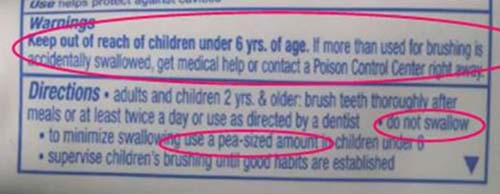
Another eye-opening fact is that a pea-sized dollop of fluoridated toothpaste contains about the same amount of fluoride as a large glass of water. The difference is that if you swallow more than a pea-sized amount of toothpaste, you're instructed to immediately contact Poison Control, while there are no warnings issued for fluoridated water, even though there's no way to control the dose any given person will receive on any given day or throughout their lifetime.

Often Overlooked

Advisory from Jeff Green: One element to be addressed is that many of us who are first exposed to issues such as this enter into a world of anger at injustice, where we see the problem so passionately and so clearly that we carry the burden of proof and are in a hurry to tell others to set it right, viewing anyone who does not immediately agree with our view as opposition that must be overwhelmed with facts and a list of "shoulds."

In this state we look angry, and are easily characterized as a zealot, probably because we are. Asking someone without our passion to join us may not be that inviting.

Should we expect that this would be any different when speaking to authorities and asking them to act?

If you are able to suspend your anger at injustice, able to switch your focus from stating the problem to addressing solutions, there are avenues available.

If you would like to elevate your discussions from the argumentative "he said, she said" to letting the facts declare themselves, and you are in a position of authority from which you can champion the performance of due diligence, contact us for access to guidance and further information.

If you are capable of being an advocate of safe drinking water and would like to assist in identifying a champion for due diligence in your community, contact us for approaches and further information.


Contact Us

10 Facts About Water Fluoridation Everyone Should Know

  1. Bottle-fed infants receive the highest doses of fluoride as they rely solely on liquids for food, combined with their small size. A baby being fed formula receives approximately 175 times more fluoride than a breast-fed infant
  2. There is not a single process in your body that requires fluoride
  3. A multi-million dollar U.S. National Institutes of Health (NIH) -funded study found no relation between tooth decay and the amount of fluoride ingested by children
  4. Water fluoridation cannot prevent the oral health crises that results from inadequate nutrition and lack of access to dental care
  5. Water fluoridation is a violation of your individual right to informed consent to medication
  6. Forty-one percent of all American children aged 12-15 are now impacted by dental fluorosis, rising to more than sixty percent of children in fluoridated communities
  7. The chemicals used to fluoridate water supplies are largely hazardous by-products of the fertilizer industry and have never been required to undergo randomized clinical trials for safety or effectiveness by any regulatory agency in the world
  8. The U.S. FDA classifies ingested fluoride for purposes of reducing tooth decay as an "unapproved drug"
  9. Ingesting fluoride has been found to damage soft tissues (brain, kidneys, and endocrine system), as well as teeth (dental fluorosis) and bones (skeletal fluorosis). There are also 24 studies demonstrating a strong relationship between fairly modest exposure to fluoride and reduced IQ in children
  10. Fluoridation discriminates against those with low incomes. People on low incomes are least able to afford avoidance measures, such as reverse osmosis filters or bottled water

Dr. Mercola - April 24 2012

References:


Source: New Hampshire State Legislature

Monday, August 31, 2009

50 Ways to Boost Your Noodle

Want to keep your brain in shape? Work it

One of the best ways to stay sharp is to exercise that muscle between your ears, research indicates. And discussions with some of the top scientists studying the brain reveal that you can work your noggin in many different ways, every day.
Here are 50 of them:


1. Snack on almonds and blueberries instead of a candy bar. As they lower blood sugar, healthy snacks can improve cognition. In this case, the omega-3s in the almonds and the antioxidants in the blueberries can keep your brain functioning correctly.
2. Ballroom dance like the stars. Dancing is a brain-power activity. How so? Learning new moves activates brain motor centers that form new neural connections. Dancing also calms the brain's stress response.
3. Love the crunch of croutons on your salad? Try walnuts instead. Omega-3s in walnuts have been found to improve mood and calm inflammation that may lead to brain-cell death. They also replace lost melatonin, which is necessary for healthy brain functioning.
4. Take your dog—or yourself—for a walk. Walking for just 20 minutes a day can lower blood sugar. That helps stoke blood flow to the brain, so you think more clearly.
5. Add Chinese club moss to your daily vitamin regimen. Taking less than 100 micrograms of the herb daily may protect your brain's neurotransmitters and keep synapses firing correctly, tests suggest. But this herb is powerful, so check with your doctor for drug interactions.
6. Volunteer to answer questions at the library, arboretum, museum, or hospital.Playing tour guide forces you to learn new facts and think on your feet, helping to form new neural pathways in your brain. What's more, interacting with others can ease stress that depletes memory.
7. Grab a video-game joystick. New video games, such as the Wii and Ninetendo DS, offer brain teasers that make you learn the computer's interface as you master the brain games. That's a double boost to the formation of new neural connections and to response time and memory.
8. Leave your comfort zone. Getting good at sudoku? Time to move on. Brain teasers don't form new neural connections once you've mastered them. So try something that's opposite your natural skills: If you like numbers, learn to draw. If you love language, try logic puzzles.
9. Get support for stressors. You may love your ailing family member, but the chronic stress of facing the situation alone can shrink your brain's memory center. Interacting with others activates many parts of the brain—and learning new ways of coping forms new neural connections.
10. When you look around, really look. Stare straight ahead, and now—without moving your eyes—see if you can make out what's at the periphery. Do this regularly and you'll stimulate the neural and spatial centers of the brain, which can atrophy as you age.
11. When you look forward, also look around. Walking down the street, don't just keep your eyes forward. Scan to the left and to the right. These actions can activate rarely used parts of the brain. That in turn can spur brain cell growth and new neural connections.
12. Show, don't tell. When you woke up this morning, how bright was the light in your room? What did the air smell like when you opened the window? How many colors could you discern in your garden? Notice and report these details to others to prompt cell growth in the visual, verbal, and memory parts of the brain.
13. Listen for details when a friend tells a story. Heed changes in the person's tone and register small facts you might otherwise gloss over. Conjure a mental image of the story. By doing this, you activate multiple areas in the brain and encourage memory formation.
14. Drink two cups of gotu kola tea daily. This ayurvedic herb, used for centuries in India, regulates dopamine. That's the brain chemical that helps protect brain cells from harmful free radicals, boosts pleasurable feelings, and improves focus and memory.
15. Try some new tea. Tulsi tea, made of an Indian herb called holy basil, and ginseng tea both contain herbs that can help reduce overproduction of the stress hormone cortisol, which can hamper memory. The herbs also help keep you alert.
16. Sit quietly, choose a word that calms you, and when your mind starts to wander, say the word silently. A form of meditation, this type of activity can reduce the stress hormone cortisol, which zaps memory. Meditation also helps mitigate focus-stealing feelings like depression and anxiety.
17. Get with the times—keep calendars in every room. Checking calendars keeps you focused and oriented, while creating a mental picture of the day in your head.
18. Get some class. Live near a college? Research shows that taking courses—even just auditing them—can stave off dementia at an early age. Don't go in for formal learning? Check out book readings, seminars, and other educational events.
19. Wear a helmet. Riding your bike is great for your health—until you fall and get a concussion. Even one serious concussion could increase your risk of developing dementia. So protect your physical brain as meticulously as you would protect its functioning by doing brain teasers.
20. Sip red wine, judiciously. Up to two glasses for women and up to three for men weekly delivers the powerful antioxidant resveratrol, which may prevent free radicals from damaging brain cells. But beware: Drinking more than that could leach thiamine, a brain-boosting nutrient.
21. Check your thyroid. It's a tiny little gland in your neck, but it could have a big effect on brain health: Thyroid hormones (T4 and T3) help nerve cells make connections. If you don't have enough of them you may be depressed, tired, and foggy-headed.
22. Choose lean pork loin crusted in peanuts and broccoli over fries and a burger.The pork and peanuts are high in thiamin, a nutrient that reduces inflammation that damages brain cells. The folate in broccoli is good for keeping synapses firing correctly.
23. Replace candy with a sweet pick-me-up of pears, apples, oranges, and cantaloupe. The combination prevents elevated blood sugar that could impede brain cells from firing correctly. It also provides fiber and antioxidants that help scrub plaque from brain arteries and mop up free radicals that inhibit clear thinking.
24. Top rolled oats with cinnamon for a brainy breakfast. The oats scrub plaques from your brain arteries, while a chemical in cinnamon is good for keeping your blood sugar in check—which can improve neurotransmission.
25. Turn up the tunes. TV may provide a lot of stimuli, but watching too much can dull brain transmission. Instead, spend an afternoon listening to your favorite music. Music can lower stress hormones that inhibit memory and increase feelings of well-being that improve focus.
26. Curry up. The active ingredient in Indian curry, turmeric, contains resveratrol, the same powerful antioxidant that makes red wine good for brain health. Eat curry once a week, or sprinkle it on salads, to protect brain cells from harmful free radicals.
27. Take a food break. Research shows that people who fast one day a week or month unlock a unique form of blood glucose that helps the brain more efficiently transmit information. Then break your fast with brain-healthy blueberries, walnuts, and maybe a glass of red wine.
28. Replace the olive oil in your favorite vinaigrette with walnut oil. Walnut oil, which is chock-full of brain-healthy omega-3s, cuts brain inflammation, a precursor to many cognitive problems. It also keeps oxygen-rich blood flowing to your brain by thinning the blood slightly.
29. Go wild with fish. While fish is generally good for you, the metals that accumulate in farmed fish like tilapia may contribute to cognitive impairments. So when you're shopping, check that the fish is from the wild, not domestically raised, and stick with heart- and brain-healthy fish like salmon and sardines.
30. Redecorate and redesign your environment. Plant new flowers in front of your house. Redecorate the kitchen. Rearrange your closets and drawers. Replace the candles in your living room with some that have a different scent. Making such changes can alter motor pathways in the brain and encourage new cell growth.
31. Choose a side. Talk sports, business, or politics. If you can do it without getting angry, which raises the memory-hindering hormone cortisol, engaging in a good debate can form new neural pathways and force you to think quickly and formulate your thoughts clearly.
32. Sleep. Shut-eye isn't a luxury. It's when your brain consolidates memories. Poor sleep, caused by medical conditions, worry, depression, or insomnia, can interfere with your rest. So treat yourself to relaxing scents like vanilla before bed. They raise the chemical dopamine and reduce cortisol, a stress hormone.
33. Check your neck. It may sound crazy, but a clot in your neck can stunt your memory by preventing enough blood and oxygen from getting to your brain. At your next checkup, ask your doctor to use the other side of his stethoscope to ensure that all's clear in your carotid artery—the main one in your neck.
34. Take a mental picture. Connect names with faces by creating mental images that trick your mind into remembering. For instance, remember Mr. Bender with the curly hair by imagining him bent over, with his curly hair facing you.
35. Read the news. Keeping up with the latest not only activates the memory part of the brain but also gives you something to talk about with friends and family. That kind of socializing can activate multiple parts of your brain and encourage cell growth.
36. Turn off the TV and pick up an instrument. Frequently tickling the ivories or blowing a horn—especially if you're trying to master it—is associated with lower dementia risks. What's more, it eliminates boredom, a brain state that can cause some thinking skills to atrophy.
37. Join a book club. Pick up a good book to cut down on brain-withering boredom. Frequent reading is associated with reduced risk of dementia. And meeting new people forces new neural connections. Besides, you might enjoy the book.
38. Play Yahtzee! Whether you choose Risk, Pictionary, Scrabble, or Boggle, board games are associated with a lower risk of developing dementia. They activate strategic, spatial, and memory parts of the brain, and require you to socialize, which can help form new neural pathways.
39. Parlez-vous brain health? You don't have to be a linguist to benefit from learning a new language. Adopting a foreign tongue boosts the verbal, language, and memory parts of the brain.
40. Savor a sensory experience. Those with the best memories take advantage of all their senses. That's because memorization is a cohesive brain effort. So head to the garden or the kitchen and take in the sights, smells, sounds, tastes, and sensations.
41. Quick temper? Instead of yelling, take a few minutes to cool down. The stress of chronic anger can actually shrink the memory centers in the brain. Get to know the signs that you’re seething and address the problem before it erupts.
42. Replace your salt shaker with a sodium-free alternative. We all know that hypertension can lead to heart problems, but new evidence suggests that decreasing the salt in your diet can also improve blood flow to the brain and decrease dementia.
43. Have a chat. Instead of popping in another movie rental, pick up the phone. Talking with someone else not only gets you out of your rut—lack of activity can decrease brain-cell formation—but the socializing can also reduce potentially memory-sapping depression.
44. Check your meds. It may not be you having the memory problems; instead, it could be your medications impeding your memory. Older antidepressants, anti-diuretics and antihistamines—all block a critical brain chemical from doing its job. Ask your doctor for an alternative.
45. Bear some weight. Adding a little strength training to your daily walks can help protect brain cells from damage done by free radicals—and encourage new brain-cell growth. So strap some weights on your ankles or wrists as you walk, or practice gentle yoga.
46. Let yourself sleep in. Research shows that when you're chronically sleep-deprived, your body doesn't have the time to build proteins and other brain- boosting components. So instead of waking yourself early, sleep until you wake naturally.
47. Take an afternoon catnap. Most of sleep's boost to concentration and memory happens in the first stage, so even a snooze as short at 30 minutes can benefit your brain.
48. Switch hands. It may be uncomfortable, but writing with your nondominant hand or operating a computer mouse with that hand can activate parts of the brain that aren't easily triggered otherwise. Anything that requires the brain to pay close attention to a formerly automatic behavior will stimulate brain-cell growth.
49. Shake your body. Gentle bouncing of your knees and shaking out of your limbs reduces the brain-sapping stress hormone cortisol, research shows. It also triggers relaxation and alertness that keeps your brain sharp. Do it for a few minutes in the morning and at night.
50. Tour your neighborhood. If your neighborhood is growing, check it out. The exploration will change your mental map of the neighborhood. Along with learning new and better routes to your favorite stores or restaurants, you'll forge new neural pathways in your brain.

By: Heather Boerner

Posted: TrueHealthIsTrueWealth

Related Resources:

Saturday, April 11, 2009

Chocolate May Boost Brain Power and Fight Fatigue

The next time your energy slumps, but you need to be sharp, a cup of hot chocolate might be just the boost you need.

That’s because flavanols, which are chemicals plentiful in dark chocolate, fight fatigue and hone mental sharpness, according to scientists at the Brain, Performance and Nutrition Center at Northumbria University in Newcastle, UK.

Researchers gave 30 people a series of math tests before and after having either a flavanol-loaded chocolate drink or a placebo beverage. On a test that required repeatedly subtracting numbers, volunteers who got the flavanol-rich drink performed better than those drinking the dummy drink. In addition, the flavanols seemed to offset the fatigue from the intense mental concentration.

“We asked them about their mental fatigue, and that increased, but the cocoa offset that increase,” said researcher Crystal Haskell.

The brain-boosting effect is tied to flavanols’ ability to dilate blood vessels, allowing more blood to reach important areas of the brain.

The study also found that a 500 mg dose of flavanols worked best. That’s the equivalent of five bars of chocolate, so researchers are trying to discover whether lower levels work as well.

“The amounts we were giving them were more than you would get from eating small amounts in diet,” said co-researcher David Kennedy, “But there is quite a bit of evidence showing that general consumption over time is protective against neurodegenerative disease and decline in cognitive function.”

Flavanols are also found in red wine, olive oil, broccoli, blueberries, tea, and onions. They’ve been linked to lowering the risk of cardiovascular disease, diabetes, and brain function.

Editor's Note:

Help stop brain shrinkage by exercising your brain; stretch your brain with new challenges, word and number games & puzzles, and by using your memory store: like writing a book, organizing old photos with information or lecturing and teaching about history and past events within your lifetime stored in your memory bank.