Showing posts with label bioidentical hormones. Show all posts

Sunday, September 29, 2013

Somers: I'm Too Young for This!: The Natural Hormone Solution to Enjoy Perimenopause

Book: I'm Too Young for This!: The Natural Hormone Solution to Enjoy Perimenopause (Kindle)

Why Wait to Feel Good Again?

If you're in your thirties or forties, your body is changing, and so are your moods, sleep, health, and weight. Tired of being at the mercy of your hormones? Armed with the knowledge in this book, you don't have to be. Perimenopause can be enjoyable if you know what to do. I'm Too Young for This! details how you can get your body and mind back on track, safely and without drugs, including:

- How our bodies transition hormonally—from puberty through perimenopause.
- The common complaints of perimenopause—and hidden factors that may keep you symptomatic.
- What are the minor and major hormones, and the important role they play in feeling good and staying vibrant and healthy.
- What to eat—including Perimenopausal Power Foods—as well as other lifestyle shifts that are critical to your successful transition.
- Cutting-edge research that proves the safety and efficacy of bioidentical hormone replacement (BHRT).
- The Symptom Solver: a state-of-the-art guide to immediate relief for your hormonal complaints. Plus, how to find the right doctor as well as get your most frequently asked questions answered by expert hormone specialists.

Your life is about to change for the better. You can feel great, be vibrant, healthy, thin, and sexy! This book shows you how.

Book: Ageless: The Naked Truth About Bioidentical Hormones (Kindle)

Sunday, November 1, 2009

Sex Rx for 5 Female Disorders

Sex is supposed to be fun. But what if you aren’t into it? Or worse yet, it’s painful? We’ll help you feel sexy again with these solutions to 5 common female sexual disorders. Plus, find out what’s lowering your libido with our quiz…

Does it seem like everyone’s enjoying sex except you? Well, you aren’t alone: 43% of women experience some type of sexual disorder, according to the 1992 U.S. National Health and Social Life Survey, considered by experts to be one of the most comprehensive reviews of sexual behavior in the U.S.

Whether your sex life has been derailed because of menopause, inhibition, anger or a physical problem, here are some ways to get the zing back:

1. Lack of Desire
He’s revved and raring to go, but you can’t even get in gear for a night of romping.

Not being in the mood is a common complaint among women and their partners, says sex researcher Beverly Whipple, Ph.D., R.N., professor emerita at Rutgers University.

“Men think their partner isn’t attracted to them anymore,” she says, but other reasons may be to blame.

Why it happens: Stress, exhaustion and spreading yourself too thin can wreck your sex life, says Stephanie Buehler, psychologist and director of the Buehler Institute (TheBuehlerInstitute.com) for sex therapy in Irvine, Calif.

So can a strict religious upbringing, fear of pregnancy and negative messages about sex in your head. A bad sexual experience and no emotional satisfaction in your relationship can also make you feel like a wet blanket in the bedroom.
“Lack of desire is probably the most complex sexual problem,” Buehler says. “And the causes are very individual.”

Even if your head and heart are in sync, physical conditions such as diabetes, fibromyalgia and hormonal imbalance (perhaps from thyroid disorders or menopause) can also throw your sex and love life for a loop.

That’s what derailed Leslie (identified by her first name only for privacy), 52, of Austin, Texas. She had a “super low libido” and vaginal dryness when she entered perimenopause.

“It literally felt like I was drying up like an old woman,” she says. “And that was not OK because I actually enjoyed sex and wanted to have as active a sex life as possible.”

Still, as her sex life declined, so did her 10-year marriage. It ended in divorce.

Finally, with hormone replacement therapy, Leslie got her sex life back on track. After a two-year break, she and her husband rekindled their relationship and remarried last February.

Sex Rx: So what’s the best way to ramp up your libido? It depends on the cause.

In pre-menopausal women, lack of desire is typically due to life circumstances, such as stress, lack of energy or fighting with your mate, says Elizabeth Houser, M.D., of the Urology Team in Austin, Texas, whose Web site, Wetmatters.com, deals with pelvic health.
Once you ID the cause, try these steps to put heat back between the sheets:

  • Reduce stress and increase energy level. Maintaining a healthy diet, exercise and balance in your life can help ignite the fire within.
  • Make time for sleepy sex. Try this suggestion from Seven Weeks to Better Sex (Westcom Press) by Domeena Renshaw, M.D., director of the Loyola University Health System Sex Clinic in Chicago.

    Pick a rendezvous night with your mate and set your alarm clock to ring 90 minutes after you go to bed, which takes advantage of the body’s first sleep cycle, when you should be at peak arousal. When the alarm goes off, take a shower together to refresh you, and then have sex, which will relax you and help you get back to sleep again.

    “You may be skeptical, but try it anyway and see what happens,” Renshaw says.

    • Look at your relationship. How much conflict do you have? Do you spend enough time together? Does he listen? Do you communicate with each other? Lack of desire could be a symptom of another relationshipproblem, Buehler says. Couples therapy can help address issues. So can restructuring your life so that your relationship is a priority, Houser says.
    • Get the bad thoughts out. Cognitive behavioral therapy, in which patients address negative beliefs and feelings, can help you examine your attitude about sex.
    • Expand your options. Sex isn’t just about inserting part A into part B. A woman may want a back rub or cuddling instead, Whipple says. “I encourage people to learn about different parts of the body and be aware of what they like – and to communicate to their partner what they find sensual.”

    2. Lack of Arousal
    “People associate arousal with vaginal lubrication,” Whipple says, but it’s more complicated than that.
    When women are aroused, more blood flows to the clitoris and its surrounding flesh, which stimulates fluids to seep through blood vessels into the vagina. It also causes the upper part of the vagina, uterus, cervix and clitoris to expand and swells the lower vagina and labia (the flesh at the opening of the vagina) so the vaginal opening shrinks. In other words, your body gets ready to receive a penis.
    When a woman isn’t aroused, the blood doesn’t flow and the process shuts down. “Women describe it as just being dead down there,” Houser says.
    Why it happens: Many of the same things that inhibit desire also tamp down arousal. “If your vagina is dry and uncomfortable, it isn’t going to feel any stimulation,” Whipple says.

  • Often, it's because a woman can't let go of her worries and to-do list.

  • “She can’t relax,” Houser says. “Or she really doesn’t like her husband. Or she is thinking about their kid’s soccer tournament.”

    Sex Rx: Water-based vaginal lubricants can help. Don’t use oil-based products, which can dissolve latex condoms and diaphragms, compromising your protection from a pregnancy and sexually transmitted diseases.

    If the vaginal dryness stems from a decrease in estrogen levels, hormone replacement therapy may help keep the vaginal lining plump and improve lubrication.
    Your doctor can prescribe estrogen in several forms, including cream, skin patch or an estrogen-dispensing ring or tablets, which are inserted into the vagina.

    Don’t use estrogen cream as a lubricant, Whipple cautions, because the body absorbs a small amount with each use and too much estrogen could be dangerous.

    And skip antihistamines. If they dry out your nose, they probably dry you out down under.

    Whipple also suggests ArginMax, a tested over-the-counter oral supplement (it contains the amino acid L-arginine) that may increase lubrication and satisfaction.

    3. Anorgasmia
    This is the inability for either sex to experience an orgasm, but the condition is far more common in women. In fact, only about 30% of women have orgasms from sexual intercourse, Whipple says.

  • Why it happens: Medical problems such as diabetes, multiple sclerosis and gynecological cancers can interfere. So can antidepressants: 70-80% of women taking selective serotonin reuptake inhibitors (SSRIs), a class of antidepressants, have a hard time peaking, Whipple says.

Check out 9 Drugs That Can Dampen Your Sex Drive.

But maybe you aren't feeling the fireworks because you don’t know how to have an orgasm or haven’t schooled your partner about your sweet spots.

Sex Rx: It’s time to explore your nether regions. “You'd be amazed at how many women don’t know what they look like,” Buehler says.
First, get out a hand mirror out and examine yourself.
Now let your fingers do the walking. Get used to touching your body in a non-sexual but pleasurable way. Give yourself a massage or take a warm bath or shower and explore your entire body to find out what feels good. When you’re comfortable, move your hands to your genitals.

Stimulating your clitoris, G-spot and even the cervix can bring on an orgasm. The trick is finding what works for you, Whipple says. For more tips, check out How to Find Your G-spot.

As you learn your sexual responses, have a show-and-tell with your partner so he can recreate the sensation.

“A lot of people give up too easily,” Buehler says. Because of socialization or fear, the ability to have an orgasm is shut down. “You have to reawaken the wiring.”

Having an orgasm is a skill. And practice makes perfect.

4. Vaginismus
This condition causes the pelvic floor muscles to spasm, essentially blocking a penis from entering the vagina.
How common is the disorder? That’s debatable, because many women don’t seek treatment or are misdiagnosed. At the Sexual Dysfunction Clinic at Loyola University in Chicago, the vaginismus incidence rate is 7%, Renshaw says.

Untreated, vaginismus can be long-term: Renshaw says she treated a woman who had the disorder for 23 years before she sought help.

Why it happens: Repeated yeast infections or urinary tract infections can cause the reflexive muscle reaction, but so can fear of sex, pregnancy or emotional trauma from past sexual abuse.

Sex Rx: If the condition has a physical cause, at-home exercises may reverse it. In Seven Weeks to Better Sex, Renshaw suggests the following exercises:

  • Without your partner, lie down and get comfortable. Breathe slowly, opening your mouth when you exhale.
  • Lubricate your finger with water-based lubricant or saliva and insert it into your vagina. Continue to breathe deeply. As you explore your vagina, you’ll feel it start to loosen.
  • As if you're trying to stop the flow of urine, contract the muscles in the lower third of your vagina tightly around your finger. Relax and repeat to learn how to control the muscles.
  • Repeat the exercises for five minutes, twice a day. Use one finger on the first two days. For the next two days, insert two fingers while breathing slowly and contracting your muscles.
  • On the next two days, ask your partner to place one lubricated finger inside your vagina. Guide his finger and keep your mind focused on your sexual response.
  • On the following two days, spend as much time on foreplay as you need to get aroused and then ask your partner to lie passively next to you.
  • Straddle him and place his non-erect penis into your vagina. Contract and relax your muscles. You should feel your partner becoming erect without experiencing pain. If he is already aroused, you can insert his erect penis or slow things down until his erection subsides and try again. Allow yourself as much time as you need to feel comfortable at any stage of these exercises.

A physical therapist who specializes in pelvic floor biofeedback – a kind of training program that can help people regulate body functions – can teach a woman how to consciously relax her muscles.

A doctor also can prescribe vaginal dilators – a set of plastic or silicone dildos, graduated in size, that are inserted into the vagina by the woman or her partner for 10 minutes a few times a week leading up to intercourse. The dilators gradually stretch the vaginal skin.

5. Dyspareunia
Pain during and after intercourse makes sex unpleasant. Unfortunately, many women are too embarrassed to discuss the subject with their doctor and avoid the act altogether, Buehler says.

“There are couples who don’t consummate their marriage for years. If they’d come in sooner, they’d have a smaller problem to solve,” she says.

Sex is an important part of a long-term relationship or marriage, and its absence can threaten it.

Why it happens: Endometriosis (the growth of the uterine lining outside the uterus), vaginismus, urinary tract infections, a dry vagina or any combination of physical or psychological factors can cause dyspareunia.

Sex Rx: First, head to your doctor for a physical exam, blood work and a check of hormone levels. Once a physical problem is ruled out, physical and sex therapy can help.

After all, sexual disorders don’t involve only the genitals, Whipple says. “I view sexual disorders holistically. It's really important to evaluate the total person and not just one part.”

Remember, intercourse isn’t the only way to get sexual pleasure. Try alternatives, such as oral, manual and anal sex. Anything that feels good can provide satisfaction minus the pain.

An extra tip: If you suffer from unexplained pain, your doctor may prescribe the antidepressant amitriptyline (Elavil). In very low doses — one-tenth of the amount you would take for depression — it can ease pelvic pain.

Need more help? Visit the American Association of Sexuality Educators, Counselors and Therapists at www.aasect.org, and the Society for Sex Therapy and Research at www.sstarnet.org.
Get your own copy of Domeena Renshaw’s Seven Weeks to Better Sex.

What’s Lowering Your Libido?
Studies suggest that one third of women have lost interest in sex. How much do you know about what keeps your motor humming? Take our libido quiz and find out.

Check out Health Bistro for more healthy food for thought. See what Lifescript editors are talking about and get the skinny on latest news. Share it with your friends (it’s free to sign up!), and bookmark it so you don’t miss a single juicy post!

The information contained on www.lifescript.com (the "Site") is provided for informational purposes only and is not meant to substitute for advice from your doctor or healthcare professional. This information should not be used for diagnosing or treating a health problem or disease, or prescribing any medication. Always seek the advice of a qualified healthcare professional regarding any medical condition. Information and statements provided by the site about dietary supplements have not been evaluated by the Food and Drug Administration and are not intended to diagnose, treat, cure, or prevent any disease.

Lifescript does not recommend or endorse any specific tests, physicians, third-party products, procedures, opinions, or other information mentioned on the Site. Reliance on any information provided by Lifescript is solely at your own risk.

Source: Lifescript: Sex Rx for 5 Female Disorders

Suzanne Somers swears by bio-identical hormone replacement. She says it keeps her young, sexy and help fight disease: Ageless: The Naked Truth About Bioidentical Hormones & The Sexy Years: Discover the Hormone Connection: The Secret to Fabulous Sex, Great Health, and Vitality, for Women and Men

Posted: True Health Is True Wealth

Other Resources:

Younger Next Year for Women: Live Strong, Fit, and Sexy - Until You're 80 and Beyond

The Wisdom of Menopause: Creating Physical and Emotional Health and Healing During the Change, 2nd Edition

The Miracle of Bio-Identical Hormones, 2nd edition

Natural Hormone Balance for Women: Look Younger, Feel Stronger, and Live Life with Exuberance

Sunday, August 23, 2009

Menopausal Belly Fat Linked with Testosterone

In middle-aged women, visceral fat, more commonly called belly fat, is known to be a significant risk factor for cardiovascular disease, but what causes visceral fat to accumulate?

The culprit probably is not age, as is commonly believed, but the change in hormone balance that occurs during the menopause transition, according to researchers at Rush University Medical Center in Chicago.

“Of all the factors we analyzed that could possibly account for the increase in visceral fat during this period in a woman’s lifetime, levels of active testosterone proved to be the one most closely linked with abdominal fat,” said Imke Janssen, assistant professor of preventive medicine and the study’s lead investigator.

The study, which was published early online in the medical journal Obesity, included 359 women, ages 42 to 60, in menopausal transition. They were split evenly between blacks and whites.

Fat in the abdominal cavity was measured with CT scans, a more precise measurement than waist size. Blood tests were used to assess levels of testosterone and estradiol (the main form of estrogen). Medical histories covered other health factors possibly linked with an increase in visceral fat.

Statistical analyses showed that the level of “bioavailable” testosterone, or testosterone that is active in the body, was the strongest predictor of visceral fat.

A woman’s age did not correlate significantly with the amount of visceral fat. Nor did race or other cardiovascular risk factors. The level of estradiol also bore little relationship to the amount of visceral fat.

Visceral fat, surrounding internal organs around the waistline, is metabolically different from subcutaneous fat, located beneath the skin. Research has shown that visceral fat is a source of inflammation that contributes to premature atherosclerosis and risk of acute coronary syndrome.

The study’s findings extend Janssen's earlier research on testosterone’s link with what is called the metabolic syndrome during the menopausal transition, published in the Archives of Internal Medicine in 2008. That study, examining women six years before and six years after their final menstrual periods, found that the rise in metabolic syndrome — a collection of risk factors for heart disease — corresponded with the rise in testosterone activity.

“For many years, it was thought that estrogen protected premenopausal women against cardiovascular disease and that the increased cardiovascular risk after menopause was related only to the loss of estrogen’s protective effect,” Janssen said. “But our studies suggest that in women, it is the change in the hormonal balance — specifically, the increase in active testosterone — that is predominantly responsible for visceral fat and for the increased risk of cardiovascular disease.”

Posted: True Health Is True Wealth

Related Resources:

Saturday, August 22, 2009

12 Surprising Signs You'll Live to 100

What you're doing right, and how to do it better to stay healthy, happy, and strong for years to come

By Sandra Gordon, Prevention

Find more

You're the life of the party.

Outgoing people are 50 percent less likely to develop dementia, according to a recent study of more than 500 men and women age 78 and older from the Karolinska Institutet in Sweden. Participants also described themselves as not easily stressed. Researchers speculate that their more resilient brains may be due to lower levels of cortisol—studies show that oversecretion of this "stress hormone" can inhibit brain cells' communication. Science-backed ways to cut cortisol levels: Meditate, sip black tea, or take a nap.

Exercise your mind with these memory and brain games.

You run for 40 minutes a day.

Scientists in California found that middle-aged people who did just that—for a total of about five hours per week—lived longer and functioned better physically and cognitively as they got older; the researchers tracked runners and nonrunners for 21 years. "What surprised us is that the runners didn't just get less heart disease—they also developed fewer cases of cancer, neurologic diseases, and infections," says study author Eliza Chakravarty, M.D., an assistant professor of medicine at Stanford University School of Medicine. "Aerobic exercise keeps the immune system young." If you don't like to run, even 20 minutes a day of any activity that leaves you breathless can boost your health, she says.

You like raspberries in your oatmeal.
Most Americans eat 14 to 17 g of fiber per day; add just 10 g and reduce your risk of dying from heart disease by 17 percent, according to a Netherlands study. Dietary fiber helps reduce total and LDL ("bad") cholesterol, improve insulin sensitivity, and boost weight loss. One easy fix: Top your oatmeal (½ cup dry has 4 g fiber) with 1 cup of raspberries (8 g) and you get 12 g of fiber in just one meal.

Try some of these other potent fiber-rich foods: ½ cup of 100 percent bran cereal (8.8 g), ½ cup of cooked lentils (7.8 g), ½ cup of cooked black beans (7.5 g), one medium sweet potato (4.8 g), one small pear (4.3 g).

You feel 13 years younger than you are.

That's what older people in good health said in a recent survey of more than 500 men and women age 70 and older. "Feeling youthful is linked to better health and a longer life," says researcher Jacqui Smith, Ph.D., professor of psychology at the University of Michigan. "It can improve optimism and motivation to overcome challenges, which helps reduce stress and boost your immune system and ultimately lowers your risk of disease."

Discover how maintaining these 6 types of healthy friendships can improve your happiness and your health.

You embrace techie trends.

Learn to Twitter or Skype to help keep brain cells young and healthy, says Sherri Snelling, senior director for Evercare (part of United-Healthcare), a group that sponsors an annual poll of U.S. centenarians. Many of the oldest Americans send e-mails, Google lost friends, and even date online. Researchers say using the latest technology helps keep us not only mentally spry but socially engaged: "Stay connected to friends, family, and current events, and you feel vital and relevant," says Snelling.

You started menopause after age 52.
Studies show that naturally experiencing it later can mean an increased life span. One reason: "Women who go through menopause late have a much lower risk of heart disease," says Mary Jane Minkin, M.D., clinical professor of obstetrics and gynecology at Yale University School of Medicine.

You make every calorie count.

Researchers in St. Louis reported that men and women who limited their daily calories to 1,400 to 2,000 (about 25 percent fewer calories than those who followed a typical 2,000-to 3,000-calorie Western diet) were literally young at heart—their hearts functioned like those of people 15 years younger. "It's about not just eating less but getting the most nutrition per calorie," says study author Luigi Fontana, M.D., Ph.D., associate professor of medicine at Washington University School of Medicine. Study subjects stuck to vegetables, whole grains, fat-free milk, and lean meat and nixed white bread, soda, and candy. If you cut empty calories and eat more nutrient-rich foods, your health will improve, says Fontana. To find out how many calories you need to maintain a healthy weight, go toprevention.com/caloriecalculator.

Lower your caloric intake and still feel full with these delicious 400-calorie meals.

You had a baby later in life.

If you got pregnant naturally after age 44, you're about 15 percent less likely to die during any year after age 50 than your friends who had their babies before age 40, reports a recent University of Utah study. "If your ovaries are healthy and you are capable of having children at that age, that's a marker that you have genes operating that will help you live longer," says lead researcher Ken R. Smith, Ph.D., professor of human development at the university.

Your pulse beats 15 times in 15 seconds.

That equates to 60 beats per minute—or how many times a healthy heart beats at rest. Most people have resting rates between 60 and 100 bpm, though the closer to the lower end of the spectrum, the healthier. A slower pulse means your heart doesn't have to work as hard and could last longer, says Leslie Cho, M.D., director of the Women's Cardiovascular Center at the Cleveland Clinic. To get the healthiest heart rate, see "From the Heart Doc".

You don't snore.

Snoring is a major sign of obstructive sleep apnea, a disorder that causes you to stop breathing briefly because throat tissue collapses and blocks your airway. In severe cases, this can happen 60 to 70 times per hour. Sleep apnea can cause high blood pressure, memory problems, weight gain, and depression. An 18-year study found that people without OSA were three times more likely to live longer than those with severe apnea. If you snore and have excessive daytime drowsiness or mood changes, talk with your doctor about a referral to a sleep center.

Click here for 14 more signs you'll live longer than you think.

You have a (relatively) flat belly after menopause.

Women who are too round in the middle are 20 percent more likely to die sooner (even if their body mass index is normal), according to a National Institute on Aging study. At midlife, it takes more effort to keep waists trim because shifting hormones cause most extra weight to settle in the middle. If your waist measures 35 inches or more (for men, 40 inches or more), take these steps:

  1. Work two or three 20-minute strength-training sessions into your weekly exercise regimen to preserve lean muscle mass and rev metabolism.
  2. Eat a daily serving of omega-3s to help combat inflammation and seven daily servings of fruits and vegetables, loaded with disease-fighting antioxidants.
  3. Get 25 percent of your daily calories from healthy fats—such as monounsaturated fatty acids—which protect your heart and may help you store less fat in your belly (for a 1,600-calorie diet, that's 44 g).

You get your blood tested for vitamin D levels.

For optimal disease protection, we need at least 30 nanograms of vitamin D per milliliter of blood, reports a study in the Archives of Internal Medicine. Nearly 80 percent of Americans have less than that. Vitamin D not only helps bones ward off osteoporosis but may also reduce your risk of cancer, heart disease, and infection, says lead researcher Adit A. Ginde, M.D., M.P.H., an assistant professor of surgery at the University of Colorado Denver School of Medicine. If needed, you can take a daily supplement to get your numbers up. Doctors can measure your levels with a simple blood test, but periodic monitoring may be necessary—vitamin D turns toxic at 100 to 150 ng/mL.

More Longevity Signs

Discover the "Longevity Zones"—places around the world with the highest rates of 100-year-old-plus residents. Adopt their habits, and you may add years to your life and life to your years.

See More on MSN Health & Fitness:

Source: Prevention/Posted MSNBC

Comments:

  1. When I was younger, I knew a woman who was 105 or so. She still lived by herself, on about 5 acres of property with a couple of dogs and an assortment of cats. She'd outlived 3 husbands and a couple of her own children. She was still vivacious and happy and could be found raking leaves, gardening, baking...etc. I asked her what her secret was...because most people who live that long are in a nursing home. She said her secret was: Walk 3 miles a day, 6 days a week...no matter the weather; she never smoked, drank rarely, never used drugs. She also said, visit friends (she had a weekly group she'd go with for lunch), do things for others (active in charities in neighborhood) and have a "drop" of whiskey or bourbon in her tea before bed time. She also said she was on a regular schedule, got up at 8, went to bed at 11.
  2. 2.If you snore, you either have sleep apnea or are likely to get it in the future. This does not necessarily make it impossible for you to reach 100, but it does deteriorate your health, making it less likely. I think the big picture of how you manage your body makes more of a difference than the individual things you do, though.
  3. In the end… the greatest factor, I think, is you attitude toward life!!

Posted: True Health Is True Wealth & Cross-Posted: Marion’s Place

Related Resources:

Thursday, June 18, 2009

Media Blasts Oprah for Supporting Alternative Medicine

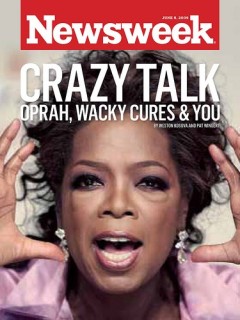
This is just a preview of what is to come in the world of government-run healthcare overseen by the ‘Health Czar’. Have you ever seen a scarier more unflattering photo of Oprah?? Even being Obama’s Muse hasn’t helped her from attacks in this arena which brings us to the obvious question… how will they treat the rest of us????

oprah, oprah winfrey, suzanne somers, cures, vaccines, hpv, bioidentical hormones, hormones

In January of this year, Oprah Winfrey invited Suzanne Somers on her show to talk about health tips. The 62-year-old actress uses bio-identical estrogen cream and progesterone on her other arm two weeks a month.

According to Somers, the bio-identical hormones are identical to the ones created by the human body, unlike conventional hormones, which are made from mare’s urine.

The result has been a media firestorm condemning both Somers and Oprah, including the hit piece in Newsweek linked below. The authors of the piece, Weston Kosova and Pat Wingert, argue that bio-identical hormones are just as synthetic as conventional hormones -- although they don’t much discuss the fact that conventional hormones are actually different from the 17-beta-estradiol made by your body, while the bio-identical hormones are 17-beta-estradiol itself.

The real reason for the attacks on bio-identical hormones?
As Somers points out, many doctors, scientists and media figures make a good deal of money off of the pharmaceutical industry.
And one thing you won’t see mentioned in the Newsweek article is the fact that Pat Wingert is the co-author of a pharmaceutically biased book on hormones and menopause, and that Newsweek is heavily funded by pharmaceutical companies.

This resembles an incident a few years ago when the cattle industry actually sued Oprah Winfrey just for talking about Mad Cow Disease.

--------------------

Dr. Mercola''s CommentsDr. Mercola's Comments:

The authors of this Newsweek article clearly had a bone to pick with alternative medicine of all kinds. Newsweek does not just ridicule Suzanne Somers for her endorsement of bioidentical hormones, they blast Jenny McCarthy’s stance on vaccine adjuvants being a culprit in causing autism, and even criticize Dr. Christiane Northrup for warning Oprah’s audience of the HPV vaccine and recommending dietary and lifestyle changes to enhance their natural immunity instead. In their article they counter this advice with the statement,

“It is true that of the millions of women who have received the vaccine, 32 have died in the days or weeks afterward. But in each case, the Centers for Disease Control and the Food and Drug Administration investigated the deaths and found that they were coincidental and were not related to the shot.”

This is the kind of blanket dismissal one could only expect from those who have not bothered to do any serious investigations of their own on a topic.

And as for the idea that your thoughts and beliefs may have the slightest to do with your physical health? Ridiculous, according to these two authors.

Apparently they’ve never heard of epigenetics.

Dr. Bruce Lipton, a forerunner in the field of epigenetics and The New Biology, has carefully documented how emotions are one of the most important factors in your health. According to his research, the controlling factor in deciding what your genes express -- in deciding how your future health will play out -- is not your genes, your family history or even the strength of your immune system. It is YOUR MIND.

These are the kind of myopic viewpoints you have to contend with when dealing with conventional medicine, big pharma, and their mouthpieces. But that doesn’t mean they’re any more right, or any less ridiculous, than the people and alternative strategies they try to dismiss with little more than parroted catch-phrases.

Is an Organized Smear Campaign Underway?

Now, Oprah has been targeted by big industries before, such as when she dared talk about Mad Cow disease on her show – a topic that brought her a lawsuit by the meat industry.

But Oprah is not the only one in the crosshairs of what can only be described as an organized smear campaign against alternative medicine.

There’s a disturbing trend taking shape, with a recent onslaught of media articles seeking to put a bad spin on various complementary, alternative medicine and natural medicine options. The misinformation campaign is shifting into higher gear. Is it a very deliberate and concerted media strategy?

Could there be any coincidence that this is all occurring just as the government is preparing health care reform? What would happen If much of alternative medicine was determined illegal?
Robert Zieve, MD, who gave me many of these links, believes that it smells like a witch hunt.

Recent headlines include:

-----------------

Dr. Deepak Chopra responded to the Oprah bashing with this Alternet article, where he states,

"The criticism the medical establishment is directing at Oprah through this article only exposes their own frustration in having squandered their credibility with the public. They hope that if they can successfully attack Oprah's immense credibility, then they can magically get some of that credibility back for themselves. However, if people still trusted the health care industry to act in their best interest the way they did decades ago, then it would be unnecessary to brand Oprah for "crazy talk" simply because she occasionally provides a forum for ideas outside of mainstream medicine.
The medical profession is burdened with a host of problems that Oprah addresses with more candor and force than the AMA. She promotes wellness and prevention, two areas that drastically need improvement. She brings up creative solutions to problems that medical science is baffled by, such as the healing response itself and the role of subjectivity in patient response. These are issues that few M.D.s are willing to explore, yet she has done so for decades.
... What this tells me is that medicine needs Oprah and other patient advocates who are demanding that official medicine heal itself. To accuse them of lacking medical credibility is a red herring. Patients aren't supposed to know more than their physicians. The fact that they often do, at least insofar as alternative treatment goes, is both a sign of hope and cause for distress."

--------------

Is Hormone Replacement Therapy (HRT) Dangerous?

It has been overwhelmingly proven that conventional hormone replacement therapy (HRT), which science, as little as ten years ago, massively touted, has now been shown to be very dangerous. So there’s no argument there.

Studies looking at the long-term usage of synthetic estrogen have revealed many negative side effects, including heart attacks, strokes, blood clots, high blood pressure and vaginal bleeding. But perhaps most strikingly, just one year after millions of women quit taking hormone replacement therapy, incidents of breast cancer fell dramatically—by 7 percent!

The following prescriptions now carry black box warnings and need to be avoided:

  1. Premarin. Premarin is an estrogen extracted from Pregnant Mare’s Urine. We now know it is associated with an increased risk of heart disease.

  2. Estrogen Therapy. Estrogen, which is extracted from Premarin, was effective in combating some menopausal symptoms but proved to have serious, negative side effects, such as the increased risk of breast cancer and an increase in insulin levels.

  3. Provera. This drug is a progestin or a synthetic form of progesterone, which probably makes it even more toxic than Premarin. Its well-documented, negative side effects include blood clotting.

But to lump bioidentical hormones in with the rest, and attributing the same dangers to them as their synthetic versions is likely unjustified.

The Truth About Bioidentical Hormones

Bioidenticals, unlike synthetic hormones or natural ones from animals, are natural hormones that are bioidentical to your own.

The bioidentical hormone that is prescribed 80 percent of the time is estriol. It’s natural -- not a drug -- and you get it at compounding pharmacies.

And, although the article above states there are no conclusive clinical studies showing that bioidenticals are any less risky than synthetic hormones, the FDA also admits it’s unaware of any adverse effects of bioidentical hormones.

The fact is that estriol has been used safely for decades, and I believe it’s particularly useful when your ovaries have been removed or you’ve had a hysterectomy. Dr. Johathan Wright, who I’ve interviewed for my Expert Inner Circle program, is a pioneer in bioidenticals, and you can see what he has to say about their value in this short video.

The crux is that natural estriol can’t be patented, so there are no major profits to be made, and hence it gets little attention.

The FDA Effectively “Banned” Estriol, But May Approve an Unsafe Prescription Instead

Although not an FDA-approved drug, the FDA has proposed to allow estriol-containing prescriptions to be filled if they’re accompanied by an Investigational New Drug (IND) application, if and when a physician believes it’s in his patient’s best interest.
However, the IND places a significant financial burden on physicians, most notably by requiring them to submit applications to an Institutional Review Boards (IRB).
This process effectively bans most prescriptions for estriol.

Meanwhile, the FDA is in the process of considering the approval of Trimesta, a knock-off of natural estriol. Clearly, the FDA has never been concerned with estriol being used in an unsafe manner -- they were concerned that their drug-company buddies were not getting their fair share of the profits.
Aside from the obvious bias, this is even more troubling because Trimesta may not be a safe version of natural estriol.
According to Dr. Jonathan Wright, the problem with Trimesta is that it’s taken in pill form. Taking this hormone orally is known to be a greater risk factor for endometrial cancer than taking the hormone transdermally (through your skin).
As Dr. Wright said:

"...When the inevitable findings of excessive endometrial cancer are ultimately disclosed, you can bet the blame will fall on the bio-identical hormone itself -- and not on the oral route of administration, which is known to be more risky."

Do You Need Hormone Replacement?

The issue of hormone replacement generally does not come up until the classic symptoms of menopause strike. Menopause occurs when you stop producing estrogen and progesterone, and your periods cease. This can occur naturally, or be induced by a hysterectomy or by having your ovaries removed.

Typical menopausal symptoms include:

  • Hot Flashes

  • Vaginal Dryness

  • Menstrual Irregularities

  • Depression

  • Mood Swings

  • Weight Gain

Short- and long-term strategies can help you control these symptoms. The best approaches are preventive and involve diet and exercise. But in some cases where diet and lifestyle changes are not enough to counteract the more troublesome symptoms of menopause, bioidentical hormones may be able to help.

However, you’ll want to make sure you get your hormonal levels checked properly before embarking on any kind of hormone supplementation program.

I recommend you review Michael Borkin’s article, Women’s Hormones, for more in-depth information about the many variables involved in your sexual and overall health.

Oftentimes the cumulative physiological effects of stress can cause disruption of the natural rhythms and balancing mechanisms of your hormones, which can compromise your overall health as well as your sexual and reproductive health.

Both estrogen and progesterone are necessary in the female cycle, and their balance is key for optimal health. Many women have an imbalance of these hormones, regardless of their age. And if you have insufficient levels of progesterone to counter excessive estrogen, this imbalance can be further exacerbated by chronic stress.

So your answer might not necessarily lie in using hormones, but rather addressing your stress levels so that your body can normalize your hormone levels naturally.

Alternatives to Hormone Replacement

Prevention is always the best cure, and diet and exercise are as powerful in the prevention of future menopausal symptoms as for most other health concerns. Eating right for your nutritional type and exercising regularly can go a long way to keeping your hormones balanced as you age.

Consuming plenty of phytoestrogens (plant-estrogens) such as licorice and alfalfa before menopause can also help moderate your day-to-day estrogen levels so that when menopause comes, the drop won’t be so dramatic.

Beware, however, that soy is not a good option. In fact, non-fermented soy products are likely to damage your health even further.

You’ll also want to make sure your vitamin D levels are optimized. Vitamin D has gotten the short shrift, thanks to fears abouttanning and skin cancer, but Vitamin D is a must for gene regulation and optimal health. For more information, I recommend you watch my one-hour video lecture on this essential nutrient.

As for supplements, these have been shown to be beneficial in tempering symptoms of menopause:

  • Polyphenols. Certain polyphenols have been shown to have some HRT-like benefits without the drawbacks, and are associated with a lowered risk of heart disease. Royal Macha seems to be an amazing adaptogenic herbal solution for menopause that has helped many women. Be sure to avoid the inexpensive ones, as they typically don’t work. Get the real deal from Peru.

  • Omega 3 fats. You’ll also want to get plenty of omega-3 fats. A high quality animal-based omega-3 supplement, such as krill oil, can be far more effective and beneficial than fish oil.

  • Black Cohosh may help regulate body temperature and hot flashes.

Implementing these lifestyle changes will help control symptoms of menopause, such as hot flashes, without resorting to hormone replacement.

Source: Mercola.com

I myself have gone to Suzanne Somers’ Doctor’s Clinic and used the bio-identical hormones. I never felt better and there are no side affects. And for anyone who has doubts… I would say just look at Suzanne and compare her to just about any other 62-year-old woman. If the positive affects aren’t obvious… get glasses! -Ask Marion~

Posted: Ask Marion – True Health Is True Wealth

Related Resources:

Saturday, December 2, 2006

Suzanne Somers on the Schwarzbein Principle - Bioidentical Hormones

For any of you who have read any of my books on Somersizing, you know the important role Dr. Schwarzbein plays in my life. She is an awesome doctor, cutting-edge, and the first doctor I met who truly understands menopause and its ramifications. As an endocrinologist, her specialty is the chemical makeup of the body. As I struggled to find a doctor who really understood what my body was going through in menopause (before I found the wonderful doctors I have interviewed for this book), it was Dr. Schwarzbein who was finally able to help me find relief. She understands the importance of replacing the hormones lost in the aging process with natural hormones that are exact replicas (bioidentical) of the ones we make in our own bodies. Because of Dr. Schwarzbein, I am enjoying my menopause more than any other passage so far. Here is our conversation.

SS (Suzanne Somers): First of all, I appreciate your giving me time to do this. I know how swamped you are at the office.

Every woman is looking for answers during this confusing passage, and you have made menopause a specialty. So let me first ask you: Because menopause is confusing not only to women but also to most doctors, how did you figure it out?

DS (Dr. Diana Schwarzbein): Most of what I know about hormone replacement therapy in menopause I did not learn in medical school, or in medical training. It was when I was in private practice. I had four years of medical school, three years of internal medicine, then two years of endocrinology, but in nine years of training no one said, This is menopause, this is what you need to be doing.

SS: What made you pay attention?

DS: I started treating diabetic patients back in 1991, and I was noticing that a subset of my diabetic patients who happened to be menopausal women, who were following the exact same diet and exercise program as all the other diabetic patients, were not responding with the same good results. In other words, their sugars were not budging. It was startling. They were eating the same way, doing the same kinds of exercises, but their blood sugars were staying at 300, whereas the men and the premenopausal women had blood sugar levels that were coming down.

SS: What were you missing?

DS: It started to dawn on me that maybe the sex hormones were playing a role in their problem. But initially I made a lot of mistakes.

SS: For instance?

DS: If someone said to you, you can have all the benefits of hormone replacement therapy with or without a period, everyone would probably say, "Oh, without a period, please."

SS: Very understandable. I mean, who wants to have a period if they don't have to?

DS: I agree, and at that point I bought into the current standard of care that believed you could have the benefits of hormones without a period. But I found that when you give hormones that way [continuously combining an estrogen with a progestin on a daily basis], you make the patient more insulin resistant.

SS: But isn't a woman her healthiest when she is pregnant, because her body is making estrogen and progesterone simultaneously?

DS: Actually, no. Pregnancy is not the healthiest state for a woman to be in. In fact, pregnancy is one of the times when you are more insulin resistant. If you are pregnant back to back and you have many children, I guarantee you're going to end up with type 2 diabetes or another form of insulin resistance such as obesity, abnormal cholesterol levels, and/or high blood pressure. Also, we now realize that pregnant women have a higher risk of breast cancer.

SS: Why is that?

DS: I am not sure that anybody really knows, but I'm going to say I think it's because of insulin resistance. Because high insulin levels have been linked to breast cancer. For instance, women with type 2 diabetes have one of the highest risks of developing breast cancer. So do women with metabolic syndrome [an insulin-resistant problem].

SS: Okay, but why would pregnancy make you insulin resistant?

DS: It's complex, but to simplify, physiologically you have many hormonal changes in pregnancy that block the action of insulin. One of them is the high progesterone levels.

SS: But people always think of pregnancy as a high estrogen state.

DS: Actually, pregnancy produces high estrogen levels but much higher daily progesterone levels, and the progesterone blocks the action of estrogen every day. The result of this is a low estrogen effect in the body.

SS: So let's get back to how you started treating your diabetic menopausal patients.

DS: I started treating women with diabetes in 1991, and I prescribed Prempro to those who were in menopause. Luckily, I noticed right away that their blood sugar control worsened. This was a group of patients who were not improving despite how hard they were working at eating well and exercising. In fact, some of them were getting worse. That's when I realized Prempro was the problem. Then I switched these women to estradiol and progesterone, thinking the bioidentical hormones would be the answer. However, I still prescribed them in a continuous combined way (no periods), and their blood sugars remained elevated.

Then I thought about the four rules that I use for the replacement of any missing hormone:

1. Don't take a hormone that's not low or missing.
2. Take only bioidentical hormones.
3. Mimic normal physiology as much as possible.
4. Track the hormone levels and their effects.

Starting with rule number one-in menopause you are low in estradiol and progesterone. Rule number two, give back the same hormone in its bioidentical form. I realized that Premarin was being substituted for estradiol, and Provera was being substituted for progesterone, and this was not the right thing to do. So I prescribed bioidentical estradiol for estradiol and bioidentical progesterone for progesterone.

Then, because of rule number three, I realized that continuous combined therapy was not the way the body made these hormones. To mimic normal physiology as much as possible, these hormones would have to be taken in a cyclical manner, and then women would have to have withdrawal menses [monthly period] again.

Then, rule number four, I followed my patients by tracking their hormone levels through blood work and the effects of these bioidentical hormones.

When I followed my four rules of hormone replacement that I used in treating all types of hormone deficiencies, the blood sugars of the women with diabetes improved and their hormone levels came back into balance. Finally, these women felt well again.

I realized the mistake I was making [ten years ago] treating menopausal women with type 2 diabetes was in giving them continuous combined HRT. Remember, as diabetics they were already insulin resistant, and they became more insulin resistant on continuous combined HRT. Unfortunately, many doctors today still don't understand the link between continuous combined therapy and insulin resistance and are still making the same mistake today that I did all those years ago.

In my opinion, the harm of continuous combined therapy was confirmed in July 2002, when the first results of the Women's Health Initiative was published. There were three groups of women in this study:

1. The observational group. These women were in menopause but were given only a placebo. They were "observed" to check for heart disease, breast cancer, stroke, blood clots, type 2 diabetes, and so forth.

2. Two treatment groups: subdivided by whether the woman had a uterus or did not because of a hysterectomy.

If the woman had a uterus, she was given Prempro, a synthetic drug hormone comprising an estrogen, Premarin, and a progestin, Provera. Progestins block the effect of estrogen, so the women on Prempro did not get a period. In other words, if you take an estrogen and then block the action of it with a progestin, you end up with a low estrogen effect in the body. Hence, no bleeding.

If she didn't have a uterus, she was given Premarin alone. [Premarin is a drug that contains many different estrogens, most of which are not found or made in the human body.] Taking Premarin alone would lead to a higher estrogen effect in the body.

SS: Interesting. And when you have a low estrogen effect because of continuous combined HRT [no period], are you subject to disease?

DS: That's what the WHI study showed. It was going to be an eight-plus-year study. They wanted to compare the outcome of the treatment groups with those of the observational group.

But at 5.2 years, the Prempro study was stopped early.

SS: Why?

DS: They started noticing that the women on Prempro [continuous combined therapy-no period] were having more heart attacks, more strokes, more blood clots, and more breast cancer than the group taking the placebo.

SS: What about the women who were taking Premarin?

DS: They haven't found the same kind of increased risk for disease with Premarin alone; therefore, that part of the WHI study is still ongoing. It is slated to be finished and reported in 2005 after eight years plus.

Last year when the news broke out about Prempro, the initial reaction was to get all women off all HRT, and to this day that is what most physicians are recommending.

SS: Why was the Women's Health Initiative done in the first place?

DS: The idea was to do a long-term prospective study on the possible benefits versus risks of the most commonly used HRT. They studied Premarin and Prempro because these are the most commonly prescribed therapies.

SS: So, when a woman takes these drug hormones, is she getting any good out of it at all, or would she be better off not taking anything?

DS: The WHI concluded that Prempro is worse than not taking anything, and I agree with the conclusion.

SS: That's a pretty strong statement.

DS: Yes, but that's what the study concluded.

As far as Premarin goes, I do not like it because it is not a bioidentical estrogen. However, it hasn't been shown to be more harmful than not taking anything at all. But this part of the study is still ongoing. It's important to know that Premarin has not yet been shown to be of much benefit, either. When it first came on the market, it was only supposed to be used in the short term to treat hot flashes, but then its use got extended (without any studies, I might add) to long-term hormone replacement therapy for menopause. As far as I am concerned, one of the uses of HRT after menopause should be for protection against heart disease. Premarin does not protect against heart disease.

SS: Well, all I know is I am feeling so wonderful that I am going to take bioidentical [natural] hormones for life, or as long as I choose to do so.

DS: And I believe it is safe for you to take bioidentical hormones for the rest of your life as long as we keep monitoring the effects of these hormones and we keep adjusting the amount to match your ever-changing lifestyle.

SS: Now what about Prempro or Premarin? Would a gynecologist put a woman on these drugs for life?

DS: I know many women who have been on these drugs for too long. There are two paralleling concepts going on: One is don't substitute a drug for a hormone; they do not do the same thing in the body. Two, do not think that you are going to come up with a better way to give these drugs than to match the physiology that already exists, as in natural bioidentical hormones.

I learned from my own studies and my treatment of menopausal women that you can approach menopause in two ways: symptomatic relief therapy or bioidentical HRT following the four rules mentioned earlier. Most gynecologists have been approaching it from the symptomatic side. They feel that as long as a woman is not having hot flashes, she is being treated properly. That is not true.

Furthermore, in my experience most gynecologists treat the uterus as the most important organ in the human body. As such, they feel their role is to keep harm from coming to your uterus. The medical literature in gynecology is filled with studies on the amount of progestin needed to protect the uterus from developing cancer. In trying to save the uterus and prescribing continuous combined therapy, gynecologists have increased the risk of breast cancer, heart attacks, and strokes in once-healthy women! Unfortunately, by messing with Mother Nature and giving drug hormones without restoring menstrual bleeding, we have done more harm than good.

SS: Okay, here we are again at having a period.

DS: You have to have a period, because this mimics normal! The normal state is not pregnancy! Prempro mimics pregnancy, so continuous combined therapy is not normal. Having a monthly period is normal. At one point gynecologists understood this concept. Prior to the last ten to fifteen years, most doctors did prescribe Premarin and Provera in a cycling way. That was the standard of care for quite some time.

SS: Then what happened?

DS: Primarily, women weren't feeling good on Premarin and Provera. They were complaining of bloating and irritability and on top of it were getting their period again! Then many women stopped taking HRT because they felt so poorly on it. Instead of treating women with bioidentical hormones, gynecologists tried different ways to give Provera to protect against uterine cancer and came up with continuous combined therapy without thinking about or studying the long-term consequences.

SS: Quite a dilemma. So if rule number three is to mimic normal physiology as much as possible, that would mean having a period, but is having a period all your life normal?

DS: Medically we are altering natural phenomena everywhere. There is nothing natural about immunizations, or open heart surgery, or hip replacement surgery. We have to decide as a society whether we are all going to honor aging or not. If we are, then I would say don't give hormone replacement therapy. But if as a society we choose to alter natural phenomena medically, we have to be consistent. Taking HRT after menopause is not natural, but neither is performing open heart surgery.

SS: Let's talk more about rule number four-tracking.

DS: Tracking means monitoring the effect of the hormone a woman is taking. It is done through assessing hormone levels, assessing how the woman feels on hormones, when and how much bleeding she has on a monthly basis, assessing bones and cholesterol, and evaluating her uterine lining with yearly ultrasounds. It also entails following specific issues pertinent to the woman's personal health history such as blood pressure, insulin, and blood sugar levels.

Menopause is a serious condition. In other words, I don't just prescribe hormones and say, "Have a nice life, call me if you get a hot flash." Menopause needs to be followed just like any other hormone replacement therapy. Dosages of hormones may need to be continuously adjusted around a woman's aging and her changing lifestyle.

SS: What about self-medicating, as in today my breasts are a little more tender, I think I'll take a little more estrogen cream?

DS: I don't feel very comfortable with women self-medicating around symptoms. For instance, let's take breast tenderness . . . it could be from too little estrogen or too much estrogen. So how would a woman know what to do?

I'll tell you something else about estrogen: It can act like an antidepressant, and women can end up taking too much of it if left to determine how much they should be on in relation to how they feel. Then you get into the complications of high hormone effect in the system.

And then there is progesterone. Women cannot tell if they're taking too much progesterone because it is a stimulant and can initially make one feel better. It isn't until later that they can start feeling depressed or gain weight from too much progesterone, and by then they may not realize it's the progesterone because of how long it took before the symptoms occurred.

SS: Oh, so that is why you don't like women to self-adjust their hormones.

DS: Right, you have to be very careful. You do not want too much or too little. It has to be just right, and the only way to do that is through tracking.

SS: Should women and men go only to an endocrinologist who specializes in bioidentical HRT to get their sex hormones balanced?

DS: As an endocrinologist, I have chosen to specialize in sex hormones. But not every endocrinologist has the same training. I wish I could say, "Go to your local endocrinologist and everything will be okay." Unfortunately each person must find the right endocrinologist or doctor for him- or herself. It will require interviewing the doctor to see if he or she has made sex hormones a specialty.

SS: When you do get your hormones in balance (as you have helped me balance mine), life is blissful. It's worth a trip or a drive to another city to get on track. After all, it is a three-hour drive for me to see you, but you are worth it.

DS: Well, thank you. Now that you and I have worked together for all these years, you know that hormone replacement therapy can be complex.

SS: And this is where the concept of synthetic pharmaceutical hormones is screwy to me. How can one pill fit all?

DS: Exactly. Even though we all share the same physiology, we don't all share the same metabolism rate of different hormones. I mean, you and I have completely different body types. Let's look in the mirror at ourselves: Who has more estrogen . . . you or me?

SS: Old friendly me. Curvy body . . . you get to have a long, lean body and slim hips (I hate you, by the way). But I get your point. Every "body" has different needs.

DS: It's also genetics. It's about ratios among different hormones.

SS: Right now the ratio, the match, you have prescribed for me feels good. I'm feeling fantastic.

DS: Great. But it's sometimes a very difficult thing to find the perfect match for women. It takes patience and focus.

SS: How difficult?

DS: Well, it depends on their lifestyle and what is going on.

SS: So if a woman lived by a river and didn't work and didn't have a telephone or a television set and wasn't constantly thinking, Oh, my God, I have to juggle a million things . . .

DS: It would be easier to find a match for that woman. She could probably get away with much less estrogen, because estrogen is the multitasking hormone. But if this same woman smoked, it would make the body rid itself of the estradiol faster.

Another example is you, Suzanne, when you were going through that period where you were so stressed. Your hormone needs kept going up, so I had to keep changing your doses, yet your hormone levels stayed the same, because you were using it up so much. And then abruptly your stress stopped and the dose of your hormones was too much for you. All of a sudden you had a high estrogen effect.

SS: Right, and that was excessive bleeding . . .

DS: Yes, you called me and I decreased your doses and things got on track and in balance again.

SS: What's interesting to me as the patient who has been doing this for several years is that I have become very sensitive to when the doses are not correct. I find this an incredible way to work with you as my doctor. We are doing this in concert together, and it helps me to feel that I am in control of my health and my body.

DS: Yes, and as you recall when we first started working together, I was very clear about the fact that this is a pain in the butt. A "one pill fits all" would be a lot easier, but the rewards of doing it this way, from a health standpoint, a quality-of-life standpoint, and a longevity standpoint, are indisputable.

And it's not just about the hormones. It's about eating well and stress management, and tapering off sugar and other chemicals, and doing the right kinds of exercise. All hormones talk to one another. So you can't take estradiol and progesterone and expect to find balance if your insulin and adrenaline levels are going crazy from poor nutrition and lifestyle habits. Every hormone has to be in balance with the other hormones.

SS: That makes a lot of sense. A woman has to have better habits after menopause to keep her hormones in balance to help keep her prescribed hormones in balance, too. How do you feel about gynecologists giving antidepressants to quell menopausal symptoms?

DS: I think it's a tragedy. We are one of the first generations of women to fully experience this passage. We have much higher stress levels and more anxiety in our lives than ever before, and we are seeing menopause at earlier ages. And all this accelerated aging is due to bad lifestyle and dietary habits! Giving a woman an antidepressant to deal with the suffering of menopause does nothing to replace the hormones she has lost in the aging process. Antidepressants take away the vibration of living and create a host of other problems. Menopause is natural, but dying is natural also! Today we have ways of dealing effectively with menopause or delaying death; why wouldn't we want to take correct advantage of that? Antidepressants are not the answer.

SS: So what is the answer?

DS: Remember this concept . . . she who keeps her hormone levels highest the longest wins. That's the race, dear!

It's got to start with good nutrition. People don't realize that if they want to be busy and run around like a crazy person, and they don't eat well, then they will literally eat themselves!

If a woman of childbearing age wants to make a baby but is under any type of stress, she can end up dealing with infertility. Eggs are dispensable. This is not the time to make a baby, because she needs to use whatever she would use to make an egg for energy instead to fight off the stress.

We have advanced medically so that women no longer need to die prematurely from childbirth or from infectious diseases as they did before we had antibiotics. Women also used to die in perimenopause from infections before proper medicine was available, because we are more susceptible to infections during this phase. Women are their healthiest and strongest during their childbearing years, when they are making a full complement of hormones. The loss of hormones makes you weak.

SS: So the theory is that if I keep my hormones balanced and I continue to eat right, I can expect to stay strong and most likely avoid the diseases of aging?

DS: Right, and we now know that it's not just about menopause. It's about nutrition and stress management and sleep and exercise, and hormone replacement, if needed.

SS: Are we baby boomers the guinea pigs?

DS: I think the women who have been given the chemicals are the bigger guinea pigs. Come on, giving drugs to replace a hormone? These chemicals will cause you to lose the hormones that protect you from heart disease, namely estradiol. Real hormones provide protection from heart disease if given in bioidentical form [exact replicas of the hormones we make in our own bodies]. This was confirmed by the Howard Hodis study at theUniversity of Southern California. He showed that estradiol-not Premarin, not synthetic hormones, not drugs, but the bioidentical estradiol found in human ovaries-will protect a woman against heart disease.

SS: Okay, Dr. Schwarzbein, we're sold, but where am I going to send women to find this kind of excellence and understanding relative to this passage? Women are barraged with bad medical advice and are highly influenced by the drug companies, so where do they go, and what should they ask their own doctor? For instance, the woman says, "I am in menopause, I am having hot flashes, I am irritable, and I am bloating."

DS: First thing to ask your doctor is to get baseline hormone levels through lab work. You want to have your estradiol, progesterone, and follicle-stimulating-hormone levels tested. If you are in menopause, you proceed to rule two.

Tell your doctor that you want to be prescribed bioidentical estradiol and progesterone. You can get the best form of these hormones from a good compounding pharmacy. Next, ask your doctor if he or she knows or works with a good compounding pharmacy. If not, or if you don't have one in your area, have them check the reference guide you have provided in the back of this book. However, some doctors won't know how to use the compounding pharmacy, so ask them to prescribe an estradiol preparation such as Estrace or Gynodiol found in the local pharmacies. There is also a noncompounded form of bioidentical progesterone known as Prometrium.

SS: How would someone know how much to take?

DS: You always want to take the lowest dose and taper up slowly.

SS: And see how you feel?

DS: Yes, and take the estradiol hormone twice a day. Estradiol is in and out of the body very quickly, so you really need to take smaller amounts more frequently to achieve the best balance. Take it twice a day about twelve hours apart, because you want to mimic a steady stream, as if your own body is still making it. The progesterone may be taken once a day or sometimes twice a day if needed.

SS: Okay, they have their estradiol and progesterone preparations. Now what?

DS: They will need to take them in a cycling manner. Take the estradiol every day of the month twice a day and add in one pill of progesterone for fourteen days out of each month. The easiest way to do this is on calendar days one through fourteen of every month.

SS: What dosage should they take?

DS: Start with about 0.5 mg of estradiol twice a day and with 100 mg of progesterone a day, and then track symptoms and levels to determine if a higher or lower dose is needed.

SS: What happens after the fourteenth day of progesterone? Is that when a woman should expect to have her period?

DS: Yes, they are supposed to be having a regular menstrual flow around the end of the progesterone or just after it is finished. . . . If they break through early [bleeding], then they are taking either too much progesterone or not enough estradiol.

SS: How will they know?

DS: They will need to have their blood levels checked to see which one it is.

Now, we are not taking into account that some people would like to be on progesterone 50 mg twice a day, not 100 mg once a day. Unfortunately, we don't have a 50 mg at every drugstore. We only have 100 mg. You have to try to work with it. But if you are able to work with a compounding pharmacy, they will be able to work it out to fit your needs more specifically.

SS: This will be a big help to women who are frustrated and do not live in an area that has an informed endocrinologist or gynecologist. As women, we have to be proactive about our health and our hormonal needs, because there is so much misinformation and lack of understanding about this passage. That is the point of this book, to empower women and men (and believe me, they also lose their hormones) to find quality health care and information about hormones for themselves.

DS: We are in a crisis as far as menopause is concerned. Doctors are going to have to learn something new, because we can't keep allowing women to suffer and become ill due to the lack of understanding that exists.

SS: So what is the future? I agree with you that menopause is a crisis at this time with this lack of understanding among women and doctors, but another generation is coming up right after us, and everyone is still in a state of confusion and frustration. Women my age are suffering, their marriages are falling apart, the divorce rate is going up, men are remarrying young girls to get the fun back in their lives, so what is going to happen? What are your hopes?

DS: Menopausal women have to demand answers. We also have to get them over their fear of breast cancer and of estrogen. One of my hopes is that the right information gets out. Women have to know that the risk of breast cancer is much less than the risk of dying from not taking hormones, or the risk of getting a heart attack or a debilitating stroke.

Let me state that insulin is a much bigger hormone relative to breast cancer than estrogen will ever be, because insulin is a major growth hormone. Insulin is a major growth hormone and estradiol is a minor growth hormone. Breast cancer is not caused because you took estradiol. Breast cancer comes from damage to DNA from the environment and damage caused by unhealthy lifestyle and dietary habits.

SS: Like . . .

DS: Stress, smoking, too much caffeine, high daily doses of progestins, lots of artificial sugar, anything that you put in your body that shouldn't be there. If you damage an area of the DNA that promotes a tumor, then that tumor is going to start to grow. Estradiol is a growth factor for normal breast tissue. So if you have normal breast tissue, but now the DNA of that normal breast tissue gets damaged, estradiol is still going to make it grow, but it didn't cause the damage.

In fact, I am going to stick my neck out and say that when we finally get around to studying bioidentical estradiol, it is going to be shown to be protective against cancers because it is an antioxidant in the human body.

Again, though, it is not about too much or too little of a hormone. The balance has to be just right.

SS: Thank you so much.