Showing posts with label acupuncture. Show all posts

Thursday, February 28, 2013

Acupuncture for Dogs (Pets)

Acupuncture (as well as other holistic treatments like acupressure, chiropractic care, Chinese herbs, natural stem cell enhancers, message, Reiki, and ACT allergy treatments) for dogs, cats and other pets are gaining popularity around the world as an alternative or complementary non-medicated treatment.

What is Acupuncture?
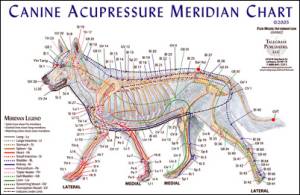
Canine Acupuncture

 Picture Source: http://www.lhasaoms.com

Just One More Pet: Acupuncture is a non-drug treatment modality that was developed about 5,000 years ago by the Chinese. By inserting tiny metal needles into specific points (called "acupoints") in the body, these doctors in the early days discovered that they could cause physiological changes, control and suppress pain, and stimulate organs or body parts.

Acupoints are not random but run along "meridians", which connect the entire body and are the pathways through which the "Qi" (pronounced as "chee"), or life force energy, circulates. Although the meridians run deep in the body, they surface at certain points on the skin. These acupoints are where the meridians can be accessed in order to create change in the associated organs or structures. According to Chinese acupuncture literature, there are 12 major meridians and 365 acupoints in the body.

In Eastern medicine, it is theorized that disorders or diseases occur when the "Qi" is out of balance. Acupuncture is one treatment option that can be used to rebalance the body and create harmony of Qi.

Acupuncture forms part of an ancient Chinese method of diagnosis and treatment known as Traditional Chinese Medicine (TCM). (Besides acupuncture, TCM includes the use of herbs, medical massage, food therapy, and other therapies to rebalance the "Qi".)

In acupuncture for dogs, the "acupoints" which veterinary acupuncturists use are sometimes called "transpositional points", the locations of which are transposed to canines from the human acupoints.

What Kind of Illnesses Can Be Treated by Acupuncture for Dogs?

Acupuncture is NOT appropriate for major acute diseases or emergencies (e.g. broken bones, overwhelming viral or bacterial infections).

Image Credit: CLINT EGBERT/XPRESS

However, it is a great alternative or complementary treatment for chronic diseases.

Acupuncture for dogs can be used to treat a variety of dog health conditions, mainly for pain relief (e.g. caused by osteoarthritis or injuries, etc.) and for treating dogs with neurological conditions, such as epilepsy. However, there are other dog health issues that can benefit from acupuncture as well.

You may want to consider canine acupuncture if your dog is suffering from any of the following problems:

  • Musculoskeletal Problems: osteoarthritis, hip dysplasia, chronic degenerative joint disease, intervertebral disc disease, tendonitis, sprains and muscle spasms.
  • Neurological Problems: epilepsy, stroke, deafness, coma, paralysis from disc disease.
  • Urinary Disorders: incontinence, cystitis, urine retention.
  • Gastrointestinal Problems: colitis, chronic idiopathic diarrhea or vomiting, gastroenteritis, rectal prolapse.
  • Respiratory Disorders: sinusitis, rhinitis, asthma, chronic coughing, pneumonia.
  • Systemic Inflammatory Conditions: chronic skin inflammation, allergies,lick granulomas.
In addition to the above, more and more veterinarians are now incorporating acupuncture as a part of canine cancer treatment protocol, either to lessen the side effects of chemotherapy, boost the immune system and improve quality of life, or to actually inhibit the growth of the cancerous tumor itself.

What Does an Acupuncture Treatment Involve?
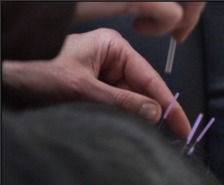
Dog Having Acupuncture Treatment

 Picture Source: http://www.fourpawsacupuncture.com

Each treatment is individualized to each dog patient. The acupoints selected, the number of needles, and the length of treatment all depend on the type and severity of the dog's condition.

Acupuncture for dogs is usually performed with small, tiny metal needles.

Most dogs do not mind (and do not even feel) the needles being inserted. Most of them seem to feel relaxed and comfortable. Some go right to sleep during treatment!

Generally speaking, one treatment lasts for 10 to 20 minutes. Most cases are seen once or twice a week at first, after which the number of treatments can be reduced depending on progress.

Besides metal needles, there are some variations that are proving quite successful as well, including:

  • Aquapuncture: This involves injecting the acupoints with a solution of vitamin B12 and saline. The solution puts pressure on and thus stimulates the point for a longer period of time and is a good technique to use if the dog does not want to stay still for 20 minutes.
  • Electroacupuncture: This involves connecting electrodes from a small battery-operated unit to the needles in different acupoints. A very gentle current is passed through the points and down the meridians. This type of treatment encourages the flow of energy, blood and lymph along the meridians and speeds up healing.
  • Laser Acupuncture. This involves the use of lasers rather than needles on acupoints and can be beneficial for dogs who absolutely don't want anything to do with needles.
  • Moxibustion: This is a very old Chinese treatment modality that involves heating the acupuncture needles with a dried herbal incense. It stimulates blood flow and can be an excellent treatment for older arthritic dogs with sore and stiff joints and tight muscles.

Safety and Effectiveness of Acupuncture for Dogs

Acupuncture for dogs is very safe IF the acupuncturist has received formal training, and most importantly, is licensed.

The effectiveness of canine acupuncture depends on a few factors, such as:

  • The acupuncturist's experience and technique.
  • The condition of the dog, e.g. how long the dog has been sick, and how serious the health problem being treated is.
  • The number, length and consistency of treatments.

Cat Getting Acupuncture - Image Credit: CLINT EGBERT/XPRESS

Occasionally a positive response may be seen after only one treatment, but more often than not, 4 to 6 treatments are needed. Sometimes it can take up to eight treatments before results can be seen.

According to Dr. Karen Becker (a holistic vet who also uses pet acupuncture in her practice), about 25% of patients have a very positive response to acupuncture, showing major improvement to the point of fully recovering from the condition. Another 50% of patients experience dramatic improvement but with some symptoms remaining; while 25% have no response at all.

If you look at these figures, it seems that acupuncture works quite well on a rather high percentage of patients. It is definitely worth giving this treatment modality a try.

(Our dogs have experienced acupuncture, acupressure, chiropractic care as well as having taken Chinese herbs and StemPets stem cell enhancers and Goji Juice. I have a cousin whose dog avoided back surgery because of acupuncture and both my husband and daughter have had successful experiences with acupuncture and other natural treatments.)

Where Can I Find Acupuncture Veterinary Professionals?

If you are interested in acupuncture for your dog, ask your holistic vet or access the websites of The American Academy of Veterinary Acupuncture or International Veterinary Acupuncture Society.

Here is an informative video in which Dr. Becker talks about pet acupuncture:

Give your pets a head start for a healthier, happier and longer life with StemPets and StemEquine – Stem Cell Enhancers for Pets

Related:

Alternative Dog Arthritis Treatment Series Part 1 – An Introduction

Dog and Cat Vaccines are Not Harmless Preventive Medicine

Laser Therapy is Good Medicine for Humans and Their Companion Animals… Any Animals

Natural Pet Remedies For Everyday Problems

Dog Massage? Isn’t Petting Enough?

Pet owners get the point of acupuncture

Friday, April 24, 2009

Feet And Health

Foot massage helps people feel better and is gaining a toehold in Southern California.  Pressure points in the feet are a large part of Reflexology and Acupuncture.  

So be kind to your feet and don't take them for granted.  Bad footware can be one of your worst health enemies.

A woman's feet

Monday, April 6, 2009

The Basics of Rheumatoid Arthritis

If you've recently been diagnosed with rheumatoid arthritis — or have a loved one who has — you're likely to have a host of questions. Let's start with the basics: risk factors, symptoms, and treatments. Rheumatoid arthritis, also known as RA, affects more than two million Americans; it's three times more likely in women than men and strikes patients of all ages and races. Symptoms range from mild to severe, with varying degrees of inflammation, swelling, pain, and damage in the joints. While there is no known cause, there are numerous treatments — from medications to lifestyle modifications — to help ease day-to-day living. 

The symptoms of RA vary from person to person and can mimic those of other inflammatory joint conditions, sometimes making the diagnosis difficult. So how can you know if the signs are pointing toward rheumatoid arthritis? One of the unique features of the disease is that it involves the small joints; for example, of the hands or the feet. And the pain is symmetrical — if it affects the first finger on the right hand, it usually will affect the same finger on the left side.

When it comes to diagnosing, treating, and managing your rheumatoid arthritis, experts say a team approach is your best bet. In addition to finding a reputable rheumatologist — your team leader — you may also need help with physical, occupational, and mental therapy to cope with the condition. Alternative and complementary treatments, like acupuncture, are also used to relieve pain. 

The chronic pain and swelling associated with rheumatoid arthritis is most often caused by inflammation. In RA, the body's immune system attacks the synovial membrane (the tissue that lines the joints), the tendons, or the ligaments. If not treated properly, the inflammation can affect your heart, increasing the risk of heart disease. Understanding the role of inflammation in rheumatoid arthritis will enable you to work with your doctors to find a suitable treatment. 

Rheumatoid arthritis is unpredictable: In some, the disease will remain active for a year or two. Others may have periods of flares, followed by remissions; and still others may live with the condition for years, resulting in significant and often permanent joint damage. While rheumatoid arthritis mostly begins in the smaller joints of the fingers, hands, and wrists, it can also affect hips, knees, ankles, feet, neck, shoulders and elbows. The good news: diagnosing and treating rheumatoid arthritis early can help slow — and even stop — the damage.

Millions of dollars are spent each year on prescription drug advertisements. Restricting the advertising of prescription medication from TV and every magazine in the grocery store would reduce the cost of medications. 

Source: everydayhealth 

Many conditions that the AMA pushes drugs for can be helped with natural or holistic remedies and even cures.


Monday, December 1, 2008

7 Steps to Controlling Crohn's Disease

For people with digestive issues, life tends to revolve around what you can and can't eat and how far away from the nearest bathroom you dare to venture. That's certainly the case with Crohn's disease, which along with ulcerative colitis is one of the two most common forms of inflammatory bowel disease. Symptoms include wrenching stomach pain soon after eating (typically in the lower right side) and relentless diarrhea. It's relatively rare, but a new research finding suggests that people with Crohn's are seven times more apt to carry bacteria that cause a related gastrointestinal disease in cattle. The bacteria -- Mycobacterium avium subspecies paratuberculosis or MAP -- has been found in milk in American supermarkets, and some studies have found it in meat and cheese, raising the possibility that it may be passed up the food chain to people.

IT'S GUT WRENCHING

Whether or not bacteria such as MAP cause disease in the intestinal tract is largely a matter of threshold, explains Daily Health News contributing editor Andrew L. Rubman, ND. A person with a healthy, intact digestive tract will likely be able to resist infectious bacteria. But the large intestine is the body's center of immunity, and when the digestive tissue becomes damaged and inflamed, it becomes more susceptible to invasive microorganisms, be it MAP or the increasingly infectious species of E. coli, Salmonella, and other causes of food poisoning. If the balance of healthy versus harmful bacteria is disrupted and/or tissue is damaged, people become less able to resist disease and it becomes more difficult to treat. Dr. Rubman and I talked more about Crohn's disease in general, and about natural support for people with this problem.

Little is known about the causes of Crohn's disease, although family history, an overactive immune system and inflammation response, and environmental triggers are all believed to play a role. It differs from ulcerative colitis (which causes similar symptoms) because inflammation is deeper in the intestinal wall and also potentially affects the entire gastrointestinal tract from mouth to anus. Ulcerative colitis primarily affects the colon and small intestine. There's no known cure for Crohn's and remedies offered by conventional medicine are riddled with problems. In September 2008, the FDA ordered stronger warnings for common Crohn's drugs -- infliximab (Remicade), adalimumab (Humira) and certolizumab pegol (Cimzia) -- after an association with the risk of developing fungal and yeast infections such as Candidiasis was found. Because conventional treatments have significant side effects -- even when they work, and they don't always -- more than half of people with Crohn's disease turn to natural therapies.

NATURAL SOLUTIONS

Since Crohn's disease affects different people in different ways, Dr. Rubman individualizes treatment for each patient, working in collaboration with his/her gastroenterologist -- a strategy he suggests for all Crohn's patients since a combination of natural and mainstream treatments seems to be most effective.

Dr. Rubman's natural solutions include...

  • Probiotics. Health requires maintaining a balance between good and bad bacteria in the digestive tract. Poor diet, stress or a digestive disorder such as Crohn's can result in a takeover of the system by "bad" bacteria, resulting in symptoms such as diarrhea and gas. To restore a proper floral balance, Dr. Rubman frequently prescribes a seven- to 10-day course of a probiotic supplement composed of Lactobacillus acidophilus and Bifidobacterium bifidus. However, he notes that it is important to have a stool test before treatment, in order to ensure the proper probiotic formula is administered.

  • Fish oil. A small British study found that fish oil taken with antioxidants may help reduce the inflammation associated with Crohn's disease. Eat fatty fish such as salmon, mackerel or sardines two or three times a week. In addition, Dr. Rubman often prescribes one or more grams of an EPA-DHA fish oil capsule or liquid daily.

  • Vitamin B-12. When the bowel has been damaged by Crohn's disease, it may no longer effectively absorb B-12. If you are tired and rundown, ask your doctor to test you. Dr. Rubman prefers to prescribe sublingual B-12 rather than B-12 shots. "It's as effective, less expensive and certainly more comfortable," he notes.

  • Acupuncture. Acupuncture has traditionally been used to treat inflammatory bowel disease in China and is meeting with increasing mainstream acceptance in the US. A small German study suggests that acupuncture may help improve quality of life and general well-being in people with Crohn's disease by modulating symptoms and may even result in a small decrease in inflammatory markers in the blood. Find an acupuncturist in your area at the Web site of the American Association of Acupuncture & Oriental Medicine at http://www.aaaomonline.org/45000.asp.

  • Focus on whole foods, fresh fruits and vegetables. A diet that contains lots of processed and fast foods -- like white bread, sugary desserts, etc. -- stresses the bowel and may trigger inflammation and worsen symptoms of Crohn's disease. Disease-causing microorganisms thrive on foods like these. Many people with Crohn's report that they feel better when they eliminate or significantly cut back on processed foods and place a greater emphasis on whole foods, fresh fruits and vegetables and moderate amounts of protein. Avoid milk and dairy products as well as trans fats, as they can also irritate the intestinal track.

  • Decompress. Many people with Crohn's find that their symptoms worsen during stressful periods. If you find this to be the case, take steps to effectively manage stress. Do whatever works best for you -- whether that is yoga or meditation or dancing or tennis.

  • Stay away from colonics. Many people are tempted to turn to this "quick fix," but Dr. Rubman warns that colonics can backfire and worsen symptoms. The large intestine requires a healthy balance of microorganisms to function properly, and colonics indiscriminately wipe out the good with the bad under the thinly supported premise of detoxification.

To feel more in control of your disease and your life, learn more about Crohn's and connect with others who are going through the same things you are. Join message boards, chats, blogs and support groups (online or offline) at Web sites such as www.ccfa.org, or those listed at http://www.crohns-disease-and-stress.com/support.html and http://ibdcrohns.about.com/od/onlinesupport/a/supportgroups.htm.

Acknowledging that a diagnosis of Crohn's disease is never good news, Dr. Rubman urges those who have the problem to be optimistic -- it can often be controlled without drastic drugs or a draconian diet, and quality of life need not suffer.

Source(s):

Andrew L. Rubman, ND, director, Southbury Clinic for Traditional Medicines, Southbury, Connecticut.

American Society for Microbiology, http://www.asm.org/