Showing posts with label HEALTH CZAR. Show all posts

Thursday, June 18, 2009

Media Blasts Oprah for Supporting Alternative Medicine

This is just a preview of what is to come in the world of government-run healthcare overseen by the ‘Health Czar’. Have you ever seen a scarier more unflattering photo of Oprah?? Even being Obama’s Muse hasn’t helped her from attacks in this arena which brings us to the obvious question… how will they treat the rest of us????
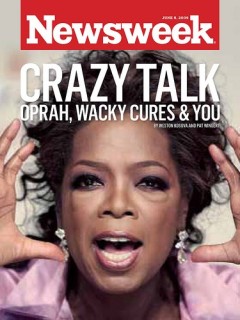
oprah, oprah winfrey, suzanne somers, cures, vaccines, hpv, bioidentical hormones, hormones

In January of this year, Oprah Winfrey invited Suzanne Somers on her show to talk about health tips. The 62-year-old actress uses bio-identical estrogen cream and progesterone on her other arm two weeks a month.

According to Somers, the bio-identical hormones are identical to the ones created by the human body, unlike conventional hormones, which are made from mare’s urine.

The result has been a media firestorm condemning both Somers and Oprah, including the hit piece in Newsweek linked below. The authors of the piece, Weston Kosova and Pat Wingert, argue that bio-identical hormones are just as synthetic as conventional hormones -- although they don’t much discuss the fact that conventional hormones are actually different from the 17-beta-estradiol made by your body, while the bio-identical hormones are 17-beta-estradiol itself.

The real reason for the attacks on bio-identical hormones?
As Somers points out, many doctors, scientists and media figures make a good deal of money off of the pharmaceutical industry.
And one thing you won’t see mentioned in the Newsweek article is the fact that Pat Wingert is the co-author of a pharmaceutically biased book on hormones and menopause, and that Newsweek is heavily funded by pharmaceutical companies.

This resembles an incident a few years ago when the cattle industry actually sued Oprah Winfrey just for talking about Mad Cow Disease.

--------------------

Dr. Mercola''s CommentsDr. Mercola's Comments:

The authors of this Newsweek article clearly had a bone to pick with alternative medicine of all kinds. Newsweek does not just ridicule Suzanne Somers for her endorsement of bioidentical hormones, they blast Jenny McCarthy’s stance on vaccine adjuvants being a culprit in causing autism, and even criticize Dr. Christiane Northrup for warning Oprah’s audience of the HPV vaccine and recommending dietary and lifestyle changes to enhance their natural immunity instead. In their article they counter this advice with the statement,

“It is true that of the millions of women who have received the vaccine, 32 have died in the days or weeks afterward. But in each case, the Centers for Disease Control and the Food and Drug Administration investigated the deaths and found that they were coincidental and were not related to the shot.”

This is the kind of blanket dismissal one could only expect from those who have not bothered to do any serious investigations of their own on a topic.

And as for the idea that your thoughts and beliefs may have the slightest to do with your physical health? Ridiculous, according to these two authors.

Apparently they’ve never heard of epigenetics.

Dr. Bruce Lipton, a forerunner in the field of epigenetics and The New Biology, has carefully documented how emotions are one of the most important factors in your health. According to his research, the controlling factor in deciding what your genes express -- in deciding how your future health will play out -- is not your genes, your family history or even the strength of your immune system. It is YOUR MIND.

These are the kind of myopic viewpoints you have to contend with when dealing with conventional medicine, big pharma, and their mouthpieces. But that doesn’t mean they’re any more right, or any less ridiculous, than the people and alternative strategies they try to dismiss with little more than parroted catch-phrases.

Is an Organized Smear Campaign Underway?

Now, Oprah has been targeted by big industries before, such as when she dared talk about Mad Cow disease on her show – a topic that brought her a lawsuit by the meat industry.

But Oprah is not the only one in the crosshairs of what can only be described as an organized smear campaign against alternative medicine.

There’s a disturbing trend taking shape, with a recent onslaught of media articles seeking to put a bad spin on various complementary, alternative medicine and natural medicine options. The misinformation campaign is shifting into higher gear. Is it a very deliberate and concerted media strategy?

Could there be any coincidence that this is all occurring just as the government is preparing health care reform? What would happen If much of alternative medicine was determined illegal?
Robert Zieve, MD, who gave me many of these links, believes that it smells like a witch hunt.

Recent headlines include:

-----------------

Dr. Deepak Chopra responded to the Oprah bashing with this Alternet article, where he states,

"The criticism the medical establishment is directing at Oprah through this article only exposes their own frustration in having squandered their credibility with the public. They hope that if they can successfully attack Oprah's immense credibility, then they can magically get some of that credibility back for themselves. However, if people still trusted the health care industry to act in their best interest the way they did decades ago, then it would be unnecessary to brand Oprah for "crazy talk" simply because she occasionally provides a forum for ideas outside of mainstream medicine.
The medical profession is burdened with a host of problems that Oprah addresses with more candor and force than the AMA. She promotes wellness and prevention, two areas that drastically need improvement. She brings up creative solutions to problems that medical science is baffled by, such as the healing response itself and the role of subjectivity in patient response. These are issues that few M.D.s are willing to explore, yet she has done so for decades.
... What this tells me is that medicine needs Oprah and other patient advocates who are demanding that official medicine heal itself. To accuse them of lacking medical credibility is a red herring. Patients aren't supposed to know more than their physicians. The fact that they often do, at least insofar as alternative treatment goes, is both a sign of hope and cause for distress."

--------------

Is Hormone Replacement Therapy (HRT) Dangerous?

It has been overwhelmingly proven that conventional hormone replacement therapy (HRT), which science, as little as ten years ago, massively touted, has now been shown to be very dangerous. So there’s no argument there.

Studies looking at the long-term usage of synthetic estrogen have revealed many negative side effects, including heart attacks, strokes, blood clots, high blood pressure and vaginal bleeding. But perhaps most strikingly, just one year after millions of women quit taking hormone replacement therapy, incidents of breast cancer fell dramatically—by 7 percent!

The following prescriptions now carry black box warnings and need to be avoided:

  1. Premarin. Premarin is an estrogen extracted from Pregnant Mare’s Urine. We now know it is associated with an increased risk of heart disease.

  2. Estrogen Therapy. Estrogen, which is extracted from Premarin, was effective in combating some menopausal symptoms but proved to have serious, negative side effects, such as the increased risk of breast cancer and an increase in insulin levels.

  3. Provera. This drug is a progestin or a synthetic form of progesterone, which probably makes it even more toxic than Premarin. Its well-documented, negative side effects include blood clotting.

But to lump bioidentical hormones in with the rest, and attributing the same dangers to them as their synthetic versions is likely unjustified.

The Truth About Bioidentical Hormones

Bioidenticals, unlike synthetic hormones or natural ones from animals, are natural hormones that are bioidentical to your own.

The bioidentical hormone that is prescribed 80 percent of the time is estriol. It’s natural -- not a drug -- and you get it at compounding pharmacies.

And, although the article above states there are no conclusive clinical studies showing that bioidenticals are any less risky than synthetic hormones, the FDA also admits it’s unaware of any adverse effects of bioidentical hormones.

The fact is that estriol has been used safely for decades, and I believe it’s particularly useful when your ovaries have been removed or you’ve had a hysterectomy. Dr. Johathan Wright, who I’ve interviewed for my Expert Inner Circle program, is a pioneer in bioidenticals, and you can see what he has to say about their value in this short video.

The crux is that natural estriol can’t be patented, so there are no major profits to be made, and hence it gets little attention.

The FDA Effectively “Banned” Estriol, But May Approve an Unsafe Prescription Instead

Although not an FDA-approved drug, the FDA has proposed to allow estriol-containing prescriptions to be filled if they’re accompanied by an Investigational New Drug (IND) application, if and when a physician believes it’s in his patient’s best interest.
However, the IND places a significant financial burden on physicians, most notably by requiring them to submit applications to an Institutional Review Boards (IRB).
This process effectively bans most prescriptions for estriol.

Meanwhile, the FDA is in the process of considering the approval of Trimesta, a knock-off of natural estriol. Clearly, the FDA has never been concerned with estriol being used in an unsafe manner -- they were concerned that their drug-company buddies were not getting their fair share of the profits.
Aside from the obvious bias, this is even more troubling because Trimesta may not be a safe version of natural estriol.
According to Dr. Jonathan Wright, the problem with Trimesta is that it’s taken in pill form. Taking this hormone orally is known to be a greater risk factor for endometrial cancer than taking the hormone transdermally (through your skin).
As Dr. Wright said:

"...When the inevitable findings of excessive endometrial cancer are ultimately disclosed, you can bet the blame will fall on the bio-identical hormone itself -- and not on the oral route of administration, which is known to be more risky."

Do You Need Hormone Replacement?

The issue of hormone replacement generally does not come up until the classic symptoms of menopause strike. Menopause occurs when you stop producing estrogen and progesterone, and your periods cease. This can occur naturally, or be induced by a hysterectomy or by having your ovaries removed.

Typical menopausal symptoms include:

  • Hot Flashes

  • Vaginal Dryness

  • Menstrual Irregularities

  • Depression

  • Mood Swings

  • Weight Gain

Short- and long-term strategies can help you control these symptoms. The best approaches are preventive and involve diet and exercise. But in some cases where diet and lifestyle changes are not enough to counteract the more troublesome symptoms of menopause, bioidentical hormones may be able to help.

However, you’ll want to make sure you get your hormonal levels checked properly before embarking on any kind of hormone supplementation program.

I recommend you review Michael Borkin’s article, Women’s Hormones, for more in-depth information about the many variables involved in your sexual and overall health.

Oftentimes the cumulative physiological effects of stress can cause disruption of the natural rhythms and balancing mechanisms of your hormones, which can compromise your overall health as well as your sexual and reproductive health.

Both estrogen and progesterone are necessary in the female cycle, and their balance is key for optimal health. Many women have an imbalance of these hormones, regardless of their age. And if you have insufficient levels of progesterone to counter excessive estrogen, this imbalance can be further exacerbated by chronic stress.

So your answer might not necessarily lie in using hormones, but rather addressing your stress levels so that your body can normalize your hormone levels naturally.

Alternatives to Hormone Replacement

Prevention is always the best cure, and diet and exercise are as powerful in the prevention of future menopausal symptoms as for most other health concerns. Eating right for your nutritional type and exercising regularly can go a long way to keeping your hormones balanced as you age.

Consuming plenty of phytoestrogens (plant-estrogens) such as licorice and alfalfa before menopause can also help moderate your day-to-day estrogen levels so that when menopause comes, the drop won’t be so dramatic.

Beware, however, that soy is not a good option. In fact, non-fermented soy products are likely to damage your health even further.

You’ll also want to make sure your vitamin D levels are optimized. Vitamin D has gotten the short shrift, thanks to fears abouttanning and skin cancer, but Vitamin D is a must for gene regulation and optimal health. For more information, I recommend you watch my one-hour video lecture on this essential nutrient.

As for supplements, these have been shown to be beneficial in tempering symptoms of menopause:

  • Polyphenols. Certain polyphenols have been shown to have some HRT-like benefits without the drawbacks, and are associated with a lowered risk of heart disease. Royal Macha seems to be an amazing adaptogenic herbal solution for menopause that has helped many women. Be sure to avoid the inexpensive ones, as they typically don’t work. Get the real deal from Peru.

  • Omega 3 fats. You’ll also want to get plenty of omega-3 fats. A high quality animal-based omega-3 supplement, such as krill oil, can be far more effective and beneficial than fish oil.

  • Black Cohosh may help regulate body temperature and hot flashes.

Implementing these lifestyle changes will help control symptoms of menopause, such as hot flashes, without resorting to hormone replacement.

Source: Mercola.com

I myself have gone to Suzanne Somers’ Doctor’s Clinic and used the bio-identical hormones. I never felt better and there are no side affects. And for anyone who has doubts… I would say just look at Suzanne and compare her to just about any other 62-year-old woman. If the positive affects aren’t obvious… get glasses! -Ask Marion~

Posted: Ask Marion – True Health Is True Wealth

Related Resources:

Tuesday, June 16, 2009

Doctors Boo Obama In Chicago… Analysis: Tough Road Ahead


WASHINGTON (AP) — Barack Obama isn't used to hearing boos.

For all the young president's popularity, the response he got Monday from doctors at an American Medical Association meeting was a sign his road is only going to get rockier as he tries to sell his plan to overhaul the nation's health care system.

The boos erupted when Obama told the doctors in Chicago he wouldn't try to help them win their top legislative priority — limits on jury damages in medical malpractice cases.

But what could they expect? If Obama announced support for malpractice limits, that would set trial lawyers and unions — major supporters of Democratic candidates — on the attack. Not to mention consumer groups.

Every other group in the health care debate has a wish list and a top priority. Insurers don't want competition from the government. Employers don't want to be told they have to offer medical coverage to their workers. Hospitals want to stave off Medicare cuts. Drug companies want to charge what the market will bear.

Obama can't give all of them what they want. Instead, he's got to figure what's just enough to keep as many groups as possible on board — without alienating others. It's a fine line for him — and sometimes for them.

"It's a coalition issue," said Robert Blendon of the Harvard School of Public Health, an expert on public opinion and the politics of health care. "No major group is able by itself to sink health reform. But if numbers of them come together for different reasons, it could really hurt the direction the president wants to go in."

The doctors were only Obama's first house call. He'll be making his case to the other groups — and to the nation at large — in an increasingly energetic campaign to get a bill passed by the end of his first year in office.

AMA insiders shouldn't have been surprised by Obama's upfront refusal to consider malpractice caps.

The group couldn't get that idea passed by a Republican Congress and president a few years ago. Some states have such curbs, but anyone who can count votes knows the chances for national limits are slim to none with Democrats in charge of Congress.

Instead, Obama left the door open to some kind of compromise on malpractice.

The president said he's willing to explore alternatives to taking doctors to court. In the past, he supported special programs in which hospitals and doctors are encouraged to admit mistakes, correct them and offer compensation. Studies have shown the approach can work, because doctors' refusal to acknowledge mistakes is one reason many families file suit.

Doctors have special reasons to be wary of the president's plans to overhaul the health care system.

Not long ago, doctors' decisions were rarely questioned. Now they are being blamed for a big part of the wasteful spending in the nation's $2.5 trillion health care system. Studies have shown that as much as 30 cents of the U.S. health care dollar may be going for tests and procedures that are of little or no value to patients.

The Obama administration has cited such findings as evidence that the system is broken. Since doctors are the ones responsible for ordering tests and procedures, health care costs cannot be brought under control unless they change their decision-making habits.

"Change is scary," said Dartmouth University's Dr. Elliott Fisher, a doctor turned costs researcher. "I think there is a fear of loss of autonomy, that someone is going to tell you what to do." Fisher collaborated on research that showed wild differences in health care spending around the country — and no signs of better health in the high-cost areas.

But Obama did not blame the doctors. Instead, he tried to woo them, much as he has done with recalcitrant foreign leaders.

"It's the equivalent of international diplomacy. He's got to make them feel like it's possible to have dialogue about what the future looks like," said Blendon. "I think he's starting out with the AMA, but before the summer's over he's going to reach out to a lot of the other groups."

Obama assured the doctors that his plan would provide them with objective information on what treatments work best, with new computerized tools to better manage their patient case loads, and with support for harried solo practitioners to form networks.

He promised that Washington would not dictate clinical decisions. And he asked the doctors to imagine a world in which nearly every patient has insurance coverage and they can devote their full attention to the practice of medicine.

"You did not enter this profession to be bean-counters and paper-pushers," Obama said. "You entered this profession to be healers — and that's what our health care system should let you be."

That line got him an ovation.

By RICARDO ALONSO-ZALDIVAR – 2 hours ago - reports on health care policy for The Associated Press.

Obama needs to take time and give Congress and the American People time to examine all the options and do the needed research about American Healthcare Reform, not push through another nightmare (costing 1 Trillion Dollars over 10-years), like the TARP and Omnibus Bills without reading or researching with the gun of immediacy to all our heads. Obama also needs to stop rewarding the organized labor, who spent $80 Million dollars getting Obama and the Democrats elected. Doing something just to fulfill your uninformed campaign promises is not a good enough reason to spend another Trillion Dollars and to do this wrong!! This time around is everyone's job to get this right and to stand up to the Obama Administration and Congress to get it right, or let it go until we have our ducks in a row and can afford the needed decisions. - Ask/Marion – Daily Thought Pad

--------------------

OBAMA BOOED BY DOCTORS IN ILLINOIS TODAY

Seems pretty funny to me that doctors booed the Obama and it was told by CNN today and it's not on the internet yet. Doctors in Illinois didn't like what he had to say and it was big on CNN. Thought I'd look into the Liberal side and see what was happening.

Oh, and what he meant about having it costing less as it goes along - is the Government going to make sure the elderly get their coverage or operations or whether they will tell them to go home and die is that what they mean about costing less as it goes along. Makes one wonder, doesn't it?

Seems a lot of doctors feel this will be offensive to them - and NO CAPS on the way people sue doctors looks to me that less men or women will want to be doctors in the future.

By: Teatime1 on AARP.org/blog

Source: Knowledge Creates Power

Posted: True Health Is True Wealth

Related Resources and Posts:

Sunday, June 14, 2009

Safeway's Health Care Program Gets Attention

My "Citizens, heal thyselves" item Wednesday on the responsibility of individuals to reform their own health care prompted inquiries from readers wanting to know more about what I referred to as Safeway Inc.'s stick-and-carrot approach.

Based on the belief that rising health care costs are mostly driven by behavior (smoking, eating poorly, not checking your cholesterol, etc.), the Pleasanton company's Healthy Measures program uses screenings and questionnaires and offers access to prevention-related facilities like fitness clubs, along with advice and referrals to help improve behavior.

The carrot: discounted premiums or refunds for passing the screenings or showing improvement. The stick: higher premiums for failing tests and no measurable improvement in behavior. "Holding people accountable gives them incentives," said Ken Shachmut, the Safeway senior vice president who oversees the health program.

It has also kept Safeway's health care costs, amounting to $1 billion or so a year, mostly flat over the past five years, an achievement few other companies can claim, said Shachmut, who admits battling his own weight problems.

The voluntary program now covers 25,000 employees, or about three-quarters of Safeway's nonunion workforce. Elements of the program are included in contracts covering Safeway's union workers, who fall outside the company's self-insurance plan. Shachmut said most of its 200,000 union workers should be participating in the program within the next six years. The main thing that employees covered by the program seem to want, said Shachmut, is "more discounts."

In the meantime, Safeway is spreading its consumer-driven approach via the recently formed Coalition to Advance Healthcare Reform (coalition4healthcare.org), founded by company CEO Steve Burd. The 63 corporate members include Bay Area companies McKesson Corp., PG&E, Clorox Co., and Kaiser Permanente.

"This is the silver lining in the cloud of rising health costs. If we can design incentives in these core areas, we have a fighting chance of getting our arms around it," Shachmut said.

More details: You can find more on Safeway's program at links.sfgate.com/ZHIV. A Chronicle feature that ran earlier this year, is online at sfgate.com/ZHJB. Safeway CEO Burd penned on op-ed on the subject in Friday's Wall Street Journal, available at links.sfgate.com/ZHIX.

The Journal also has a news story in Friday's edition questioning the efficacy of prevention programs (links.sfgate.com/ZHIY). On the other hand, a 2007 nationwide survey of 355 human resources and health benefits managers suggested a strong correlation between wellness programs and increased productivity and market and shareholder value. (links.sfgate.com/ZHIZ).

-------

How Safeway Is Cutting Healthcare Costs


Effective health-care reform must meet two objectives: 1) It must secure coverage for all Americans, and 2) it must dramatically lower the cost of health care. Health-care spending has outpaced the rise in all other consumer spending by nearly a factor of three since 1980, increasing to 18% of GDP in 2009 from 9% of GDP. This disturbing trend will not change regardless of who pays these costs -- government or the private sector -- unless we can find a way to improve the health of our citizens. Failure to do so will make American companies less competitive in the global marketplace, increase taxes, and undermine our economy.

At Safeway we believe that well-designed health-care reform, utilizing market-based solutions, can ultimately reduce our nation's health-care bill by 40%. The key to achieving these savings is health-care plans that reward healthy behavior. As a self-insured employer, Safeway designed just such a plan in 2005 and has made continuous improvements each year. The results have been remarkable. During this four-year period, we have kept our per capita health-care costs flat (that includes both the employee and the employer portion), while most American companies' costs have increased 38% over the same four years.

[Steven A. Burd]

Martin Kozlowski

Safeway's plan capitalizes on two key insights gained in 2005. The first is that 70% of all health-care costs are the direct result of behavior. The second insight, which is well understood by the providers of health care, is that 74% of all costs are confined to four chronic conditions (cardiovascular disease, cancer, diabetes and obesity). Furthermore, 80% of cardiovascular disease and diabetes is preventable, 60% of cancers are preventable, and more than 90% of obesity is preventable.

As much as we would like to take credit for being a health-care innovator, Safeway has done nothing more than borrow from the well-tested automobile insurance model. For decades, driving behavior has been correlated with accident risk and has therefore translated into premium differences among drivers. Stated somewhat differently, the auto-insurance industry has long recognized the role of personal responsibility. As a result, bad behaviors (like speeding, tickets for failure to follow the rules of the road, and frequency of accidents) are considered when establishing insurance premiums. Bad driver premiums are not subsidized by the good driver premiums.

As with most employers, Safeway's employees pay a portion of their own health care through premiums, co-pays and deductibles. The big difference between Safeway and most employers is that we have pronounced differences in premiums that reflect each covered member's behaviors. Our plan utilizes a provision in the 1996 Health Insurance Portability and Accountability Act that permits employers to differentiate premiums based on behaviors. Currently we are focused on tobacco usage, healthy weight, blood pressure and cholesterol levels.

Safeway's Healthy Measures program is completely voluntary and currently covers 74% of the insured nonunion work force. Employees are tested for the four measures cited above and receive premium discounts off a "base level" premium for each test they pass. Data is collected by outside parties and not shared with company management. If they pass all four tests, annual premiums are reduced $780 for individuals and $1,560 for families. Should they fail any or all tests, they can be tested again in 12 months. If they pass or have made appropriate progress on something like obesity, the company provides a refund equal to the premium differences established at the beginning of the plan year.

At Safeway, we are building a culture of health and fitness. The numbers speak for themselves. Our obesity and smoking rates are roughly 70% of the national average and our health-care costs for four years have been held constant. When surveyed, 78% of our employees rated our plan good, very good or excellent. In addition, 76% asked for more financial incentives to reward healthy behaviors. We have heard from dozens of employees who lost weight, lowered their blood-pressure and cholesterol levels, and are enjoying better health because of this program. Many discovered for the first time that they have high blood pressure, and others have been told by their doctor that they have added years to their life.

Today, we are constrained by current laws from increasing these incentives. We reward plan members $312 per year for not using tobacco, yet the annual cost of insuring a tobacco user is $1,400. Reform legislation needs to raise the federal legal limits so that incentives can better match the true incremental benefit of not engaging in these unhealthy behaviors. If these limits are appropriately increased, I am confident Safeway's per capita health-care costs will decline for at least another five years as our work force becomes healthier.

The Healthy Measures program currently applies only to our nonunion work force. While we have numerous health and wellness provisions in our union contracts, we are working with union leaders like Joe Hansen of the United Food and Commercial Workers to incorporate healthy measures provisions in our union work force as well.

While comprehensive health-care reform needs to address a number of other key issues, we believe that personal responsibility and financial incentives are the path to a healthier America. By our calculation, if the nation had adopted our approach in 2005, the nation's direct health-care bill would be $550 billion less than it is today. This is almost four times the $150 billion that most experts estimate to be the cost of covering today's 47 million uninsured. The implication is that we can achieve health-care reform with universal coverage and declining per capita health-care costs.

There is a very real possibility that we will see positive transformational health-care reform in the near future. I am encouraged by the effort I see on Capitol Hill, particularly the bipartisan effort in the Senate. While some tough issues remain, if we continue to work in a bipartisan manner I believe we will resolve these issues successfully and find agreement on meaningful reform.

By STEVEN A. BURD - Mr. Burd is CEO of Safeway Inc., and the founder of the Coalition to Advance Healthcare Reform.

Steven Burd has testified in Washington D.C. and appeared on Fox News’ Huckabee. He has caught the attention of people from Senator Barbara Boxer to Rush Limbaugh; definitely opposite ends of the spectrum!! This is a great alternative to $600 Million in additional taxes and $400 Million in cuts to Medicare and Medicaid!!

Source: Daily Thought Pad

Posted: True Health Is True Wealth

Related Resources and Posts:

Thursday, June 11, 2009

How to Stop Socialized Health Care

Five arguments Republicans must make…

It was a sobering breakfast with one of the smartest Republicans on Capitol Hill. We can fix a lot of bad stuff President Barack Obama might do, he told me. But if Mr. Obama signs into law a "public option," government-run insurance program as part of health-care reform we won't be able to undo the damage.

I'd go the Republican member of Congress one further: If Democrats enact a public-option health-insurance program, America is on the way to becoming a European-style welfare state. To prevent this from happening, there are five arguments Republicans must make.

[Karl Rove]Getty Images

The first is it's unnecessary. Advocates say a government-run insurance program is needed to provide competition for private health insurance. But 1,300 companies sell health insurance plans. That's competition enough. The results of robust private competition to provide the Medicare drug benefit underscore this. When it was approved, the Congressional Budget Office estimated it would cost $74 billion a year by 2008. Nearly 100 providers deliver the drug benefit, competing on better benefits, more choices, and lower prices. So the actual cost was $44 billion in 2008 -- nearly 41% less than predicted. No government plan was needed to guarantee competition's benefits.

Second, a public option will undercut private insurers and pass the tab to taxpayers and health providers just as it does in existing government-run programs. For example, Medicare pays hospitals 71% and doctors 81% of what private insurers pay.

Who covers the rest? Government passes the bill for the outstanding balance to providers and families not covered by government programs. This cost-shifting amounts to a forced subsidy. Families pay about $1,800 more a year for someone else's health care as a result, according to a recent study by Milliman Inc. It's also why many doctors limit how many Medicare patients they take: They can afford only so much charity care.

Fixing prices at less than market rates will continue under any public option. Sen. Edward Kennedy's proposal, for example, has Washington paying providers what Medicare does plus 10%. That will lead to health providers offering less care.

Third, government-run health insurance would crater the private insurance market, forcing most Americans onto the government plan. The Lewin Group estimates 70% of people with private insurance -- 120 million Americans -- will quickly lose what they now get from private companies and be forced onto the government-run rolls as businesses decide it is more cost-effective for them to drop coverage. They'd be happy to shift some of the expense -- and all of the administration headaches -- to Washington. And once the private insurance market has been dismantled it will be gone.

Fourth, the public option is far too expensive. The cost of Medicare -- the purest form of a government-run "public choice" for seniors -- will start exceeding its payroll-tax "trust fund" in 2017. The Obama administration estimates its health reforms will cost as much as $1.5 trillion over the next 10 years. It is no coincidence the Obama budget nearly triples the national debt over that same period.

Medicare and Medicaid cost much more than estimated when they were adopted. One reason is there's no competition for these government-run insurance programs. In the same way, Americans can expect a public option to cost far more than the Obama administration's rosy estimates.

Fifth, the public option puts government firmly in the middle of the relationship between patients and their doctors. If you think insurance companies are bad, imagine what happens when government is the insurance carrier, with little or no competition and no concern you'll change to another company.

In other words, the public option is just phony. It's a bait-and-switch tactic meant to reassure people that the president's goals are less radical than they are. Mr. Obama's real aim, as some candid Democrats admit, is a single-payer, government-run health-care system.

Health care desperately needs far-reaching reforms that put patients and their doctors in charge, bring the benefits of competition and market forces to bear, and ensure access to affordable and portable health care for every American. Republicans have plans to achieve this, and they must make their case for reform in every available forum.

Defeating the public option should be a top priority for the GOP this year. Otherwise, our nation will be changed in damaging ways almost impossible to reverse.

By Karl Rove

About Karl Rove - Karl Rove served as Senior Advisor to President George W. Bush from 2000–2007 and Deputy Chief of Staff from 2004–2007. At the White House he oversaw the Offices of Strategic Initiatives, Political Affairs, Public Liaison, and Intergovernmental Affairs and was Deputy Chief of Staff for Policy, coordinating the White House policy making process.

Before Karl became known as "The Architect" of President Bush's 2000 and 2004 campaigns, he was president of Karl Rove + Company, an Austin-based public affairs firm that worked for Republican candidates, nonpartisan causes, and nonprofit groups. His clients included over 75 Republican U.S. Senate, Congressional and gubernatorial candidates in 24 states, as well as the Moderate Party of Sweden.

Karl writes a weekly op-ed for The Wall Street Journal, is a Newsweek columnist and is now writing a book to be published by Simon & Schuster. Email the author at Karl@Rove.com or visit him on the web at Rove.com.

Or, you can send him a Tweet @karlrove.

Related Resources and Posts:

Posted: True Health Is True Wealth

Democrats Set to Rush Through Government-Run Healthcare


Senate Democrats announced plans Tuesday to begin committee work next week on health care legislation designed to assure coverage for millions of Americans who now lack it, a key objective of the Obama administration.

IBut Sen. Chris Dodd, D-Conn., said the measure that goes before the Senate Health, Education, Labor and Pensions Committee would contain gaps rather than include several controversial features included in a draft that circulated only last week. Among them are a proposed government-run insurance plan to compete with private companies -- vociferously opposed by nearly all Republicans -- and a requirement for employers to pay a penalty if they fail to provide coverage for their workforce.

Dodd said he would preside over the sessions in the place of Sen. Edward M. Kennedy, D-Mass., the committee chairman, who was diagnosed more than a year ago with brain cancer and has not been in the Capitol in recent days. The committee work will take about three weeks, he said.

Sen. Mike Enzi, R-Wyo., the top Republican on the health committee, responded dismissively to Dodd's comments about leaving gaps for GOP lawmakers to debate.

He said Democrats did so "because they know we're not going to like what they've written and they don't want us to have any time to comment," he said in an interview.

Enzi also said Democrats would have behaved differently if Kennedy were present.

"I've never worked a process on any bill with him that went like this where there was absolutely no input taken from the other party," Enzi said. "And I never treated him that way either."

"What the question is, is Senator Dodd in charge or is he just running the meeting, and we don't know yet," Enzi said.

Dodd's announcement signaled a quickening pace of activity on health care legislation, and came as senior House Democrats disclosed they are considering a new tax on employer-provided health benefits to help pay for expanding coverage to the 50 million uninsured. President Barack Obama opposed a tax on benefits during last year's campaign and aired numerous television commercials criticizing the idea when his Republican rival, Sen. John McCain, proposed it.

Several officials also said an outline of emerging legislation in the House envisions a requirement for all individuals to purchase affordable coverage, with an unspecified penalty for those who refuse and a waiver for those who cannot cover the cost.

"There's no sense having a mandate unless you have a contribution," Rep. Charles Rangel, D-N.Y., chairman of the House Ways and Means Committee, said Monday. He referred to the suggestion as "play or pay."

Rangel and other senior Democrats arranged to bring members of the party's rank and file up to date at a midday session Tuesday on the effort to draft health care legislation at the top of President Barack Obama's agenda.

The officials spoke on condition of anonymity, saying they did not want to pre-empt the presentation to rank-and-file Democrats on Tuesday.

Under an outline of the House Democratic plan, individuals and small businesses would be able to purchase coverage from a "health exchange" and the government would require all plans to contain a minimum benefit. No applicant could be rejected for pre-existing conditions, nor could one be charged a higher premium.

The outline shows Democrats want to provide subsidies to families up to about $88,000 a year to help them pay for insurance, and to require new policies to limit out-of-pocket spending as a way to prevent personal bankruptcies.

House Democrats also are considering a wide-ranging change for Medicaid that would provide a uniform benefit across all 50 states and increase payments to providers, according to several officials. Medicaid is a joint state-federal program of health coverage for the poor.

The measure also envisions several changes to Medicare, the government program that provides health care to seniors, although details are lacking.

According to the outline, the gap between primary care physician fees and those of specialists would be narrowed, and beneficiaries would not incur out-of-pocket costs for preventive services. The outline also mentions unspecified improvements in the prescription drug benefit. Democrats vociferously opposed that benefit when Republicans passed it, saying it provided billions in unnecessary subsidies to pharmaceutical companies.

The outline does not include an overall cost for the legislation, which is expected to exceed the $1.2 trillion, 10-year price tag Obama's proposal carried last winter.

Part of the cost would be covered in the form of cuts in the government payments under Medicare plans run by private insurance companies, which receive more per patient than the cost of traditional coverage.

Strikingly, the outline made no mention of the possible tax on health benefits, or of the proposed penalty for those refusing to purchase affordable insurance.

Several officials stressed that no final decisions would be made for several days on the possible tax on health benefits.

The idea has been gaining currency in recent weeks as Congress intensifies its search for more than $1 trillion to help pay for a health care overhaul.

America… Do your homework, contract your Representative and Senator (no matter which side you are on) and do not let them pass this legislation without reading it, without having ‘real’ funds to pay for it and a real plan, and without being satisfied that you will be receiving and will continue to receive the same or better health care treatment than you do today… which means better than the care in any country that now has socialized or nationalized healthcare. If not… do not let the government force you into a plan of worse healthcare that nobody can pay for!!

Source: Associated Press/MoneyNews.com

Related Resources and Posts:

Wednesday, June 10, 2009

Big Pharma and the FDA: Suppress the Science, Ban the Natural Substances, Sell the Drugs!

In 2005, an up-and-coming pharmaceutical company made a big mistake: they invested millions of dollars into developing a drug only to discover that the only active ingredient of the drug, pyridoxamine, was really a common, naturally occurring substance that has been sold for decades at low cost to consumers in the form of a dietary supplement, and has always been available in commonly consumed foods such as chicken and brewer’s yeast.

We’re taught as children that when you make a mistake, you should own up to it and face the consequences. Apparently the pharmaceutical company in question, Biostratum, Inc., has yet to learn that lesson. Instead of owning up to their mistake, Biostratum tried to game the system to their advantage by asking the US Food and Drug Administration (FDA) to declare supplements containing pyridoxamine “adulterated” and effectively ban anyone but Biostratum from selling pyridoxamine.

Sadly, Biostratum’s desparate ploy to save their investment worked. Earlier this year the FDA agreed to ban companies from selling pyridoxamine as a dietary supplement. They denied the request to declare products containing pyridoxamine “adulterated,” but instead they declared that such products are not dietary supplements at all—claiming they are excluded from the definition of dietary supplements under the “prior market clause” [21 U.S.C. 321(ff)(3)(B)(ii)] and so may not be marketed as such.

Please note that nowhere in the FDA’s response letter is anything said about safety concerns. In fact, the FDA’s letter specifically says that “to allow such an article to be marketed as a dietary supplement would not be fair to the pharmaceutical company that brought, or intends to bring, the drug to market.” Fair to the pharmaceutical companies? What about fairness to consumers, some of whom rely on affordable pyridozxamine supplements to provide the levels of vitamin B-6 required for their survival? Is it fair to force those consumers to pay for expensive prescription drugs and doctors’ visits to supply their B-6 needs when they could get the exact same thing for a fraction of the cost in the form of a supplement? Isn’t this why our health care system is so ineffective?

This is hardly the first time the FDA has attacked naturally occuring substances. On October 17, 2005, the FDA banned information about the health benefits of cherries from appearing on websites—scientifically proven benefits, such as tart cherries’ ability to reduce the risk of colon cancer because of the anthocyanins and cyanidin contained in the cherry. Cherries, according to the latest research, help ease the pain of arthritis and gout; reduce risk factors for heart disease and diabetes; help regulate the body’s natural sleep patterns, aid with jet lag, prevent memory loss, and delay the aging process; and helps lower body fat and cholesterol—risk factors associated with heart disease. Moreoever, Scientists at Johns Hopkins have found that tart cherry anthocyanins reduced painful inflammation as well as a non-steroidal anti-inflammatory drug, indomethacin.

When the 2005 ban was instituted, the FDA sent warning letters to twenty-nine companies that market cherry products. In these letters, they ordered the companies to stop publicizing scientific data about cherries. According to the FDA, when cherry companies disseminate this peer-reviewed scientific information, the cherries become “unapproved new drugs” and are subject to seizure. The FDA warned that if those involved in “cherry trafficking” continue to inform consumers about these scientific studies, criminal prosecutions would ensue.

But fresh fruit and vegetables are not the FDA’s only target: As we reported in this newsletter recently, General Mills was recently issued a warning letter by the FDA for illegally marketing Cheerios Toasted Whole Grain Oat Cereal. The problem was the claim on the cereal box that Cheerios can lower cholesterol 4% in six weeks, and the statement on their website that “diets rich in whole grain foods can reduce the risk of heart disease.” The letter, dated May 5, 2009, called the above claims “serious violations” of the Federal Food, Drug, and Cosmetic Act and applicable regulations.

FDA stated that based on the claims made, Cheerios is now an unapproved drug, and must go through FDA new drug approval process.Note that the FDA isn't disputing the claim. It's disputing the company's right to make the claim.

As one newspaper columnist humorously put it, “One of these things is not like the others: morphine, penicillin, aspirin, Cheerios. Most drugs, if taken improperly, will kill the consumer or cause substantial bodily harm. An entire bottle of aspirin at one sitting will harm or kill. If Cheerios is a drug, therefore, one should be able to commit suicide by consuming the entire box.”

For years, the FDA barred health claims about the benefits of fish oil for heart, cancer, depression, body pain, and various other conditions until a drug company paid a great deal of money to go through the approval process. This type of enforcement effectively censors scientific information and greatly restricts consumer access to scientific studies that provide valuable information.

In the case of pyridoxamine, the FDA did not act out of concern for public safety. This is about money, and about a profit-seeking corporation taking advantage of what is supposed to be a public health organization in order to save their skins.

Source: American Association for Health Freedom

Related Articles:

Posted: True Health Is True Wealth

Tuesday, June 9, 2009

Understanding the House Democrats’ health care bill

Posted Tuesday, June 9th, 2009, at 10:30 am

Yesterday I posted and described the draft Kennedy-Dodd health care bill. Today I would like to do the same for an outline produced by House Democrats.

Here is a three-page outline of “Key Features of the Tri-Committee Health Reform Draft Proposal in the House of Representatives,” dated yesterday (June 8, 2009).

The three committees are:

  • The House Ways & Means Committee, chaired by Rep. Charlie Rangel (D-NY). The Health Subcommittee is chaired by Rep. Pete Stark (D-CA).
  • The House Energy & Commerce Committee, chaired by Rep. Henry Waxman (D-CA). The Health Subcommittee is chaired by Rep. Frank Pallone, Jr. (D-NJ).
  • The House Committee on Education & Labor, chaired by Rep. George Miller (D-CA). The Health, Employment, Labor and Pensions Subcommittee is chaired by Rep. Robert Andrews (D-NJ).

The document suggests this is a joint product of the three committees and/or their subcommittees. My sense, however, is that it is Speaker Pelosi who is driving the bus. This is in contrast to the Senate, where the committee chairmen (Kennedy/Dodd and Baucus) appear to have the pen, in less well-coordinated efforts.

Kennedy-Dodd and the House bill outline are remarkably similar. Whether this represents House-Senate coordination or parallel thought processes is unclear.

I think the easiest way for me to present the House bill outline is in comparison with the Kennedy-Dodd bill. So here my description from yesterday of the Kennedy-Dodd bill, with today’s comparison to the House bill outline in red. I hope it’s comprehensible and useful this way. If you read yesterday’s post, you can skim the text in black and focus on the new text in blue.

Here are 15 things to know about the draft Kennedy-Dodd health bill and the House bill outline.

  1. The Kennedy-Dodd bill would create an individual mandate requiring you to buy a “qualified” health insurance plan, as defined by the government. If you don’t have “qualified” health insurance for a given month, you will pay a new Federal tax. Incredibly, the amount and structure of this new tax is left to the discretion of the Secretaries of Treasury and Health and Human Services (HHS), whose only guidance is “to establish the minimum practicable amount that can accomplish the goal of enhancing participation in qualifying coverage (as so defined).” The new Medical Advisory Council (see #3D) could exempt classes of people from this new tax. To avoid this tax, you would have to report your health insurance information for each month of the prior year to the Secretary of HHS, along with “any such other information as the Secretary may prescribe.”

    The House bill also contains an individual mandate. The outline is less specific but parallel: “Once market reforms and affordability credits are in effect to ensure access and affordability, individuals are responsible for having health insurance with an exception in cases of hardship.”

  2. The Kennedy-Dodd bill would also create an employer mandate. Employers would have to offer insurance to their employees. Employers would have to pay at least a certain percentage (TBD) of the premium, and at least a certain dollar amount (TBD). Any employer that did not would pay a new tax. Again, the amount and structure of the tax is left to the discretion of the Secretaries of Treasury and HHS. Small employers (TBD) would be exempt.

    The House bill outline also contains an employer mandate that appears to parallel that in Kennedy-Dodd: “Employers choose between providing coverage for their workers or contributing funds on behalf of their uncovered workers.”

  3. In the Kennedy-Dodd bill, the government would define a qualified plan:
    1. All health insurance would be required to have guaranteed issue and renewal, modified community rating, no exclusions for pre-existing conditions, no lifetime or annual limits on benefits, and family policies would have to cover “children” up to age 26.

      The House bill outline is consistent with but less specific than the Kennedy-Dodd legislative language. The House bill outline would “prohibit insurers from excluding pre-existing conditions or engaging in other discriminatory practices.” I will keep my eye on what “other discriminatory practices” means in the legislative language. Does that mean that a health plan cannot charge higher premiums to smokers?

      Like the Kennedy/Dodd bill, the House bill outline would preclude health plans from imposing lifetime or annual limits on benefits: “Caps total out-of-pocket spending in all new policies to prevent bankruptcies from medical expenses.” This would raise premiums for new policies.

      The House bill outline “introduces administrative simplification and standardization to reduce administrative costs across all plans and providers.” I don’t know what this means, but suggest keeping an eye on it.

    2. A qualified plan would have to meet one of three levels of standardized cost-sharing defined by the government, “gold, silver, and bronze.” Details TBD.

      Same: “… by creating various levels of standardized benefits and cost-sharing arrangements…”. It also contains this addition relative to Kennedy-Dodd: “… with additional benefits available in higher-cost plans.”

      But note the “various levels of standardized benefits.” This appears to be more expansive government control of health plan design than in the Kennedy-Dodd draft.

    3. Plans would be required to cover a list of preventive services approved by the Federal government.

      This is unspecified in the House bill outline. We’ll have to wait to see legislative language. The House bill would require plans to “waive cost-sharing for preventive services in benefit packages.”

    4. A qualified plan would have to cover “essential health benefits,” as defined by a new Medical Advisory Council (MAC), appointed by the Secretary of Health and Human Services. The MAC would determine what items and services are “essential benefits.” The MAC would have to include items and services in at least the following categories: ambulatory patient services, emergency services, hospitalization, maternity and new born care, medical and surgical, mental health, prescription drugs, rehab and lab services, preventive/wellness services, pediatric services, and anything else the MAC thought appropriate.

      This appears parallel but is less specific for now: “Independent public/private advisory committee recommends benefit packages based on standards set in statute.” I find the “standards set in statute” interesting. It suggests that provider and disease interest groups will have two fora in which to lobby for their benefits to be mandated: Congress, and the advisory committee.

    5. The MAC would also define what “affordable and available coverage” is for different income levels, affecting who has to pay the tax if they don’t buy health insurance. The MAC’s rules would go into effect unless Congress passed a joint resolution (under a fast-track process) to turn them off.

      The House bill outline is silent on this.

  4. Health insurance plans could not charge higher premiums for risky behaviors: “Such rate shall not vary by health status-related factors, … or any other factor not described in paragraph (1).” Smokers, drinkers, drug users, and those in terrible physical shape would all have their premiums subsidized by the healthy.

    The House bill outline says it would “prohibit plans [from] rating (charging higher premiums) based on gender, health status, or occupation and strictly limits premium variation based on age.” If the bill were to provide nothing more, this would appear to parallel the Senate bill and preclude plans from charging higher premiums for risky behaviors.

  5. Guaranteed issue and renewal combined with modified community rating would dramatically increase premiums for the overwhelming majority of those Americans who now have private health insurance. New Jersey is the best example of health insurance mandates gone wild. In the name of protecting their citizens, premiums are extremely high to cover the cross-subsidization of those who are uninsurable.

    The House bill outline is silent on guaranteed issue and renewal. I’m going to make an educated guess that the bill includes these provisions as part of “other discriminatory practices,” and they have just left them out of the outline. Given the philosophy behind this outline (with which I disagree), it would be a striking omission. But for now, the outline says nothing specific on these topics.

  6. The bill would expand Medicaid to cover everyone up to 150% of poverty, with the Federal government paying all incremental costs (no State share). This means adding childless adults with income below 150% of the poverty line.

    The House bill outline “expands Medicaid for the most vulnerable, low-income populations,” so we have no specifics other than that there’s an expansion. I cannot tell if this is expanding eligibility or benefits. The outline also “improves payment rates to enhance access to primary care under Medicaid.” I assume this means the bill would expand the Federal share paid of each dollar spent by a State Medicaid program on primary care, rather than the Federal government actually mandating specific payment rates to be implemented by States. Federal micromanagement of specific Medicaid provider payment rates was eliminated in the mid 1990’s.

  7. People from 150% of poverty up to 500% (!!) would get their health insurance subsidized (on a sliding scale). If this were in effect in 2009, a family of four with income of $110,000 would get a small subsidy. The bill does not indicate the source of funds to finance these subsidies.

    The House bill outline has a sliding scale up to 400% of poverty. If this were in effect in 2009, a family of four with income of $88,000 would get small subsidy.

  8. People in high cost areas (e.g., New York City, Boston, South Florida, Chicago, Los Angeles) would get much bigger subsidies than those in low cost areas (e.g., much of the rest of the country, especially in rural areas). The subsidies are calculated as a percentage of the “reference premium,” which is determined based on the cost of plans sold in that particular geographic area.

    The House bill outline is not specific on this point. I would not expect it to be – this is something you can tell only from legislative language.

  9. There would be a “public plan option” of health insurance offered by the federal government. In this new government health plan, the federal government would pay health care providers Medicare rates + 10%. The +10% is clearly intended to attract short-term legislative support from medical providers. I hope they are not so naive that they think that differential would last.

    The House bill outline “creates a new public health insurance within the Exchange … the public health insurance option competes on ‘level field’ with private insurers in the Exchange.” There are no specifics on how the public plan would work, or on provider payment rates.

  10. Group health plans with 250 or fewer members would be prohibited from self-insuring. ERISA would only be for big businesses.

    The House bill outline is silent on this point.

  11. States would have to set up “gateways” (health insurance exchanges) to market only qualified health insurance plans. If they don’t, the Feds will set up a gateway for them.

    The House calls it an Exchange rather than a Gateway. While the Senate bill would tell each State, “Create a Gateway or we’ll create one for you,” the House bill outline says to each State, “We’re creating a single new national Exchange. You’re in it unless you develop your own State or Regional Exchange.”

  12. Health insurance plans in existence before the law would not have to meet the new insurance standards. This creates a weird bifurcated system and means you would (probably) be subject to a different set of rules when you change jobs.

    The House bill outline appears to parallel the Kennedy-Dodd draft: “Phases-in requirements to benefit and quality standards for employer plans.” This means that new plans will be more expensive than old plans. It also means they’re creating a bifurcated system with all sorts of perverse unintended consequences for employment flexibility.

  13. The bill does not specify what spending will be cut or what taxes will be raised to pay for the increased spending. That is presumably for the Finance Committee to determine, since it’s their jurisdiction.

    The House bill outline lists specific topics for changes to Medicare reimbursement:

    • Changing (how?) the Medicare reimbursement for doctors, called the “Sustainable Growth Rate” (SGR).
    • “Increasing reimbursement for primary care providers”
    • “Improving” the Medicare drug program. I won’t be surprised if, when I see the specifics, I disagree that their changes are “improvements.” In the past this has meant having the federal government mandate specific prices for drugs.
    • Cutting payments to Medicare Advantage plans.
    • Expanding low-income subsidies for seniors and eliminating cost-sharing for all preventive services in Medicare.

    The House bill outline also uses positive language to describe things that might generate budgetary savings from Medicare and/or Medicaid. The hospital readmissions point is specific. The first two points could increase or decrease federal spending, depending on the specifics.

    • “Use federal health programs … to reward high quality, efficient care, and reduce disparities.”
    • “Adopt innovative payment approaches and promote[s] better coordinated care in Medicare and the new public option through programs such as accountable care organizations.”
    • “Attack the high rate of cost growth to generate savings for reform and fiscal sustainability, including a program in Medicare to reduce preventable hospital readmissions.”
  14. The bill defines an “eligible individual” as “a citizen or national of the United States or an alien lawfully admitted to the United States for permanent residence or an alien lawfully present in the United States.”

    The House bill outline is silent on this point.

  15. The bill would create a new pot of money for state gateways to pay “navigators” to educate people about the new bill, distribute information about health plans, and help people enroll. Navigators receiving federal funds “may include … unions, …”

    The House bill outline is silent on this point.

This would have severe effects on the more than 100 million Americans who have private health insurance today:

  • The government would mandate not only that you must buy health insurance, but what health insurance counts as “qualifying.”
  • Health insurance premiums would rise as a result of the law, meaning lower wages.
  • A government-appointed board would determine what items and services are “essential benefits” that your qualifying plan must cover.
  • You would find a tremendous new disincentive to switch jobs, because your new health insurance may be subject to the new rules and would therefore be significantly more expensive.
  • Those who keep themselves healthy would be subsidizing premiums for those with risky or unhealthy behaviors.
  • Far more than half of all Americans would be eligible for subsidies, but we have not yet been told who would pay the bill.
  • The Secretaries of Treasury and HHS would have unlimited discretion to impose new taxes on individuals and employers who do not comply with the new mandates. (The House bill outline is not specific on this point.)
  • The Secretary of HHS could mandate that you provide him or her with “any such other information as [he/she] may prescribe.” (The House bill outline is not specific on this point.)

I strongly oppose the Kennedy-Dodd bill and the House Tri-Committee bill.

If this topic interests you, I highly recommend Jim Capretta’s blog Diagnosis.

Source: Keith Hennessey.com /Daily Thought Pad

Posted: True Health Is True Wealth

Related Resources and Posts: