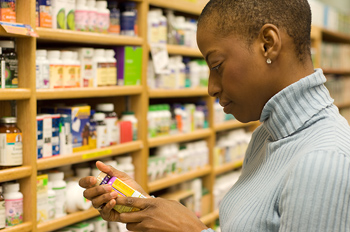
 Red yeast rice, a mainstay of Chinese medicine since ancient times, is emerging in drug stores and vitamin shops as a natural tool to lower cholesterol. The substance is actually derived from a fungus that grows on rice and is eaten as a dietary staple in certain Asian countries.
As its popularity grows, I wanted to share some important information, and a warning of sorts, about red yeast rice.
Even though it is natural, red yeast rice is not a panacea or miracle cure for those of you looking to lower your cholesterol. In fact, using it is an approach I would recommend avoiding.
What’s All the Hype about Red Yeast Rice?
Red yeast rice is sold over-the-counter and is often promoted as an alternative to cholesterol-lowering statin drugs, especially for those who stop taking the drugs due to side effects, like unbearable muscle pain.
In one recent study, researchers studied 62 people with high cholesterol, half of whom were given red yeast rice twice a day for six months while the other half received a placebo. The people taking red yeast rice also had weekly meetings for three months during which they learned about how to incorporate healthy nutrition, exercise and stress management into their lives.
After six months, the researchers found[1]:
-
LDL (bad) cholesterol levels decreased by an average of 35 mg/dL in those taking red yeast rice, compared with 15 mg/dL in the placebo group
-
Total cholesterol levels improved more in the red yeast rice group than the placebo group
Although the researchers acknowledged that the study was small and of short duration, they concluded that red yeast rice, coupled with lifestyle changes, could decrease LDL cholesterol without increasing pain levels or liver or muscle enzyme levels (as often happens in people taking statin drugs). They recommended the yeast rice as a valid treatment option for people who cannot tolerate statin drugs.
A separate study, this one of 5,000 people who have suffered a heart attack, also found favorable results. Those who took an extract of red yeast rice for five years reduced their risk of repeat heart attacks by 45 percent. It also lowered their chances of having a heart procedure such as bypass surgery or angioplasty, and even appeared to reduce their risk of cancer by as much as two-thirds.[2]
So why, then, do I NOT recommend you take this "natural" supplement if you have high cholesterol?
The answer is two-fold and may surprise you:
-
Red yeast rice is a statin drug -- with all the same side effects
-
Cholesterol is not your enemy
Red Yeast Rice is a Statin Drug
The "active" compounds in red yeast rice are known as monacolins, and are substances known to inhibit cholesterol synthesis. One type of monacolin, "monacolin K," is also known as mevinolin or lovastatin.[3]
Lovastatin, as you might now recognize, is the first statin drug to be approved by the U.S. Food and Drug Administration, and it goes by the brand names of Mevacor and Altocor. So if you’re taking red yeast rice in the hopes of avoiding a statin drug -- surprise!
They’re essentially the same drug.
And if you are concerned about your cholesterol levels, taking a drug, even a "natural" drug like red yeast rice, should be your absolute last resort. And when I say last resort, I’m saying the odds are very high, greater than 1000 to 1, that you don’t need drugs to lower your cholesterol.
To put it another way, among the more than 20,000 patients who have come to my clinic, only four or five of them truly needed these drugs, as they had genetic challenges that required it.
Why Statin Drugs -- Including Red Yeast Rice -- Should be Avoided
Count yourself lucky that you probably do NOT need to take cholesterol-lowering medications of any kind, because these are some nasty little pills.
Statin drugs work by inhibiting an enzyme in your liver that’s needed to manufacture cholesterol. What is so concerning about this is that when you go tinkering around with the delicate workings of your body, you risk throwing everything off kilter.
For starters, statin drugs deplete your body of Coenzyme Q10 (CoQ10), which is beneficial to heart health and muscle function.
CoQ10 is a cofactor (co-enzyme) that is essential for a system of enzymes that create ATP molecules, which are needed for cellular energy production.
Organs, such as your heart, which have higher energy requirements therefore also need more CoQ10 to function properly.
Statins deplete your body of CoQ10, which can have devastating results. And because doctors rarely inform people of this risk and advise them to take a CoQ10 supplement, as your body gets more and more depleted, it can lead to fatigue, followed by muscle weakness and soreness, and eventually heart failure.
Congestive heart failure is in fact a very common health risk of statin drugs, and a major reason to avoid them.
Muscle pain and weakness, a condition called rhabdomyolysis, is the most common side effect of statin drugs, which is thought to occur because statins activate the gene atrogin-1 gene, which plays a key role in muscle atrophy.[4]
It’s important to remember that your heart is also a major muscle and can be affected in the same manner as the other muscles in your body.
By the way, muscle pain and weakness may be an indication that your body tissues are actually breaking down -- a condition that can cause kidney damage.
Statin drugs have also been linked to:
-
An increased risk of polyneuropathy (nerve damage that causes pain in the hands and feet and trouble walking)
-
Dizziness
-
Cognitive impairment, including memory loss[5]
-
A potential increased risk of cancer[6]
-
Decreased function of your immune system[7]
-
Depression
-
Liver problems, including a potential increase in liver enzymes (so people taking statins must be regularly monitored for normal liver function)
And a possible association was even found between statins and an increased risk of Lou Gehrig's disease.[8]
Exposing yourself to these potentially serious risks by taking statin drugs becomes even more unacceptable when you understand the truth about cholesterol -- that it is actually your friend, not your enemy.
Why You Need Cholesterol
In the United States, the idea that cholesterol is evil is very much ingrained in most people’s minds. But this is a very harmful myth that needs to be put to rest right now.
Cholesterol is a soft, waxy substance found not only in your bloodstream but also in every cell in your body, where it helps to produce cell membranes, hormones, vitamin D and bile acids that help you to digest fat. Cholesterol also helps in the formation of memories and is vital for your neurological function.
As Ron Rosedale, MD, who is widely considered to be the leading anti-aging doctor in the United States, points out[9]:
"First and foremost, cholesterol is a vital component of every cell membrane on Earth. In other words, there is no life on Earth that can live without cholesterol. That will automatically tell you that, in of itself, it cannot be evil. In fact it is one of our best friends.
We would not be here without it. No wonder lowering cholesterol too much increases one's risk of dying. Cholesterol also is a precursor to all of the steroid hormones. You cannot make estrogen, testosterone, cortisone, and a host of other vital hormones without cholesterol."
Other "evidence" that cholesterol is good for you?
Consider the role of "good" HDL cholesterol. Essentially, HDL takes cholesterol from your body’s tissues and arteries, and brings it back to your liver, where most of your cholesterol is produced. If the purpose of this was to eliminate cholesterol from your body, it would make sense that the cholesterol would be shuttled back to your kidneys or intestines so your body could remove it.
Instead, it goes back to your liver.
Why?
Because your liver is going to reuse it.
"It is taking it back to your liver so that your liver can recycle it; put it back into other particles to be taken to tissues and cells that need it," Dr. Rosedale says. "Your body is trying to make and conserve the cholesterol for the precise reason that it is so important, indeed vital, for health."
Do You Really Have "High" Cholesterol?
Sally Fallon, the president of the Weston A. Price Foundation, and Mary Enig, Ph.D, an expert in lipid biochemistry, have gone so far as to call high cholesterol "an invented disease, a ‘problem’ that emerged when health professionals learned how to measure cholesterol levels in the blood."[10]
And this explanation is spot on.
If you have increased levels of cholesterol, it is at least in part because of increased inflammation in your body. The cholesterol is there to do a job: help your body heal and repair.
Conventional medicine misses the boat entirely when they recommend that lowering cholesterol is the way to reduce your risk of heart attacks, because what is actually needed is to address whatever is causing your body damage -- and leading to increased inflammation and then increased cholesterol.
Further, there is absolutely NO evidence to show that lowering your LDL cholesterol to 100 or below is good for you, but what do you think the American Heart Association STILL recommends?
Lowering your LDL cholesterol levels to less than 100.[11]
And to make matters worse, the standard recommendation to get to that level almost always includes cholesterol-lowering drugs.
The Risks of Lowering Your Cholesterol Too Much
The common mindset in much of the developed world is that lowering your total blood cholesterol below 200 mg/dL is a key to good heart health. In reality, lowering your cholesterol does nothing to address any underlying problems … and lowering it too much can seriously devastate your health.
One large study conduced by Dutch researchers found that men with chronically low cholesterol levels showed a consistently higher risk of having depressive symptoms.[12] This may be because cholesterol affects the metabolism of serotonin, a substance involved in the regulation of your mood.
On a similar note, Canadian researchers found that those in the lowest quarter of total cholesterol concentration had more than six times the risk of committing suicide as did those in the highest quarter.[13]
Dozens of studies also support a connection between low or lowered cholesterol levels and violent behavior, through this same pathway: lowered cholesterol levels may lead to lowered brain serotonin activity, which may, in turn, lead to increased violence and aggression.[14]
And one meta-analysis of over 41,000 patient records found that people who take statin drugs to lower their cholesterol as much as possible may have a higher risk of cancer,[15] while other studies have linked low cholesterol to Parkinson’s disease.
What cholesterol level is too low?
Brace yourself.
Probably any level much under 150, an optimum would be more like 200.
So how do you know if your cholesterol really is too high?
How to Find Out What Your Cholesterol Levels Really Mean
Personally, I believe anything above 330 is likely too high. But another powerful way to determine if you’re at risk from abnormal cholesterol metabolism is to check your ratio of HDL, or "good" cholesterol, and your total cholesterol.
Your HDL percentage is a very potent heart disease risk factor.
Simply divide your HDL level by your cholesterol. That percentage should ideally be above 25 percent. Typically, the higher the better, as there are no known side effects of having too high good cholesterol.
If your ratio falls below 15-20 percent you are at high risk, and below 10 percent, it’s a significant indicator of risk for heart disease.
You can also do the same thing with your triglycerides and HDL ratio. That percentage should be below 2.
Keep in mind, however, that these are still simply guidelines, and there’s a lot more that goes into your risk of heart disease than any one of these numbers.
Do You Want to Safely and Effectively Optimize Your Cholesterol Levels?
First, please realize that simply lowering your dietary cholesterol intake is not an effective primary strategy.
Why?
Because 75 percent of your cholesterol is produced by your liver, which is influenced by your insulin levels. Therefore, if you optimize your insulin levels, you will also regulate your cholesterol levels.
One of the most powerful ways you can do that is by exercising, and paying attention to the foods you eat. Foods that increase your insulin levels will also contribute to high cholesterol by making your liver produce more of it.
With that in mind, here are my primary recommendations for safely regulating your cholesterol levels:
-
Get the right amount of exercise. When you exercise you increase your circulation and the blood flow throughout your body. The components of your immune system are also better circulated, which means your immune system has a better chance of fighting an illness before it has the opportunity to spread.
-
Make sure you’re getting plenty of high-quality, animal-based omega3-fats, such as those from krill oil.
-
Reduce, with the plan of eliminating, grains and sugars in your daily diet.
-
Eat the right foods for your nutritional type.
-
Eat a good portion of your food raw.
-
Eat healthy, preferably raw, fats that correspond to your nutritional type. This includes:
-
Olive oil
-
Coconut and coconut oil
-
Organic raw dairy products (including butter, cream, sour cream, cheese, etc.)
-
Avocados
-
Raw nuts
-
Seeds
-
Eggs (lightly cooked with yolks intact or raw)
-
Organic, grass-fed meats
-
Avoid smoking and drinking alcohol excessively.
-
Address your emotional challenges. I particularly love Meridian Tapping Techniques (MTT) for stress management.
As you’ll notice, these recommendations are all lifestyle-based, meaning that with a few key changes to your diet, activity level and emotional health your cholesterol levels will naturally optimize -- without the need for statin drugs or supplements like red yeast rice.
By Dr. Mercola
Posted: True Health Is True Wealth

